
Business leaders warn of 'catastrophe' on Flinders Street
A development which could add 5000 residents to Wollongong came under intensive scrutiny in council last night


Two of the region’s most influential business leaders have strongly opposed Wollongong City Council’s future plans for what is being described as “the gateway to the city”.
Councillors were presented on Monday night with a future strategy for the Flinders Street precinct, which takes in an area of 32 hectares, including North Wollongong railway station and the former Bunnings site.
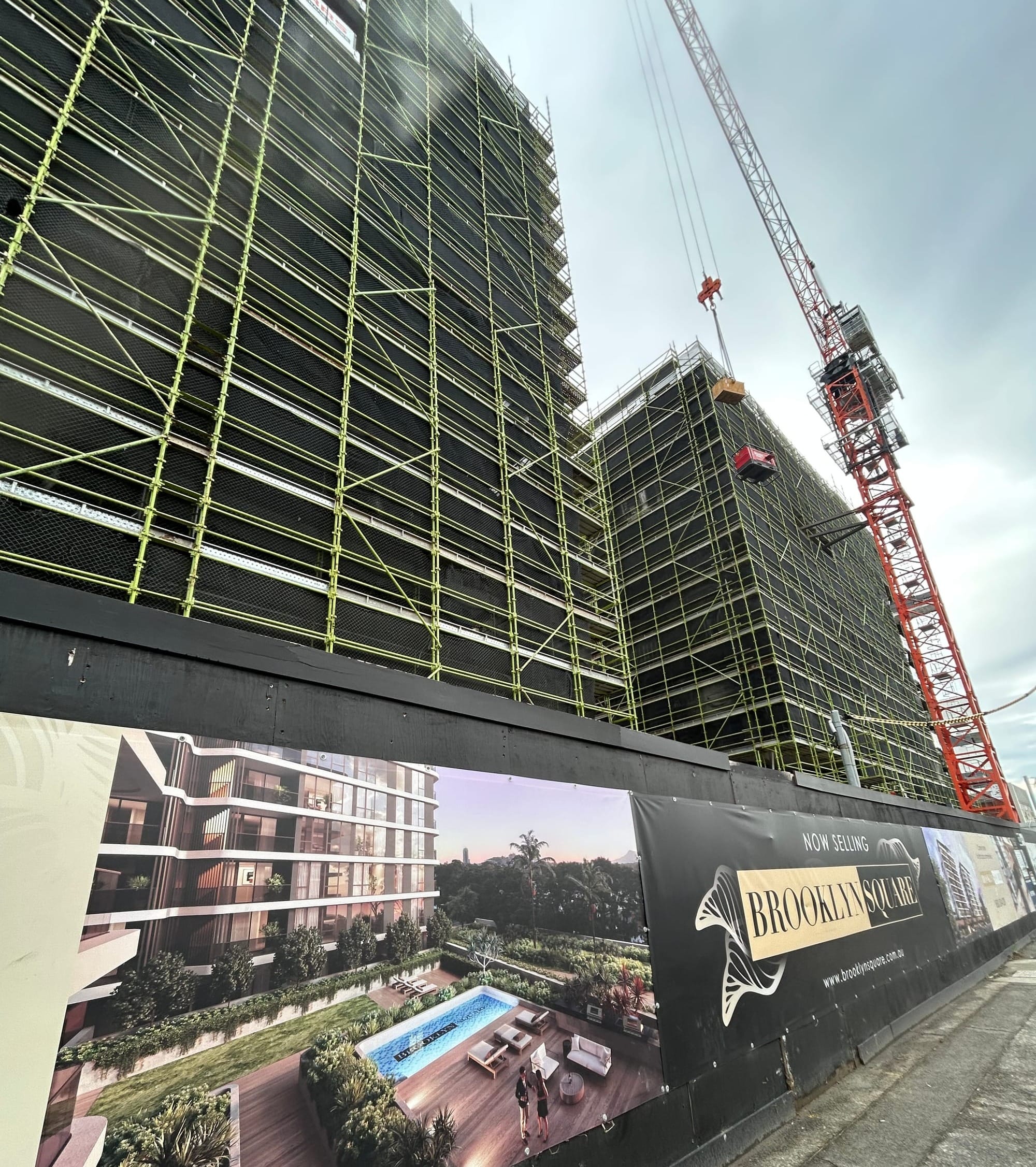
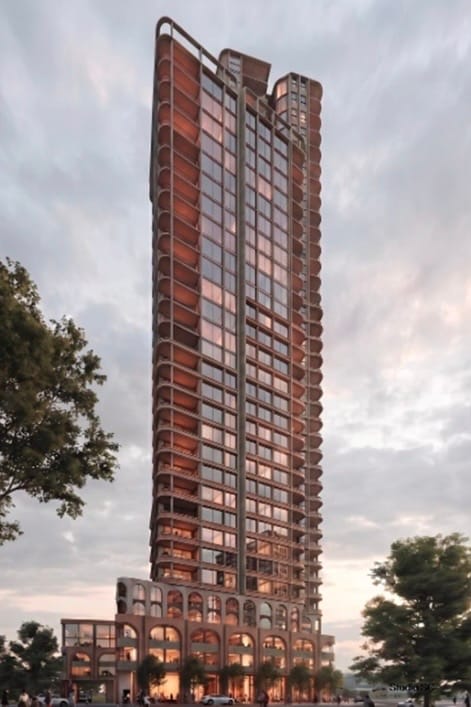
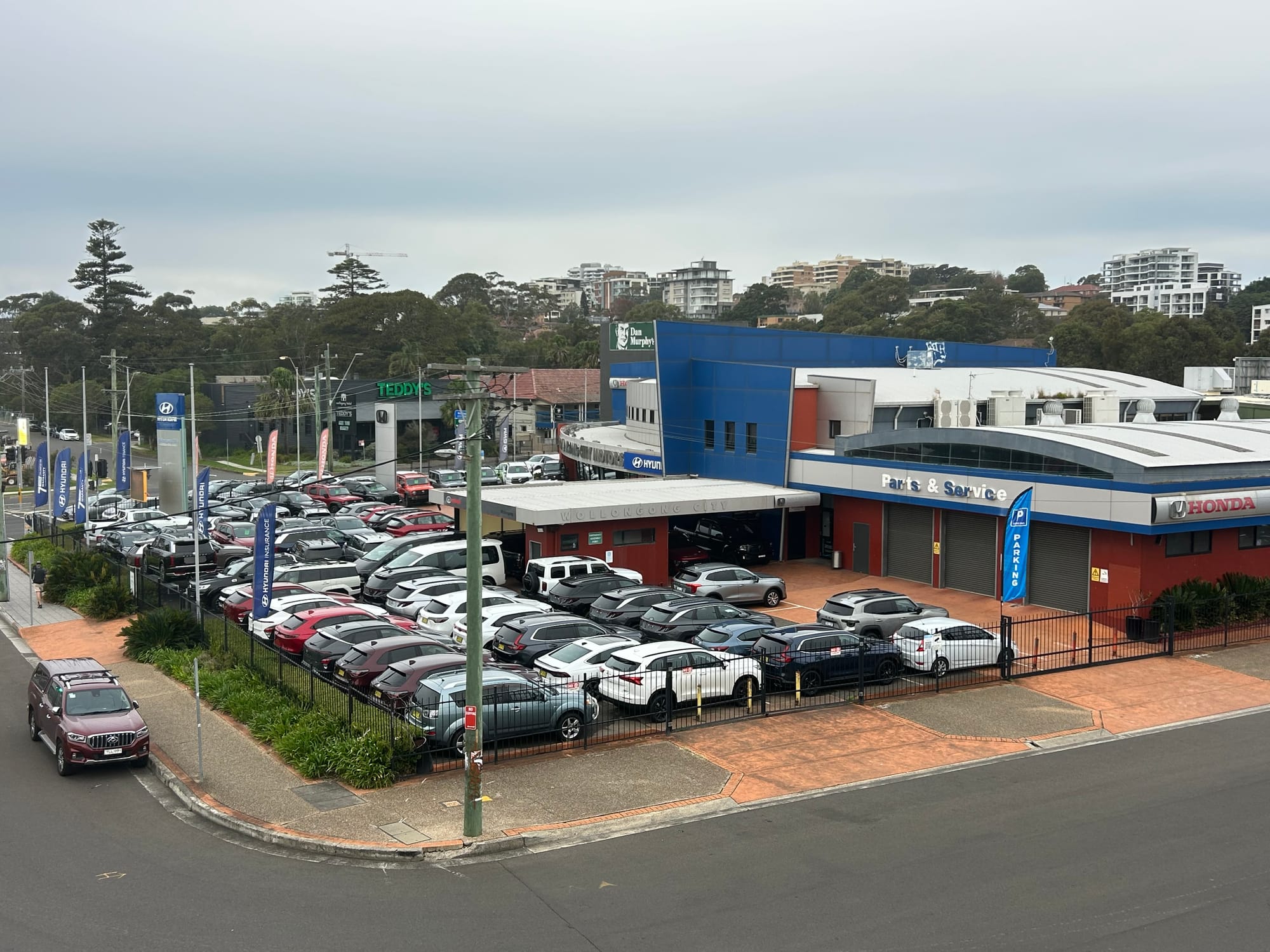
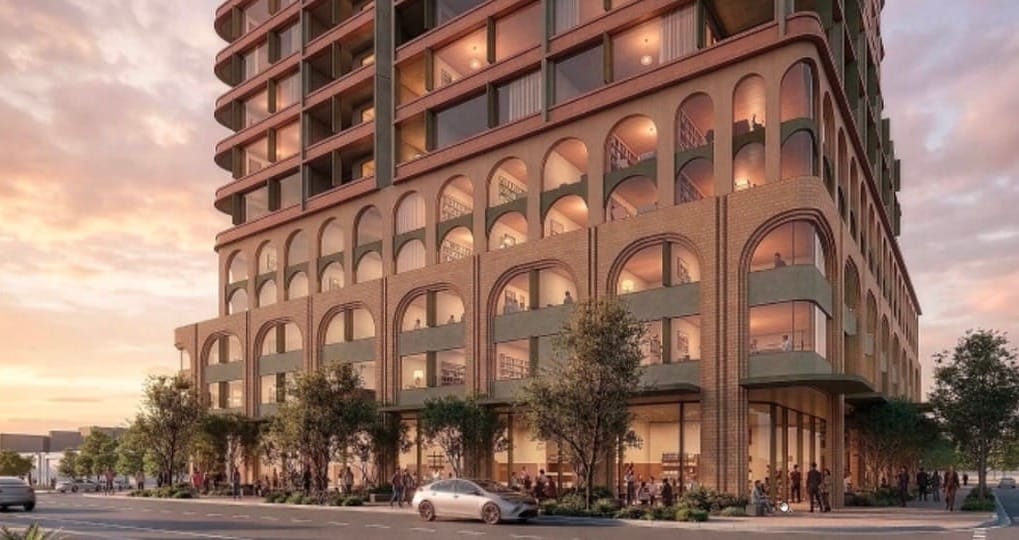
At present, most of the area is low-rise, with one to two-storey buildings. Work is already under way on several new apartment buildings, and Sydney developers Urban Property Group this month unveiled plans to build a 38-storey skyscraper, which would be the city’s highest building, on a site occupied by Wollongong City Motors.
'Ridiculous proposition'
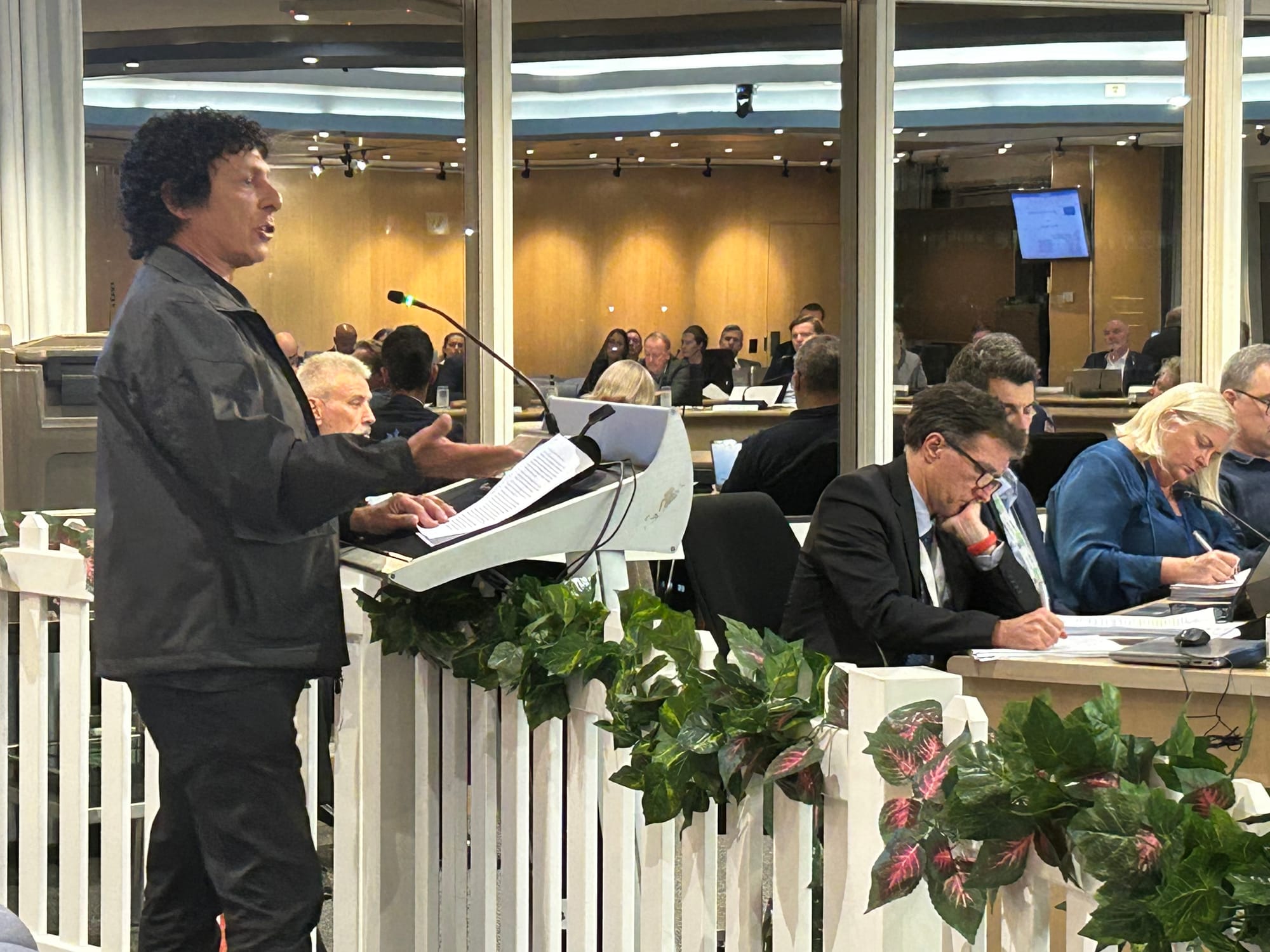
Addressing Monday’s council meeting, businessman Michael Corban described the proposal for a building 127 metres high as “the most ridiculous proposition I have ever seen considered by Wollongong Council and the state government”.
Corban said council needed to consider consequences when trying to resolve the current housing crisis.
“It is now being forced upon us to create an enormous amount of housing due to the demands of the state government and their shortcomings," he said. "Good planning will prevent what would be a catastrophe for all residents in Wollongong.”
Corban said he hadn’t spoken in front of council since 1979, “when Wollongong Lord Mayor Frank Arkell and his team opposed the approval of the North Beach International, Wollongong‘s first international hotel, now known as the Novotel.” He said thankfully he received enough support, which enabled him to “create a landmark for Wollongong”.
Nearly 50 years later, he felt he couldn’t remain silent when he saw what was being proposed for one of the key entry points to Wollongong’s CBD.
Overdevelopment concerns
During council’s public exhibition of its draft Flinders Street Precinct Urban Design Framework late last year, 49 community submissions were received. Most expressed concern about the potential overdevelopment of the site, raising issues about increased flood risk (in what is already a flood-prone area), increased traffic congestion and a lack of parking.
In the council business paper, it was also noted that “the lack of publicly available open spaces to support existing and future population has been raised as a concern”.
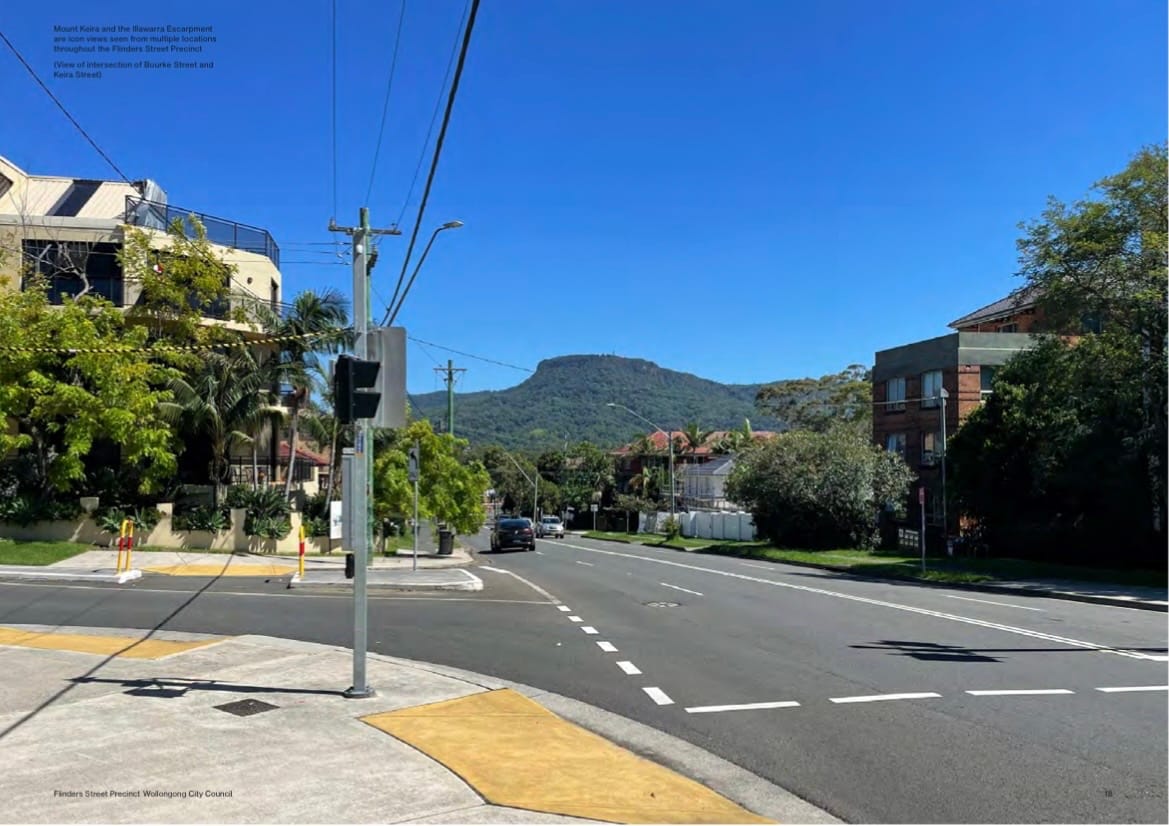
The report also raised concerns over disruption of views to the escarpment and the need to “maintain public views from Bourke, Gipps and Flinders Streets to Mount Keira, noting their Aboriginal cultural significance and value to the community.”
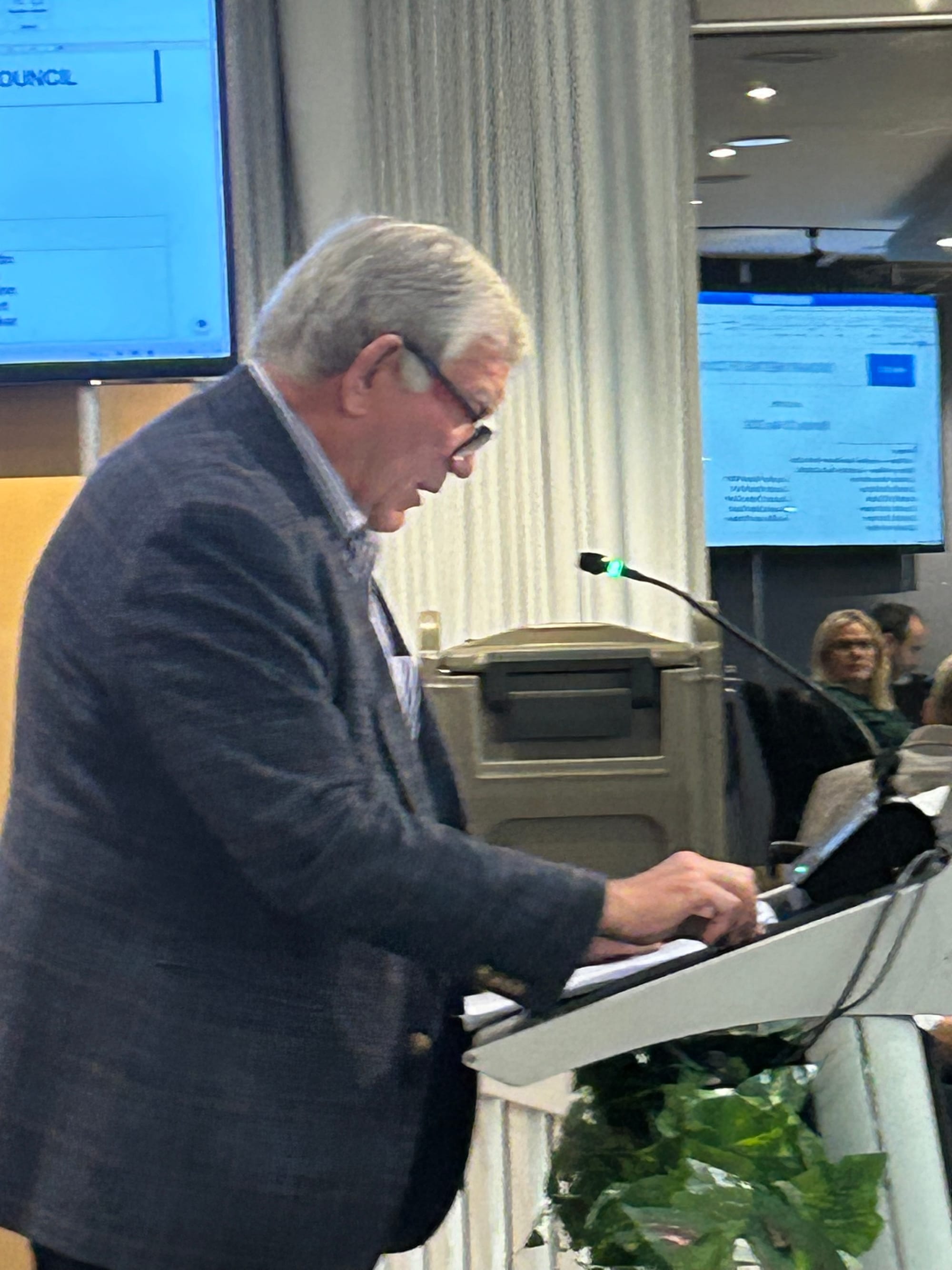
Terry Wetherall says there are too many problems to overcome at this time.
Approval is 'premature'
Also addressing council on Monday night, town planner Terry Wetherall AM, a former president of the Australian Chamber of Commerce and Industry, shared Michael Corban’s concerns about increased traffic and parking issues.
“Commuters utilising North Wollongong railway station currently rely on on-street parking, save for 24 off-street parking spots on the western side of the line.”
Wetherall said there were too many problems to be overcome for council to adopt the framework in its current form, describing it as “premature”.
“Creating a built environment that works for all is the greatest gift that council can provide,” Wetherall said. “Communities aren’t rejecting density, they are rejecting poor outcomes. Density is accepted when the benefits are visible and provide outcomes the community embraces.”
Outside the meeting, Wetherall told The Illawarra Flame he feared the Flinders Street precinct “is going to be a slum in time".
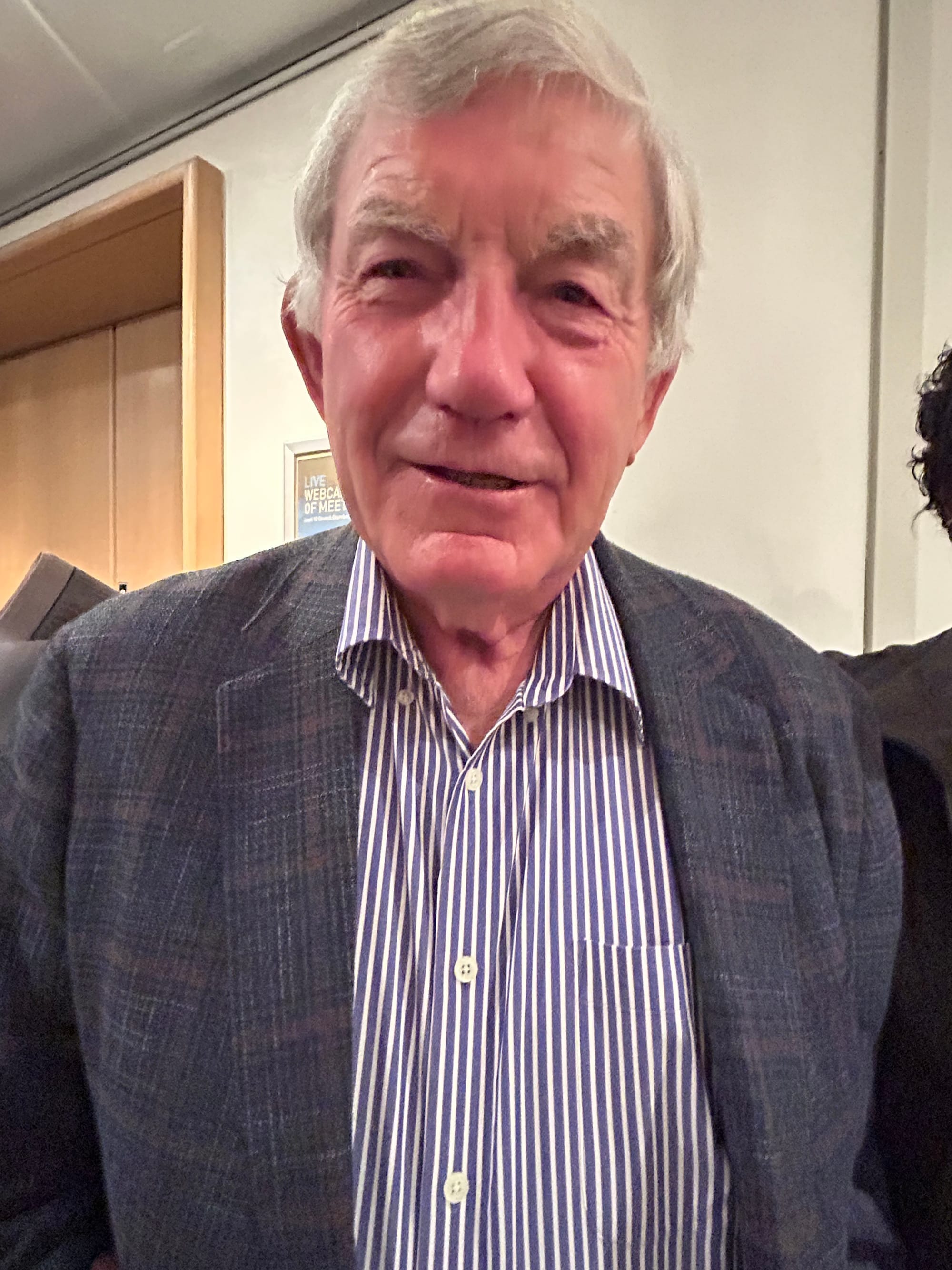
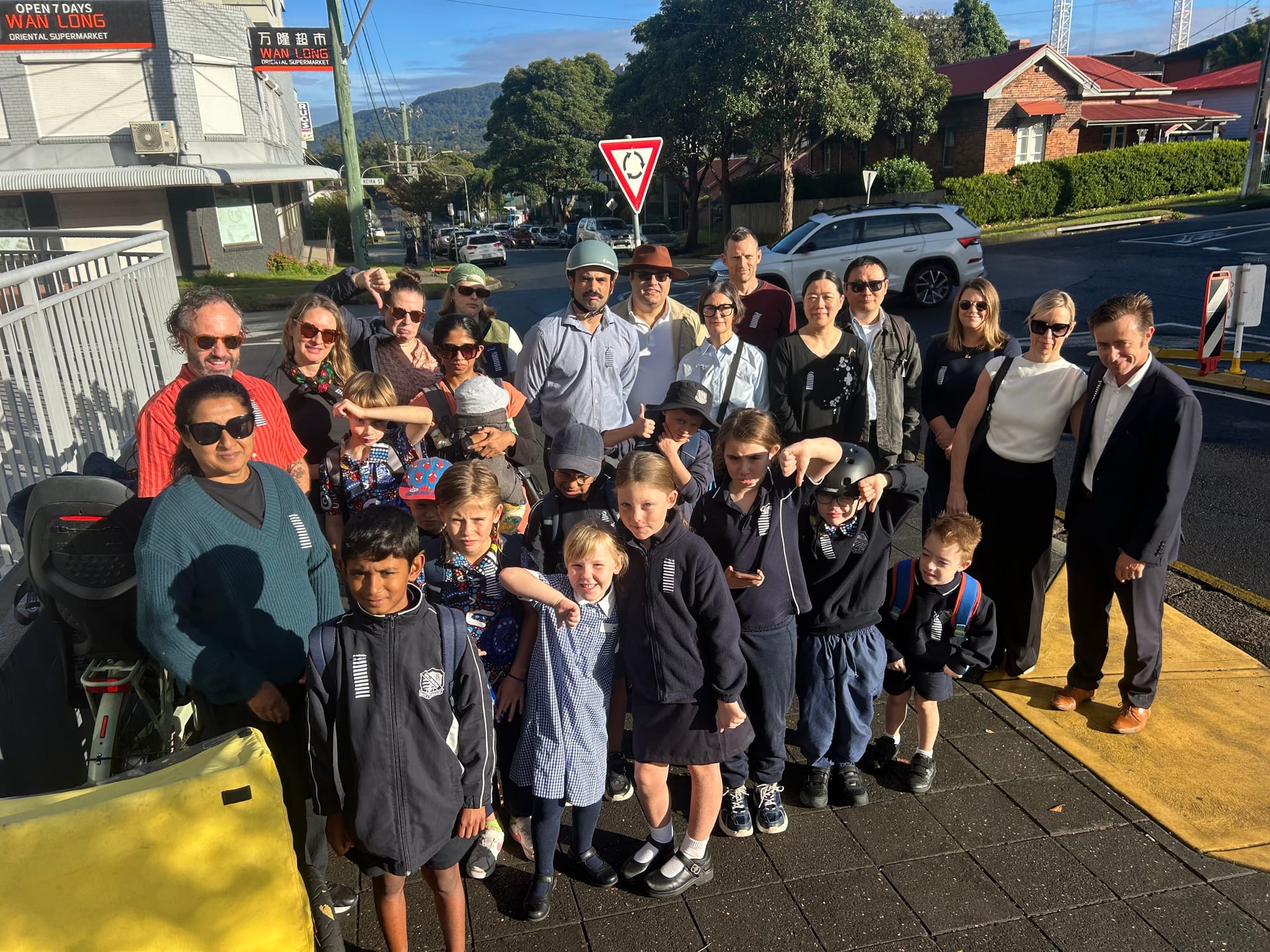
Left: Terry Wetherall fears the precinct will create slums. Right: Wollongong Public School and Smiths Hill parents recently expressed concerns about safe crossings in the city.
Flooding concerns
While welcoming aspects of the precinct framework, independent Cr Andrew Anthony said he also had “significant concerns about the scale of development” and how the infrastructure necessary to support the new housing would be funded.
“The developer contributions won’t cover it.”
He said he was worried about how increased stormwater and flooding in a notoriously bad flood zone would be addressed.
Cr Anthony said there were already serious problems with congested roads, making it difficult for students attending Smiths Hill High School and Wollongong Public School to safely get to and from school.
As The Illawarra Flame recently reported, the projected student population at Wollongong Public is expected to rise by hundreds in the next four years.
“Those problems around the schools are only going to get worse. I want us to focus on improving that area first before we increase the population,” Cr Anthony said.
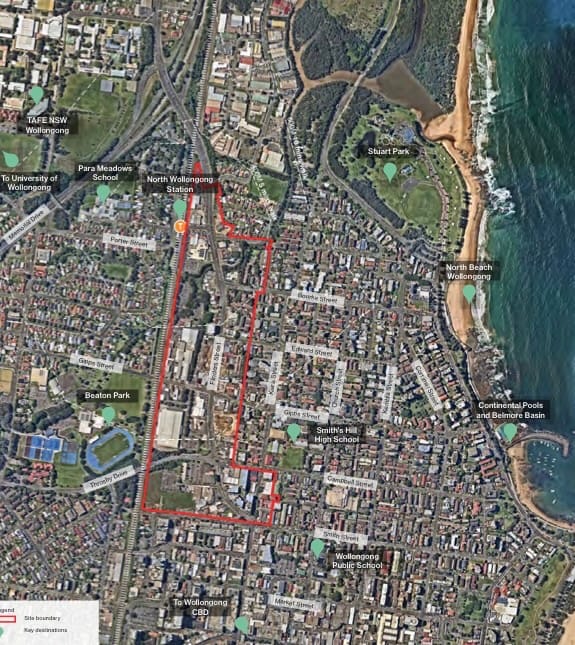
“Potentially we are adding a whole new suburb of Wollongong. There could be an additional 5000 people living in that area of Wollongong."
'Slums of the future'
Cr Anthony said: “I really worry about Wollongong’s future. My biggest fear is that Wollongong is going to look like the Gold Coast or New York City. I don’t want to see the signature buildings of today become the slums of the future.”
While other councillors expressed some concerns about getting the balance right, especially in terms of managing traffic and parking issues, all voted in support of the new framework for Flinders Street.
When questioned about car parking issues around the busy North Wollongong station, council general manager Greg Doyle assured councillors that the NSW government was aware that this was an issue that needed to be addressed.
Housing needs highlighted
Cr Ryan Morris said it was important to “get the infrastructure right during the development stage”, adding “we need to ensure we have more affordable housing”.
His comments were echoed by Cr Ann Martin, who said: “I’m amazingly optimistic this precinct will deliver housing for our residents and for the future workers who are coming. There is already a severe shortage of housing in Wollongong.
“We can’t walk away from our responsibilities,” Cr Martin added. “Our desire for housing is critical to our survival as a region. While I appreciate seeing change in Wollongong is upsetting, at the same time we need to move beyond it and appreciate we are providing homes for people.”
Cr Dan Hayes said when he read the document he was “excited”.
“Of course there are going to be issues. Increased population and increased car use is going to mean changes.” However, Cr Hayes said, “People need housing and this is the place for it.”
Cr David Brown said he believed the precinct “is well suited to urban densification, and the market seems to think so”.
“It’s an important little precinct,” he said. “Will it support or detract from the CBD?
"The precinct will be an interesting test case,” he said, noting housing development there was progressing more quickly than expected.
Size and scale concerns
Lord Mayor Cr Tania Brown said she “firmly believes 38 storeys is too high for that precinct” saying she would be more comfortable at around 20 storeys.
The Lord Mayor said the size and scale of construction had raised concerns, and she received an assurance from staff that what is proposed as the city’s tallest building has not yet progressed to a development application stage.
Cr Brown said she was optimistic that Flinders Street could be made “to look more like a boulevard” with more greening, street trees and pocket parks.
The Lord Mayor said she agreed pedestrian safety was of paramount importance, and expressed “full confidence our team will work with the state government” to achieve a good outcome.


