

Driven: BYD Shark 6
With the current cost of fuel and EV sales on the rise, we review the BYD Shark 6, plug-in hybrid electric ute

The BYD Shark 6 has excited a lot of people – and for good reason.
The Shark, Australia’s first plug-in hybrid electric ute, exemplifies an innovative approach and has generated plenty of interest and, consequently, sales, but is this ute – with no 4WD, low-range gearing or diff-locks – a mere novelty? Or is it a strong sign of things to come?
How much does the BYD Shark 6 cost?
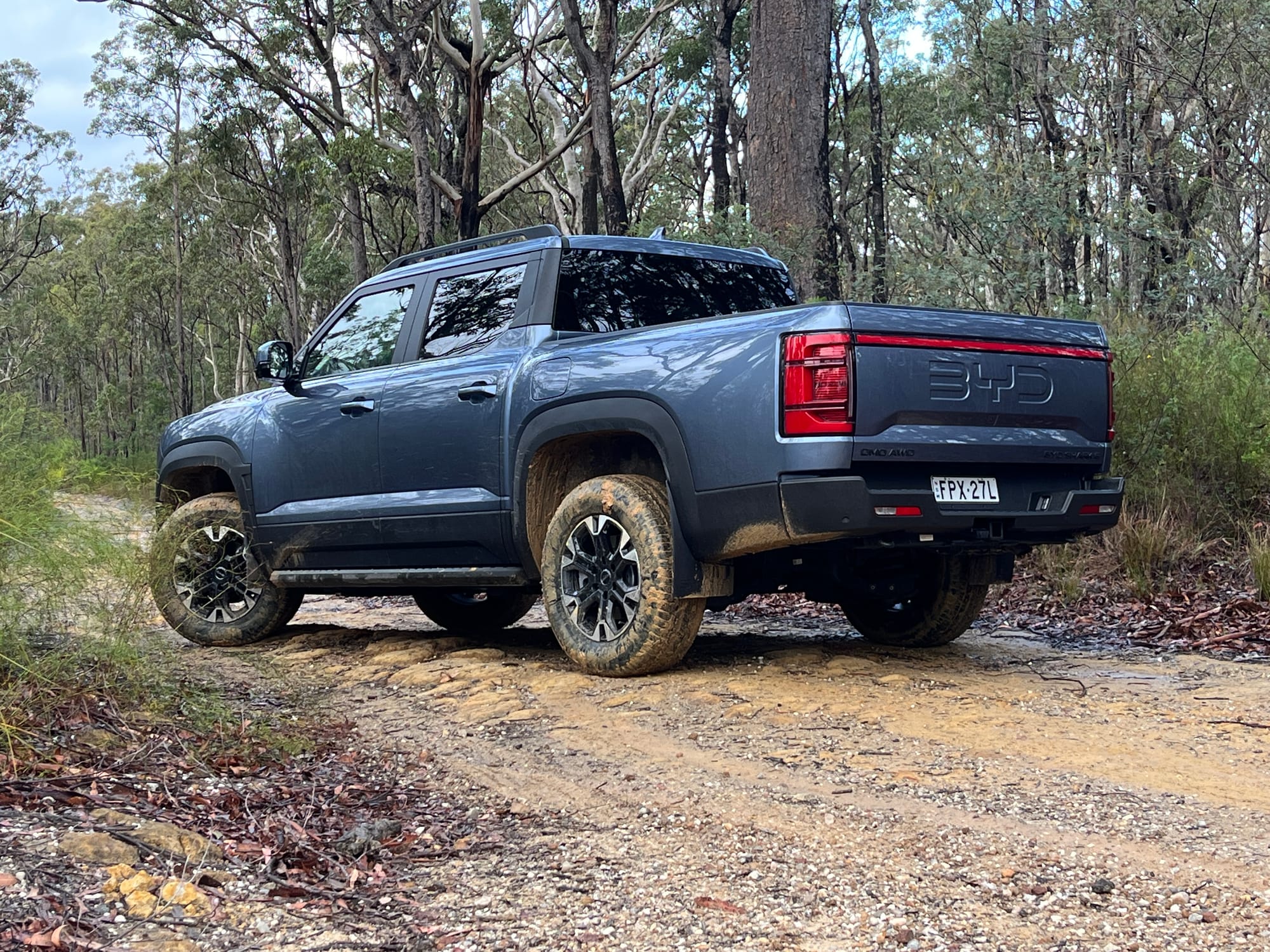
The BYD Shark 6 is a five-seat dual-cab ute with a price-tag (at time of writing) of $57,990 (excluding on-road costs).
What features do you get in the BYD Shark 6?
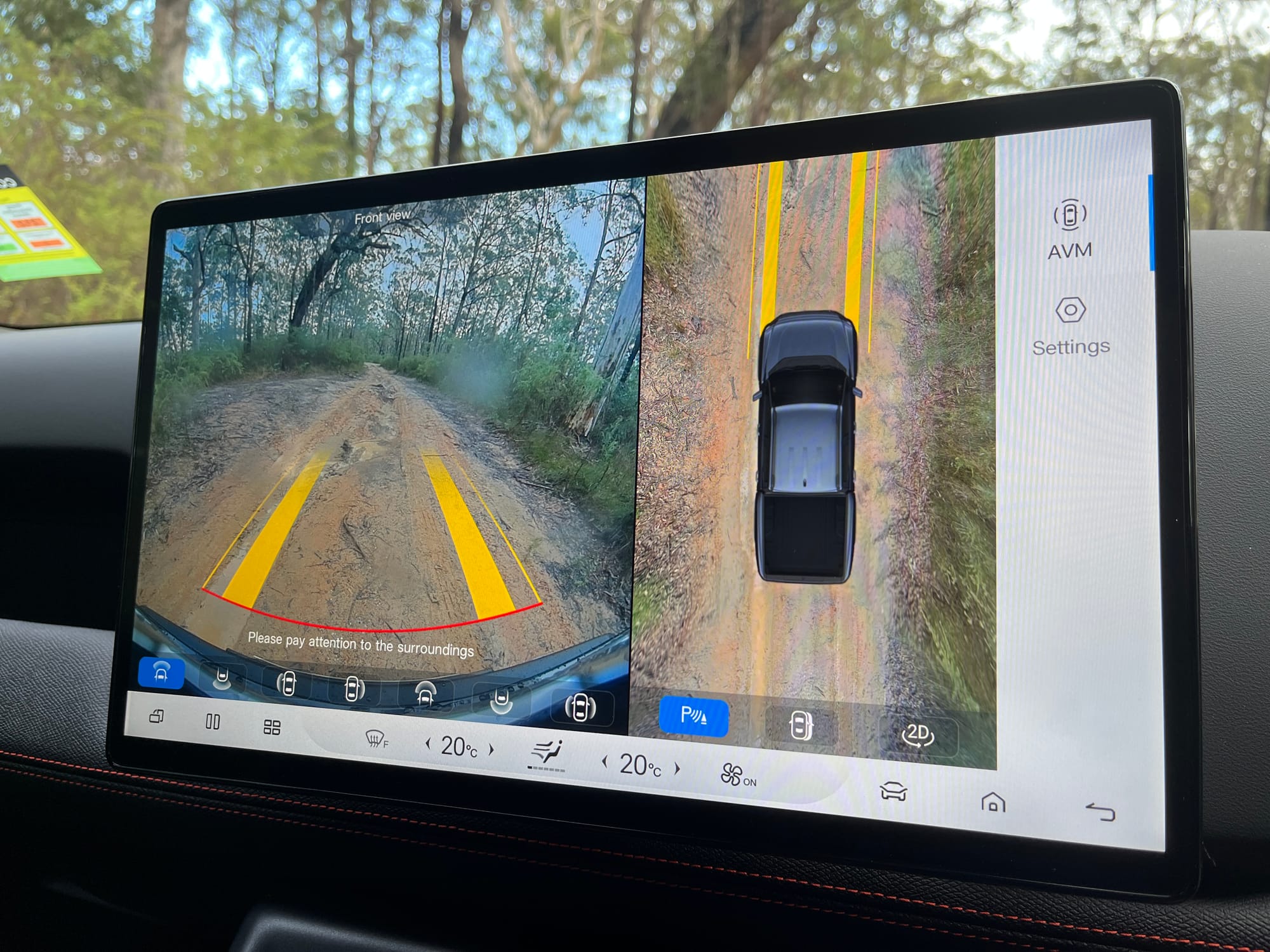
Standard features onboard the Shark include a 15.6-inch rotating touchscreen multimedia system (with wireless Apple CarPlay and Android Auto), a 10.25-inch digital instrument cluster, head-up display, wireless charging, an eight-way electrically-adjustable driver’s seat, a four-way electrically-adjustable front passenger seat, heated and ventilated front seats, leather steering wheel, 12-speaker stereo system, a 360-degree camera, tyre-pressure monitoring system, and a hydraulically-assisted tailgate.
Exterior paint choices include Great White (of course), Tidal Black, Deep Sea Blue and Outback Orange.
BYD has avoided alienating the car-buying public by going with styling that is fresh and interesting without dividing opinions as the Kia Tasman has.
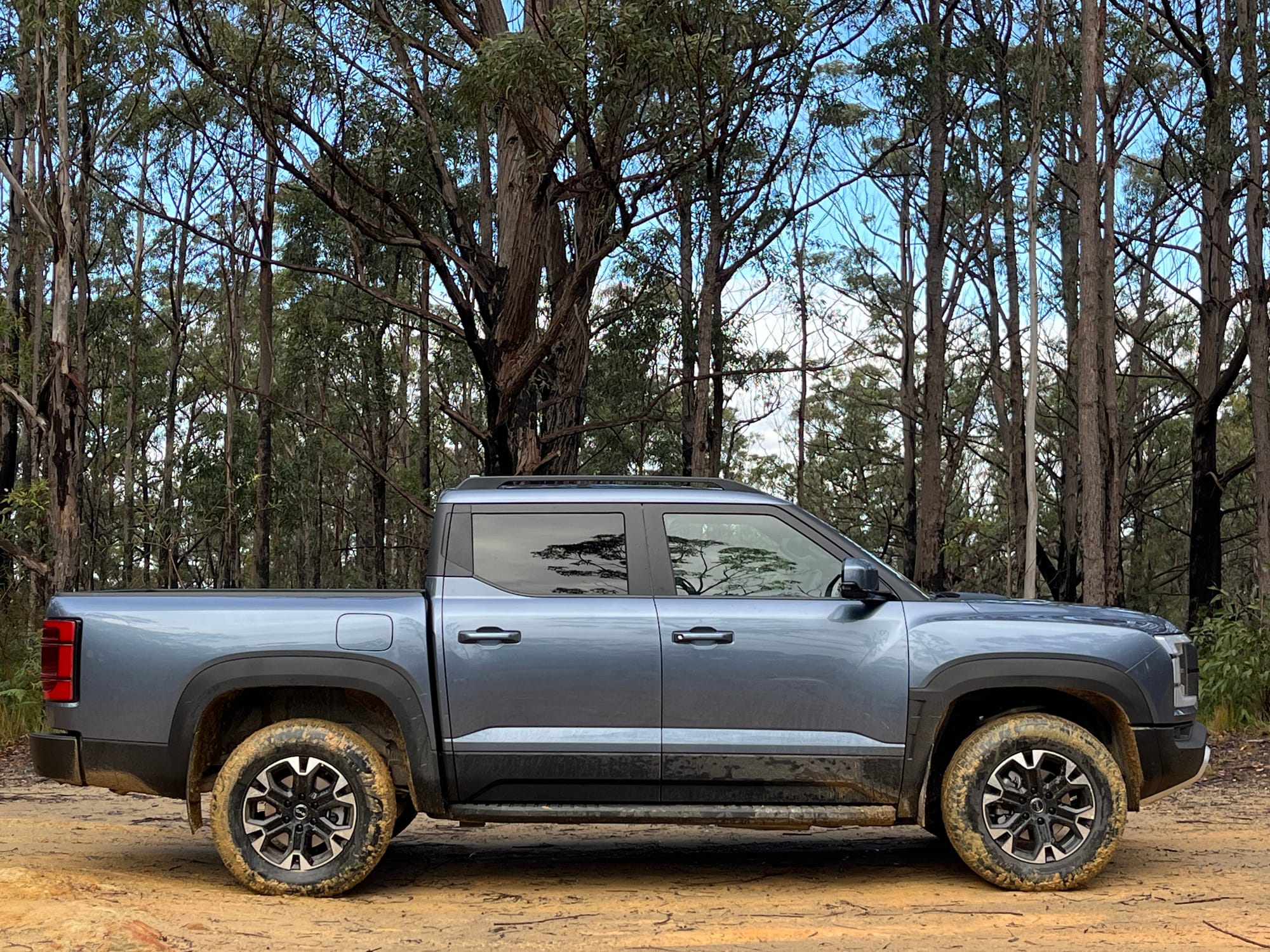
The Shark has a big bluff front end, slyly pronounced wheel arches, 18-inch alloys, chunky side steps, and a distinctive squared-off rear.
The Shark is 5457mm long (with a 3260mm wheelbase, 1971mm wide (1660mm wheel track), 1925mm high, and it has a kerb weight of 2710kg.
The cabin is practical with high-level prestige about it. You have to experience it for yourself – it’s that good.
Fit and finish and build quality are impressive and there are plenty of soft-touch surfaces inside.
The driver and front-seat passenger seats are comfortable and everyone in the cabin is well looked after with charge points, storage areas and general amenities.
Using the 15.6-inch rotating touchscreen and the 10.25-inch digital instrument cluster, you can control most aspects of in-cabin comfort and entertainment.
In the back seat, there’s a surprising amount of room and it is very comfortable.
All in all the Shark's cabin is a very impressive space.
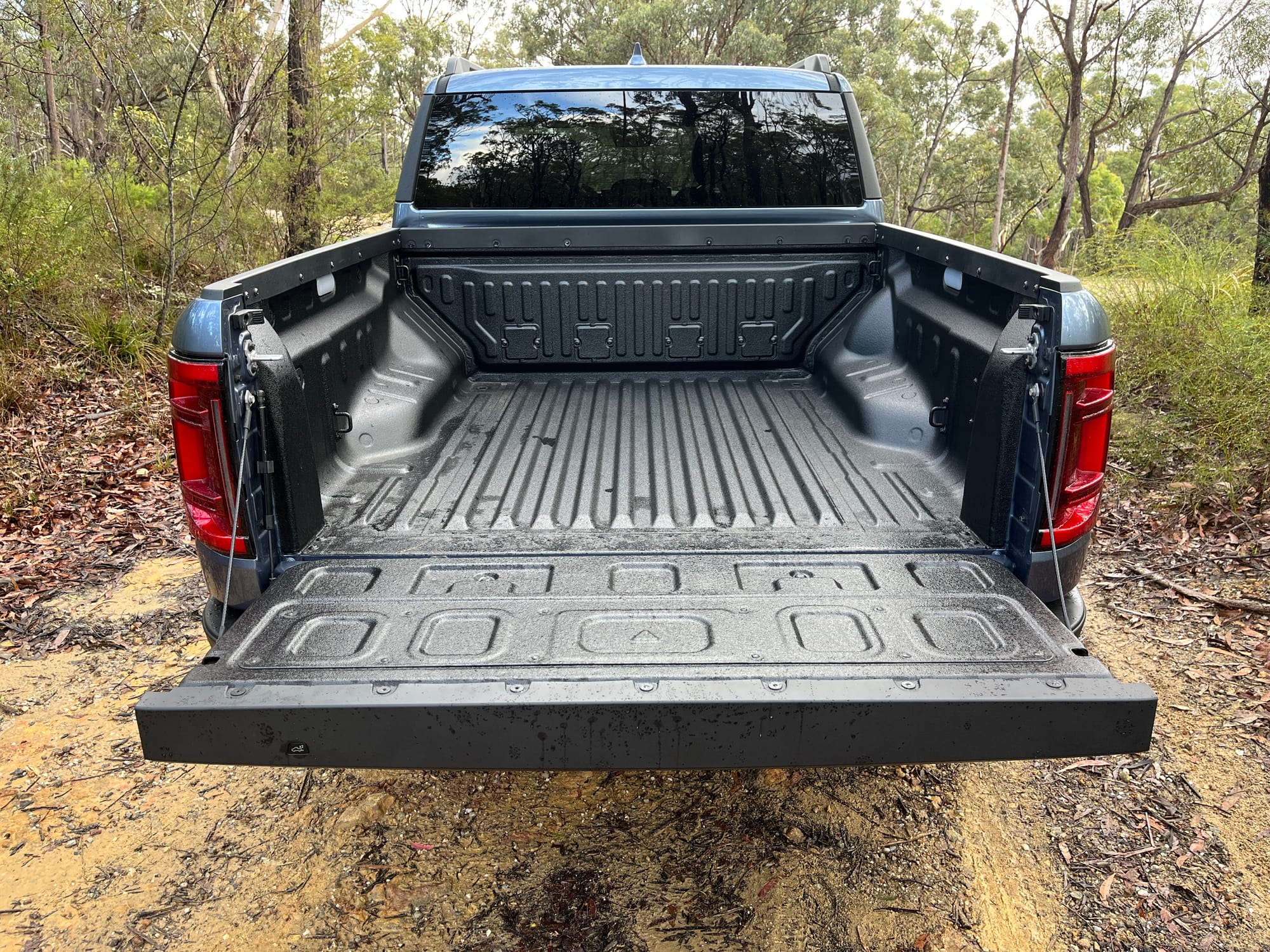
The Shark’s tray is 1520mm long, 1500mm wide (1224mm between the wheel arches), and 517mm deep. So it’s shorter, narrower and shallower than a Ranger tray (1547mm long, 1584mm wide, 529mm deep).
It has a sturdy looking tub liner, six tie-down points, a light and a three-plug power outlet.
What is the BYD Shark 6 like to drive?
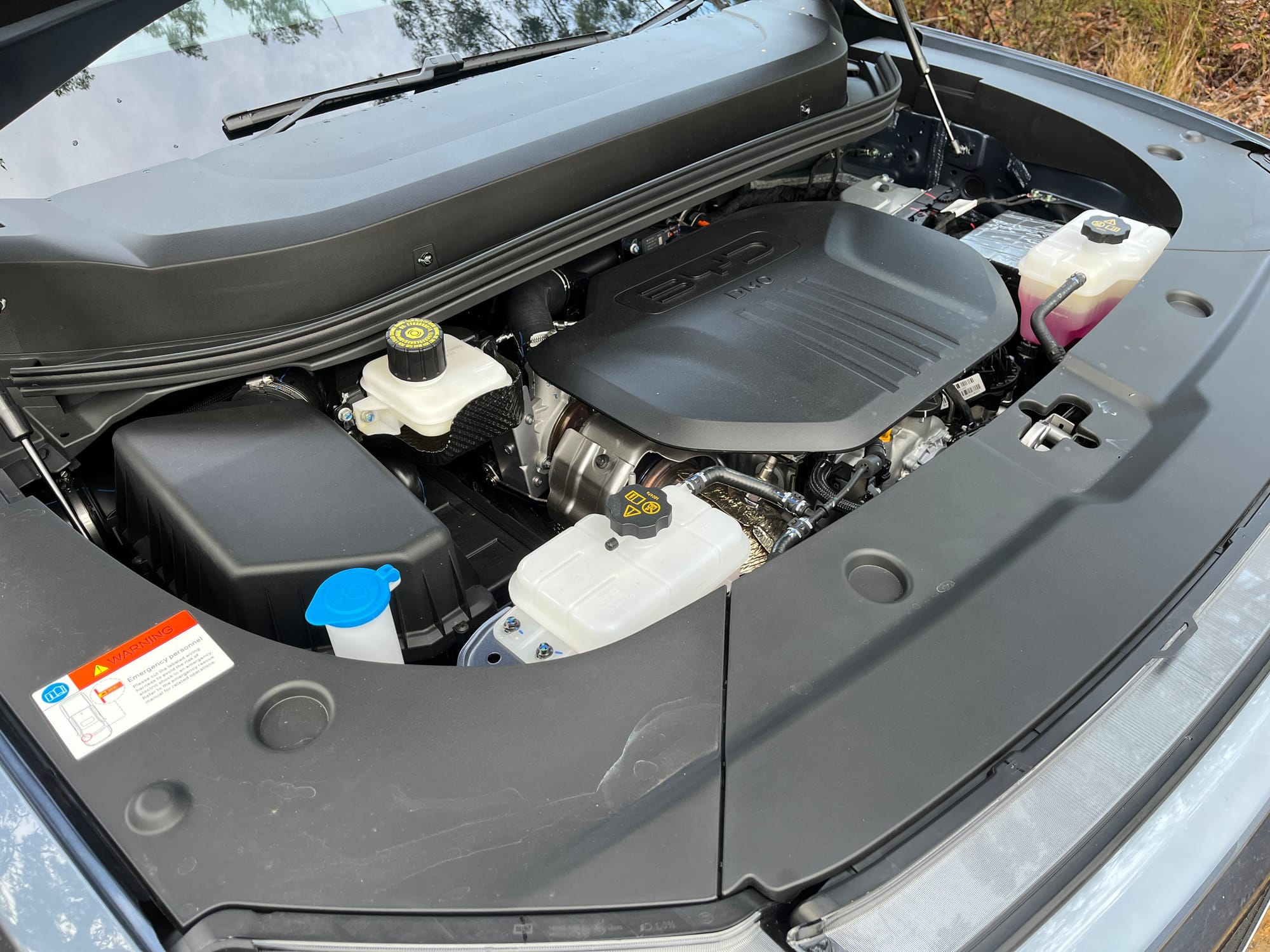
The BYD Shark 6 has a turbocharged 1.5-litre petrol engine – producing 135kW and 260Nm – and it has an electric motor at the front (170kW/310Nm) and rear (150kW/340Nm).
Maximum total outputs for the whole hybrid system are 321kW and 650Nm.
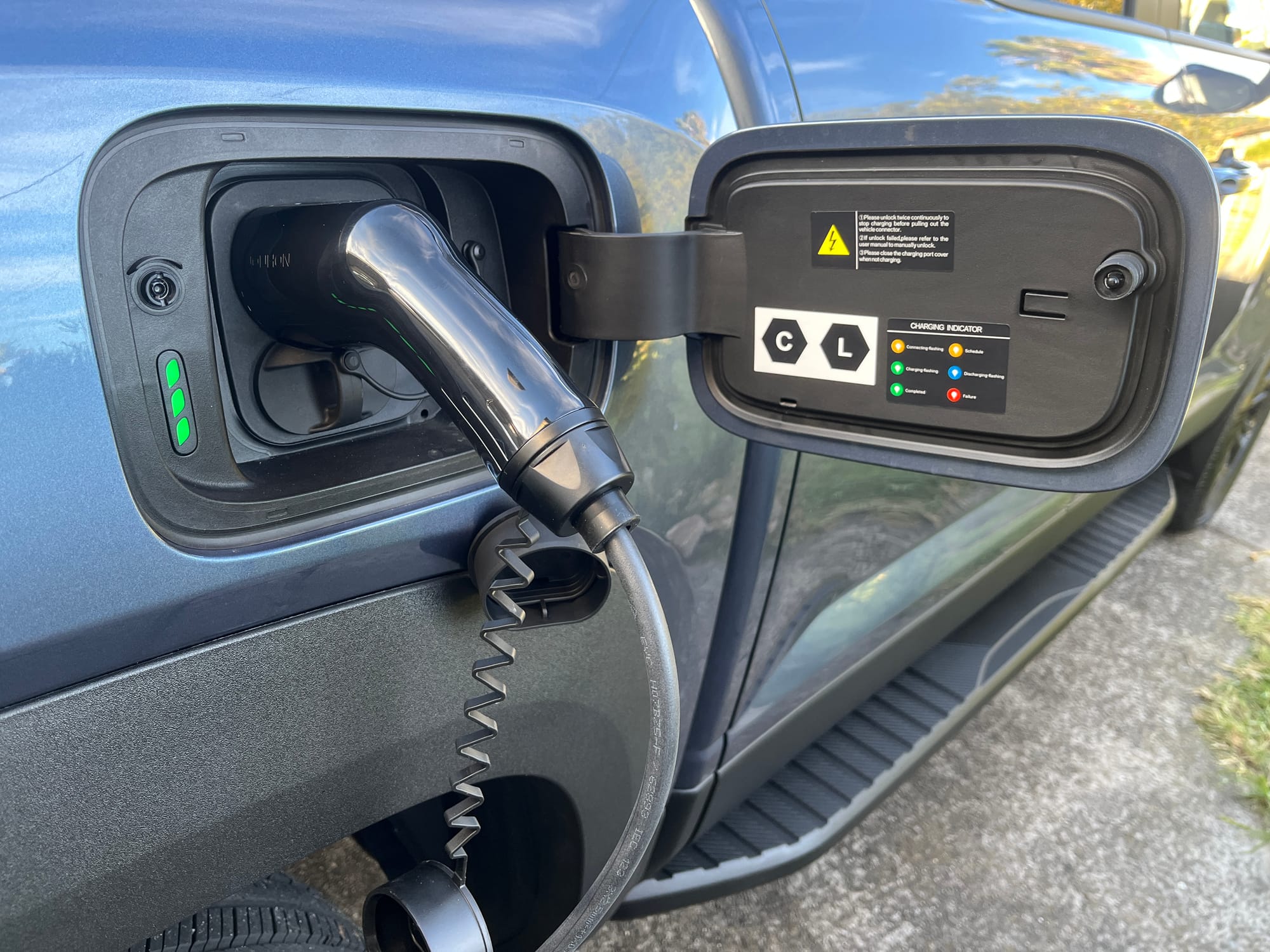
The Shark has a 30kWh battery and the petrol engine – and regen braking – feed power into that battery during general driving.
It has a single-speed reduction gear / dedicated hybrid transmission (which enables electric-only driving and hybrid operation, switching between modes based on throttle demand and battery level), an all-wheel drive system (split between the front and rear) and Drive modes include Eco, Normal and Sport) and Terrain modes include Sand, Snow, Mud and Mountain.
The Shark doesn’t have 4WD, high- or low-range gearing, or diff-locks. It doesn’t even have a drive shaft.
This ute is impressive on sealed surfaces – refined and comfortable – and some of that composure is due to it being quite a heavy vehicle because, as a result, it settles nicely on the road.
The hybrid system works in a smooth linear fashion, without any lag or clunkiness in take-offs or transitions from electric-only to hybrid driving.
The suspension set-up – double wishbones and coil springs at each wheel – errs on the side of firm, but the Shark still manages to generally yield a nice ride quality.
It is, however, a slightly different story over anything more than light lumps, bumps and shallow ruts on bush tracks. On these kinds of irregularities, the Shark may become unsettled and you can cop a few thumps up through the tyres, the suspension and into the cab, but it's not terrible.
When it comes to slower, technical off-roading, the Shark does better than a lot of us would've expected and that’s a pleasant surprise because this vehicle does not have four-wheel drive, low range gearing, or diff locks.
But you have to understand this: the Shark is simply a capable off-roader for only light to moderate off-roading. Its all-wheel drive system works well for what it is, but it's better to think of it as almost like a Subaru all-wheel drive system, rather than anything approximating 4WD because that is how it operates.
The Shark relies on off-road traction control engineered to keep the ute moving safely and under control in a variety of off-road scenarios. And while that system is not perfect – it could be better calibrated – it generally works well.
Of course, the Shark can be improved with a set of better all-terrain tyres – it has Continental CrossContact All Terrain (265/65R18) as standard – and an aftermarket suspension lift, but it’s best regarded as a light-duty AWD. Get it in the correct driving mode, use the throttle wisely, drive with sustained controlled momentum and resist the urge to drive any tracks signposted ‘4WD/ high ground clearance only'.
The Shark can tackle steep-ish hill-climbs (25 degree incline), deep-ish muddy ruts (250mm-300mm deep or so) and shallow mudholes but, be aware, apart from its approach angle (31 degrees), it has shallow off-road angles (departure 19.3 and rampover 17). Also, ground clearance and wading depth are listed as 230mm and 700mm respectively, and we were in danger of scraping the underbody through shallow ruts.
It does have steel bash plates on the underbody, but what concerns me is that the battery pack – positioned about midway along the Shark’s undercarriage where you have the shallow rampover angle – is only shielded by a piece of foam and a bash plate. It seems vulnerable to damage to me, especially if you're trying to tackle rock steps, even rock steps that aren’t particularly severe – you wouldn't want to inadvertently give that battery a solid bump against the ground or a rock or a tree stump because then, if the battery sustains any damage, you might be in some serious strife.
Payload is listed as 790kg and that's a little shy of what some other dual-cab utes are able to carry. Start adding people, gear and pets – not to mention aftermarket accessories – and you’ll swiftly be over legal limits. Always keep those figures in mind – gross vehicle mass, payload etc – because all of those numbers come in handy when you're trying to figure out how much you can legally carry onboard your vehicle.
In summary, the Shark could tackle off-road terrain that’s a little bit more difficult, but the Shark will need, at the least, a decent set of all-terrain tyres and, if you want to go harder, a suspension upgrade.
Let’s leave a full-blown software update – that delivers an off-road traction control system capable of producing some kind of approximation of low-range gearing and diff locks – to BYD.
The Shark’s official fuel consumption is listed as 2.0L/100km and it has a listed combined driving range – petrol and electric – of 800km.
Electric-only driving range is claimed to be 100km. I consistently used 75% over 80km (dropping the Shark’s charge from 100% to 25%) so I reckon that 100km range figure is close to accurate.
I recorded 4.0L/100km and 16.8kWh/100km on this test.
The Shark has a 60L fuel tank and I reckon you can reasonably expect a combined driving range – full-tank and full-charge – of about 700km.
Is the BYD Shark 6 any good?
The BYD Shark 6 is a big step forward for Australia’s plug-in hybrid electric ute market in terms of quality, comfort and all-round useability.
It’s good value in an increasingly expensive car market, it’s well built with a real premium look and feel, and it’s quiet, refined and comfortable on-road.
The bonus is that the Shark is quite impressive off-road, as long as it’s driven within its scope of capability: light to moderate 4WDing.
Ultimately, the Shark’s refinement, on-road performance, and overall driveability outweigh its off-road limitations.


