Drones up accuracy, as NSW reveals new koala numbers
Koalas used to be tracked by sight and scat, now government scientists have finished their first NSW survey with new technology, such as heat-detecting drones and acoustic recorders


Koalas used to be tracked by sight and scat, now government scientists have finished their first NSW survey with new technology, such as heat-detecting drones and acoustic recorders.
The result: there are more of the endangered marsupials out there than we knew.
On December 11, the NSW Government revealed that 274,000 koalas are estimated to live across the state after its scientists surveyed more than 1,000 locations, including national parks, state forests and private land.
This is far more than 2022 estimates, which had the population at between 15,000 and 30,000, but it’s thought to be a sign of more accurate monitoring, rather than a population increase.
“The use of thermal drones is cutting-edge technology for surveying koalas,” said a spokesperson for the federal Department of Climate Change, Energy, Environment and Water (DCCEEW).
“This method is being used across the state to map koala abundance, including as part of the NSW Government’s koala baseline survey.”
A local project funded by coal miner GM3, involving University of Wollongong researchers and Helensburgh’s Symbio Wildlife Park, helped contribute to the scientific knowledge. The team used thermal drones at night to scan areas of the Illawarra ‘ranges’, a term referring to the eastern side of the Woronora Plateau, including the escarpment.
They spotted 56 koalas, with modelling estimating true abundances of 147 koalas published in Australian Mammalogy in October.
“These results reveal that the forests south of Sydney are far more significant for conservation than previously recognised,” lead author Jordyn Clough, of UOW’s School of Science and Environmental Futures, said at the time.
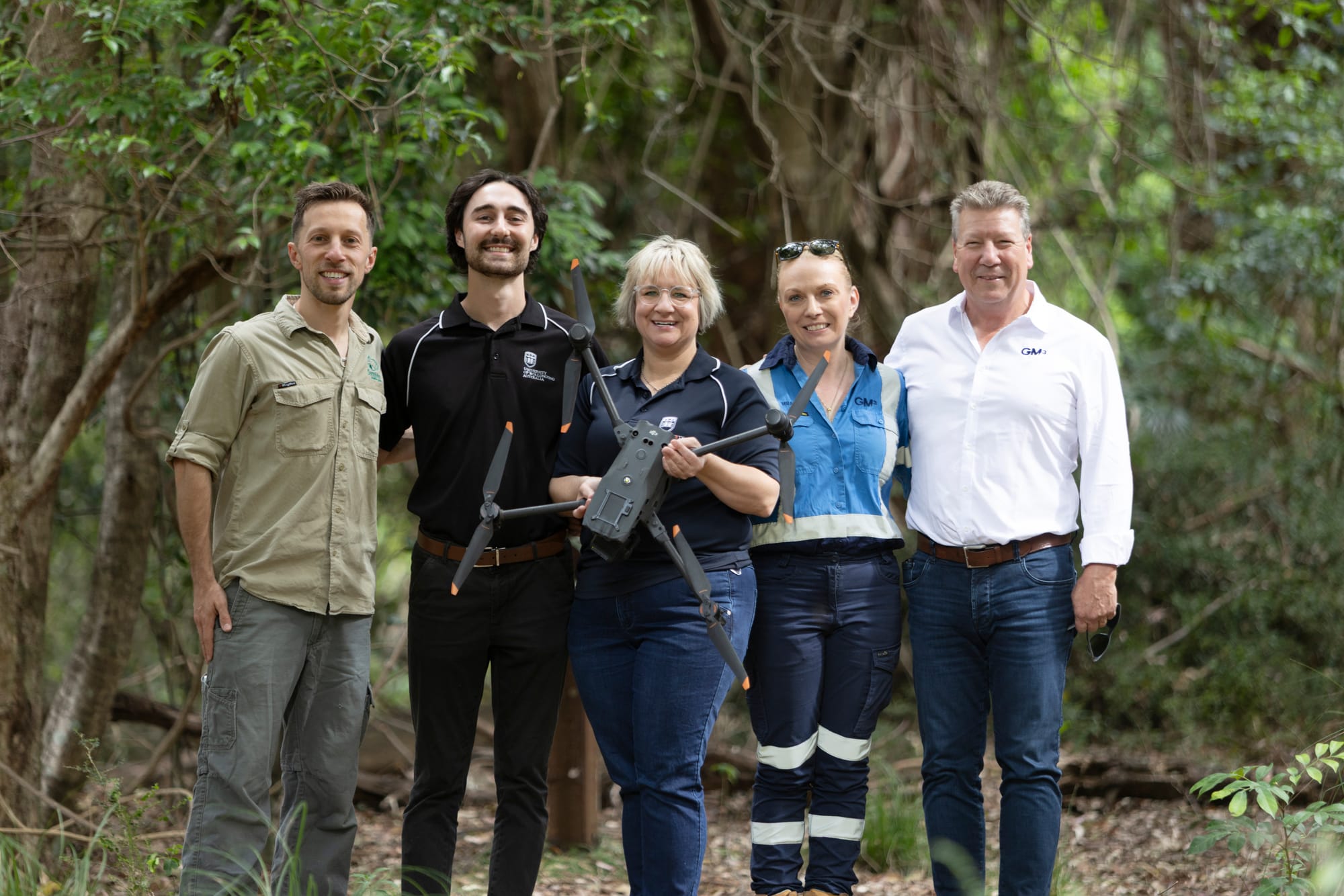
Representatives of Symbio, UOW and GM3 celebrated the success of their drone survey. Photo: Symbio Wildlife Park
The study by business and academia followed a bioacoustic koala survey led by the government’s NSW Koala Strategy in 2024.
That investigation – published on DCCEEW's biodiversity data site BioNET – used a type of microphone called a song meter. It didn’t find any koalas along the Illawarra Escarpment but did identify them in the same area surveyed by Symbio/UOW, west of Mt Kembla on the Woronora Plateau as well as further south towards Macquarie Pass.
The DCCEEW spokesperson said the department had worked with Symbio to “fill knowledge gaps and contribute to fine-scale mapping of koala density and occurrence across the whole Woronora Plateau”.
“The data collected by Symbio will be combined with results from similar drone surveys led by DCCEEW in South West Sydney, Sutherland and the Southern Highlands to inform koala management across the Woronora Plateau.”
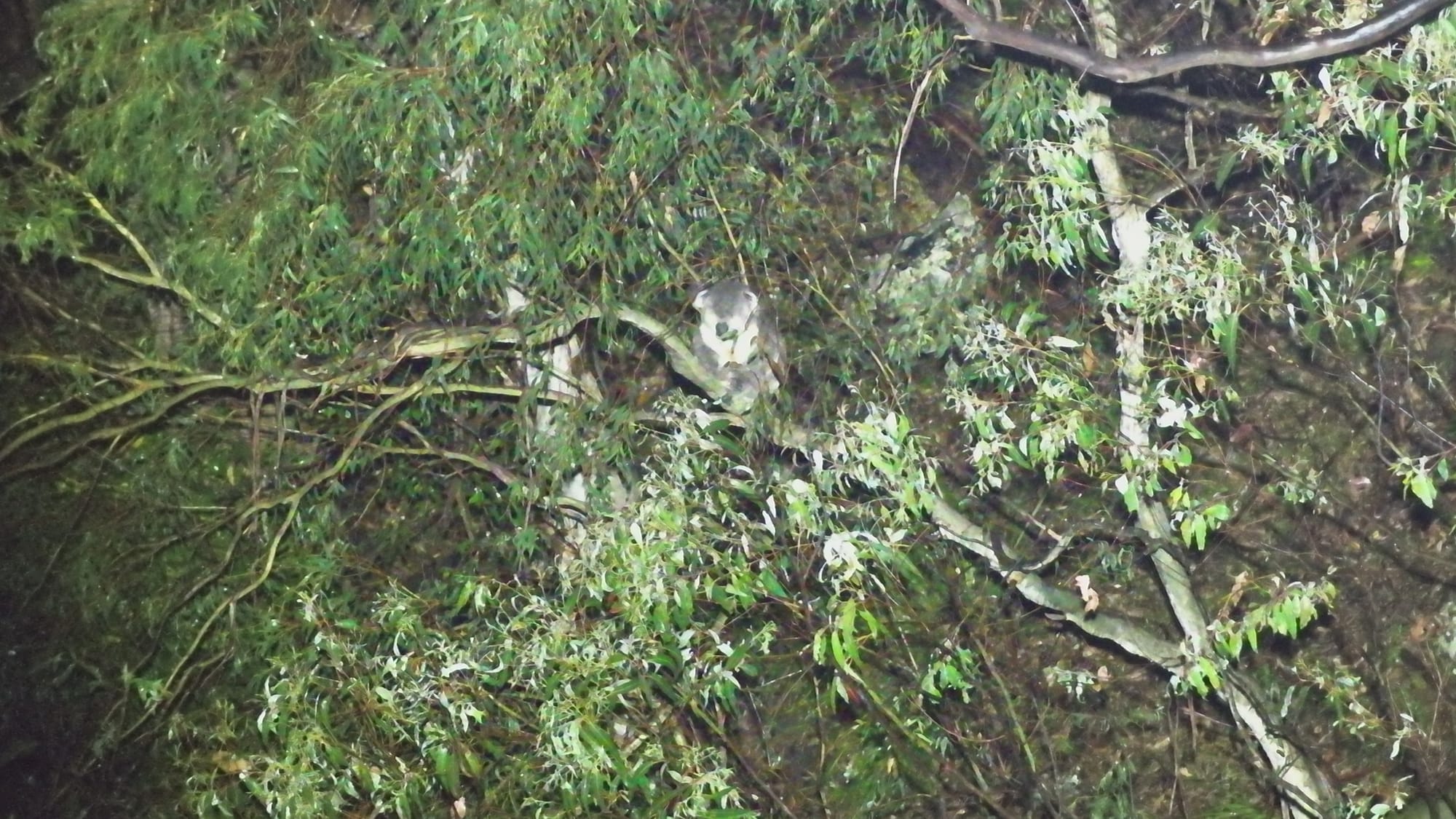
A drone's eye view of a wild koala on the Woronora Plateau. Photo: Symbio Wildlife Park
Where you’re sure to see a koala
Hoping to see a koala in the Illawarra this summer? Head over to Symbio in Helensburgh, where sightings are guaranteed and zookeepers offer visitors a chance to enjoy close encounters with Australia's favourite marsupial.
Koalas are rarely seen in the Illawarra Escarpment – it is not home to their favourite food. The sandstone cliffs and steep slopes stretching down to Wollongong are typically dominated by Blackbutt and rainforest species, which are not preferred koala feed trees.
In fact, to feed the growing family of koalas at Symbio – which each need about 400-700 grams of leaves a day – Wollongong City Council planted its first Koala Food Forest of specially selected eucalyptus tree species at Eleebana Reserve in Koonawarra in 2023.
This year the Helensburgh zoo celebrated its 50th birthday and the award-winning tourist attraction is still growing. A few months ago, Symbio gained deductible gift recipient (DGR) status for its new not-for-profit arm, the Symbio Conservation Foundation, and the team now have their sights set on building a Koala and Wildlife Hospital.
Projects across the plateau
Meanwhile, the DCCEEW spokesperson said the NSW Government is “leading Koala Conservation actions” across the state. This includes projects in the Woronora Plateau area, such as:
- Regional partnerships in South Western Sydney and the Southern Highlands, delivering local conservation action for koalas
- Vehicle strike mitigation projects
- Koala habitat mapping with Wingecarribee, Wollondilly and Sutherland Councils
- Establishment of the Warranmadhaa National Park along the Georges River to secure the Koala habitat corridor.
- Koala habitat restoration projects
- Koala monitoring projects including the statewide NSW koala baseline survey and the sentinel koala program.
“The sentinel program is collecting data across six key koala populations/areas. The Woronora Plateau is one of those areas,” the DCCEEW spokesperson said.
That research project is in the Southern Highlands.
Much of the Woronora Plateau is protected water catchment area, some of it is private land. Longwall mining occurs under several parts of the plateau, including the area west of Mt Kembla where the koala population was identified by Symbio/UOW and DCCEEW. Little is known about the effects of longwall mining on koalas but the Illawarra Flame understands these effects are likely to only be observed over very long timeframes.
“The Woronora Plateau Koala population has its highest densities around the western edge from Campbelltown to Robertson,” the DCCEEW spokesperson said.
“Koalas on the Woronora Plateau are generally well protected because public access to this area is largely restricted. As a result, koalas are currently thriving.”
However, koalas are not out of the woods.
On announcing the NSW Government survey results on December 11, Minister for Climate Change and the Environment, Penny Sharpe said the survey is an important tool to guide conservation decisions.
“Koalas are still endangered, and the threats they face are real,” she said.
“This work helps ensure we are targeting the right areas so that future generations can continue to see koalas in the wild.”


