
Groundbreaking UOW project first to map Australia's decarbonisation revolution
As the decarbonisation revolution gathers speed, University of Wollongong researchers are stepping up to produce Australia’s first big picture of change, thanks to prestigious funding announced on May 30. “We're just really excited that here in...
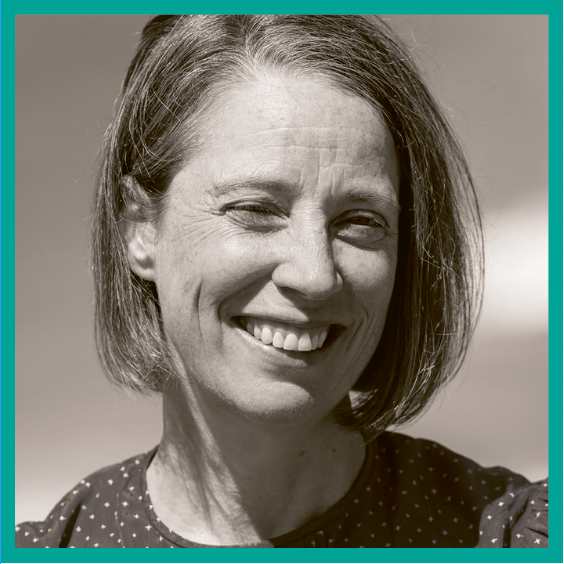

As the decarbonisation revolution gathers speed, University of Wollongong researchers are stepping up to produce Australia’s first big picture of change, thanks to prestigious funding announced on May 30.
“We're just really excited that here in the Illawarra we'll have some substantial resources to be able to do the proper independent research that's needed on this,” said Senior Professor Chris Gibson of UOW’s School of Geography and Sustainable Communities.
Chris has received an Australian Research Council (ARC) Laureate Fellowship, which will fund a five-year, $3.6-million project to study decarbonisation in industrial regions across the nation, including the Illawarra.
“One of the things I would say about decarbonisation in Australia to date is that it's amazing that something so important as this, that we don't actually have a clear national picture of how many decarbonisation projects are proceeding, what their value is; how many jobs they're promising, as opposed to how many they might generate; how they hit the ground in different regions and with what effect. We just don't know,” Chris said.
“It's uncoordinated and no one has ever has ever thought to bring that information together. So that's where our project fills the gap.”
Chris is a professor in geography. His expertise is in regional development, studying how Australian regions shift with global economic currents, tracking social, demographic and cultural trends.
As well as building Australia’s first national database of decarbonisation projects, Chris wants to look at the best process for taking into account regional communities’ wishes, so that people feel included.
Up until now, he said, it’s been a “cart before the horse” situation, with decisions made around infrastructure. “And then the job of the social scientists like me is to sort of talk to the communities after the fact. So we do actually need to look critically at our community consultation processes.”
While offshore wind is the Illawarra’s hottest topic, renewable energy projects elsewhere – such as Borumba Pumped Hydro in Queensland – have also been a source of community controversy.
Chris said the ARC research will give a national picture of decarbonisation in its many forms. “It's everything from the potential for things like green hydrogen, for solar, for offshore wind … but it's also things like our transportation networks, which are very carbon intense.
“The Illawarra is a real hub for trucking transportation, for example. So it's another industry that will need to decarbonise in due course and we want to make sure that happens in a way that's equitable and inclusive for the industry, for the people who are employed in that industry. There's lots of moving parts to decarbonisation.”
It's a race but we need to watch our step
Time is critical, Chris said.
“It's a paradox we find ourselves in that really we need to be responding quickly to the climate crisis, and unfortunately we had a decade where that stalled in Australia, so we are playing catch up. The problem is that this pace of change is an important variable here.
“There's a real risk that you can alienate people if these things proceed too quickly or if there's an assumption that they must go ahead no matter what that community's response to those projects might be. So it is a really difficult one.
“We need to try and find ways to enact change, to do it as speedily as we can, but to not leave communities behind.”
He’d like to see more discussions about “benefit sharing” and establish an inclusive process for change that restores trust.
“People's radars are highly attuned to spin and to tokenism. So when we talk about a better, more inclusive approach to these sorts of decisions, it's got to be genuine.”
It’s vital to take differing views seriously. “Because if planners and proponents of big projects underestimate those communities, they can find themselves in situations where there's a lot of conflict.”
Research in real time
The project will record and react to changes in real time, delivering current news that Chris hopes to also incorporate into his teaching about sustainable transitions.
“An ambitious part of the project is to map change in industrial regions across the whole country and be able to capture that and display that in a format that governments and community members and others can look at and make sense of as it's happening,” Chris said.
"So we won't just wait for five years and then deliver a kind of perfect result.”
The funding will support a team of eight – four full-time researchers with PhDs and four PhD students. One person’s full-time job will be to simply track different projects on the ground around the country. “There is a lot of volatility,” Chris said “Just because a project is proposed doesn't mean to say necessarily that it will go ahead.”
Could inclusion be the cure?
Mis and disinformation – accidental and deliberate untruths – are sweeping the globe and not just in the decarbonisation sector.
“Levels of mistrust in government and decision makers are at an all-time high,” Chris said. “That’s very well documented and tracked in different surveys. In fact, not just in Australia, but in places like the US and the UK as well.”
Poor decisions about some developments have made communities mistrustful, Chris said. “So there is a high degree of scepticism there. You add social media into the mix and you have all the ingredients there for a lot of misinformation that can float around.”
Misinformation may not be the cause but the symptom of our malaise, and a potential cure could be a more inclusive approach to decision-making.
“It's about looking at the process that underlies decision-making around decarbonisation projects and thinking about how can we improve that so that we can actually have a better foundation of trust between communities, between industry and with government.”
Chris described the ARC funding – achieved after years of work and several application rounds – as “a lovely surprise” and especially valuable as it is independent. “We don't have to answer to any particular stakeholder or industry," he said.
“The other really wonderful thing about it being funded at UOW is that we have people down the corridor from me … who also have research interests that are very similar to this. So we’ll end up with a pretty sizeable critical mass.
“It'll be certainly the largest critical mass of researchers interested in these themes in Australia. And we'll all be based in Wollongong, working away at this at the same time.”


