

LGBTQIA+ citizens make mark with day of document scanning
Community members joined allies, activists and historians to ensure photos, posters, badges, flags and documents were recorded
Record-keepers brushed the dust off long-kept photo albums and file folders when archived histories of Wollongong’s LGBTQIA+ community were welcomed into Wollongong libraries for a scanning day.
LGBTQIA+ community members joined allies, activists and historians on February 21, bringing in photos, posters, badges, flags and documents depicting the historic experiences of LGBTQIA+ people in the Illawarra. Library staff assisted by assessing kept materials and scanning records on the day.
Local studies librarian Louise Beale said collections often represented people who had more mainstream stories or those who were recognised in newspapers.
“They're the easy stories to collect,” she said. “It's harder to collect the stories of people who may have been marginalised or less represented in mainstream media.
“What we say now is, ‘a story for every place and a place for every story’. There's an active push to make sure that we're collecting those stories that have been left out.”
“It's about creating a fuller picture of the past. At the moment, if somebody comes and searches our records and were to put in a search term like LGBTQIA+, they'd probably find very little.
“It's really important for people to be able to find themselves in history – to feel that you haven't actually been written out of the story.”
Trish Regal brought a collection of documents and photos from her time working as a cub reporter with the AIDS Council of NSW (formerly known as the Community Support Network).
She has long kept folders of ACON newsletters, meeting minutes, training papers, newspaper clippings and personal notes from a time when “nobody would go near anybody that was sick. They were terrified, and so they set ACON up because they had to look after themselves and each other,” she says.
“Nobody understands what it was like back then. AIDS was the first real pandemic in modern times. That happened… and people forget about it.
“Gay people got AIDS and people were like, ‘see, they're all sinners…they're this, that and the other and they're going to make us all sick, and we've got to lock up the kids because they won't be safe… It was accepted as being okay to even think that way.
“It was like a war zone. You couldn't talk about it and the guys would be dying within 20 months of diagnosis. We'd be nursing them at home and looking after them and the diseases they’d be suffering from were just horrible.”
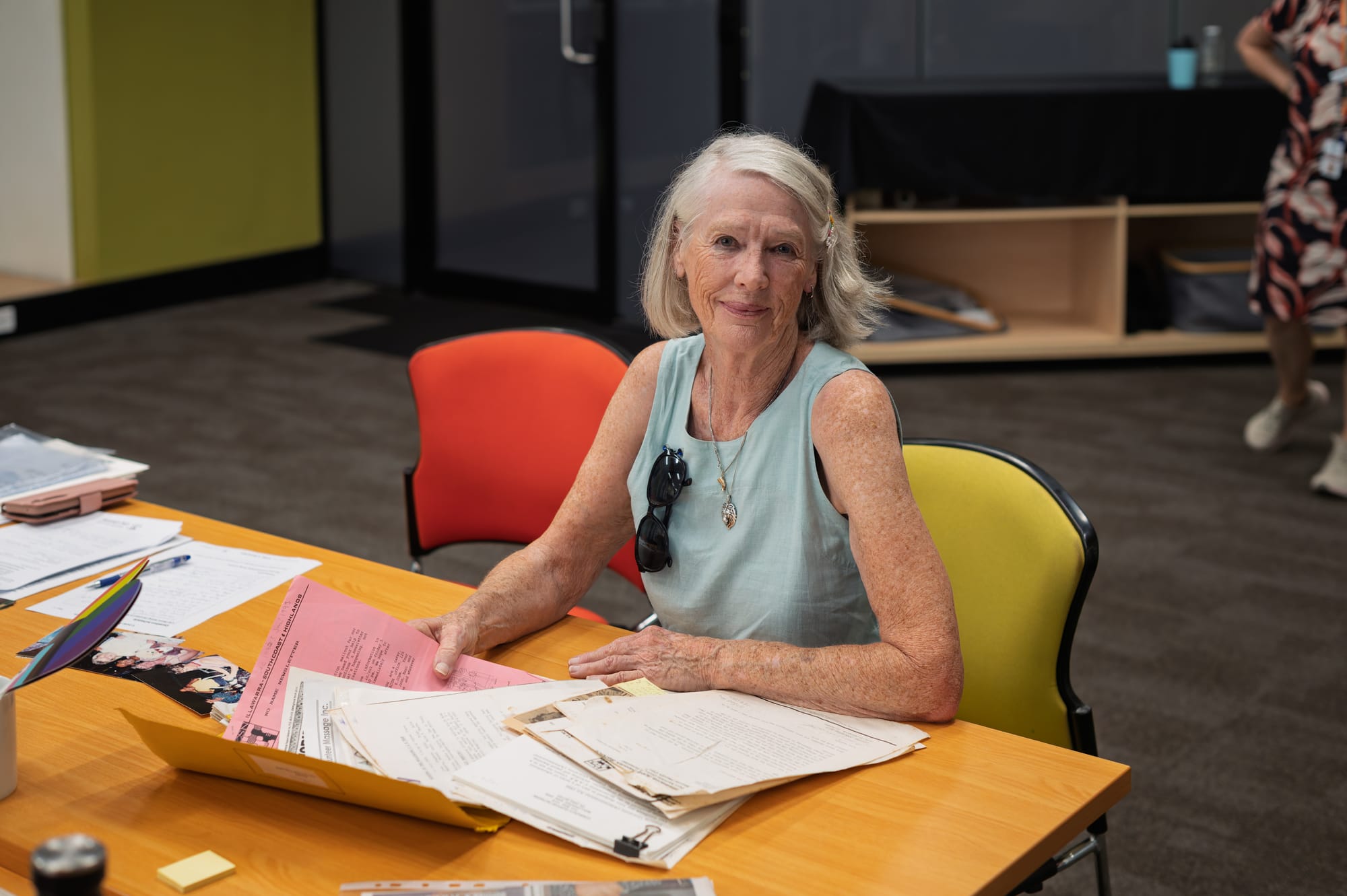
Trish has been an avid record keeper since the 1980s and served as a staff member at the library through the height of the AIDS epidemic and beyond. She has been one of many keepers of the stories of community members lost to extreme levels of ostracisation and violence.
“Anybody who looked slightly like they might be gay, they would be bashed. Some of them were killed,” she says.
“I had a friend I worked with at the hospital whose son was bashed and had brain damage just for walking down the street. The guys would try not to walk around campy because they would be in serious danger.”
Trish kept her records for ACON simply so the group could see the tangible change they were making as hate crimes and violence lowered at the turn of the millennia. Working in a public library in the early 2000s, Trish was front row as societal attitudes improved.
“One day, this young guy came up to me and he said quite openly, ‘How come you're blocking this site I'm on?’. I said no, council doesn’t block sites unless it’s pornography or something illegal. I walked over and it was a gay site, and it was not sexual,” she says.
Trish was appalled. She asked an IT worker to unblock the site, and gladly found that the site wasn’t being blocked by council; it was under maintenance and had been down that day.
“I just thought, wow, he hasn't had the slightest bit of worry coming over and asking why the site was blocked, whereas 10 years earlier, he would have just turned it off and walked out,” she says.
“So things do change… he wouldn't have a clue but I did a little happy dance inside. I thought, ‘Yes! Yes! This is great’, because he just didn't have any hesitation about challenging that.”
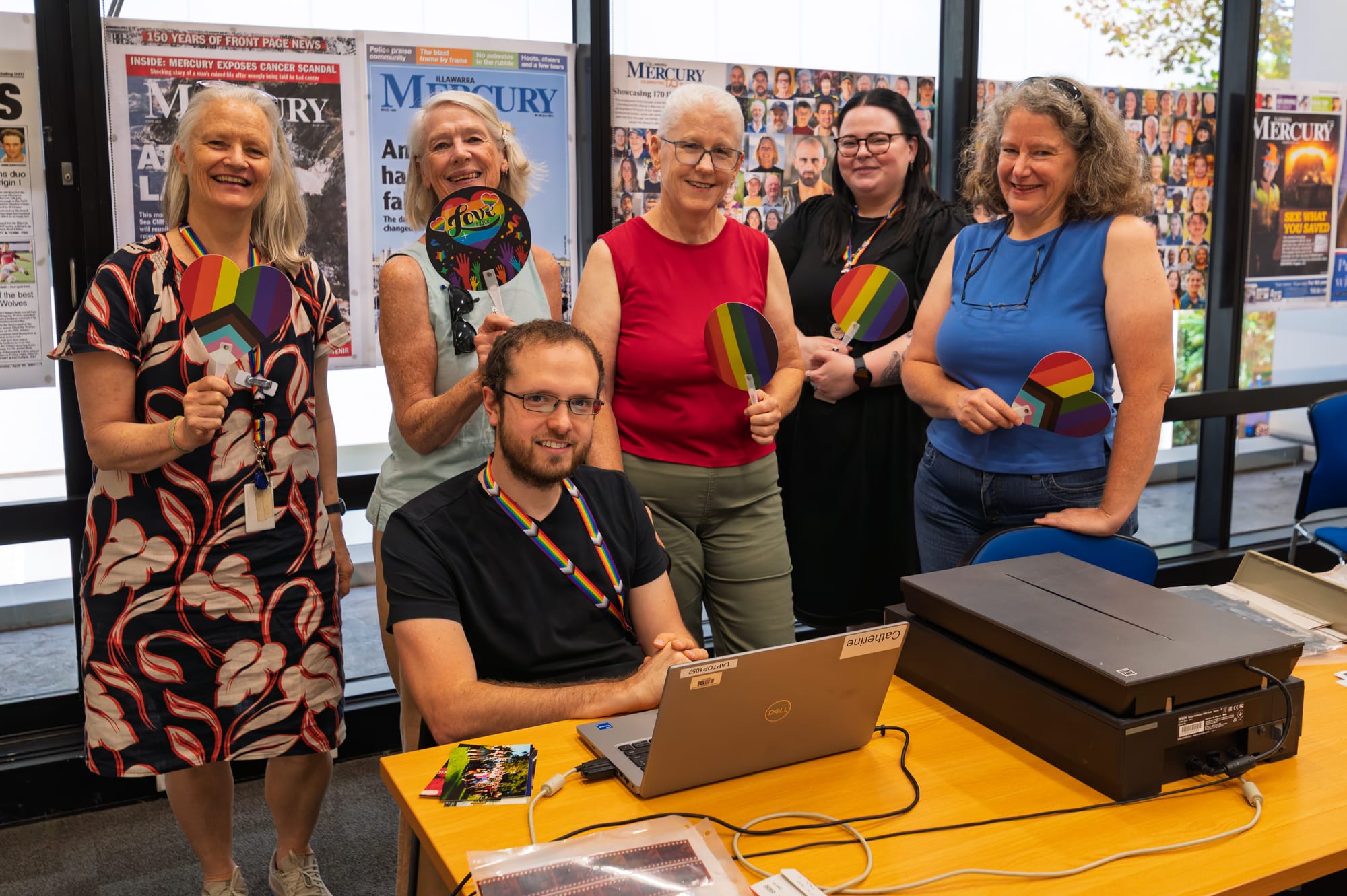
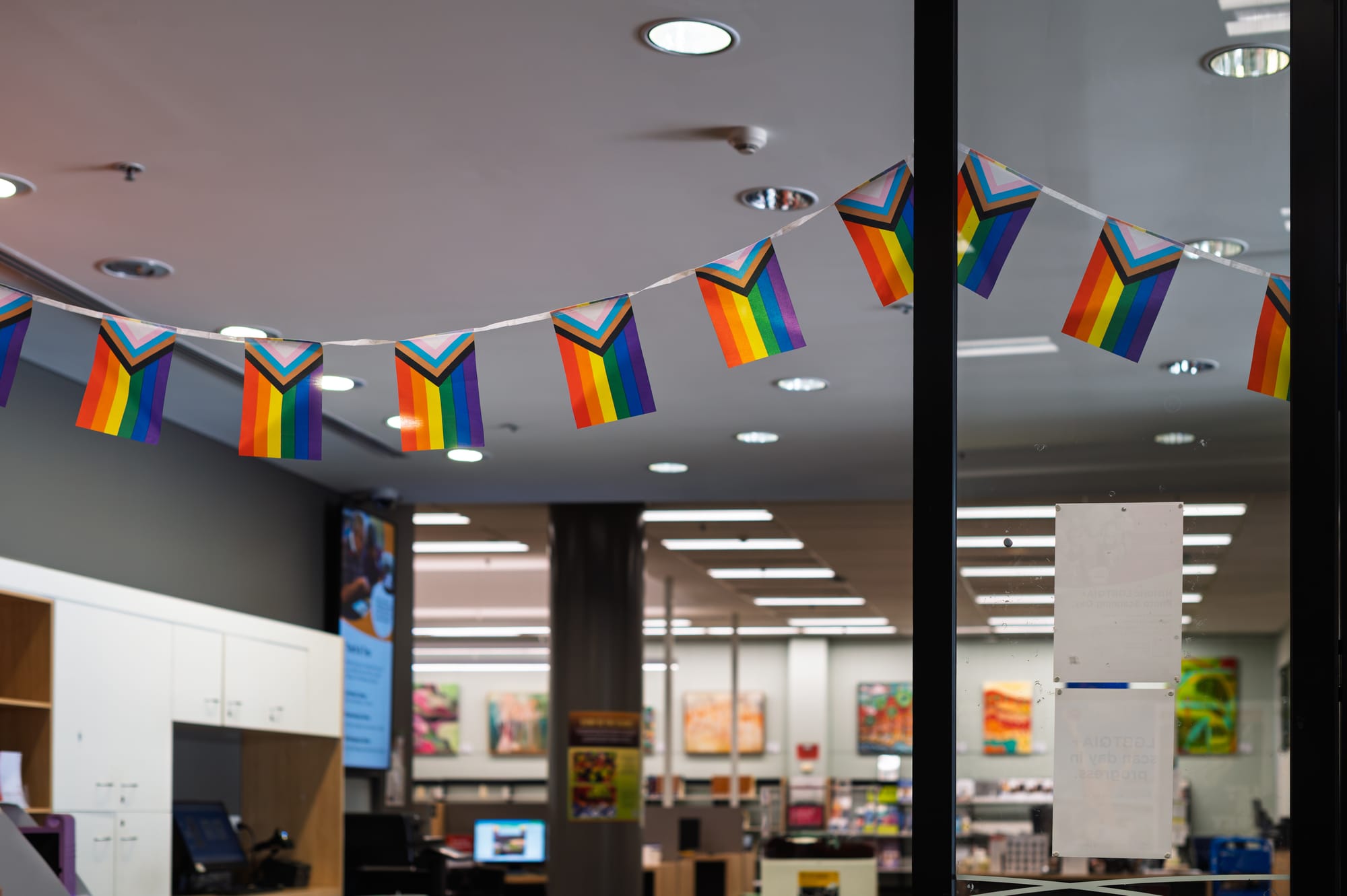
Community members and local studies specialists collate material. Photos: Tyneesha Williams
Louise says the community response has been great, and people have been enthusiastic to contribute to the project. She says any number of scannable artifacts are welcome. Contributors can donate their original copies or simply have them scanned and kept for their personal archives.
“Photos are fabulous… the things that Trish has brought in are amazing. Posters of nightclubs, posters of events that happened, placards from protests… But also photos of daily life… like what does it mean to walk hand in hand if you're a same‑sex couple in a public place in the 1980s as compared to the 2020s?,” Louise says.
The local studies team at Wollongong City Library are working continuously to collect the stories of our region, and there is an open invitation for contributions of previously untold stories.
“We're working on collecting Aboriginal stories from the local region,” Louise says. “LGBTQIA+ is another area that we want to collect in… social housing, homelessness… there's all sorts of stories that for all sorts of reasons aren't usually captured on the written record.
“We're training young people from the LGBTQIA+ community to do oral histories and then they can find elders from the community and interview them. So we will get their stories and it's a wonderful intergenerational project as well.”
Those who missed out on the scanning day can email localhistory@wollongong.nsw.gov.au at any time to inquire about making an entry to the public archive.


