

North Beach seawall project rolls in at over $10m
Construction has begun on the second stage, funded by Wollongong Council and the NSW Government to protect the Blue Mile

More than $10 million is set to be spent on stage two of the North Wollongong seawall project to protect the Blue Mile and its historic buildings from rising seas and erosion.
“This is a big project for Wollongong Council, one that we are determined to deliver, but obviously comes with its challenges,” Lord Mayor of Wollongong Councillor Tania Brown said at an event to mark the start of construction on Friday.
“Thanks to the New South Wales Government, we've been given a grant of $3.9 million to get on with stage two of the seawall.”
Works will take about a year to complete, the Lord Mayor said.
“We assure you that North Wollongong Beach remains open, as does the Blue Mile… This is a very popular area. It's at the heart of our tourism precinct. We know people love our Blue Mile."
North Wollongong is the only one of council’s 17 patrolled beaches to have flags up year round and 2026 will be business as usual, said WCC's Operations Manager of Beach Services, Murray Copas.
“Historically, this has been our number one beach in the area.
"We do see a drop off in winter … but we have seen a bit of more of an uptick as people come in with more of that [cold] water therapy and that sort of stuff.
“Plans will remain the same. The beach will be patrolled throughout the winter months, seven days a week, Monday to Sunday by council lifeguards.”
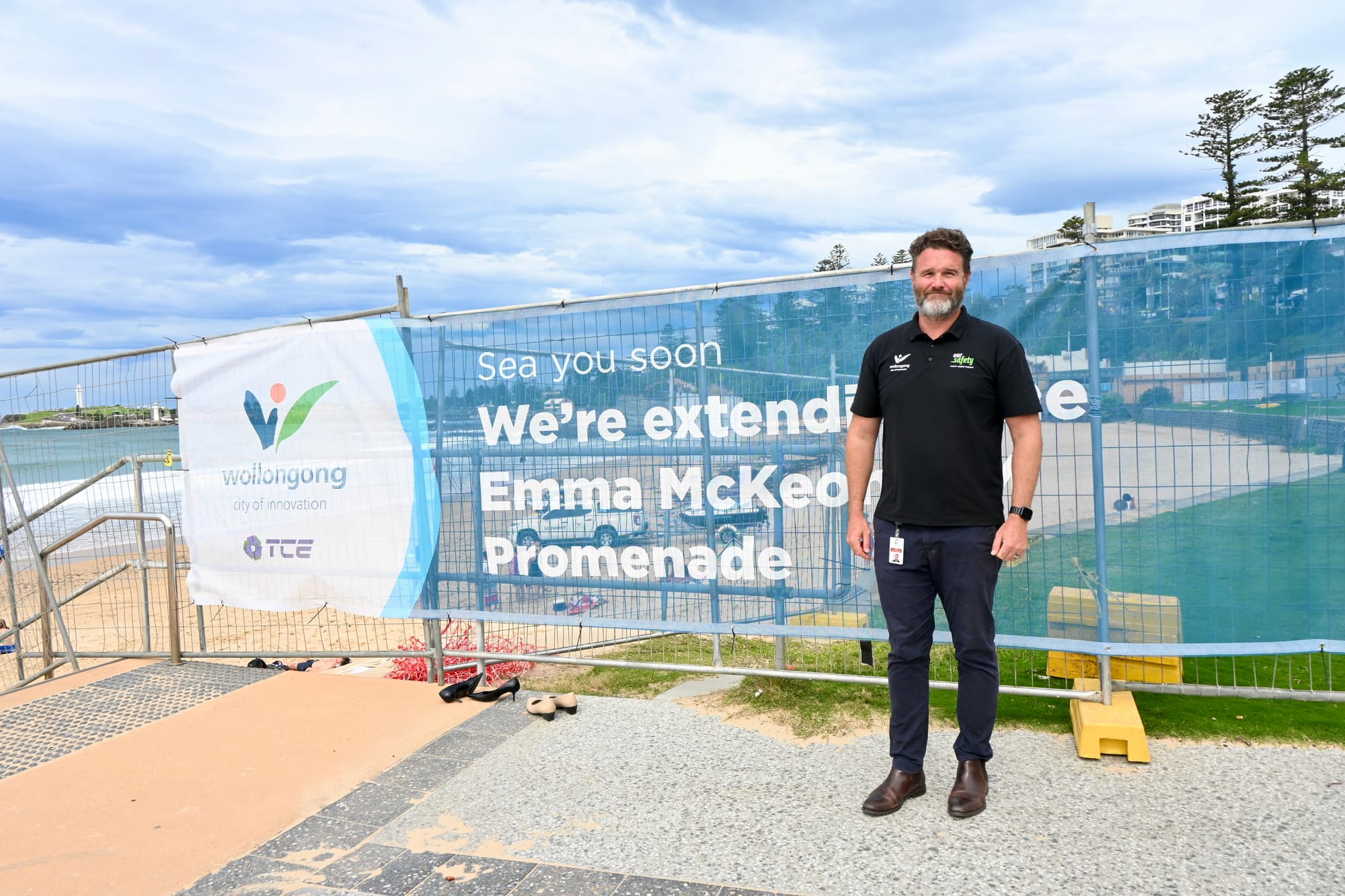
Seawall to protect coastal heritage
On the Blue Mile, the Bathers Pavilion will be open throughout the seawall works, while Diggies cafe and kiosk remain closed.
Cr Brown said the heritage buildings must be preserved for generations to come: “We are working with Diggies and the North Beach Kiosk to do some essential repairs … those buildings are over, nearly, 100 years old.”
The reinforced concrete seawall will connect to the Emma McKeon AM Promenade and the project will also involve a promenade, stairs and a ramp to the beach, lighting and electrical upgrades, stormwater drainage improvements, and landscaping and street furniture.
“This is a very high pedestrian traffic area, the beating heart of the town. We want to make sure that the cafes are protected,” the Lord Mayor said.
The damage the ocean can do was evident just a few weeks ago at North Wollongong, she added.
In the early hours of March 28, a safety fence – installed to protect the seawall construction zone – was washed away and volunteer surf lifesavers were still retrieving sections over the Easter long weekend.
“When those large seas hit, we had water right up to the Stage 1 seawall, with large powerful waves also impacting the existing crib wall running along the grassed area between the Surf Club and North Beach Bathers Pavilion, which was never designed to resist these forces,” Cr Brown said.
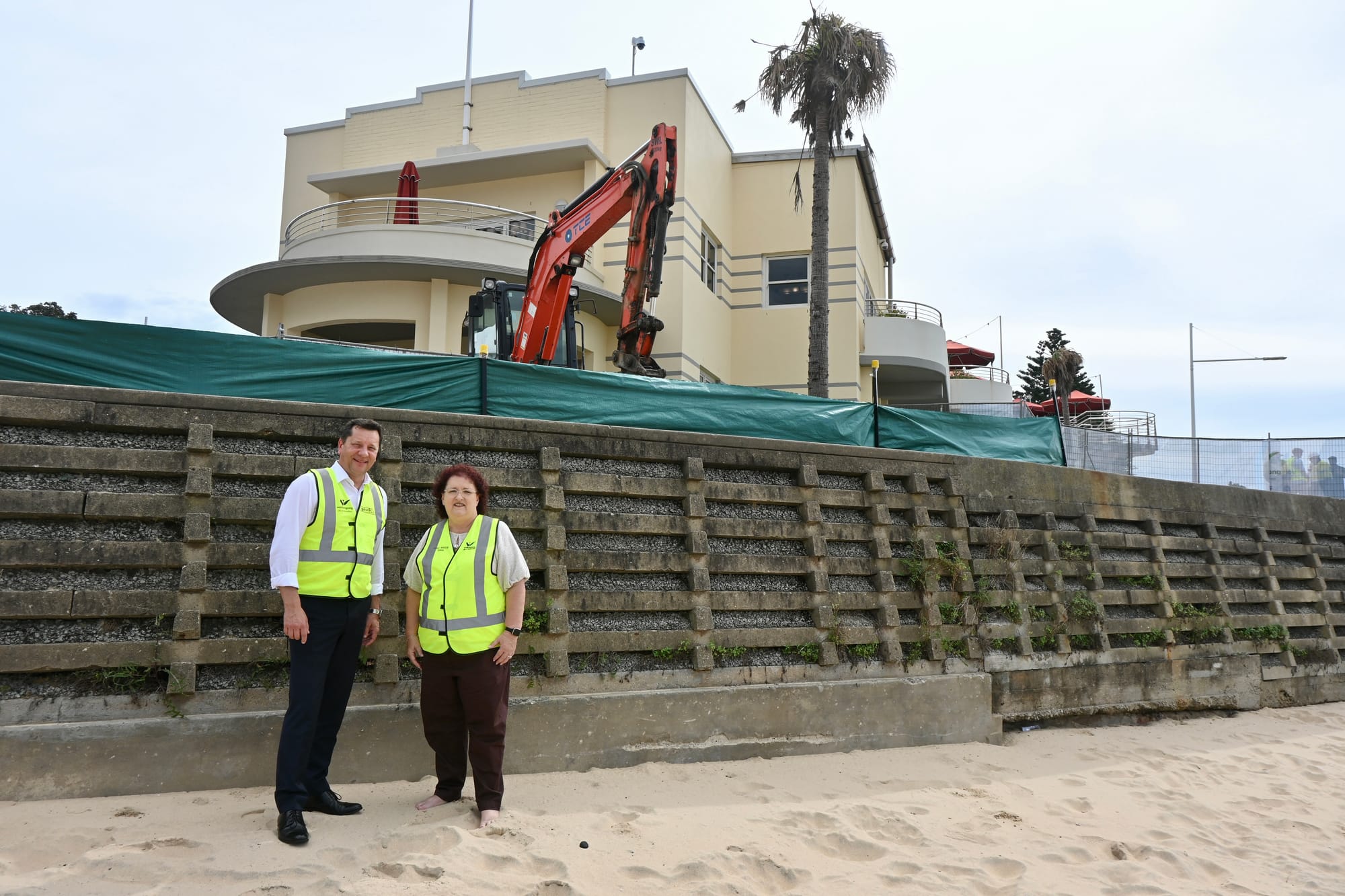
Costs of climate change
A report on the outcomes of tender negotiations for the North Wollongong Seawall Stage 2 project will be given at April 20's Wollongong City Council meeting. Yesterday, a council spokesperson confirmed that the construction tendered amount, including building repairs, is $10,562,137.76 (including GST).
The costs of climate change won’t end there, though, with sea level rise adding to coastal erosion, flooding and inundation problems threatening the city's infrastructure.
At Friday's North Beach site visit, Member for Wollongong Paul Scully said the state government will support council in planning and seeking funding.
“Coastal inundation, as a result of the impact of climate change, has been identified in the state disaster management plan as one of the bigger risks in terms of the economic impact, given the cost of coastal assets and the importance of those,” he said.
“We've got plenty of coastline in the Wollongong local government area, 60-odd kilometres. So I'm sure, if it's not here, that council will have some other areas to look at. And we know that other parts of the local government area and other parts of the Illawarra are being impacted by coastal erosion.”
The lifespan of the new $10m seawall remains uncertain.
“We want it to last for a very long time,” Tania Brown said.
“This work will be important to make sure that the assets that are so beloved by our community and by visitors remain for a long time into the future,” Paul Scully said.
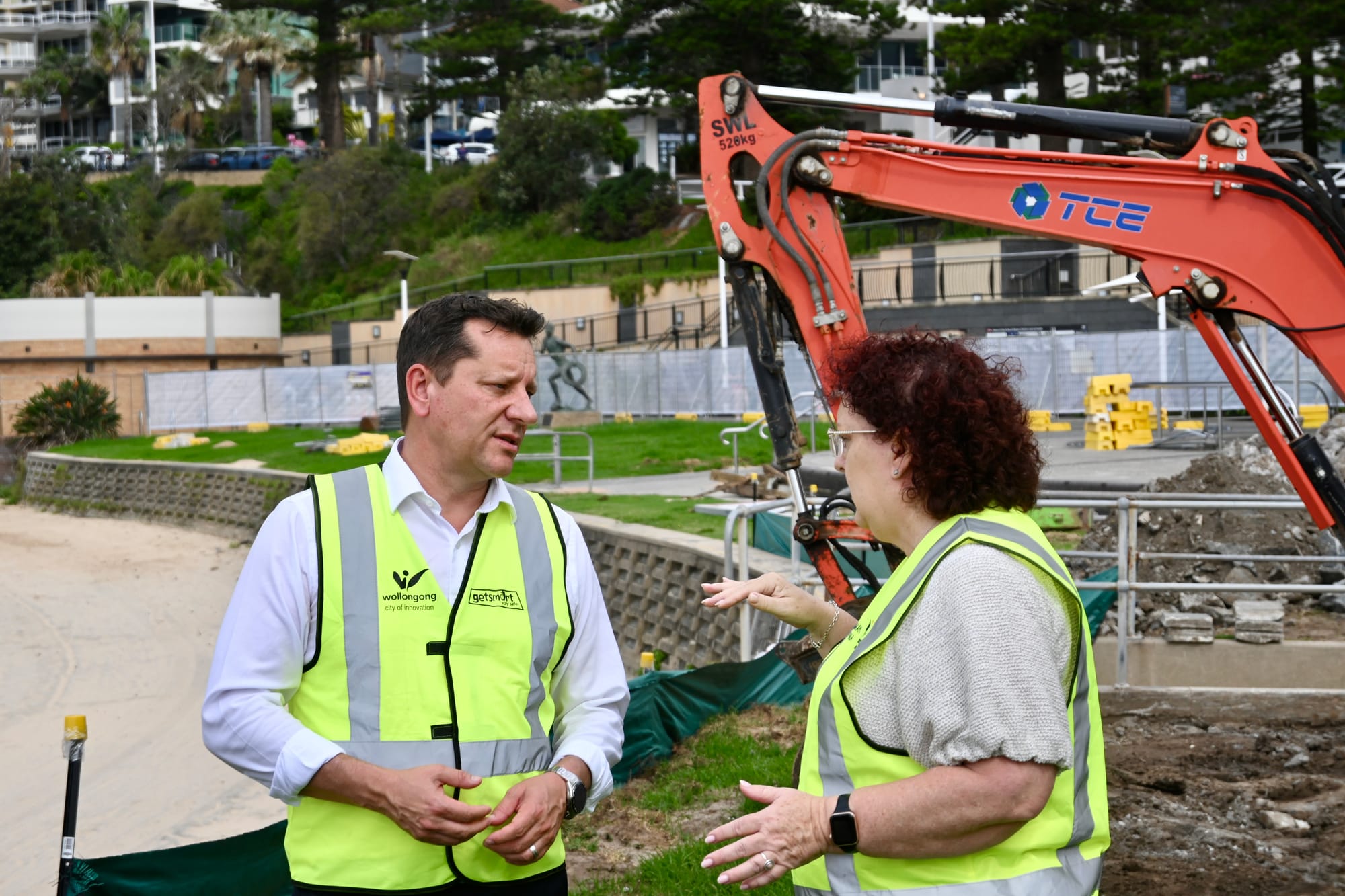
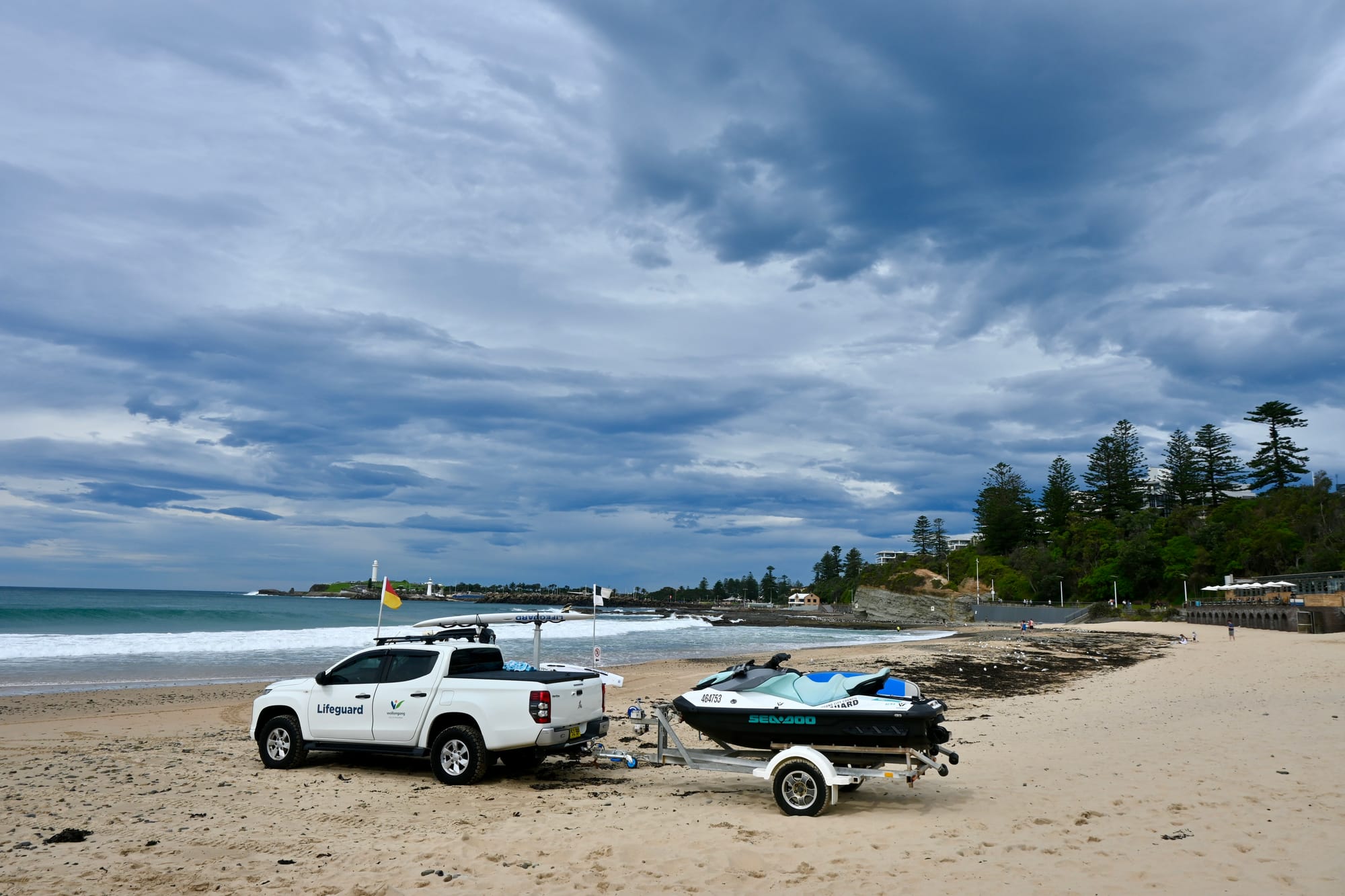
North Beach will remain open for everyone to enjoy while the seawall works are going on
Plan for a century of risks
The experts who put together council’s recently endorsed Stage 2 Coastal Hazard Risk Assessment Report have factored in a range of scenarios to prepare for over the next 100 years.
North Wollongong – along Austinmer, Little Austinmer and Wollongong Central – feature as areas facing "headline risks" of failure of protective seawalls and structures from 2025–2125. However, the report notes that failure is “unlikely to be an immediate concern for more recently built structures”.
At Council’s March 23 meeting, councillors unanimously resolved to endorse the risk assessment report, which will drive long-term strategy and the new Wollongong Coastal Management Program.
Labor’s Cr David Brown said: “Coastal management policy response is a bit like painting the Harbour Bridge, time consuming, expensive and continuous. It's not often we get to sign off on a policy with a 100-year horizon. The key driver here is the chance of a 1.1 metre sea level rise over that time period, with the outliers at 0.65 of a metre, and at the high end, 1.89 of a metre.
"This report notes that some rock pools and parks may become untenable. Water and sewer infrastructure might need moving. Buildings might be undercut and ruined by erosion – as examples.”
Greens Cr Jess Whittaker said: “It really highlights that there's going to be difficult decisions made in the future.”
She said ocean baths may become unusable and infrastructure may have to move as sea level rises. “It's pretty grim reading, but it's good that we're taking an adaptive and precautionary mindset to these challenges.
"And I think it also hopefully puts wind in our sails for getting our emissions down and being leaders in that space and inspiring other communities to also get their emissions down, because that's really the root of the problem.”
Councillors encouraged residents to read the report to find out how their local area might be affected.


