

Plan to fix Audley Weir so fish can migrate again
By Dr Bill Peirson and Dr John Harris, scientists whose expertise covers river engineering, ecology and fisheries

A breakthrough proposal by our company, Tube Fishways Pty Ltd, has been presented to restore the Hacking River’s ecology while improving traffic access at Audley Weir in the Royal National Park.
For 135 years, the weir has disrupted the river’s aquatic ecosystem, with the fauna having been degraded by blockage of essential fish migrations.
Native fish species in the river need to migrate between tidal and freshwater habitats to complete their life cycles.
While some of these fish may occasionally pass over the weir in floods, those events are too infrequent to enable the populations to spawn regularly and then recruit in adequate numbers to maintain populations. Although detailed survey data are not available, it is believed that some species such as freshwater herring and common jollytail have disappeared and many other populations, such as Australian bass, mullets and estuary perch, are severely depleted.
The only fish that can climb vertical barriers such as the weir are baby eels and gudgeons and climbing galaxias.
Regional residents are acutely aware of the Audley Weir’s other adverse effect: traffic interruptions in wet weather. The weir’s low roadway level and limited flow capacity result in frequent traffic diversions and delays.
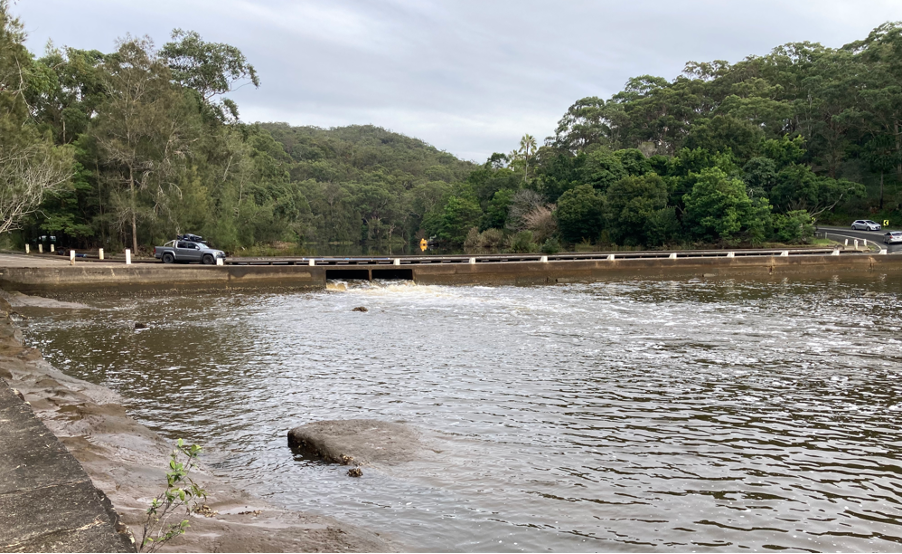
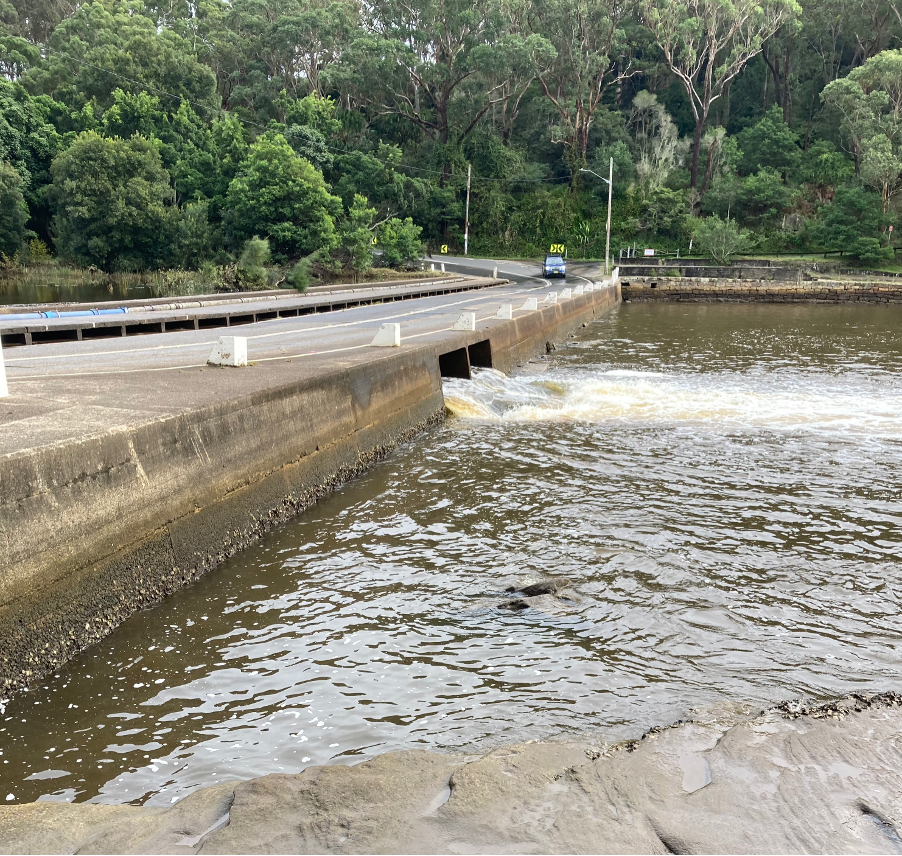
Audley Weir from downstream on the eastern bank. Migrating fish are attracted towards the strong culvert outflow at the centre. The planned Fishway's two tubes would pass through the culvert and under the roadway, delivering fish into the Hacking River system upstream. Photos: Dr Bill Peirson/Dr John Harris
Three previous attempts to resolve the weir’s fish-passage problem were unsuccessful because of design challenges, high cost and the need to maintain traffic flow. However, our company, Tube Fishways Pty Ltd, has now designed and costed a novel and affordable solution to the problem that can also reduce flood interruptions to traffic.
The innovative Tube Fishway concept was developed, tested and patented over more than a decade, after integrating the key technical specialties of fish biology and hydraulic engineering.
Research in fish hatcheries, the laboratory and river sites has been published, showing that the design can successfully attract and rapidly and safely transfer large numbers of multiple species of fish. The basic design has been documented for diverse sites including low-level culverts, coastal and inland weirs and dams exceeding 100 metres in height.
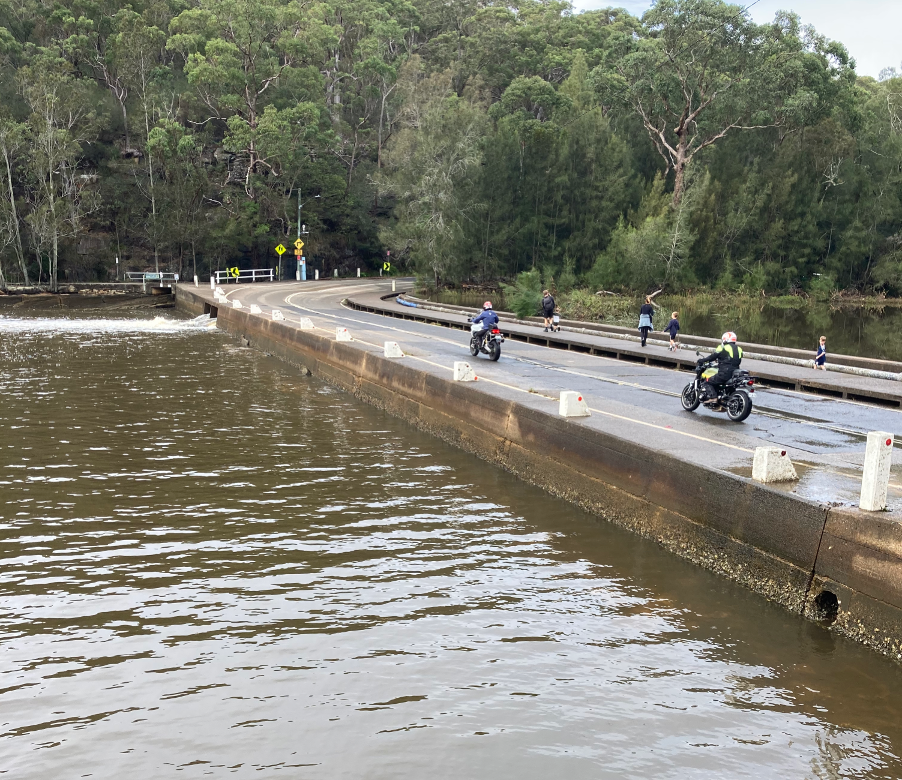
Audley Weir from downstream on the western bank. Photo: Dr Bill Peirson/Dr John Harris
A report proposing our Tube Fishway plan to restore upstream fish passage at Audley Weir has been presented to NSW Fisheries, Transport for NSW, and NSW National Parks and Wildlife Service, which manages the Royal National Park.
The proposal has modest geotechnical, structural and financial support requirements and is expected to be substantially less costly than previous attempts. The fishway is estimated to have a capacity of up 1000 fish per hour. In addition, the report also recommends an improved flow management technology for the weir that is projected to significantly reduce traffic disruptions in Hacking River floods.
Restoring fish passage at Audley Weir would be a notable environmental achievement for Australia and the Royal National Park.
Significantly reducing the flooding frequency at the weir will benefit commuters and others in the regional community. We have recommended that a trial installation should be commissioned to demonstrate and optimise Tube Fishway operations at Audley Weir.
The costs of a trial installation of a Tube Fishway, installed by qualified professionals, is estimated to be $125,000, and could be used to prove its performance and support permanent design.
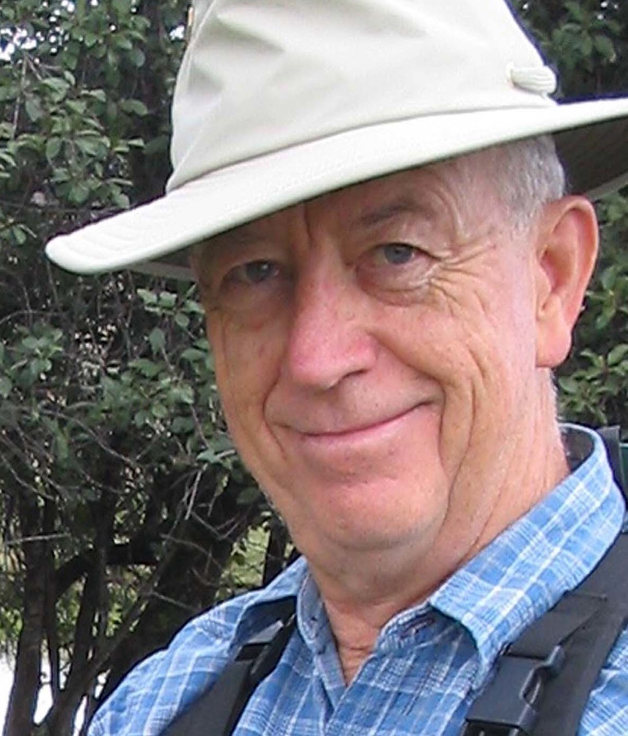
About the writers
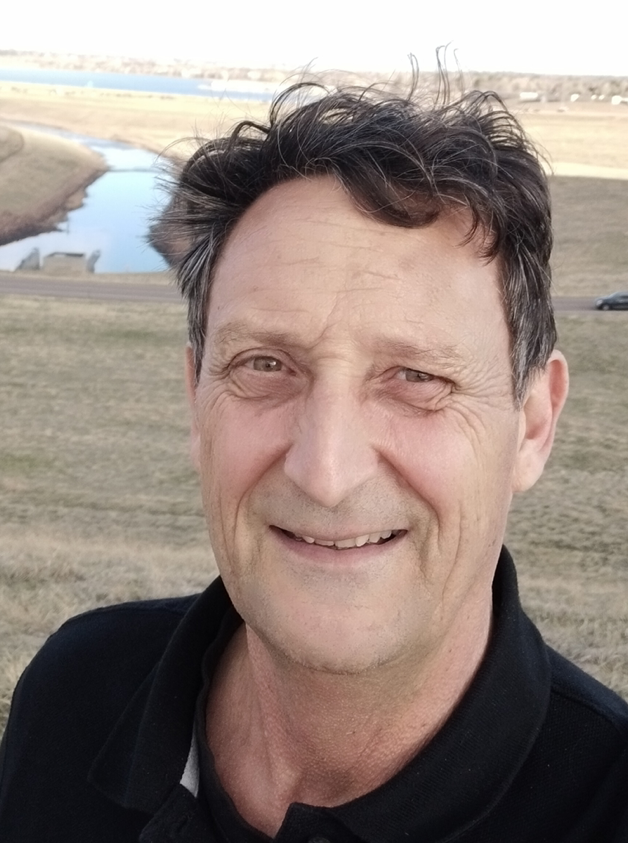
Dr Bill Peirson (at left) has more than 40 years' practical experience in large-scale river engineering. This includes 20 years as a senior academic, teaching hydraulics and undertaking research on rivers and dams. He developed the unique Tube Fishway pump to achieve Dr Harris's ambition to safely and rapidly lift fish over dams.
Dr John Harris (at right) is a river ecologist and fisheries scientist. After research and teaching at UNSW, he led freshwater research at Cronulla’s Fisheries Research Centre and the CRC for Freshwater Ecology while living at Gymea Bay. He has consulted widely in river ecology for government and industry.


