

Social media laws 'entirely necessary', chatbots should be next, says cyber psychologist
UOW's Dr Oliver Guidetti has welcomed Australia’s world-leading social media age restrictions, which begin today. He just thinks they don’t go far enough

A local cyber psychologist has welcomed Australia’s world-leading social media age restrictions, which begin today. He just thinks they don’t go far enough.
“AI needs to be added to this mix for quite a number of reasons,” says Dr Oliver Guidetti, who lectures in psychology at the University of Wollongong.
“AI – its dangers are not just to a child's educational pathway, though that is true and valid. These are systems which are also being engineered to leverage human attachment.”
While economists have been watching billions pour into what some fear is an Artificial Intelligence bubble, Oliver warns of the risks that AI chatbots pose to human relationships.
“Think of it this way.
“Gambling leans into human conditioning, the Pavlovian conditioning, to make its money. Social media leans into people's need for socialisation. Where AI leans into is the human attachment system, the need for reciprocal emotional interaction – and that is not going to be good for children at scale.”
Picture a 15-year-old boy emotionally enmeshed with an AI girlfriend through the formative years for a young man's attachment system, Oliver says.
“He’s bonding with a version of a woman that never says no, that never has an opinion, that never says ‘don't speak to me that way’, that is alert and emotionally available 24 hours a day, seven days a week.
“What's going to happen when that young man gets out of high school, goes to university and meets a woman who has an opinion?”
Kicking the habit
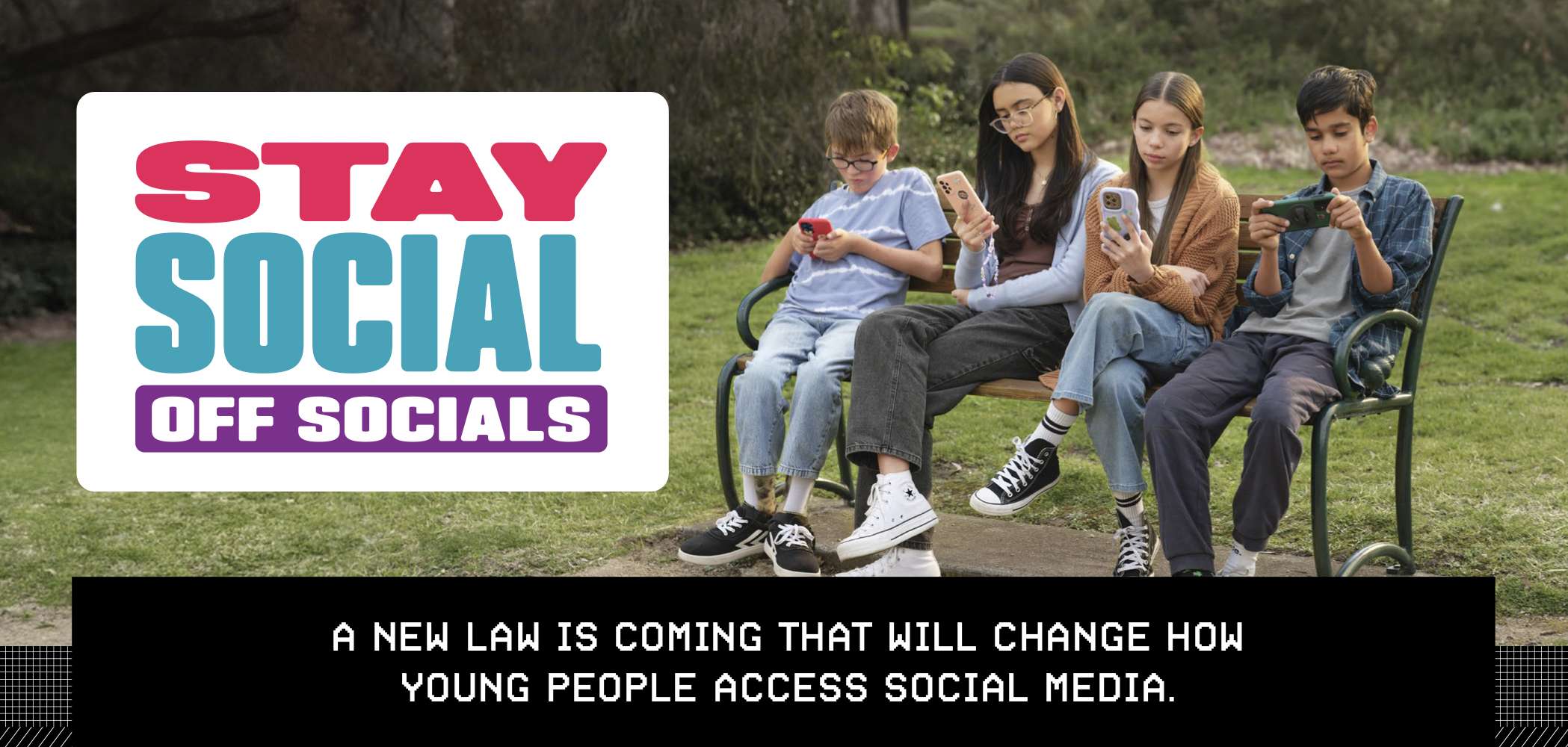
For many Australian teenagers, the digital world changes today. From 10 December, teens will need to be 16 or over to have an account on social media and it is the tech companies’ duty to enforce this. The age restrictions currently apply to 10 platforms: Facebook, Instagram, Kick, Reddit, Snapchat, Threads, TikTok, Twitch, X and YouTube.
“It's entirely necessary to protect the young in our society,” Oliver says. “My personal view is that this has been a long time coming.
“We can't have substances out in the wild affecting kids the same way social media affects kids.
“These are systems which, though they are not chemical drugs, have been engineered – ad nauseam, by some of the best engineers on the planet, by people with the budgets of kings – to essentially elicit a drug-like response, addiction.
“If any other drug had the effects on human psychology that social media has had, it would be regulated.”
Opinion over the new laws has been divided – some want to protect children from harmful content and addictive algorithms, others worry the delay in accessing the platforms will limit young people’s self-expression and connection.
"I have sympathy for the kid who has his friend group online, maybe doesn't get along with very many people at school. I was a math nerd myself growing up,” Oliver says.
“I can understand that there will be some rejection of the idea that we need to ban social media in young children, but in terms of the science and the hard data, this is going to do nothing but good.”
Growing up in 'wilder times'
Oliver is of the generation raised on unlimited internet.
“I was in year 10 or year 9 when the original iPhone came out. Those were wilder times as well. There were things out on the internet in those days which don't even warrant mentioning in civil discussion. It's a space which has necessitated governance since I was at that age.”
He praises the government for giving regulation a go, even if it comes with teething problems.
“These are not public utilities,” he says of companies like Meta, which owns Facebook, Instagram and Threads, and makes its money from advertising and selling user data. “These are private companies, and they're having such deep effects in the family, in the societal youth.”
Oliver graduated from high school in 2010, around the time Instagram took off, and digital governance was one of his early interests. His PhD looked at the neuropsychology of cyber defence.
“Then I did a post-doc research project – we actually built an AI for for defence.”
Working at the top end of town, for companies with a big budget for experimental defences, made him realise where humanity was most vulnerable – young individuals – and he decided to pivot, taking on a role at UOW.
“Now I have the chance to actually research things that, to me, strike me as urgently needed.
“What concerns me is – how long is this issue going to have to go before we recognise these very real, tangible dangers that are leading to death?”
Damage recorded over two decades
While the US has had a wave of litigation recently, with parents suing social media companies, Oliver says the first signs of trouble – including depression, body dysmorphia and suicidality in adolescence – appeared about 20 years ago, with a "robust" data set dating from the early 2000s.
“Around the advent of Facebook and Instagram, there was an extraordinarily massive explosion in the rates of those pathologies. Indeed, the data looks like a Covid curve,” he says.
Flattening that curve will take years.
“My generation, who were the generation of kids that were exposed to this unfettered version of social media, there's a model of trauma associated with that,” he says.
“Like, if I ban cigarettes today, it's not going to really stop permanently the rates of cancer that that particular stimulus causes. But what we can hope for is that we can start to – maybe not walk back – but stop the additional harm from being done.”
The government should expect kids to get around the ban, but not be deterred, Oliver adds, remembering days back in high school when getting around the YouTube block was a popular pastime.
“The importance of these laws isn't just how easy they are to govern.
“They are also, to a great extent, a position statement of our society insofar as ‘we stand for this and we do not stand for that’.
“There's a subset of society that gets around every law. You know, that's why the courts and the police system exist.”
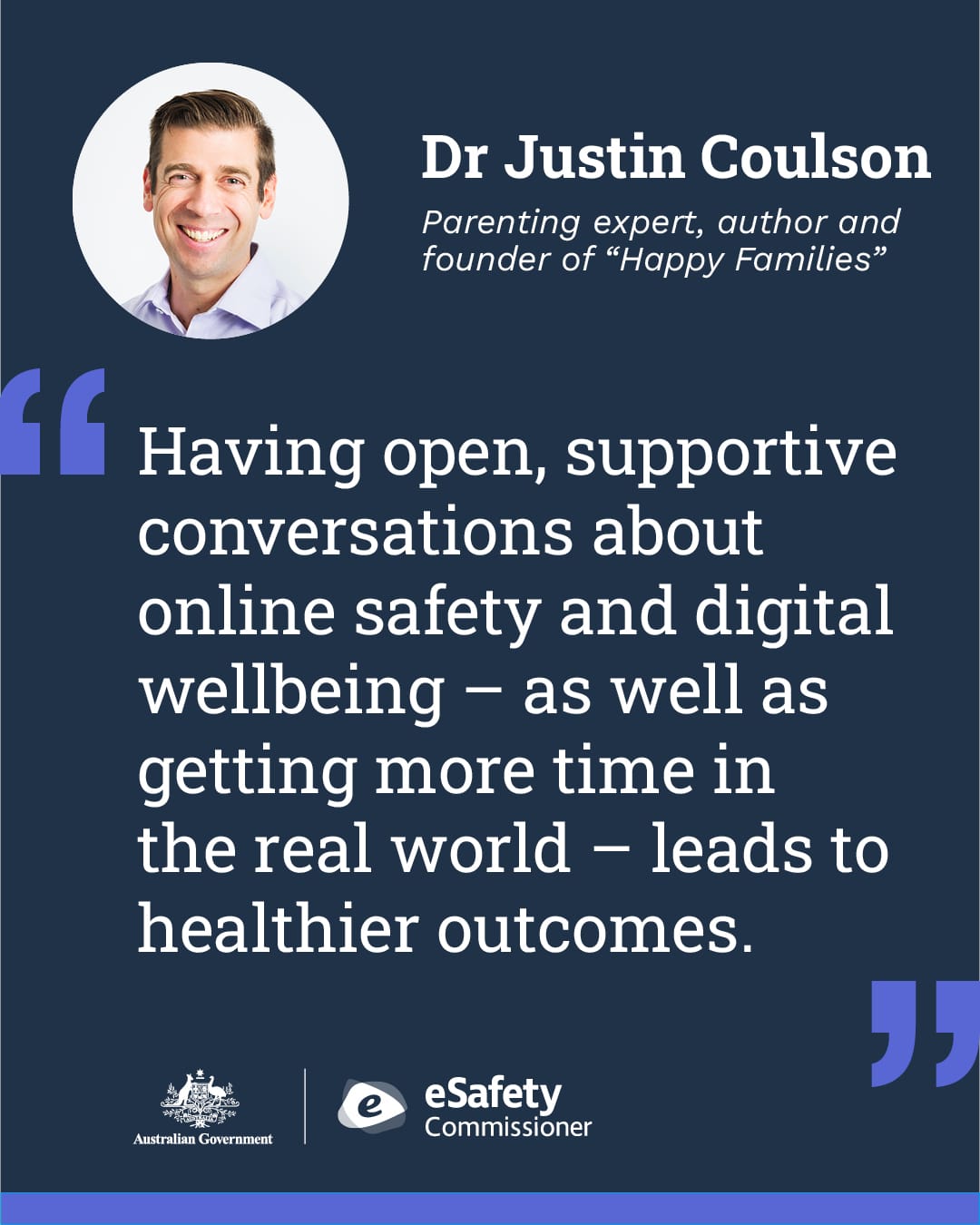
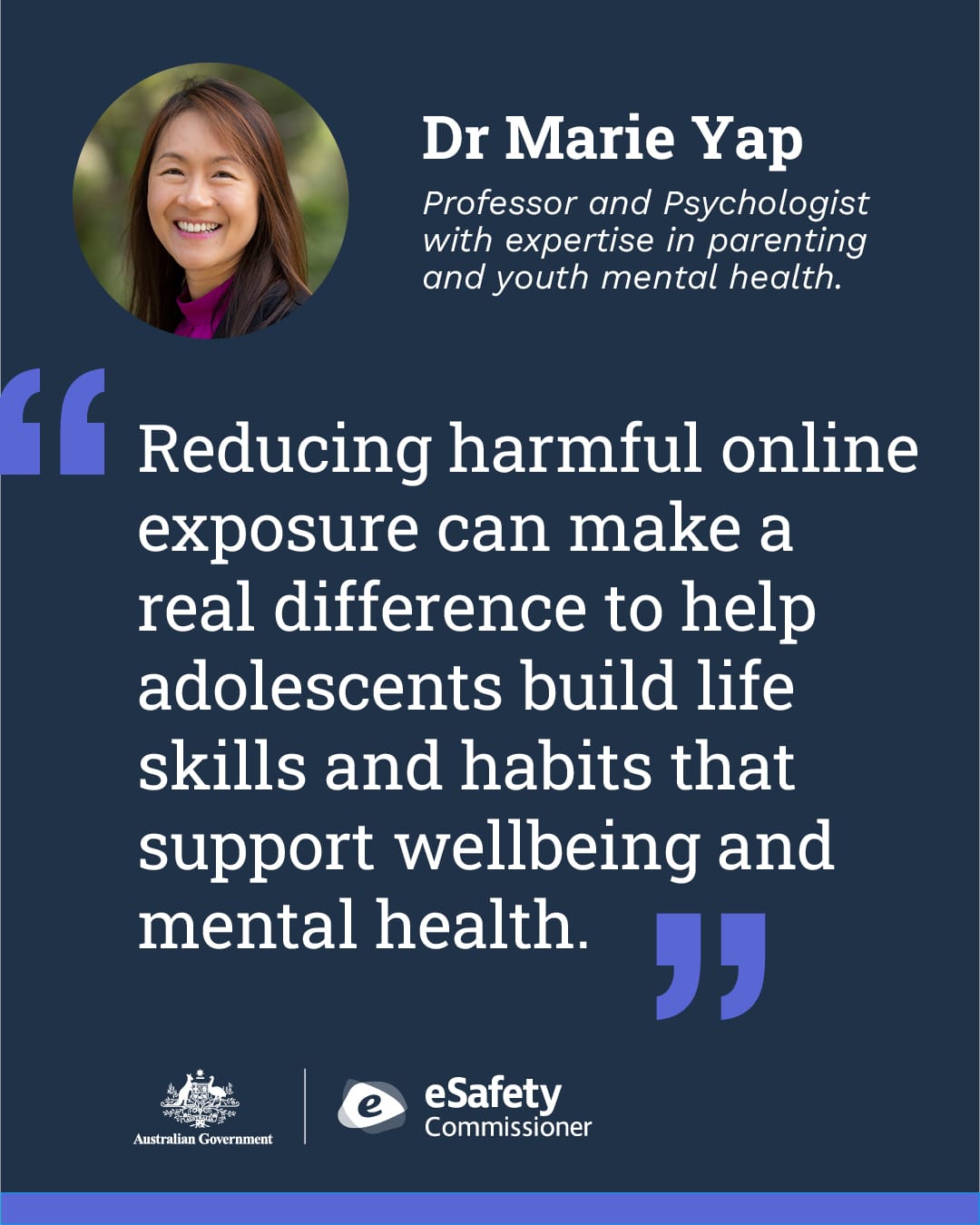
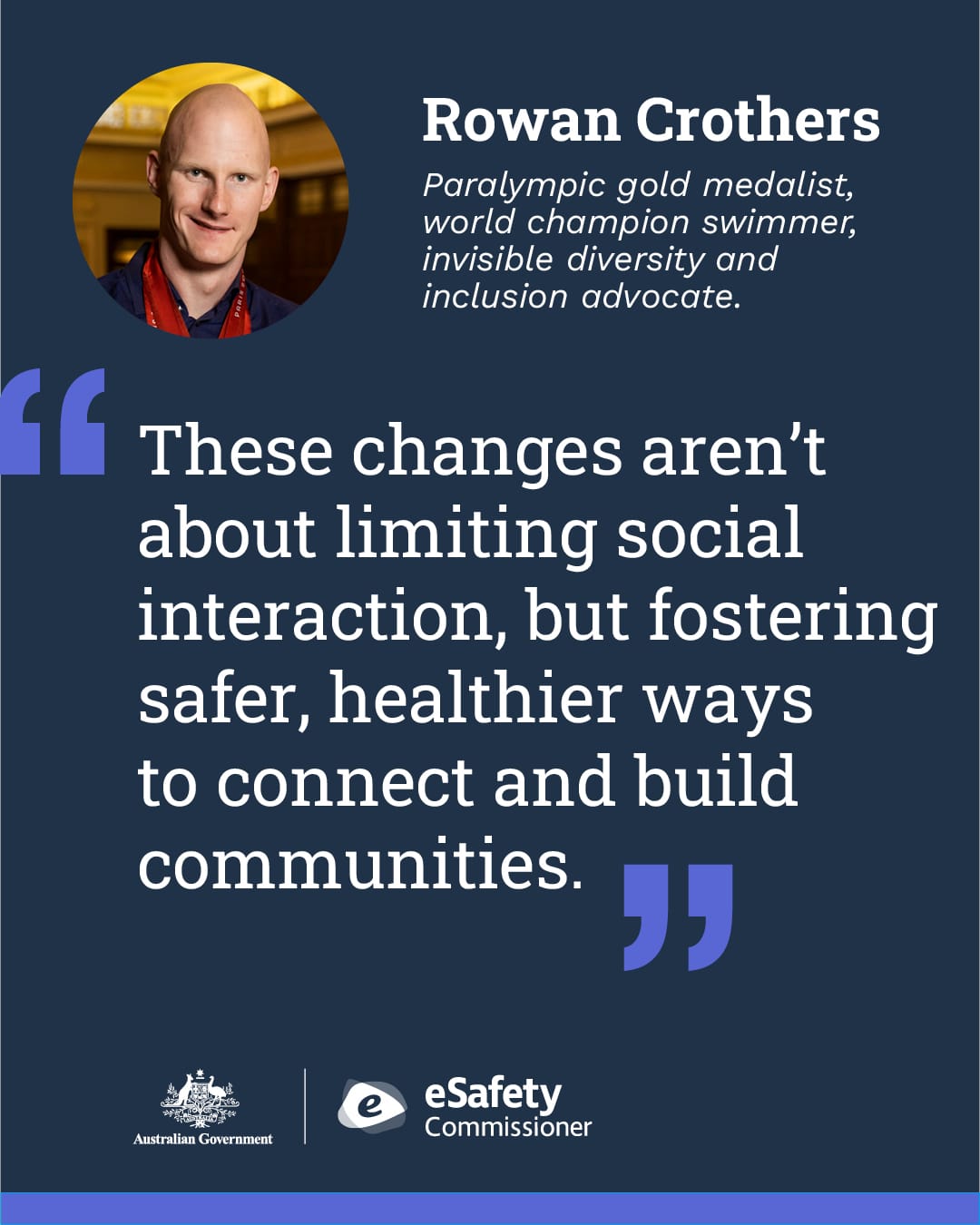
Social media tiles from the national campaign ‘For the good of their wellbeing’
Public media could counter ‘power of kings’
Eventually, Oliver thinks Australia will need public social media, like news media has the ABC.
“Because look at what powers these companies have. They have the power of kings.”
Private companies masquerading as public utilities doesn’t make sense in a democracy, he says. “So at the very least, I suppose what I'm saying is governance in this space is entirely necessary to keep society civil.
“We don't want to become authoritarian about governing the digital space. But I think that that risk should not dissuade us from attempting to govern in the space.
“These challenges are all very new and scary. They make the fundamentals of parenting and teaching… so much more important.”
Trust is key
His advice for parents is to build trust, have a rapport so your child will come to you in trouble, and instigate discussions about the digital world.
Not allowing teens to use AI chatbots – which the eSafety Commissioner warns can share harmful content, distort reality and give dangerous advice – is something he’d recommend ahead of regulation.
“Psychology has what I like to call a patient zero problem… We're a bit slow to catch up with new problems. Clinical research, by definition, needs to be conservative, and good research takes time.
“For example, suicide by AI is a modern invention. What's common to each of the cases that I know of is they began with a student using AI for homework, and then late night chats that turn into something emotional, and then those emotional chats eventually, over time, turn into something that sounds rather predatory, insofar as the AI becomes the only – I don't want to say person – the only outlet that the child goes to [to] have difficult, emotional discussions with.”
Oliver believes he’s one of a handful of Australian experts sounding the alarm on teens forming emotional bonds with AIs.
“My plan, in entirety, is to squawk as loud and as frequently about this issue as I can. I'm early career. I want to throw every honour student, every PhD student, all my research goes towards this. And hopefully there will come a time where this issue is more widely understood and spoken about and indeed accepted.”
Read more
To learn more about young people and social media, Dr Oliver Guidetti recommends two books: Parenting in the Era of Social Media and Youth Mental Health, by Tina Shelton, and Girls on the Brink, by Donna Jackson Nakazawa.
Find more on the new social media age restrictions on the eSafety Commissioner's website.
Reach out
Support is available, including: Lifeline on 13 11 14 or the Suicide Call Back Service on 1300 659 467, Kids Help Line, 1800 55 1800 and Headspace. If you, or someone you care about, is at risk of harm right now, call Triple Zero (000).


