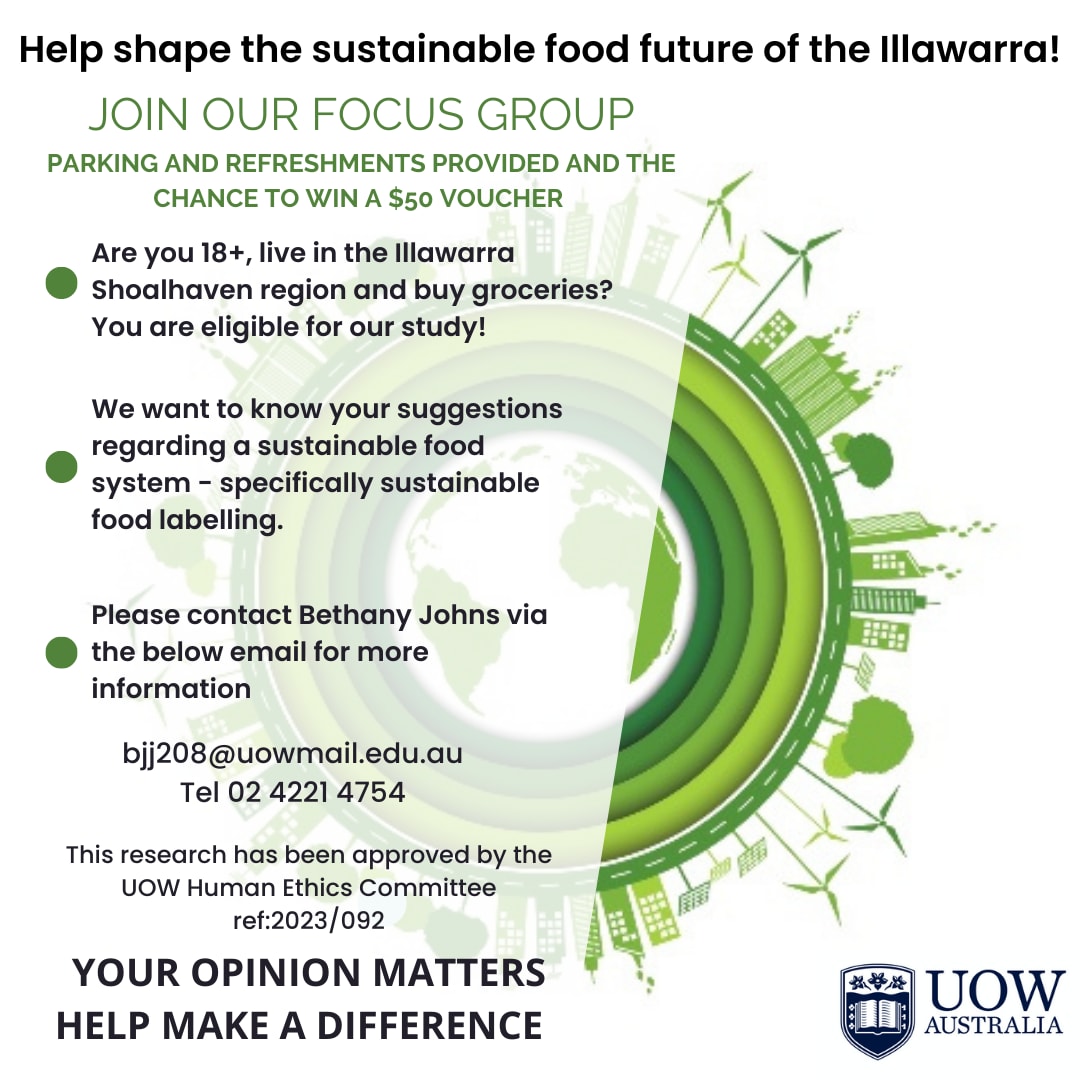
UOW wants you to help shape our sustainable food future
Karen took some time to talk to me about the project’s progress and upcoming plans. She stressed the importance of baseline information for the project so one of the first steps is to look at the availability of healthy food.
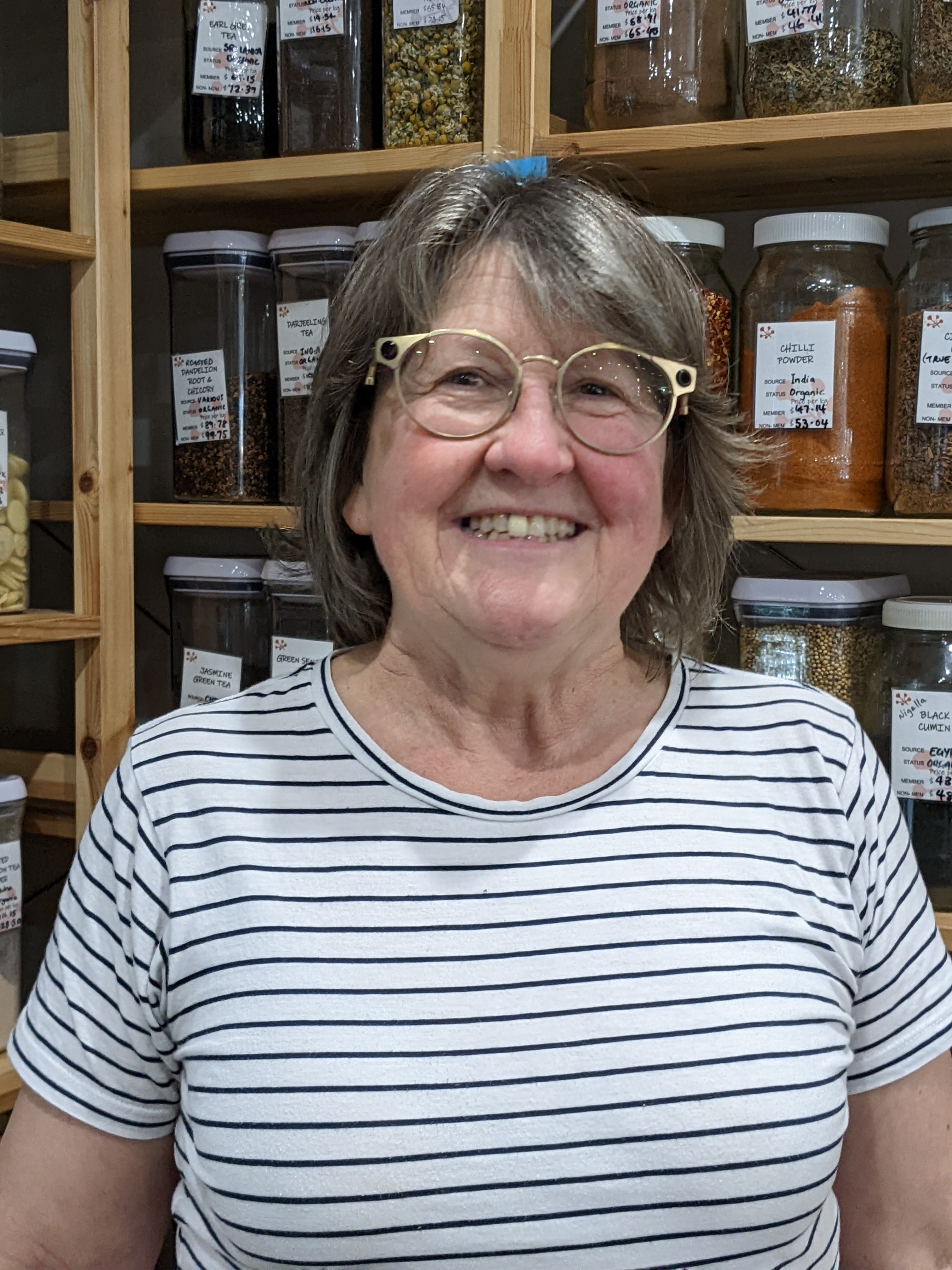

Last year I wrote about a new local food project led by the University of Wollongong’s Professor Karen Charlton. In July 2022, Professor Charlton received a four-year fellowship through the Australian Research Council to investigate sustainable, healthy and equitable food systems across the four council areas in the Illawarra and Shoalhaven. Partners in the project include Food Fairness Illawarra, Healthy Cities and Sustain: The Australian Food Network.
Nearly one year on, two PhD students have joined the team – one is local food producer Susie Pickles and the another, international student Alemayehu Gebremariam, from Ethiopia. Susie recently assisted with the Vote for Food election scorecard issued in the lead up to the recent NSW election. Some of Karen’s university colleagues who are also linked to food and food production are taking on various parts of this massive project.
Karen took some time to talk to me about the project’s progress and upcoming plans. She stressed the importance of baseline information for the project so one of the first steps is to look at the availability of healthy food.
“It is an ambitious project to change the food environment in the Illawarra Shoalhaven," she said. "We’re starting off with collecting some local data on food outlets. We are going to look suburb by suburb at the proportion of healthy to unhealthy food outlets including retailers, cafes and restaurants.”
This information, along with socio-economic, diet and food security information will give the team an indication of the quality of diet across of our region. Karen is hoping to reach 2000 households with these surveys before the end of 2023.
“This project must work on so many levels, from doing individual surveys to trying to speak to politicians," she said. "But the exciting thing about NSW is we had a parliamentary enquiry into food production and food supply led by the independent MP Alex Greenwich last year. There’s been a fantastic report that summarises all the issues but we’re eagerly any kind of action that’s going to come from that because the recommendations were wonderful.
“If we could get a NSW food policy or even a food strategy, then we’d have something for local councils to refer back to [for the preparation of local strategies]."
In Victoria the state and several local governments have aligned themselves with a consensus statement for a healthy, regenerative and equitable food system.
“Ryan Park is our local MP and also the health minister, so I’m hoping the Illawarra can lead the way in terms of food innovation.”
Karen’s vision is that the Illawarra Shoalhaven acts as a case study for the whole of NSW.
While the project is outward looking, Karen and the term will be looking inward towards the university campus as a focus too.
“We have around 17 food outlets on the university campus, and a lot of students and staff eat on campus every day, bringing food but also purchasing food, consuming food, wasting food, and we know from our student body that the students are really struggling to make ends meet.”
The university has a food pantry which, Karen said, has a line out the door to access the service.
“My vision is that eventually we will have some kind of farm on UoW campus. It sounds crazy but it’s not. If we could get a farm like Green Connect [at Warrawong], maybe a social enterprise where we could produce enough to sell, to support our student body and also for our food outlets to procure.”
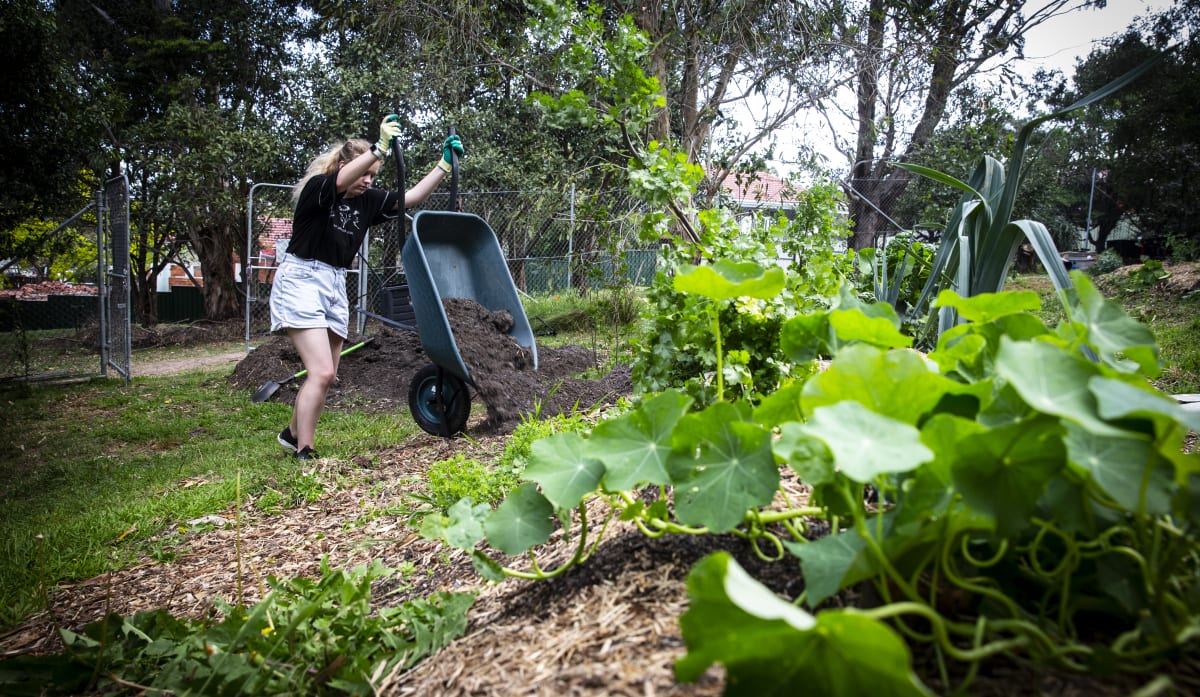
In a recent survey of UoW students, 52% were food insecure and 49% had a poor quality diet. Karen said, “The two go hand in hand. Interestingly a lot of those surveyed did value a more sustainable food system.”
Food production is very energy intensive. Karen said: “We’re going to have to do something different – urban agriculture. We’re going to have to be growing food in places we didn’t see we could grow food. We’re going to have to be more creative.”
“There is money attached [to the project] but I’m going to have to go out there and find a lot more money – sponsorship, grant, philanthropy.
“Audit, baseline data, consultation will help us to learn what it is that might work – what we can trial. We are going for collective impact, hoping to work with councils, residents, retailers, producers, to come up with projects that might work.
“So within four years, we want to showcase the Illawarra Shoalhaven region as being a place to be for food. Whatever we manage to achieve has to continue after the life of the project, otherwise it’s pointless. We have to have practical things that will keep going. That’s why it’s important to get council buy-in and state government buy-in."
To join a focus group, email bjj208@uowmail.edu.au or phone 02 4221 4754