
Ways to Water
The Illawarra Flame reports on the University of Wollongong’s Blue Futures project and how it spawned an art show Ideas about our Blue Future are exciting. This is clear, talking to researchers Michelle Voyer and Hugh Forehead at UOW’s...


The Illawarra Flame reports on the University of Wollongong’s Blue Futures project and how it spawned an art show
Ideas about our Blue Future are exciting. This is clear, talking to researchers Michelle Voyer and Hugh Forehead at UOW’s Innovation Campus. But embrace an Aboriginal perspective and those ideas become transformative.
Michelle: “I was very keen to unsettle the accepted wisdom of how we do business. Because it’s not working.
“Rather than trying to look at things in isolation … it [an Aboriginal-led perspective] really forces you to embrace the messiness of it all and that everything’s connected.”
Hugh: “This really is the way to save the planet.”
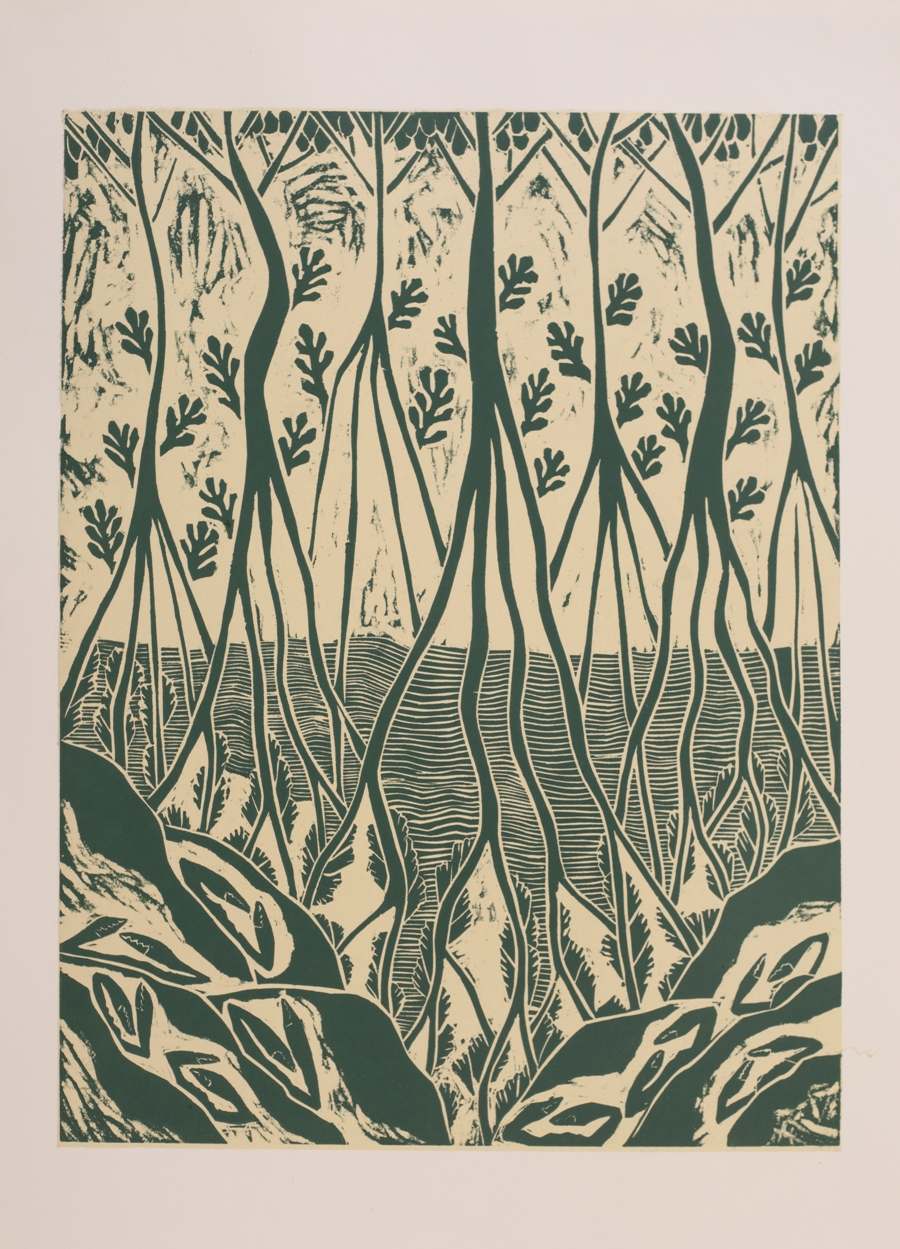
A big philosophical shift
UOW’s Blue Futures, a Global Challenges keystone project, started off with a question: how can ocean-based sustainable development be achieved in the context of coastal change?
Over the past two years, it’s involved about 30 people, including scientists, economists, policy makers, social geographers, writers and artists.
Michelle, a Blue Futures team leader and a senior research fellow at ANCORS, said the project changed entirely when it became a partnership with the Illawarra Local Aboriginal Land Council, led by CEO Paul Knight.
“The whole project shifted towards being a more Aboriginal led, Aboriginal co-developed model. It’s completely flipped the mindset …
“And that’s largely been through the influence of our colleagues, Paul Knight and Jade Kennedy and Catherine Moyle, who were all embedded in the project, to challenge us to think differently.”
Hugh, a research fellow at UOW’s SMART Infrastructure Facility, agrees. “We’ve come up with ways of doing things that are different. There’ve been big philosophical shifts.”
Hugh led the technology side of Blue Futures, helping South Coast oyster and seaweed farmers boost productivity via ‘internet of things’ sensors and data analysis, and the creation of a central water-quality data base.
At the end of 2021, Blue Futures opened up to the general public with a fascinating series of Spring Seminars (find recordings on UOW’s website); a poetry competition; and the Ways to Water exhibition at Wollongong Art Gallery.
Michelle will now take what they’ve learnt to her next project in 2022. “It’s an Australian Research Council linkage grant between UOW and the Land Council, as well as some of the South Coast mob, which is about looking at our ocean governance through an Aboriginal lens.
“Reciprocity is an absolutely central part of Aboriginal ontologies. This notion of you give and you take. Some of the ideas that I’m really excited to explore is what would a fisheries management process look like if reciprocity was embedded in it? What would that look like in law and policy? What would that look like in a government system?
“We’ve got lots and lots of questions.”
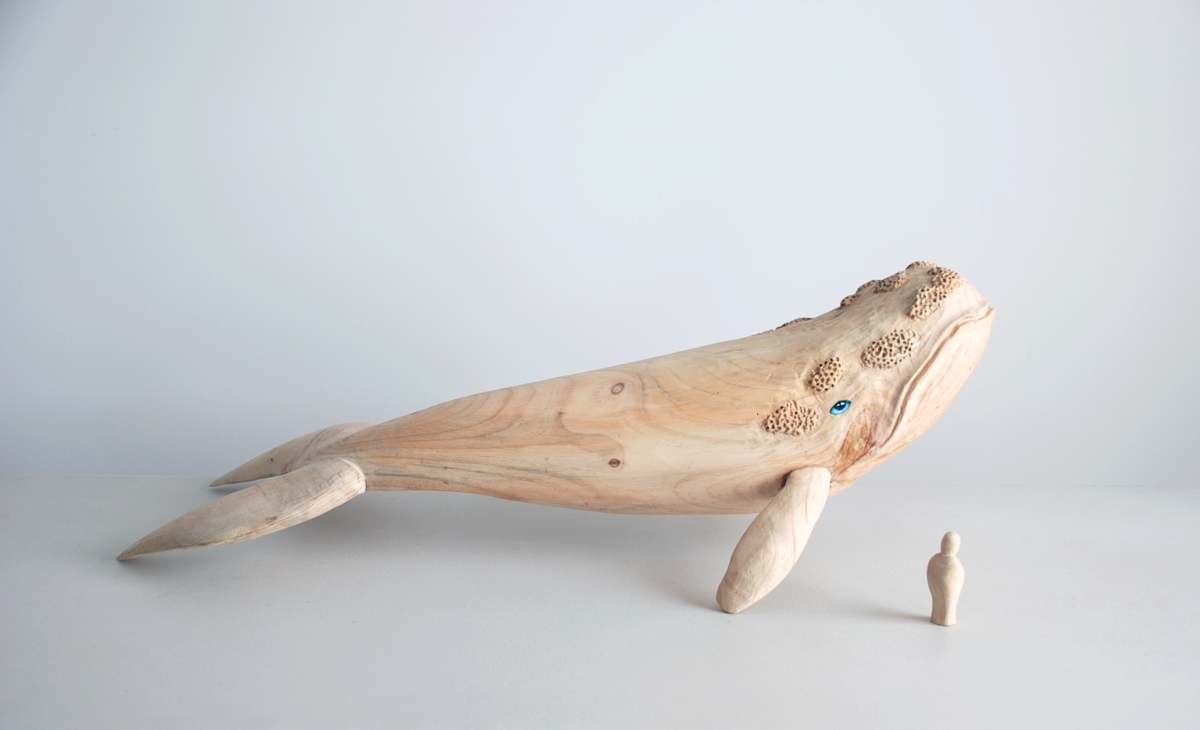
Science meets art
Curated by Agnieszka Golda and Jo Stirling, the Ways to Water exhibition features 40 historical and contemporary artworks and makes great use of augmented reality technology. QR codes, artworks in themselves, invite viewers to venture deeper – to listen to a scientist’s story, for example.
Michelle’s tip: “Make sure you’ve got a charged device. It’s a great exhibition.”
Hugh: “There’s a mangrove tree in there [the gallery], but you can’t see it until you scan the QR code with your phone. It’s beautiful.”
Ways to Water is at Wollongong Art Gallery until February 6.


