

Wreck of the Rangoon
By Tamara Hynd, curator of Shellharbour City Museum

There’s a huge red anchor outside the Ocean Beach Hotel at Shellharbour. Most people probably don’t know it’s history, or why it’s there.
It belonged to the 374-ton, three-masted timber barque Rangoon, built in England in the 1850s, the property of Messrs Smith and Lindsay. In March 2026, it will be 156 years since the ship was wrecked.
She left Melbourne 9 March 1870, in ballast, bound for Newcastle to load coal. For several days she was caught in a ferocious storm as she headed up the coast, forcing the crew to take down the sails.
On Tuesday 22 March at 2.30am, land was faintly spotted through a thick haze of fog. It is probable, the captain confused the entrance to Minnamurra River for Kiama Harbour. Kiama Lighthouse would not be built for another 17 years.
A sail was put on and the crew headed for land. The barque struck rock about 3am as she was driven by a south-easterly gale into a cleft of rocks forming part of Stack Island. Captain Sayers and crew spent a terrifying night, battered by sea and rain.
In the early hours of the morning, Captain Samuel Charles was assessing the damage caused to his Minnamurra property by the storm. He raised the alarm after discovering the ship’s crew, who were trying desperately to salvage goods and repair the vessel. At low tide, the Rangoon crew strung a line from the ship to the shore and removed as much weight from it as possible. The mission was abandoned when the tide again rose.
In the meantime, the Illawarra Steam Navigation Company was engaged in the rescue effort. Two boats were brought by dray, overland to begin the rescue.
The Kiama boat was manned by Captain Smith of the Numba, and crews from Numba, Dairymaid, and Agenoria. These three ships and crew had spent the night sheltering from the dreadful storm at Shellharbour Harbour.
The Shellharbour rescue boat was manned by Captain William Wilson, and was kept at the rear, as a reserve in case the worst happened.
The rescue boats launched into the river about 3pm.
The Kiama rescue boat struggled through the breakers, but somehow managed to make it to the river side of the island. Half the crew were picked up and then the arduous task of navigating the strong current at the mouth of the river began. For a long time, it appeared the boat was going nowhere, but inch by inch, they eventually made it.
Then, they had to do it all again.
Once on shore, the crew of 10 were taken to Shellharbour, and cared for by Mrs Baxter, Mr Aitken, Robert Wilson, and his son, Captain William Wilson who coordinated the rescue.
William Wilson was born to Robert and Mary Wilson in Suffolk, England in 1835. His father was later transported to Australia as a convict, serving his sentence in the Illawarra. William followed him to Australia in the 1850s, with his sister, Emma. They settled at Shellharbour, where their father operated a store and established a flour mill. Wilson Street, Shellharbour, is named in their honour.
William Wilson became a sea captain and master mariner of several ships, including Dairymaid and Peterborough, and was a figure of much importance in seafaring life in Shellharbour.
In 1864, William married Emma Pike of Kiama. William and Emma had several children; Mary, Robert, William, Alfred, Ernest, Walter, Sarah (died from bronchitis aged one month old), Eva (died from heart disease on her birthday, aged 10 years old) and Arthur.
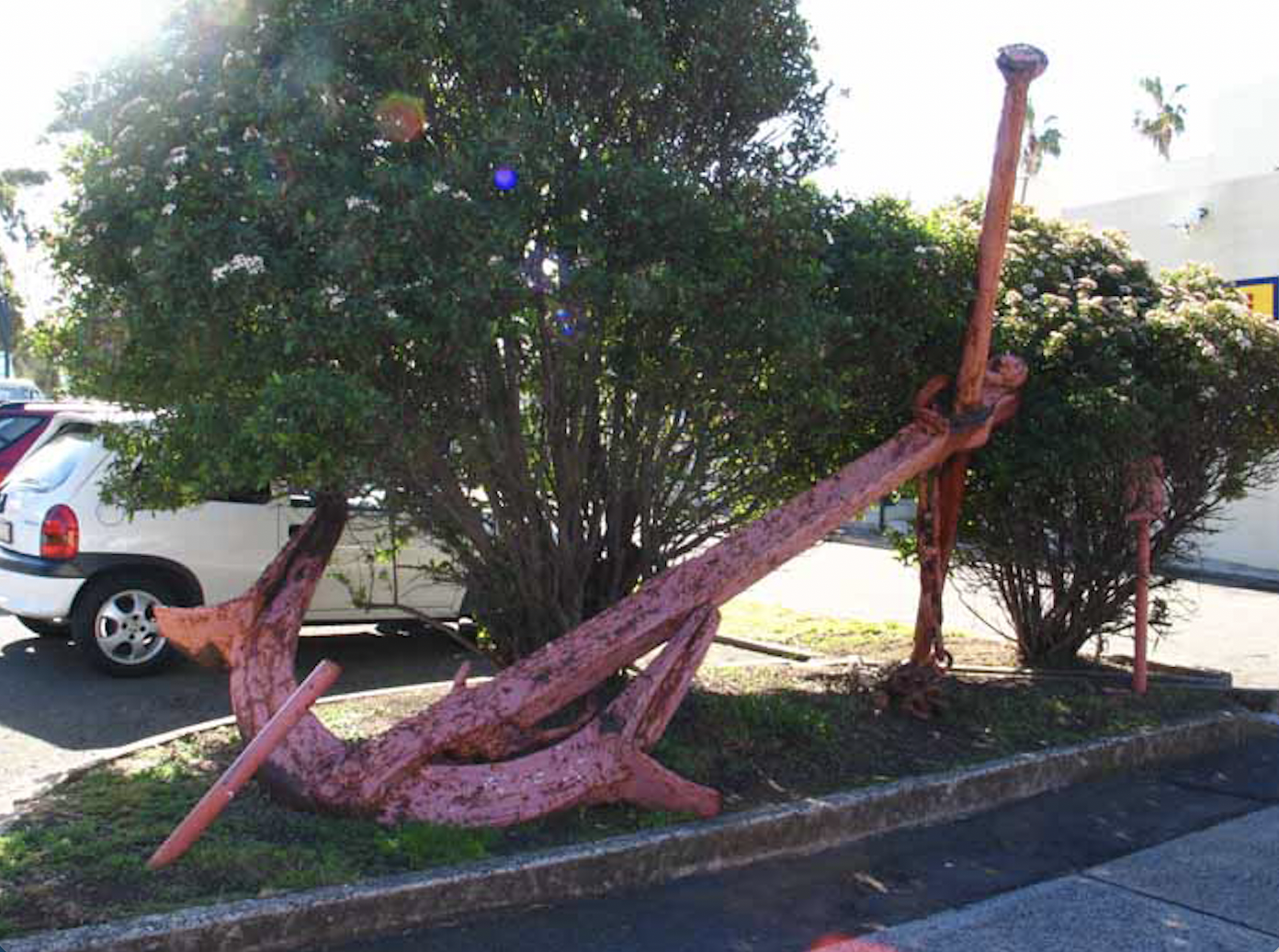
The family lived at Shellharbour, near the harbour, on the site of today's Ocean Beach Hotel. The Rangoon anchor was placed at this site to mark the role Captain Wilson played in the rescue effort.
The Rangoon broke up over several weeks. Much of the material was salvaged. In fact, the home of the McCabe family who lived at Addison Street, Shellharbour, was partly built from its planks.
After the wreck of the ship that stormy night in 1870, Stack Island became locally known as Rangoon Island.
To find about more about the history of Shellharbour City, visit Shellharbour City Museum’s online platform, Discover Shellharbour.


