

Aboriginal patch-burning helped shape early colonial Illawarra
Kieran Tapsell examines how the First Nations practice to create grasslands shaped the Illawarra
In 1795, former convict Matthew Everingham climbed Bowen Mountain north of Parramatta and had a view over the Cumberland Plain towards Sydney, the Hunter region to the north and the Illawarra to the south.
He reported "thousands of small fires" – evidence that there were far more Aboriginal people populating the country than colonial authorities had imagined.
In 1822, Alexander Berry went looking for land around the Shoalhaven River. He met an Aboriginal man there named Wagin, and asked him who had cleared the patches of grassy land surrounded by cabbage tree palms and rainforest. Wagin said he only knew that they had been like that in his grandfather's time. Berry asked Governor Macquarie for a grant of the land. Berry erected his homestead on one of them and fenced off the rest.
In 1824, Governor Macquarie offered Matthew Gibbons 1000 acres of land at Stanwell Park and Coalcliff, then known as "Little Bulli". Gibbons did not want it because it was not commercially viable. He had earlier applied for a grant of land at Wattamolla. It had the advantage of a small harbour, but Gibbons' description of it in his application is surprising for those familiar with the woody heathland there now.
He described it as "an excellent run for a small flock of sheep" and likened it to "the feeding land of Essex".
This suggests grassy land created by Aboriginal burning. Wattamolla had significant advantages for the Aboriginal people, permanent fresh water and safe fishing in the harbour. It also made sense for them to have grasslands nearby for hunting.
Gibbon’s application for Wattamolla was rejected, and he had to clear the land at "Little Bulli" with convict labour. In 1828, he applied for 2000 acres for a "cattle run" at Bulgo, just north of Stanwell Park. His application was not accepted, but in 1836, John Dwyer was granted 200 acres there to run cattle. This suggests that Bulgo had been cleared by burning, and it might also explain why Bald Hill got its name.
Where grazing land created by Aboriginal burning had not been taken over by the colonists, the vegetation soon returned to its wild natural state. Major Thomas Mitchell arrived in the colony in 1828 and explored many different parts of the country, often with bullock drays. Twenty years later, he complained that it was much more difficult to travel through the countryside than before. The most probable explanation for this was that once the Aboriginal people had been displaced, the burning practices stopped and the undergrowth thickened.
Aboriginal occupation and use of the land around Era beach have been documented. In 1832, a large parcel of it was granted to Andrew Byrne, who used it to run his cattle. The first hut at Era was built by Old Tom, one of his Aboriginal stockmen. This would also suggest that its suitability for grazing had come about by Aboriginal burning.
Robert Westmacott, the former aide de camp to Governor Bourke, bought up much of the land around the northern Illawarra near Coledale, and called it The Meadows, a name which might imply that it had also been subjected to Aboriginal burning. His watercolour, entitled Bulli from the Coal Cliffs, from the 1840s seems to confirm a patchwork of cleared land.
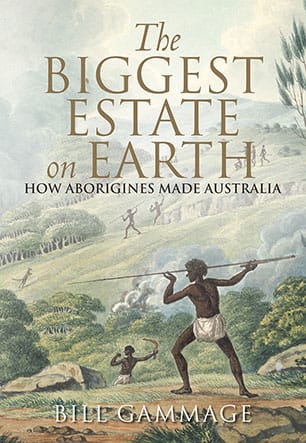
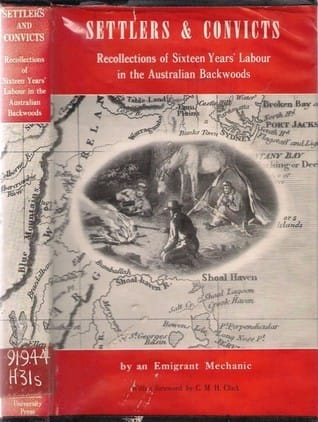
Bill Gammage in The Biggest Estate on Earth quotes Alexander Harris in his 1847 book Settlers and Convicts in which Harris described the Illawarra escarpment as “thick tangled bush”, with patches of “grassy forest” on the hills, extending down the shoulders. Gammage also quotes an anonymous but similar description of the Illawarra possibly from around 1854 as “grassy meadows” interspersed throughout “lofty cedars, graceful tree ferns and stately palms” above “thick undergrowth of wild vines, creeping plants and shrubs”.
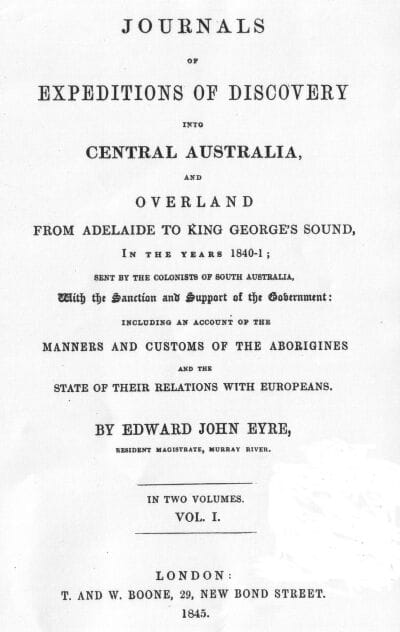
The explorer, Edward John Eyre, in his Journals published in London in 1845, commented on the colonial practice of taking over land cleared by Aboriginals: "the localities selected by Europeans, as best adapted for the purposes of cultivation, or of grazing, are those that would usually be equally valued above others, by the natives themselves, as places of resort, or districts in which they could most easily procure their food... The injustice, therefore, of the white man's intrusion upon the territory of the aboriginal inhabitant, is aggravated greatly by his always occupying the best and most valuable portion of it.”
This might explain why Matthew Gibbons described “Little Bulli” as not commercially viable.
In land cleared for grazing, nature seems to have a memory. A good modern example is the regeneration of the natural vegetation around Bulgo, which from 1828 to the 1980s had been used to graze cattle. After it was purchased by the NSW government in the 1980s to become part of the Royal National Park, it is slowly returning to littoral rainforest protected by Coastal Banksias.
Even the famous Bald Hill overlooking Stanwell Park started slowly losing its baldness once the area below the lookout was taken over by the National Parks in the 1980s. The smaller bare crown is being kept low by hang glider and paraglider pilots who need a take-off clear of turbulence.
Another example of regeneration of the rainforest is the Stanwell Avenue Reserve. It was cleared of trees in the 1920s by real estate developer Henry Halloran, who had bought it from the Hargrave family.
While old photos can be deceptive, those from 1886 onwards show the dark foliage typical of littoral rainforest. In 1968, most of the land was resumed to create a park close to the beach. The forest was allowed to regenerate, and the littoral rainforest has returned with its protective barrier of coastal banksias.
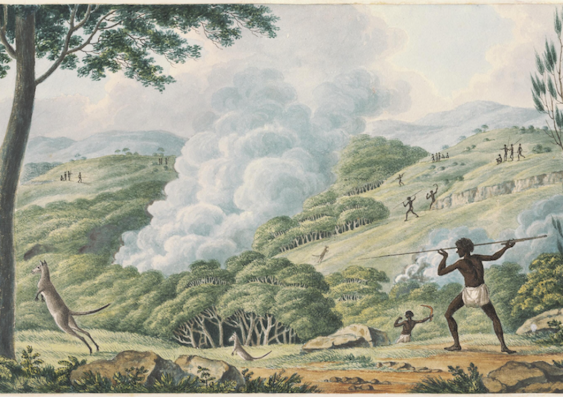
The conclusions from these historical sources and modern experience of regeneration of formerly cleared land is now supported by scientific inquiries of patch-burning conducted close to the Illawarra around the Picton area. These studies demonstrate that the practice of Aboriginal patch-burning to create grasslands has had a long history.


