

In an Illawarra autumn, this tree's fruit turns orange
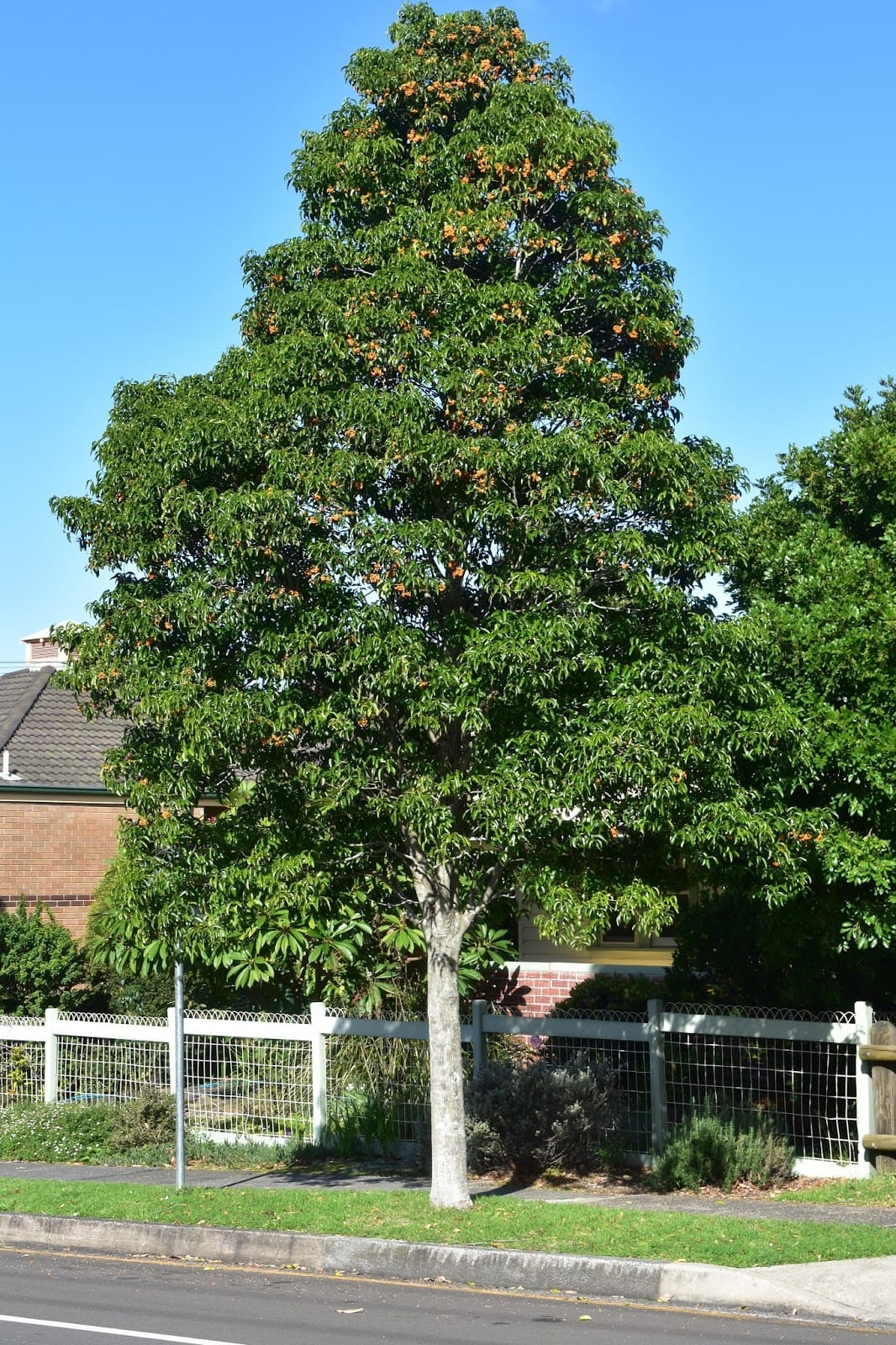
Look out for the Bonewood, a neat-looking and stately tree with numerous orange fruit decorating the canopy in autumn
We're well into April now and an amazing number of the local plants are fruiting at the moment. The widely planted Illawarra Flame Trees (Brachychiton acerifolius) are decorated with their woody fruit, which are turning from green to brown and weighing down the branches on more prolific trees.
If you know where to look, you'll see some of the less widely used street trees also doing their thing. And some of these have much more colourful fruit than the Flame Tree.
First and foremost is the Bonewood (Emmenosperma alphitonioides), a neat-looking and stately tree with numerous orange fruit decorating the canopy in autumn.
This tree is easy to see in Wollongong, as there are a couple of prominently planted specimens on verges. One is on Gipps Road in Keiraville, at the entrance to Nyrang Park. It is at its absolute best right now, so make your way over and admire it.
The Bonewood's fruit are bright cheerful orange, and grow in clusters at the ends of stems, making them quite prominent among the dark green foliage of the tree.
When they ripen completely, they split open to reveal small shiny red seeds inside.
One good use for Bonewood is as a street tree or a specimen tree in parks. It's tough, it's not messy, and it's attractive. The fruit stay on the tree for quite a long time before they ripen completely and fall.
Despite a lot of searching, I've found out nothing about the animals that might eat the fruit, and have never seen a bird or other animal eating them. The main fauna interaction I'm aware of is that borers (insect larvae) may damage trees, especially when they are present in large numbers. This is a good reason to grow the tree singly, rather than in a row or a grove.


