

Urchin and kelp forest dynamics off our beaches are not clear-cut
By Dr Jeremy Day, a marine ecologist from Wollongong who specialises in the diets of sea urchins and their predators

The role of the sea urchin Centrostephanus rodgersii (Centro) along the southeast coast of Australia is a hotly debated topic.
Reduced kelp cover often coincides with high urchin abundance, with kelp losses attributed to Centro by default. Urchin grazing can produce extensive “barrens” areas where kelp is absent, often described as lifeless “moonscapes”. However, this characterisation does not reflect the ecology of Centro habitats across their natural range in NSW.
While the contrast between kelp forests and barrens is visually striking, these so-called “barrens” are far from empty. They support diverse assemblages of fishes and invertebrates, many of which are uncommon or absent in kelp habitats. Some barrens support greater biodiversity than macroalgal forests.
Hence, rather than representing ecosystem collapse, barrens form part of a natural habitat mosaic. Together, kelp forests and barrens habitat underpin the natural biodiversity of NSW rocky reefs.
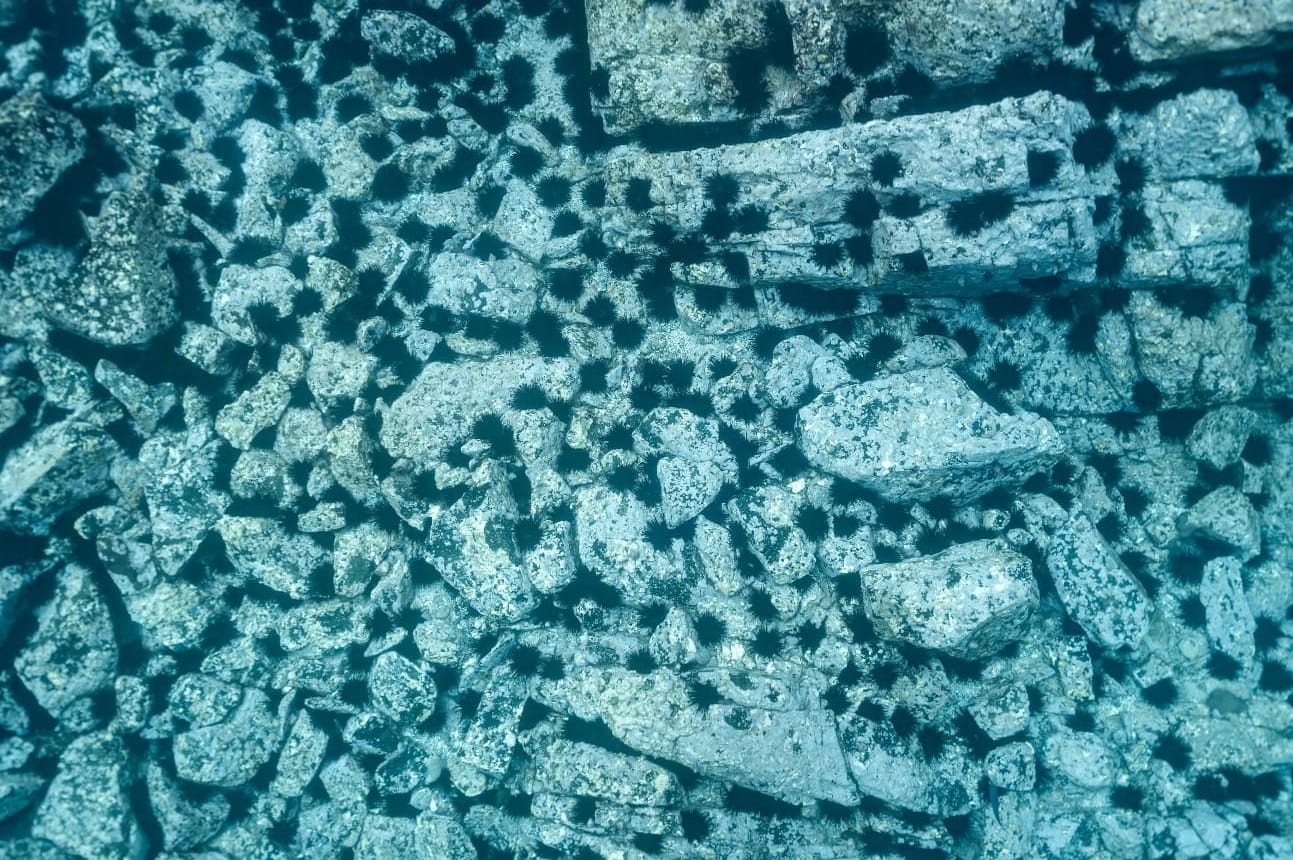
Despite this, Centro is often framed as the primary culprit when kelp declines – an obvious and conspicuous grazer. Yet recent dietary studies challenge this assumption.
Rather than mostly consuming kelp, Centro is an omnivore that relies heavily on invertebrates and marine snow, with kelp consumed opportunistically when encountered and within grazing range. Rather than grazing adult kelp, Centro is often observed catching and consuming unattached drift kelp. This raises questions about whether Centro is truly responsible for initiating kelp forest loss.
Behavioural studies further complicate this narrative. Centro cannot detect kelp. Instead, individuals emerge from their crevices to undertake circular grazing forays, typically within 2-5 metres of shelter, consuming whatever they can reach and encounter. When these “halo” patterns expand and link, barrens are formed. This differs markedly from other urchins such as our native lamington urchin Tripneustes australiae that actively hunt kelp, forming feeding fronts and climbing into the canopy to consume fronds.
In comparison, Centro’s capacity to directly remove kelp forests appears limited, as they do not climb kelp and their diet is diverse. This suggests their ecological role may be better described as maintaining barrens rather than creating them. Kelp forests are dynamic with many causes of mortality including seasonal dieback, storms and warming waters associated with climate change, which are particularly bad for kelp.
Centro’s generalist feeding can prevent kelp regrowth, maintaining the barrens habitat state. However, climate change impacts Centro, too, and these urchins are highly vulnerable to many of the same environmental impacts which affect kelp, especially floods.
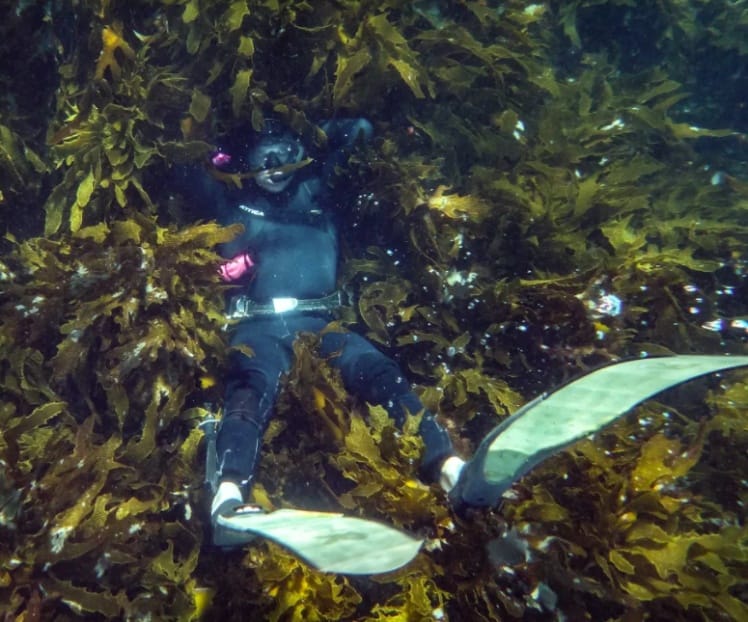
In this sense, Centro is more accurately viewed as a symptom of kelp decline rather than its primary cause.
In response to kelp loss, efforts to remove Centro have recently gained traction. At face value, this seems logical: remove the grazer and allow kelp to recover. However, ecological systems rarely respond so simply. Centro populations exhibit strong density dependence, meaning that although short-term macroalgal regrowth may occur when large numbers of Centro are removed, the massive brood stock of this urchin ensures that they rapidly return through reproduction.
Culling interventions can also produce unintended consequences, as increased Centro recruitment following removals can drive population expansion, with urchins spreading into new areas, including previously unaffected kelp forests.
A commonly proposed explanation for high Centro abundance is the decline of large predators such as lobsters, snapper and blue groper. While these species can consume Centro, dietary studies suggest predation is occasional and opportunistic, rather than these being key predators.
This is reflected in long-term observations from no-take marine reserves, such as within Jervis Bay, where predator populations are high, but Centro densities have not declined over more than 25 years of protection. Since Centro barrens are more represented within these sanctuaries than outside, it strongly suggests barrens as a natural environmental state for NSW.
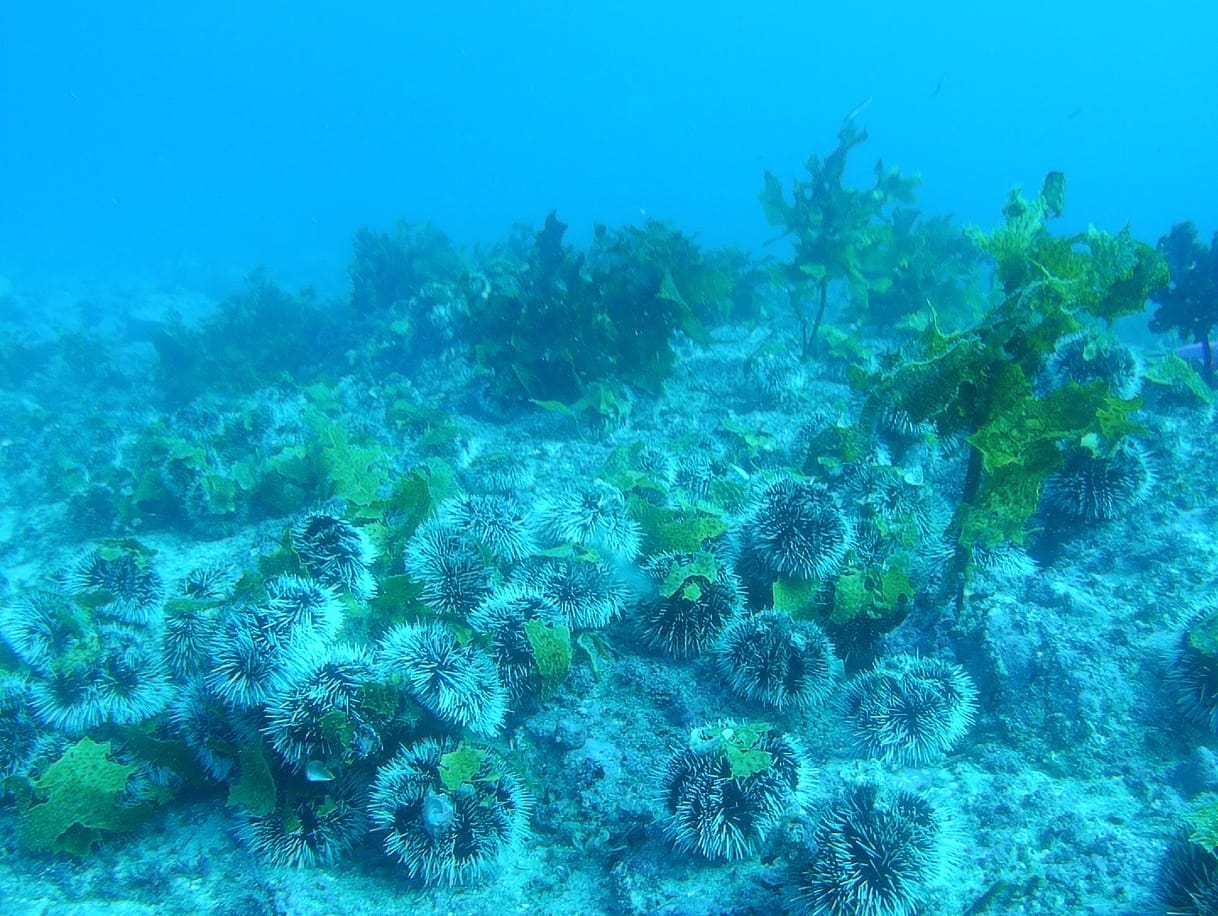
Predation alone is unlikely to control Centro populations. At the same time, broader environmental changes associated with climate change are reshaping these systems. While the strengthening East Australian Current has facilitated the southward movement of Centro into Victoria and Tasmania, in NSW the EAC has also brought back populations of another urchin: Tripneustes australiae, the lamington urchin, which has increased markedly in abundance in recent years.
Unlike Centro, lamington urchins are active, focused kelp grazers. They can detect and hence hunt kelp, climb stipes and consume canopy fronds. They also occupy a broader depth range, extending to at least 40 metres, whereas Centro is typically most abundant in shallow waters and declines beyond 15-20 metres depth. This is problematic, as deeper colder water were previously considered as refuges for kelp under the current climate change scenario. In the presence of large populations of lamington urchins, it seems these refuges will be lost.
The increasing presence of lamington urchins therefore presents a new challenge for kelp restoration. In areas where Centro has been removed previously, not only can Centro populations rebound, but lamington urchins have colonised the available space. As a more aggressive grazer which is not depth limited, this species will further inhibit kelp recovery.
These dynamics illustrate that removing urchins or relying on predators is not a simple solution for restoring kelp forests and can have unintended consequences. While targeted interventions may yield short-term benefits, they must be carefully evaluated within a broader ecological context.
It has been suggested that there is enough research on Centro, and now it is time to act. However, these systems are complex and dynamic, and our understanding remains incomplete. This is evidenced by new findings regarding the fundamental ecology of Centro, which continue to be uncovered. Effective management will depend on recognising this complexity, prioritizing future research, and avoiding overly simplistic solutions.
Follow my research on Instagram or contact Jez.Day@newcastle.edu.au

About the writer
Dr Jeremy Day is a marine ecologist from Wollongong, specialising in the diets of sea urchins and their predators. His work takes a hands-on approach to unravel ecosystem food-webs via gut contents, field experiments and stable isotopes - typically involving lots of diving. He is passionate about testing commonly-held hypotheses, and has worked within diverse tropical and temperate reef systems in north Queensland, Western Australia and the south-east coast. He is undertaking post-doctoral research on urchins and their predators in Iwate, northern Japan, where temperate reefs bear great similarity to those found along the NSW coast.


