

How little sugar gliders help keep Illawarra bush sweet
Science writer Phebe Fidge tracks down important critters in the heights of our lowland forests

As the sun sets, a chorus of screeching cockatoos and squabbling fruit bats erupt from Illawarra bushlands, and the possums know it is time to emerge from their hollows.
There are 27 species of native possums in Australia, and we have all encountered at least three of them trundling through our roof cavities at 1am in the morning.
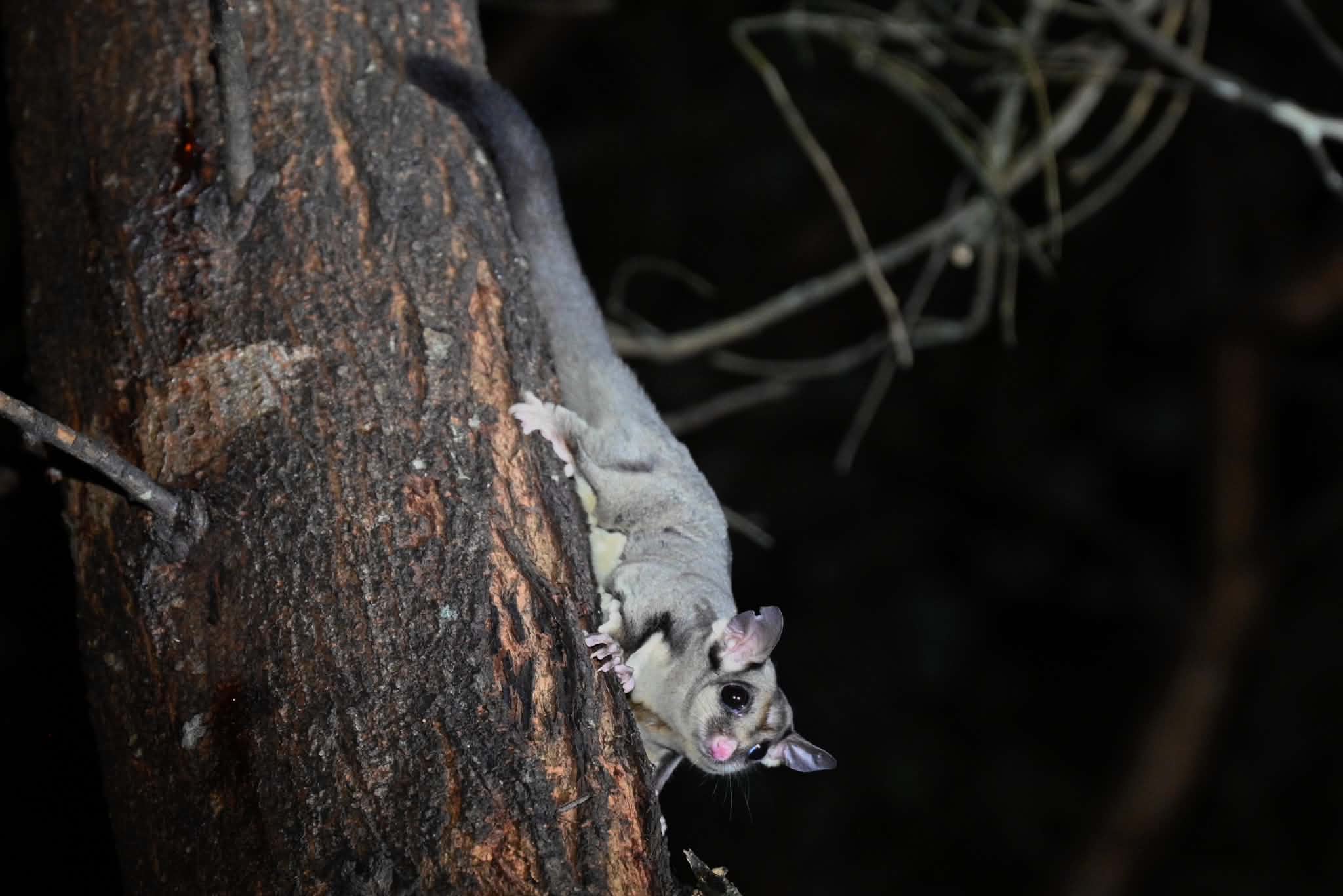
However, very few have encountered the elusive sugar glider, which, at only 115 grams, is a small marsupials with ash-grey fur, a dark stripe and gliding membranes that allow them to fly up to 50 metres. However, the real possum magic lies in their importance to critically endangered lowland forests and woodlands.
There are three known species of sugar gliders, but the Petaurus breviceps (photographed) is uniquely found on the east coast of Australia, especially along the South Coast. In the Illawarra, you can find them at places such as Mount Keira and Mount Kembla as well as Macquarie Park, Blackbutt Forest and Croom Reserve.
Make sure you bring a torch – they have nocturnal habits, as conservation biologist Ruby McPhillips explains.
“They sleep in hollows all day and only come out at sunset," Ruby said. "You have to get out at night to see them, which is why so many people have never spotted one. They do really well in fragments of forest as small as five hectares, so you’ve got a chance of seeing one wherever there’s a bit of bushland.”
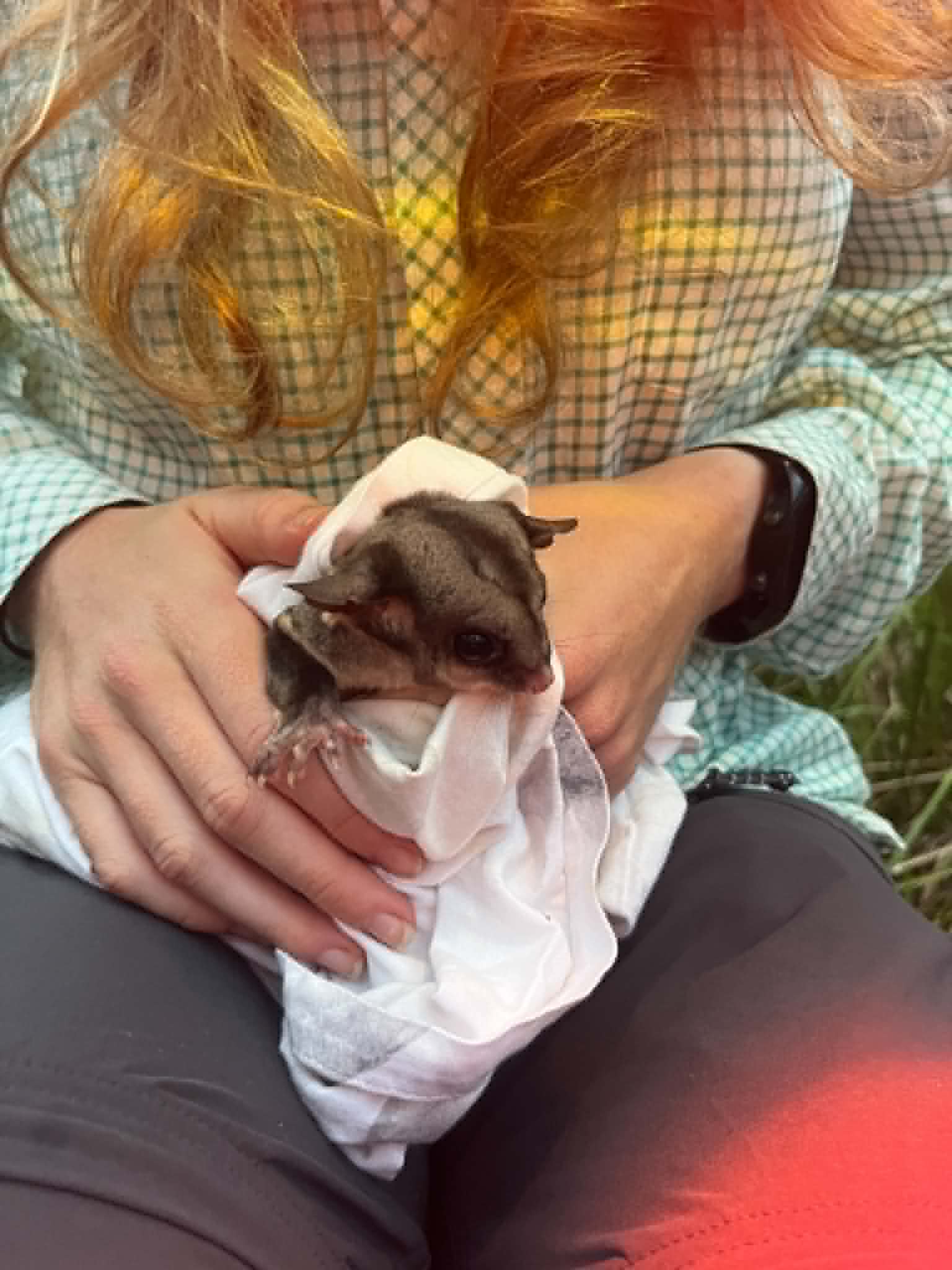
Ruby finished her honours degree at the University of Wollongong in 2025 and continues to work at the Mikac Research Laboratory, where she assists with scientific research examining the distribution and ecology of spotted tail quolls and gliding possums on the South Coast. To Ruby, the job is a dream.
“I’ve always been interested in native mammal work, so I jumped at the opportunity work with sugar gliders in my local area,” she said.

Sugar gliders are challenging to work with. They live in trees and are not easy to trap. However, observing this species in their natural habitat is critical for understanding how these species interact with their environment, Ruby says.
“We have learned that they serve three ecological roles: they can act as prey for larger predators like native owls, they prey on insects and lizards, and we are beginning to understand their role as pollinators.
“My honours research looked at the range of plant species sugar gliders might be pollinating. We collected faeces samples and looked at the different pollen collected on their fur using a high-powered microscope.”
“Before this research, a couple of historical studies indicated that sugar gliders might pollinate banksias and eucalypts. However, we identified at least 30 different types of pollen, indicating that sugar gliders might be pollinating a lot more plants than initially thought.”
They way sugar gliders pollinate native plants is also important. By facilitating pollination during the night and increasing cross-pollination coverage, Ruby claims they complement the functions of insects and birds.
“Birds and bees land on a flower and then slowly move down through a tree, whereas sugar gliders will jump onto the trunk and move upwards throughout the tree. By targeting the bottom of a plant, they are hitting the flowers that the birds and bees might miss.”
These functions are especially important to threatened habitats such as Illawarra lowland grassy woodlands, which are highly fragmented and vulnerable to climate change.
“These environments are already quite damaged and fragmented, but gliders are such generalist species that they can survive in patches smaller than five hectares, helping to fill those ecological roles where a lot of other small mammals can’t survive”, says Ruby.
Despite their resilience, sugar gliders are still vulnerable to climate change and human impacts.
“There's only a certain temperature range gliders can withstand before tree hollows get too hot for them, and climate change is threatening the sap and insect resources they feed on," Ruby says.
"With such fragmented habitats, they can't really replenish populations once they're gone because there's no gene flow coming from other populations. If they are crossing between patches, they are threatened by road traffic or feral animals, and risk entanglement in barbed wire fences.”
Protecting this species means learning more about them. Ruby and her team aim to provide the first abundance estimates for South Coast sugar glider populations, helping land managers understand the species’ risks and refugia to support their conservation.
“There will be live and camera track research continuing in a few months. Depending on the number of gliders we encounter, we will potentially be looking at genetic differences between forest fragments.”
For updates from the Mikac Research Laboratory, follow them on Facebook.
Information sources
Australian Museum, Australian Wildlife Conservancy, Australian Geographic, Office of Environment and Heritage, Conservation Advice


