

A spiky vine that appeals to pigeons and deters deer
It's not for every garden but Cockspur Thorn could solve the deer problem for some Illawarra residents
I mostly write about plants that might have a place in urban gardens, though with occasional excursions for magnificent large trees that are better off in extensive areas of bushland. This week's entry, Cockspur Thorn (or Maclura cochinchinensis), is slightly unusual as it's a very large, bulky and positively ferociously spiky vine, one that would rarely be recommended as an urban plant.
However (and you just knew some kind of a 'but' was coming, didn't you?), I do sometimes recommend Cockspur Thorn to anyone who has a problem with deer on a larger property. This is because it is one of a few thorny or prickly plants that can, if used strategically at perimeters, really help keep deer away.
Of course, it needs to be used with care and consideration of risks to children, adults, pet animals and so on. But hey, it's only a couple of decades ago that people were planting enormous Bougainvillea vines with gay abandon, and this plant is very similar in terms of size and thorniness.
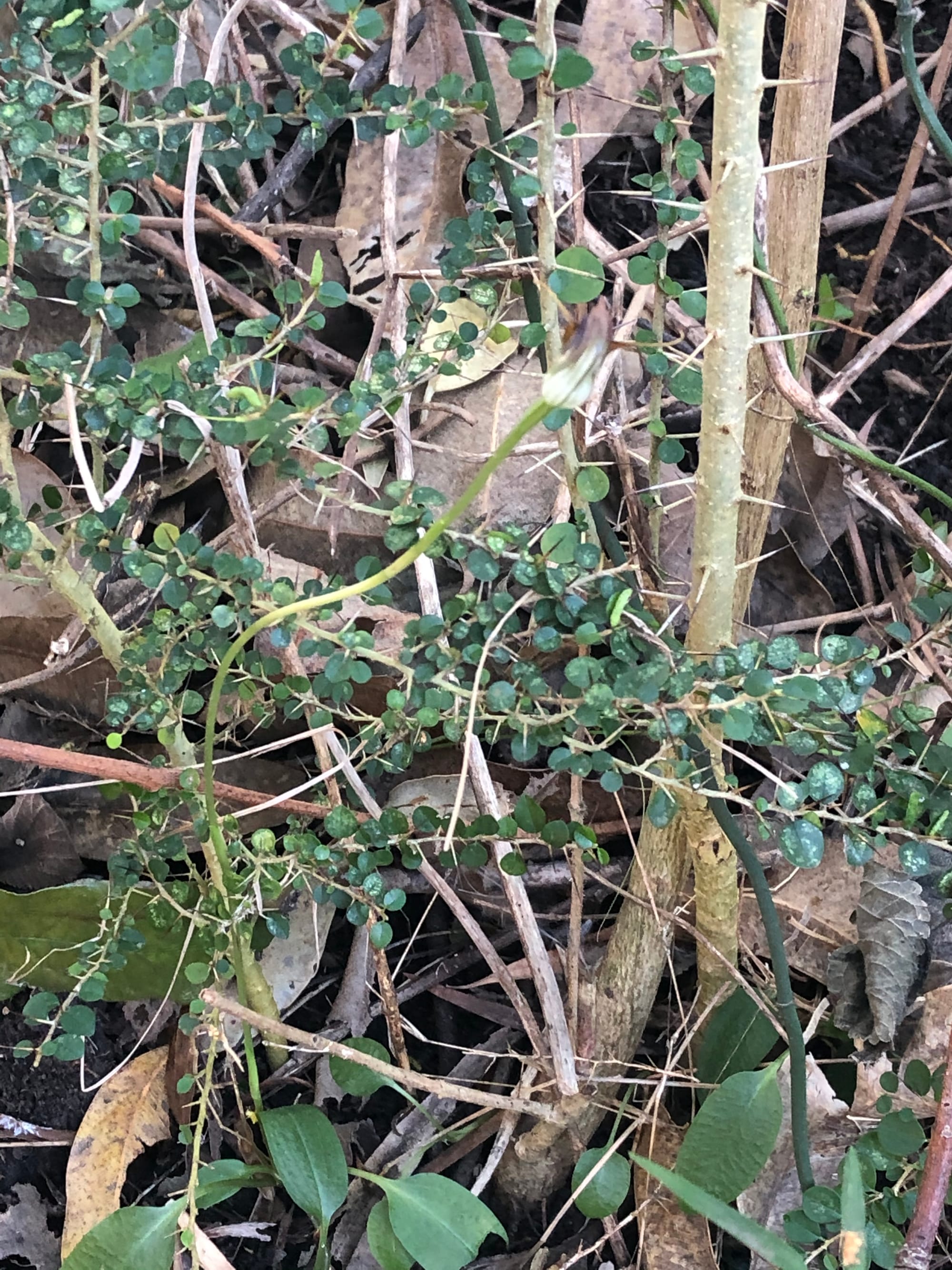
A bit about Cockspur Thorn. This vine can eventually become very large, tall and almost treelike in form, with a stout main stem to around 20cm in diameter. Large old specimens, such as one featured on the Save Our Waterways Now website, have been dated to over 250 years. But being a vine, Cockspur Vine depends on trees for support as it grows, and will fall to the ground if the trees it depends on fall over.
It is quite slow-growing, and remains shrublike for many years, gradually putting out longer and thicker stems. In this earlier stage, it can be quite dense and impenetrable for all kinds of animals. It can also be kept pruned to encourage a dense, bushy habit over time.
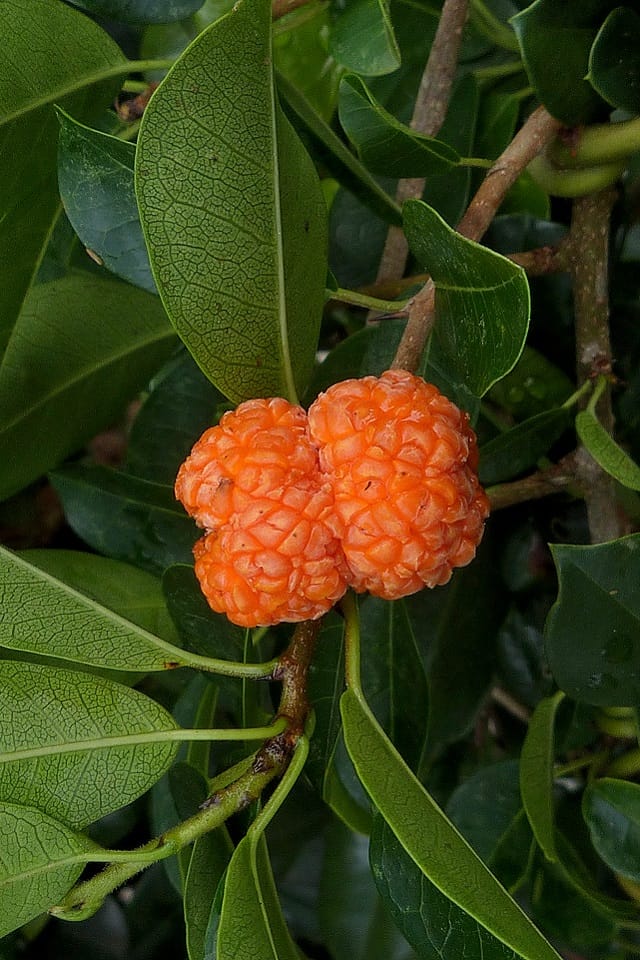
The fruit are interesting and attractive, a juicy yellow-orange, and can be very pleasant to eat (although the flavour is variable from plant to plant). As Cockspur Thorn is in the moraceae or fig family, it's not surprising that its fruit should be palatable. The fruit are often also quite numerous, typically appearing in late summer in the Illawarra region (though they may also be present at other times of the year).
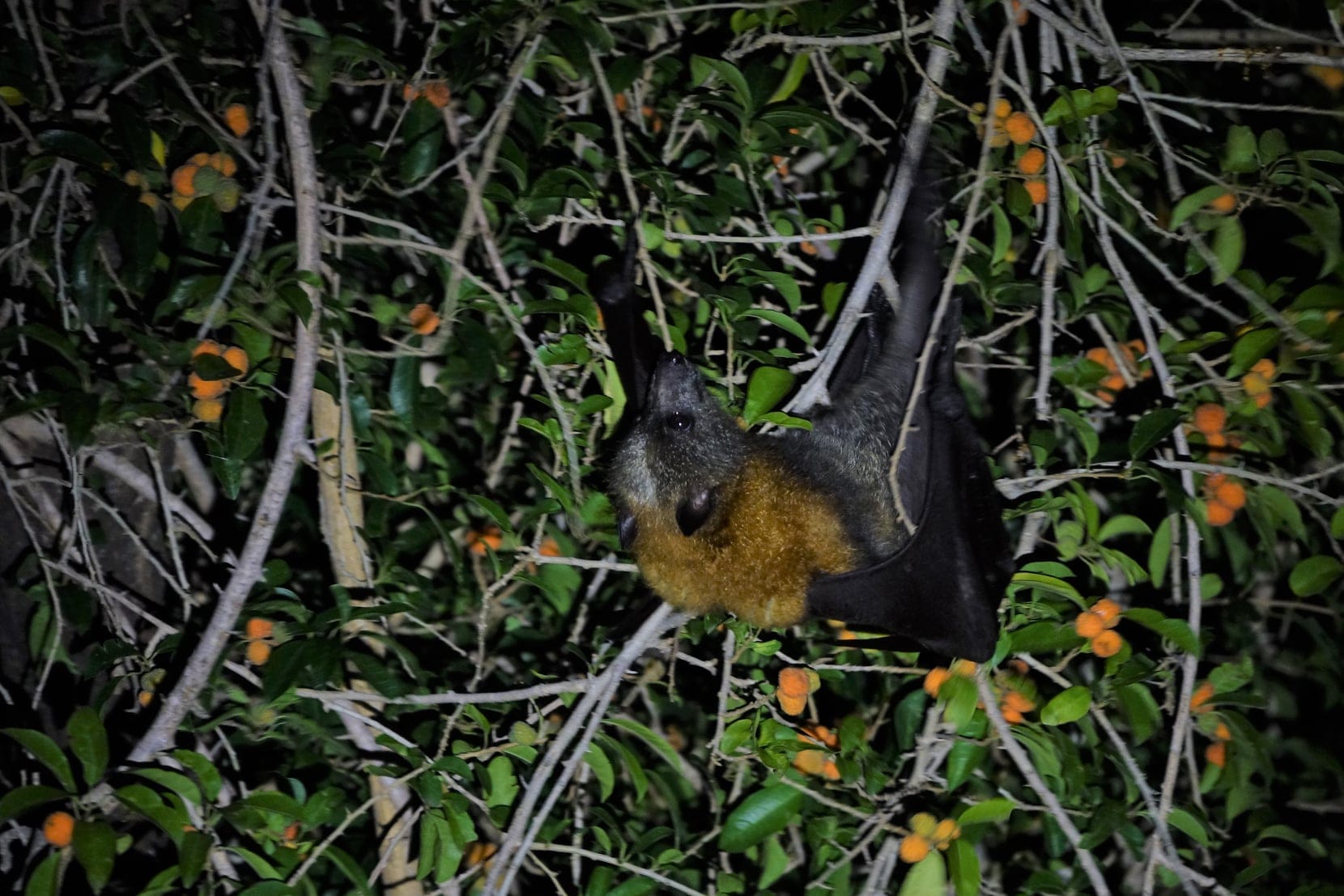
Cockspur Thorn fruit appeal to a wide range of birds, including local pigeons (aka doves). They are also favourites with the local Grey-headed Flying Foxes, as this impressive night-time image from Anthony Wardle illustrates.
While Cockspur Thorn will definitely not be a suitable subject in many local gardens, in the right situation it will help keep feral deer away, while attracting local wildlife. Have at it!


