

Poas in a pod: pea-utiful local grasses
One of the most common grasses in landscaping around coastal south-eastern Australia is the Common Tussock

One of the most common grasses in landscaping around coastal south-eastern Australia is the Common Tussock or Poa labillardierei. We've all seen it around, with its slender inrolled green or grey-green foliage, and its upright silvery-grey flowerheads. And it absolutely does deserve the prominence it gets in gardens and public landscaping, as much due to its toughness as its visual appeal.
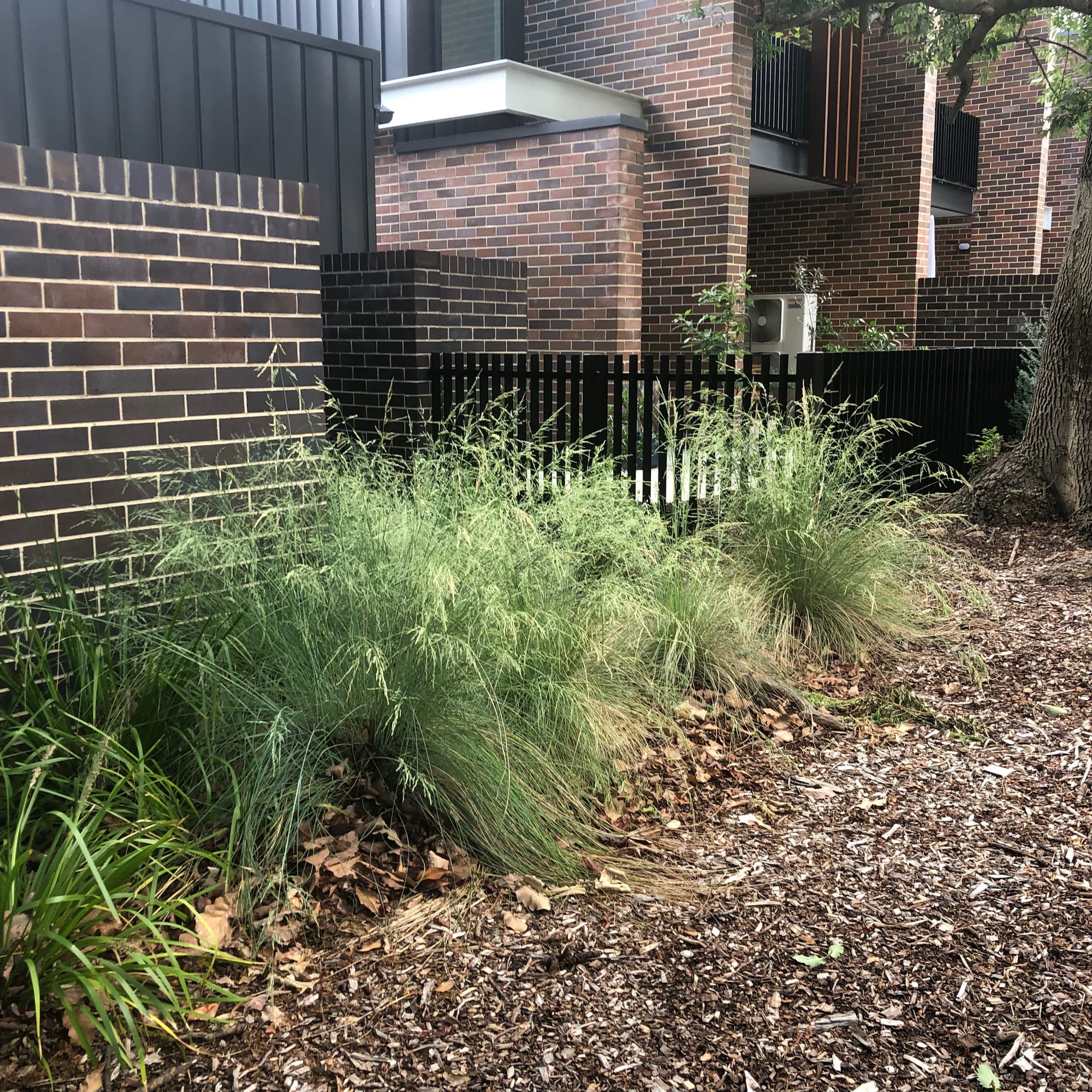
Not surprisingly perhaps, the name 'Poa' is overwhelmingly associated with this species. Amazing as it is though, it's by no means the only local Poa grass. There are a couple of other local Poas that deserve some recognition. Each of them has its own place in the local ecology, and has its own distinctive features that set it apart from other grasses.
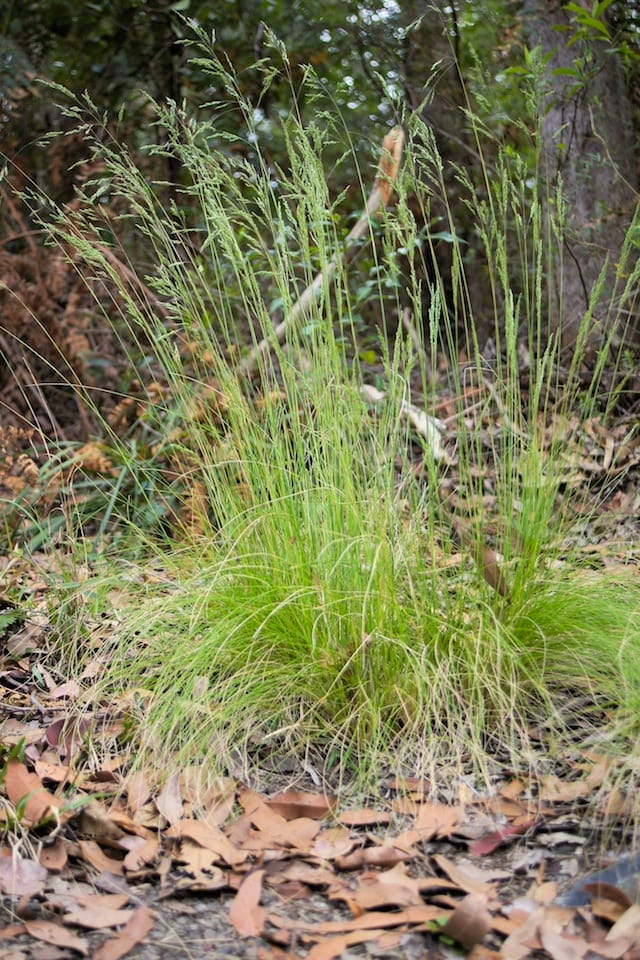
One of the other local Poas is the Grey Tussock Grass (Poa sieberiana), a slightly smaller cousin of Common Tussock, and with a finer overall appearance. This grass tends to occur in the drier areas of the region, such as in the western portion of Shellharbour, and is not seen as often as Common Tussock. It is just as attractive, but is barely used in gardening or landscaping.
Going further afield, we find the tall, elegant and striking Queensland Grass (Poa queenslandica), which, despite its name, occurs right down into southern New South Wales. Queensland Grass is somewhat unusual in that it prefers quite shady conditions. It grows on the edges of rainforest, or in rainforest clearings, where it forms clumps, with decorative weeping seedheads. The picture below by Tony Rodd shows it at its best in a shady garden setting.
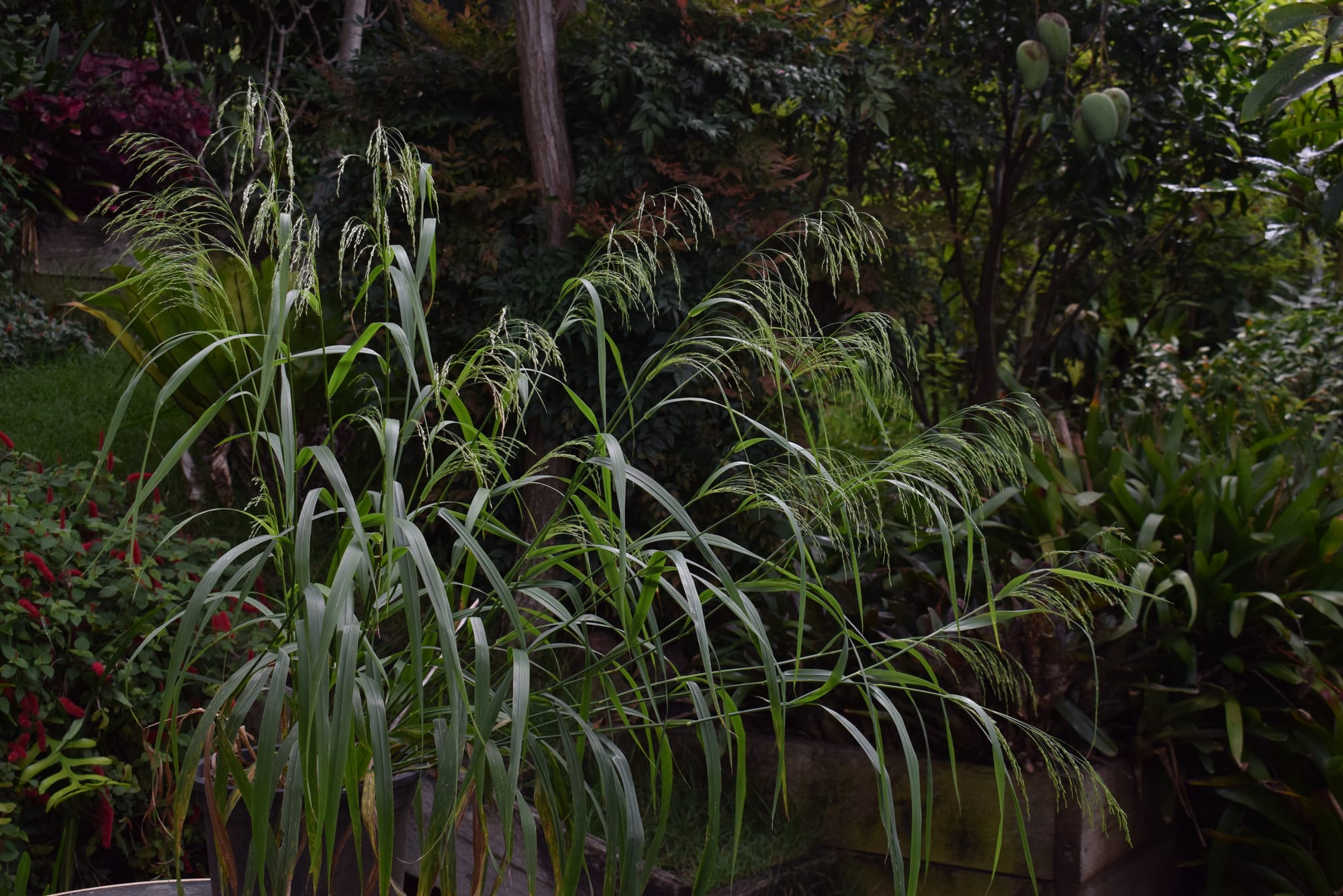
Queensland Grass (Poa queenslandica), photographed in an Illawarra garden. Image by Tony Rodd.
Try growing any or all of these grasses if you can. They take up less space than plants, and will reward you with striking flower- and seed-heads. And if you let them be, they'll set seed and provide generation after generation of tough local grasses.


