

Asbestos discovery hits stage two of seawall project
A licensed asbestos removal contractor was called and additional fencing was brought in to protect passers-by

Work on stage two of the North Wollongong seawall extension project hit another snag this week when hazardous asbestos material was found on the construction site.
A Wollongong City Council spokesperson confirmed the discovery as work began on the removal of the ageing crib wall.
“While unexpected, Council has a clear process and protocol for managing such materials which are common right across the city,” the spokesperson said.
A licensed asbestos removal contractor was on site, with staff wearing protective equipment, and additional fencing was brought in to protect passers-by. The asbestos was removed and disposed of in accordance with an Asbestos Removal Control Plan on Thursday and early Friday morning this week.
A second setback
It’s the second setback for the $10.5m seawall extension project, which is due to be completed in mid 2027.
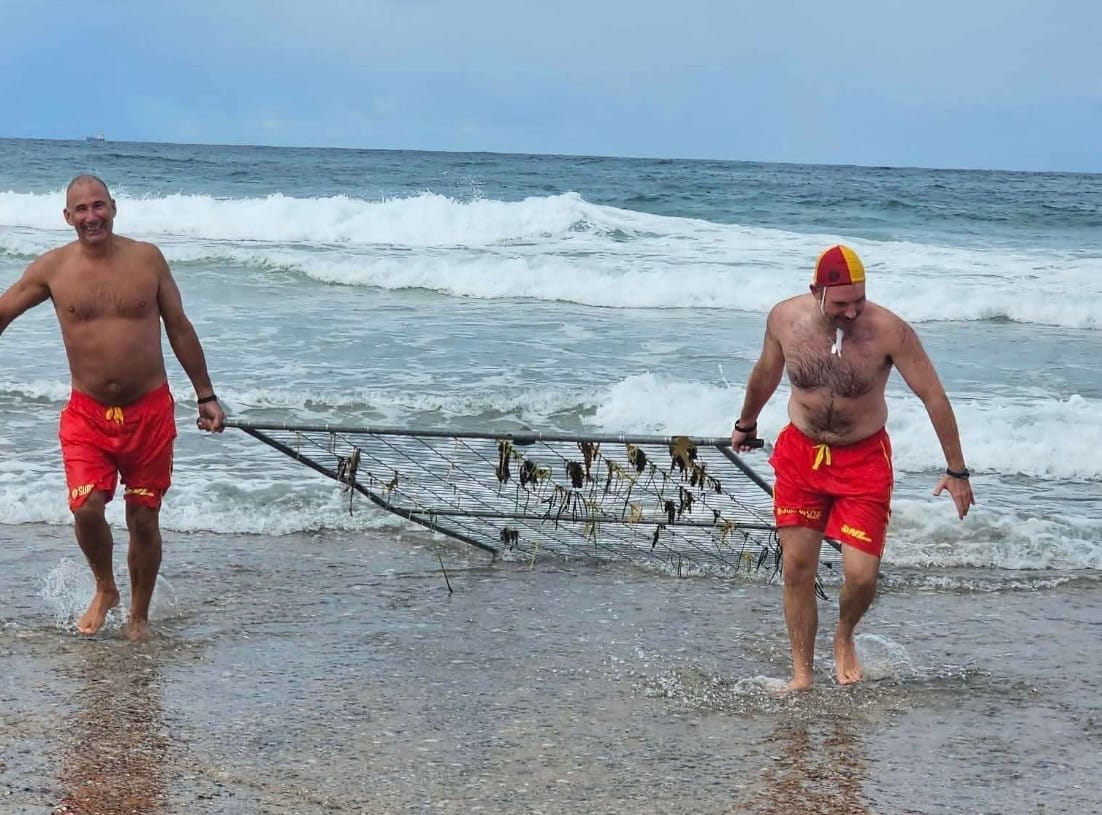
In late March, a protective fence erected on the beach was washed away in huge seas. Lifesavers recovered sections from the surf in the days that followed.
At the latest meeting of Neighbourhood Forum 5 (NF5), senior council engineers Jeremy Morgan and Sam Alger provided an overview of the seawall project.
Sam Alger, the senior project manager for the construction work, said that as far back as 2010, North Wollongong Beach was identified as a coastal erosion hazard with high risks. The beach and surrounds would become “extreme risk“ by 2050.
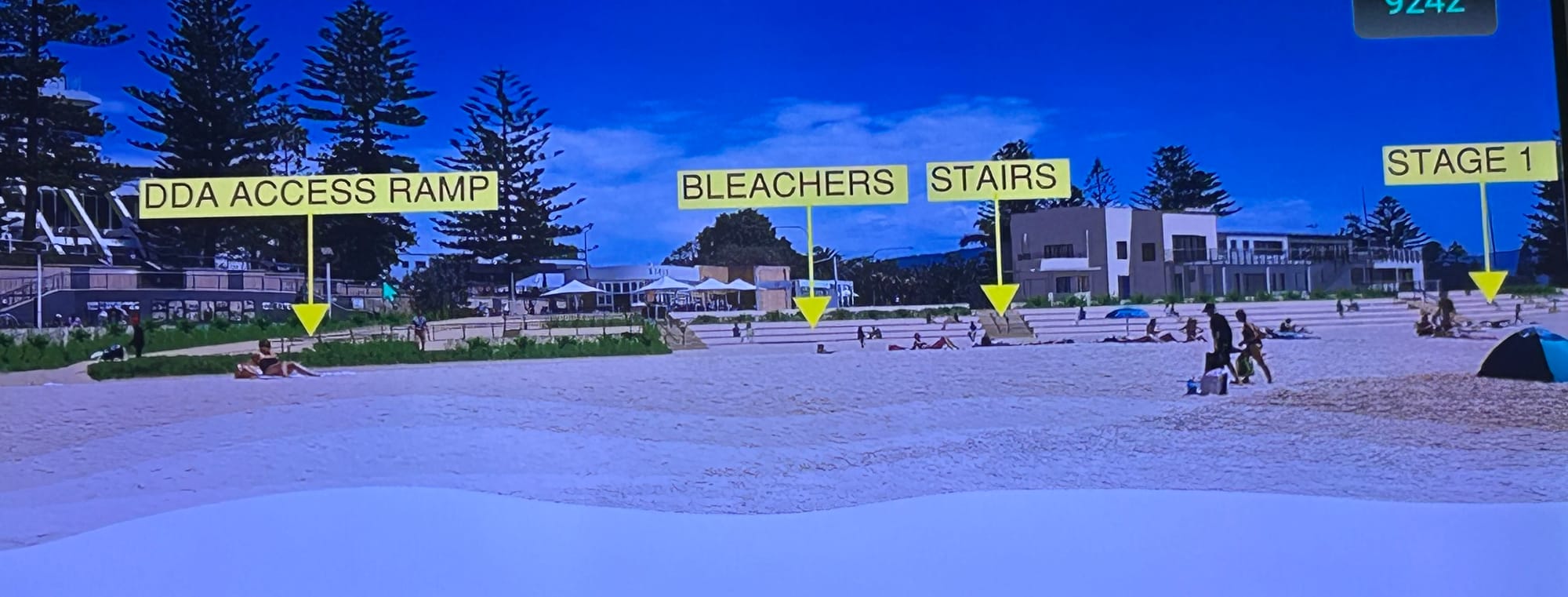
The Council team presented artist’s impressions of how the finished work would look. Sam said now the site has been secured, investigations have been undertaken on the beach to inform piling depths for fabrication.
Demolition now underway
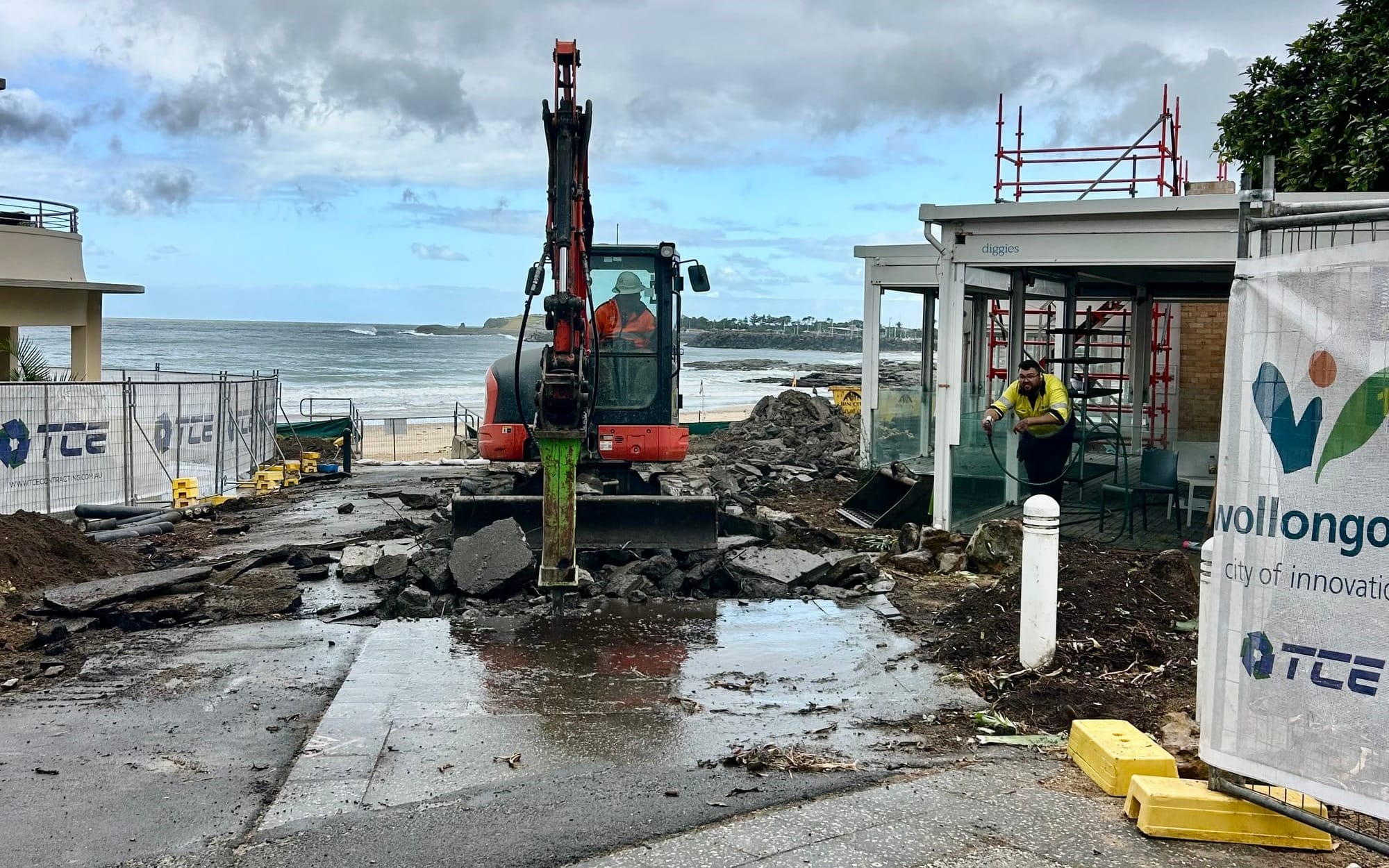
Sam said demolition work is proceeding on the promenade where the grassy area once was. In the weeks ahead, a hard stand will be created to accommodate heavy vehicles, including a 130-tonne crane that will move onto the site.
A full team, including riggers, engineers, fabricators and surveyors, will be on site for the arrival of pre-cast units that will form the structure of the new wall and bleachers.
“The finish will be as close to sandstone as you’ll get,” Sam said. “It’s a 12-month construction period but we’ve built in some contingency to allow for possible delays.”
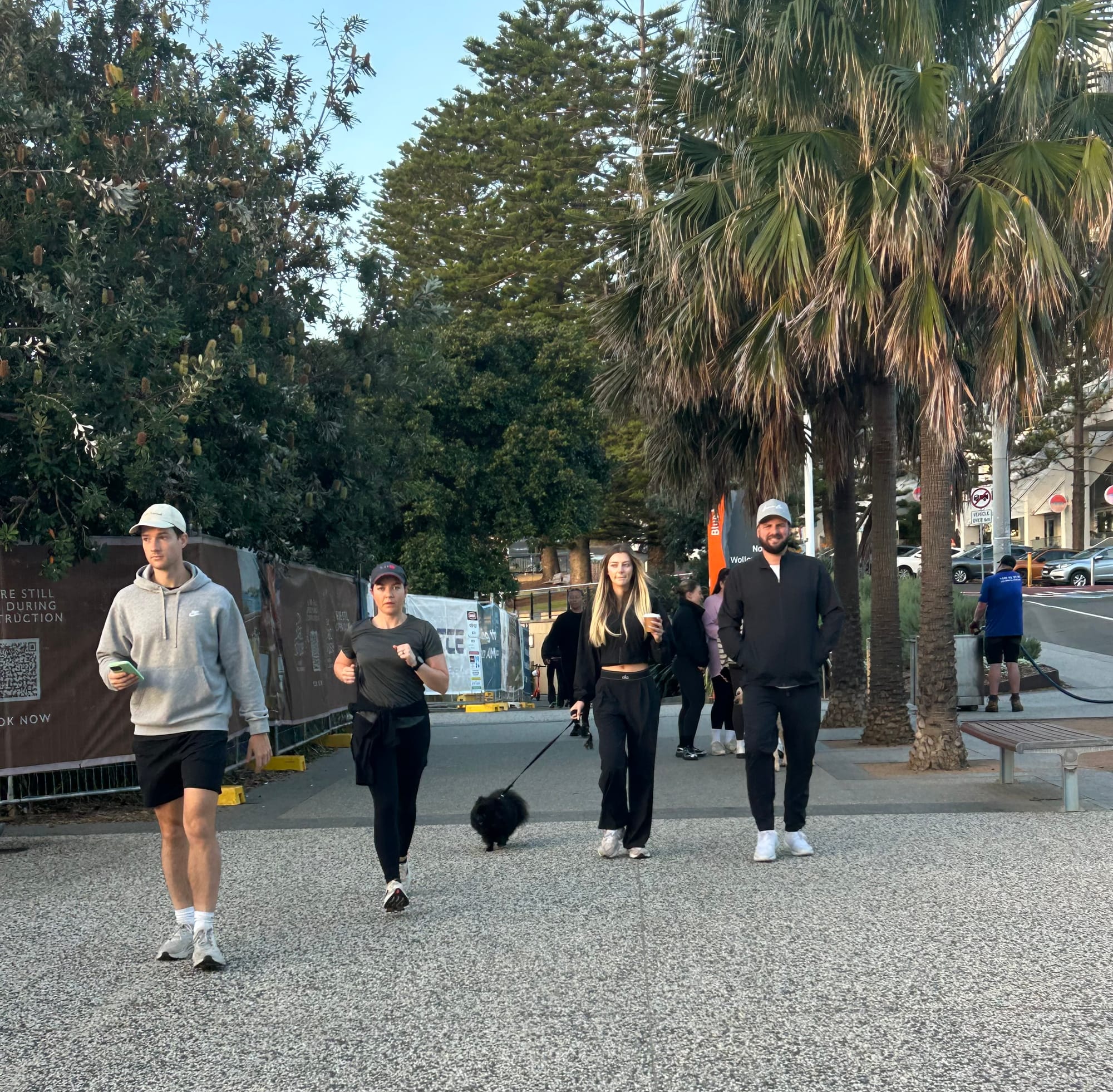
Sam said that, with thousands of people passing the construction site every day and concerns raised over the width of the path along that stretch of the Blue Mile, Council had worked with the contractor to widen the path where possible.
He said despite the disruptions on site, the Blue Mile has still seen the successful delivery of several major events including the Wollongong Running Festival, the Melanoma March and a major beach volleyball tournament.
“Council is committed to working closely with local business and community groups to share the space where possible,” Sam said.
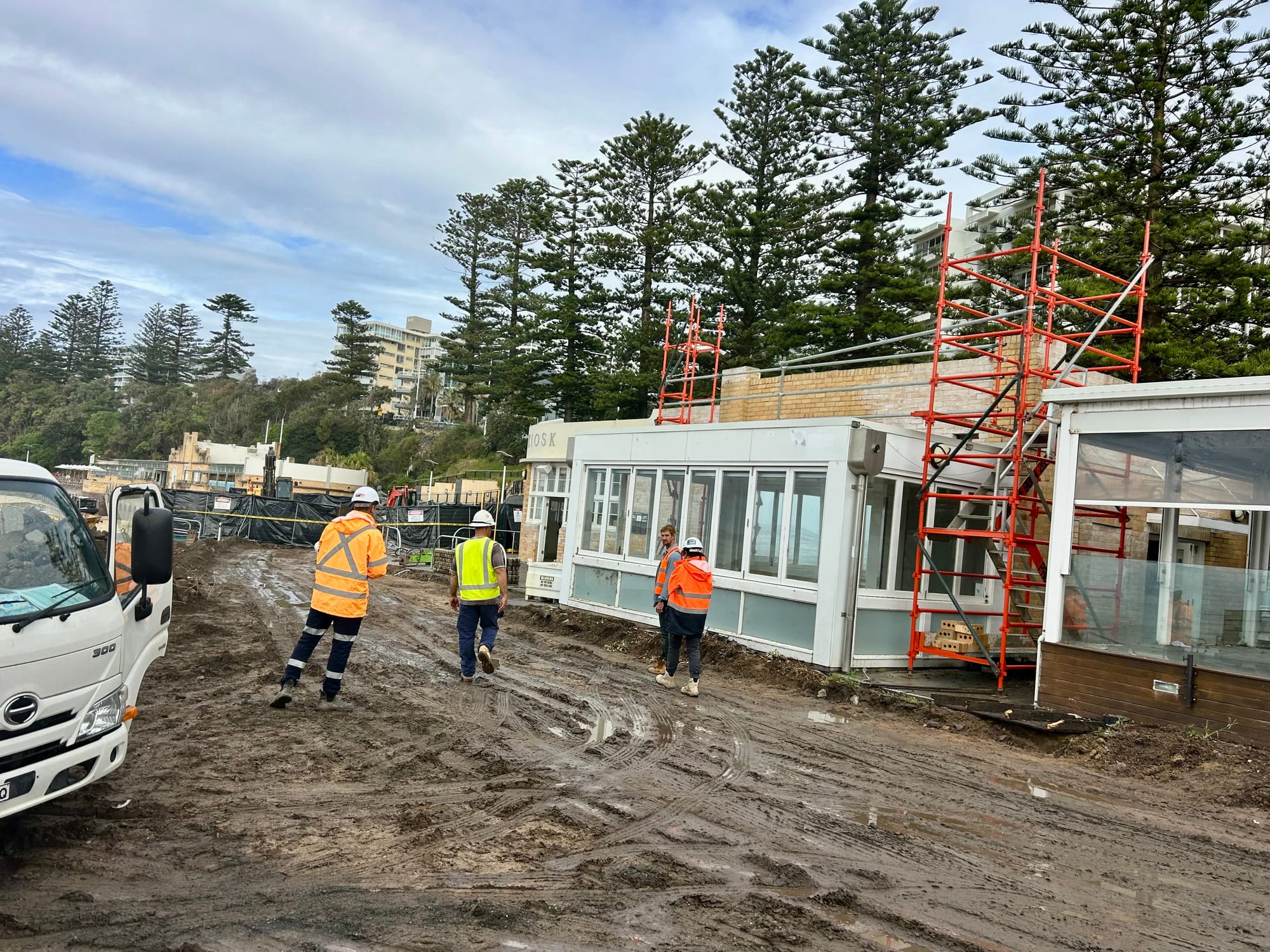
Building repairs underway
He said structural building repair works to both the North Wollongong kiosk and pavilion buildings were happening concurrently to maximise the availability of tradies on site.
“Those buildings are nearly 100 years old now and they’re starting to show their age,” Sam said.
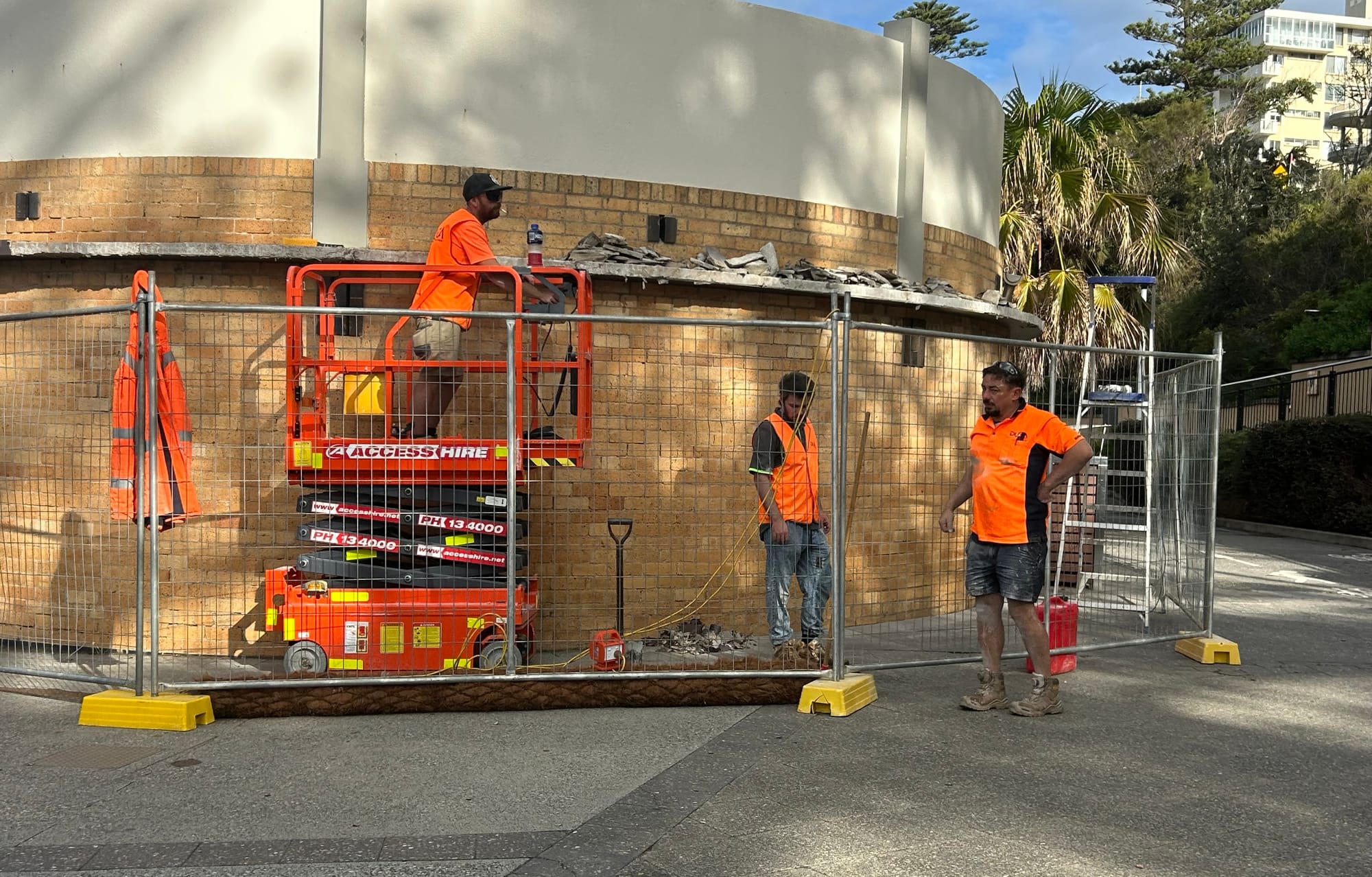
A Council spokesperson said during the replacement of some of the existing damaged external bricks, the internal bricks and cavity have been exposed, allowing Council engineers to assess the condition of these areas that aren’t often visible.
“While assessing these areas, Council has established additional brick pointing and mortar replacement will likely be required due to the degraded state of some of the original 1930s bricks,” Council’s spokesperson said.
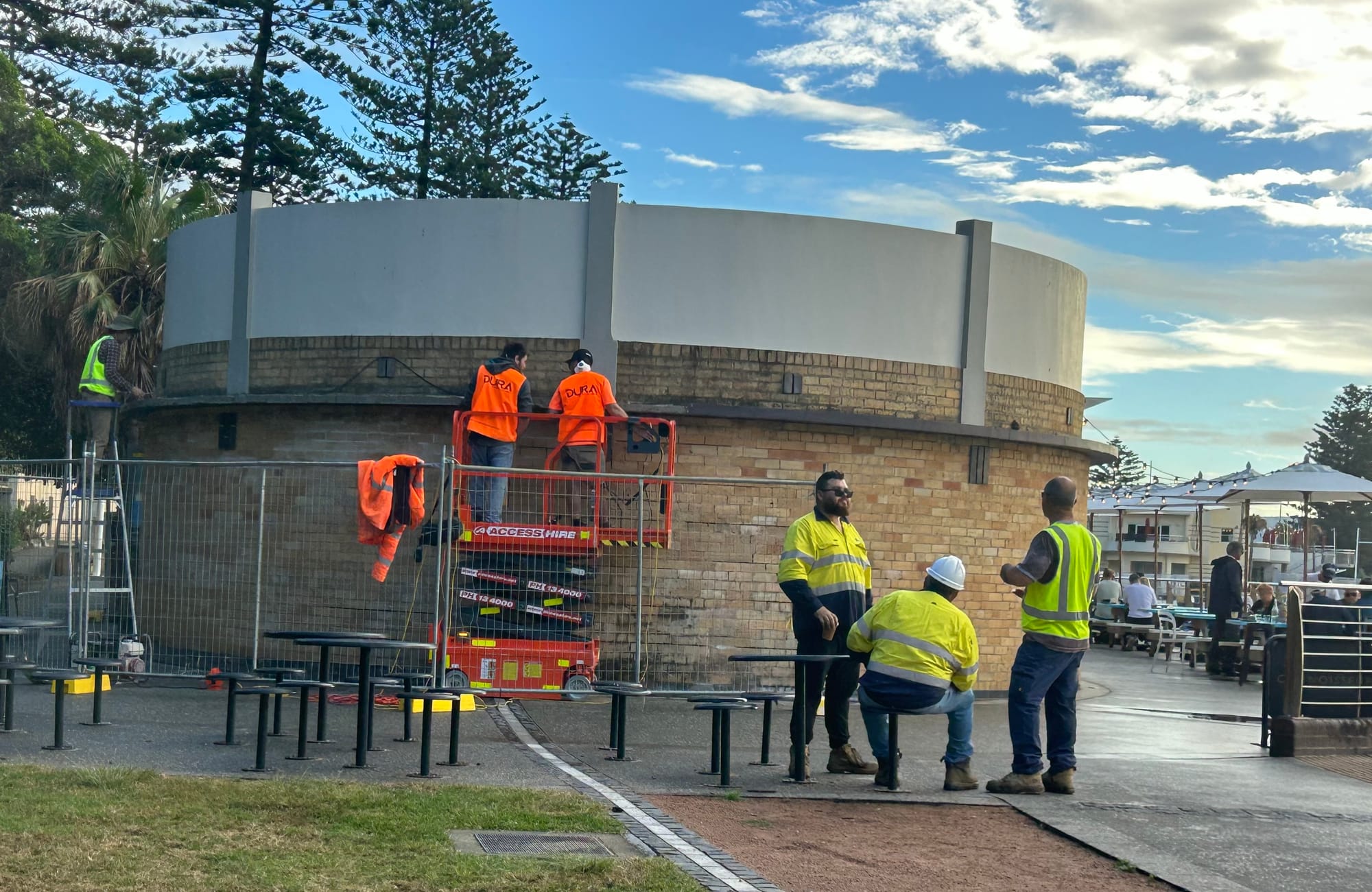
“Large-scale projects like this are not without their challenges and Council has robust plans and contingencies in place to manage issues, like brick degradation, should they arise during the work phase.”


