

Fruiting now: the Giant Stinging Tree
The fruit of 'Dendrocnide excelsa' is pretty in pink but beware: most of this tree is covered with fine stinging hairs that contain powerful neurotoxins
The Giant Stinging Tree is in fruit right now, bearing bubbly, almost pearlescent fruit, ripening in various shades from white to bubblegum pink.
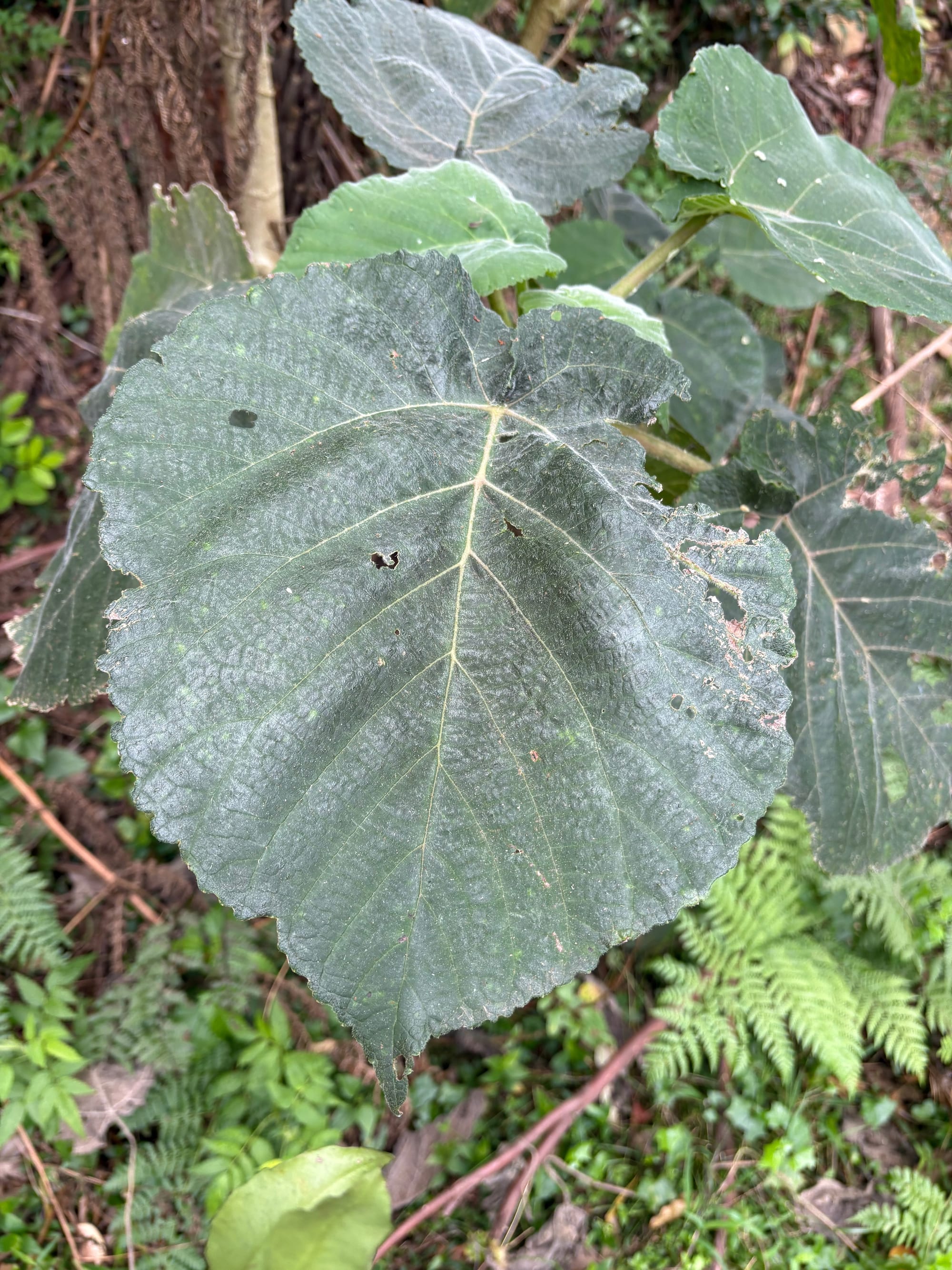
On younger trees the fruit may be at eye level, such as can be seen at the Illawarra Rhododendron and Rainforest Gardens in Mount Pleasant. The tree itself can grow to 30m or more in height in this region, with a grey trunk, much fluted and flanged. The leaves are a bright pale green, round and with a heart-shaped base.
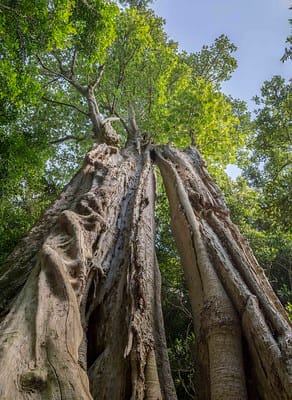
However, as the name suggests, great caution is needed in interacting with this plant.
Most of its above-ground parts are covered with fine stinging hairs that contain powerful neurotoxins and can deliver a very painful and long-lasting sting, even through multiple layers of clothing and some kinds of gloves.
The fallen leaves can still give a sting for some time. Established trunks do not have these stinging hairs, and the fruit's swollen stems (pedicels), which are the portion eaten by animals, also lack the hairs. I've tried them, and not been stung (they taste a bit like raspberries), but it is a risky endeavour and I do not recommend it.
This massive plant is an important component of local rainforests, especially subtropical rainforests on the slopes of the Illawarra escarpment and on volcanic soils in the south of the region. It is a pioneer tree, one of the first rainforest species to colonise light gaps in the forest where another tree has fallen, and also to appear in the relatively light understorey of eucalypt forests.
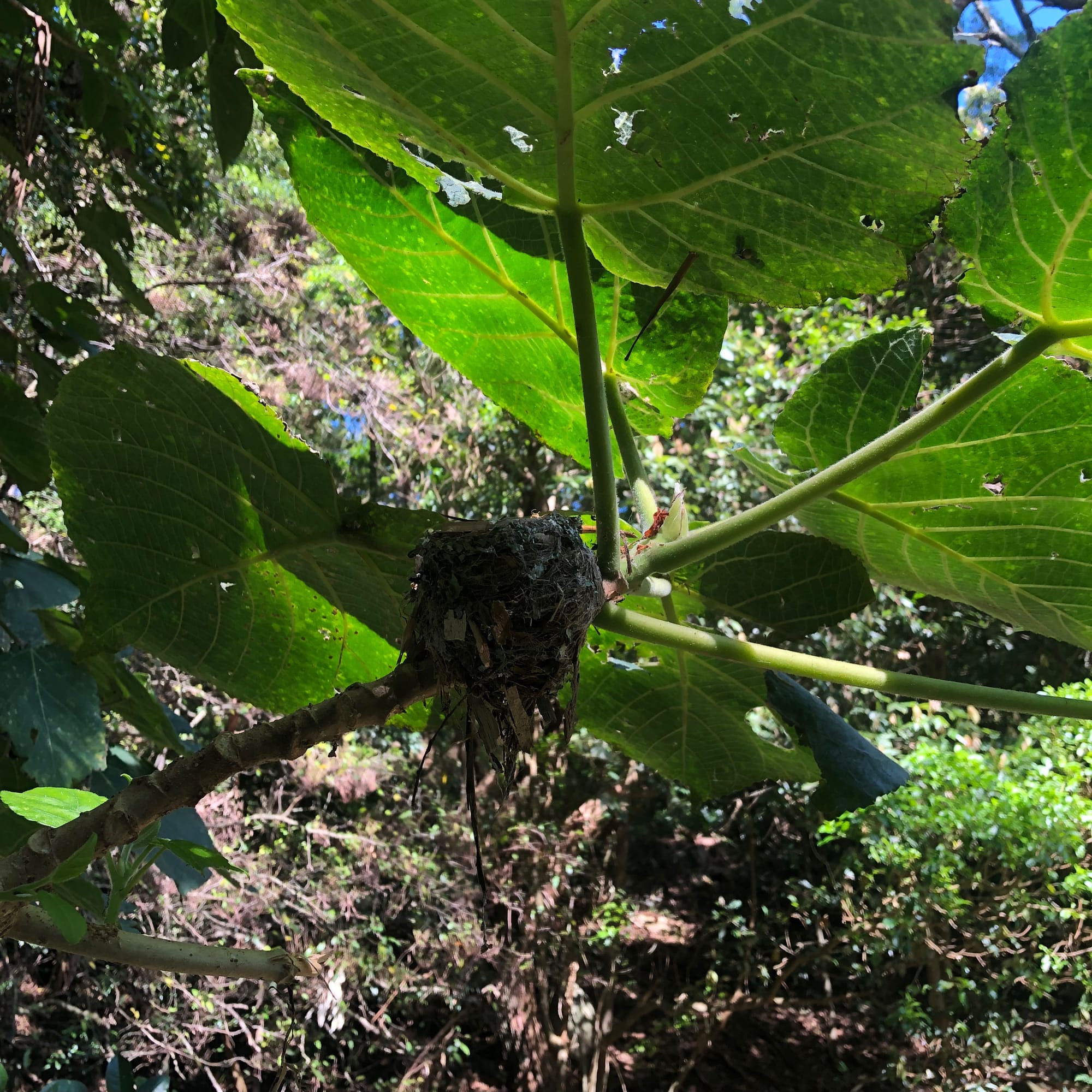
It is also fairly long-lived and persists in established rainforests as a canopy tree, often festooned with large woody vines and ferns such as the Bird's Nest Fern. Birds sometimes build their nests among its branches, as the below image indicates.
The Giant Stinging Tree is also an important habitat tree, with the fleshy stems of the fruit eaten by a birds such as Lewin's Honeyeater, Satin Bowerbird and Green Catbird, as well as mammals. And the leaves, despite their abundant stings, are eaten by chrysomelid beetles (Hoplostines laporteae), which create tiny holes as they munch away.
For its habitat value, Giant Stinging Tree is very important. For its stings, it should be recognised and respected.
In a recent update to the Growing Illawarra Natives website, we included this species – even though it is hardly a 'garden plant' – to help people learn about it and avoid its stings.
About the writer
Emma Rooksby is a volunteer bush regenerator and environmental educator who helped establish the Growing Illawarra Natives website. She is passionate about protecting and restoring biodiversity in the Illawarra.


