

Clean energy champion shares 'sliding door' career moments
City of Wollongong award winner Ty Christopher shares four experiences that changed the course of his career
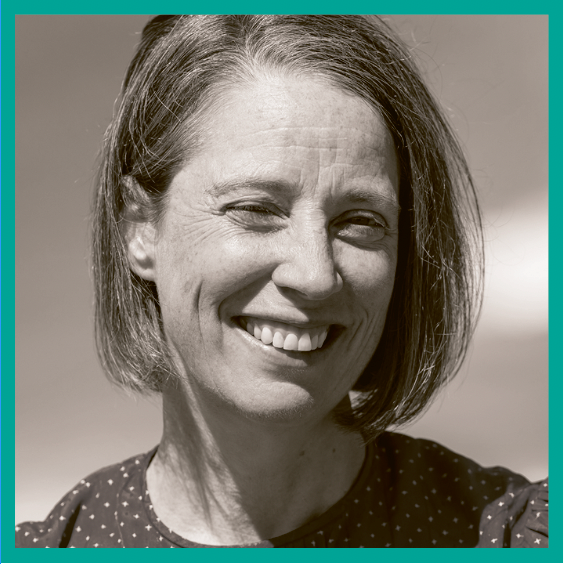
Giving the 2026 City of Wollongong Innovation Award to a scientist working in energy futures makes sense in a region where residents are embracing the switch to solar and entrepreneurs are charging ahead with ways to store it.
What some may not realise is there’s a strong social justice aspect to Ty Christopher’s work as the University of Wollongong’s Energy Futures Network director.
“You've only got to see across the globe the negative impacts that an unreliable and intermittent power supply has on the very fabric of society to see what benefit a reliable and safe and affordable power supply has to a prosperous society,” he said.
“What everyone in the power industry really does, at a fundamental level, is contribute to the safety and welfare of our community.”
The brains behind clean energy exhibits for curious young minds at Science Space, Ty is in demand as a speaker at town halls and business conferences because – as well as an engineer with four decades of industry experience – he’s a science communicator whose gift is explaining complex subjects in simple terms.
Ty has long championed cartel-breaking market reform, community co-operatives and community batteries to bridge the divide between energy’s haves and have-nots – those who can afford panels and batteries, and those set for a cold, dark winter as they cut costs by staying indoors with lights and heating off.
In 2018, he led a ground-breaking project in Dapto where solar feed-in first began causing problems in the grid.
“That was where I started to see, okay, we need to rethink the technology,” Ty says. “That was why I instigated the first community battery in NSW. I devised it, designed it, worked out how to do it and installed it. I wasn't smart enough to call it a community battery, because I'm an engineer.”
Instead he called it a BESS (battery energy storage system). “That's what it is,” he says, laughing. “That’s what engineers do. Don't put us in charge of marketing.”
That early 1-megawatt, 2-megawatt-hour project has been decommissioned but its legacy lives on. Today Dapto has eight community batteries, with more to come.
In May’s federal budget, energy could be a key area for reform, as non-profit service providers heard at a recent Social Justice Day event. Australia Institute economist Matt Grudnoff presented the case for a 25 per cent tax on gas exports – something Ty enthusiastically supports.
“If I have any criticism of us taxing our gas companies at 25 per cent, it is that 25 per cent is too low. We are a nation that makes more money from beer tax and student HECS fees than we do from tax revenue from fossil fuel extraction and oil and gas companies. It is catastrophically and intergenerationally dumb.”
So how did Wollongong come to have this sort of expertise on tap at a tipping point, as more than 50 per cent of our electricity comes from renewables and climate-conscious students seek out careers in clean energy.
The Illawarra Flame asked the 2026 innovation award winner to share his “sliding doors” moments. What were the experiences that put him on a path to success?
A choice of cadetships
On leaving high school, Ty had a choice of two engineering cadetships: at an industrial manufacturer or a community-based electricity provider, the then Illawarra County Council. “They were both sound offers, and I had to decide in about 24 hours,” he recalls.
In a piece of logic he puts down to luck, Ty thought: “Manufacturing may come and go, but people will always need electricity.
“It's the best decision I have ever made apart from proposing to my wife. I've been able to have a career that served community and didn't serve a corporation. That pushes my buttons, my psychological motivators, far more.
“My hope is that the next phase of energy and electricity supply in our nation goes back towards community-based. The foundations for that to happen are already there.”
Goodbye, comfort zone
In the new year quiet of January 2009, a phone call from the boss shook Ty out of a comfort zone. He was offered an eight-week secondment to be the energy company’s contact with a consulting firm. “On the spot, I went, yeah, why not?”
As a result, the company introduced its first external contractors, and did it without job losses. “By the end of April that year, I was an executive in a new role, in charge of delivering all of the capital programs – because of the rapid pace and the complete transformation of delivery modelling and delivery thinking that I was able to bring.”
Around the same time, Ty saw sunshine was the future.
His portfolio included new connections, with a few hundred a week registered via paper and fax. “The first wave of the solar feed-in tariffs broke us,” he says. “At the peak of the solar uptake, we were receiving 2500 solar applications a day.”
The key driver was western Sydney as battlers seized a chance to cut their bills. “The epiphany on renewables came when I saw that, and at that point in time, I said, this is going to keep going. This is going to hit the fan. It's not all because the feed-in tariff is genuine. There's something psychological behind this as well, about agency and people taking control of their own energy supply. This is going to transform the grid.”
Off the treadmill
By his early 50s, Ty had spent a decade as an executive. For 25 years, he’d driven from Wollongong to western Sydney, a commute of more than three hours, eating away at his health, family life and environmental conscience.
“I tallied up 1.2 million kilometres, the equivalent of 30-something times around the equator of Earth, that I'd driven. There was a watershed conversation between my wife and myself. We were out walking of an evening and I vividly remember we decided that that was my last year.”
While Ty had his family’s support, this reset coincided with Covid. “The irony is the week that I left the company, due to an inability to do the commute, was the week we went into lockdown and working from home became compulsory.”
It did open up a path to UOW’s Energy Futures Network and the chance to lean into a “safer, cleaner” future that is now, amid the fuel crisis, also proving “more sustainable, both economically and from a sovereignty perspective”.
The job clincher
No serious career might have come about were it not for a touch of teenage cheekiness. In 1985, Ty was sunk in a couch facing senior executives in an interview in the chief engineer’s office overlooking Wollongong Golf Course. “To describe it as daunting was a massive understatement.”
“Skinny little 17, 18-year-old me” was nervous, he remembers. “But I hadn't stuffed up. Then the chief engineer hits me with: So if you were successful in gaining an cadetship with Illawarra County Council, how far could you see yourself going?
“The colour just drained from my face because I didn't have an answer. Then in a brain to mouth moment, I pulled myself up, looked over his shoulder, out the window, theatrically, sat back down, looked him in the eye and said, ‘Well, the view's pretty good from this office’.”
The chief engineer raised an eyebrow, but the other executives nearly fell off their chairs laughing. “I've been reliably informed in the years hence by all three of them, that was the moment that got me the job.”
His comeback even came to pass. “I spent 10 years as an executive, the last five of those were as the chief engineer – different office, different view, different company, but I did it.”


