

Would Wollongong welcome pumped hydro?
A research scientist has a dual-purpose idea for Port Kembla: to store electricity and boost drinking water stocks via desalination. Now he wants to know what residents think

Australia is rich in sun and wind, and Wollongong already leads the way in storing renewables, with companies such as Sicona Batteries and Green Gravity winning awards and investment.
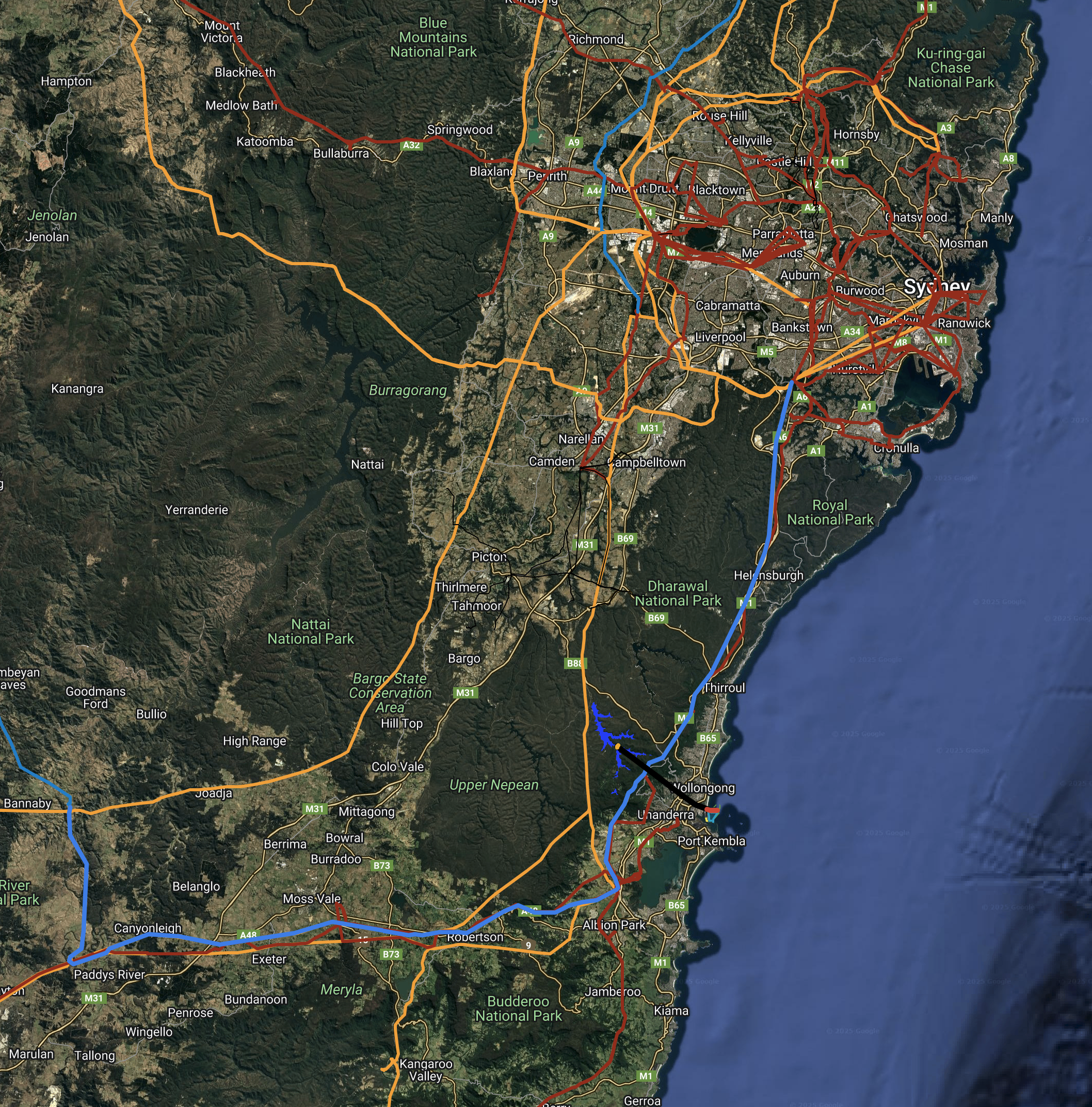
Now a Wollongong scientist has presented a pumped hydro plan to store energy on a vast scale, using Cordeaux Reservoir and creating a new freshwater reservoir in the ocean next to Port Kembla Coal Terminal.
Dr Chris Waring, managing director of MC2 Energy, said the Port Kembla Energy Storage Precinct would serve two basic needs: electricity and water.
While the country is in the grips of a fuel crisis triggered by the Middle East war, Chris believes there’s another one coming after 2035 when coal generators close.
“There’s been a complacency, in my view, about how much storage is required and what sort of storage is required,” he said.
“We're quickly facing a dilemma that we do not have enough energy storage in the pipeline to be able to cover NSW energy needs in 2035.”
The 2GW, 35GWh project would take 10 years to complete. Connecting the two reservoirs would be a 14km tunnel about 100 metres underground, with a powerhouse of six reversible pump-generator turbines under the escarpment.
Capital costs are estimated to be about $8.5 billion.
Why it's needed
A research scientist driven to act on climate change after working at ANSTO for 26 years, Chris sees the project providing lower-cost electricity to Wollongong and Sydney homes, as well as the firm power needed for steel production, decarbonising industry and creating green jobs.
“There's another major benefit in the Illawarra, and that's water security,” he said.
“Having a freshwater reservoir right next to the ocean and a gigawatt-scale capacity power system and power supply – you can desalinate saltwater to produce new freshwater.
“Then you have the pumps in a giant tunnel to feed it up into Cordeaux reservoir, and from Cordeaux reservoir, it's reticulated through to the whole of the Sydney distribution system already. So you can produce huge amounts of new water by dual use of infrastructure.”
Plans presented to Renew
Chris presented his plans to the Illawarra branch of Renew in March.
“People were keen on the idea,” he said. “Some of them are very keen and some of them are a little sceptical – just because of the large size of it.
In Chris's estimates, the Port Kembla project would be similar to the size of Snowy 2.0, which is owned by the federal government. There, costs have blown out to more than $12 billion, plus $4.8b for the HumeLink. However, Chris said that a Port Kembla project would use existing infrastructure and be near its customers, thus avoiding extra billions required for transmission lines. It would also take advantage of streamlined approval processes in the Illawarra REZ.
In its design, Chris said he took care to avoid typical hazards: the geotechnical risks of building a reservoir at the top of a mountain and the environmental risks of disturbing large areas of riverine ecology.
“As a geologist working in environmental science, they stood out to me as being the ones to avoid,” Chris said.
“It's much better to design that in in the first place, by choosing sites that are not going to cause huge environmental damage, and the geotechnical stuff is going to be fairly straightforward.”
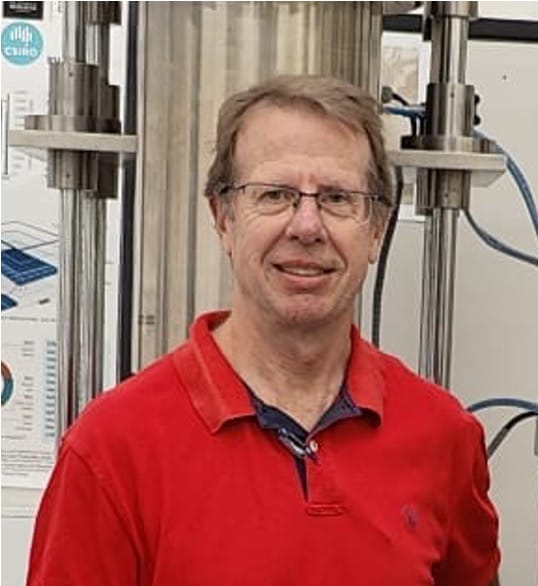
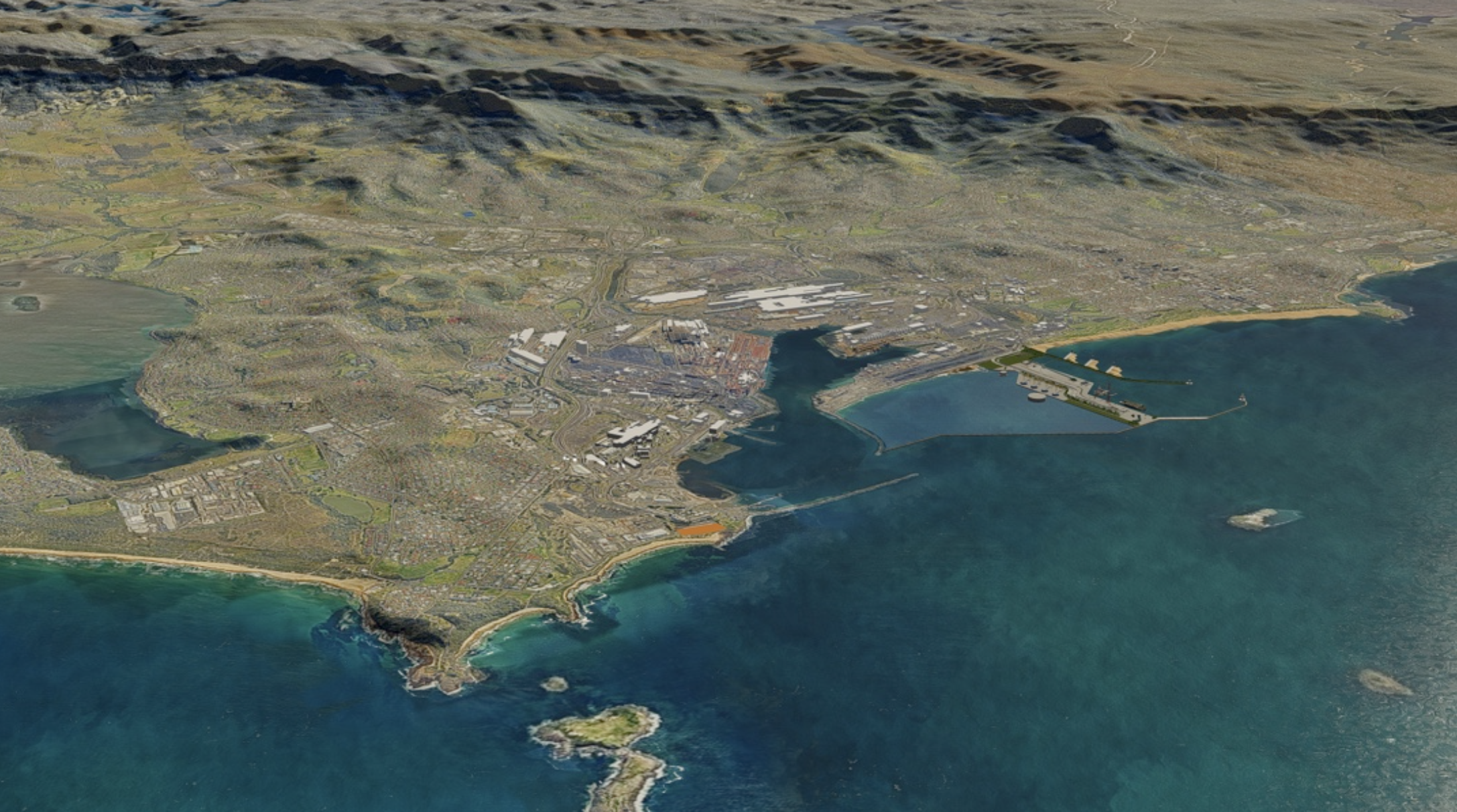
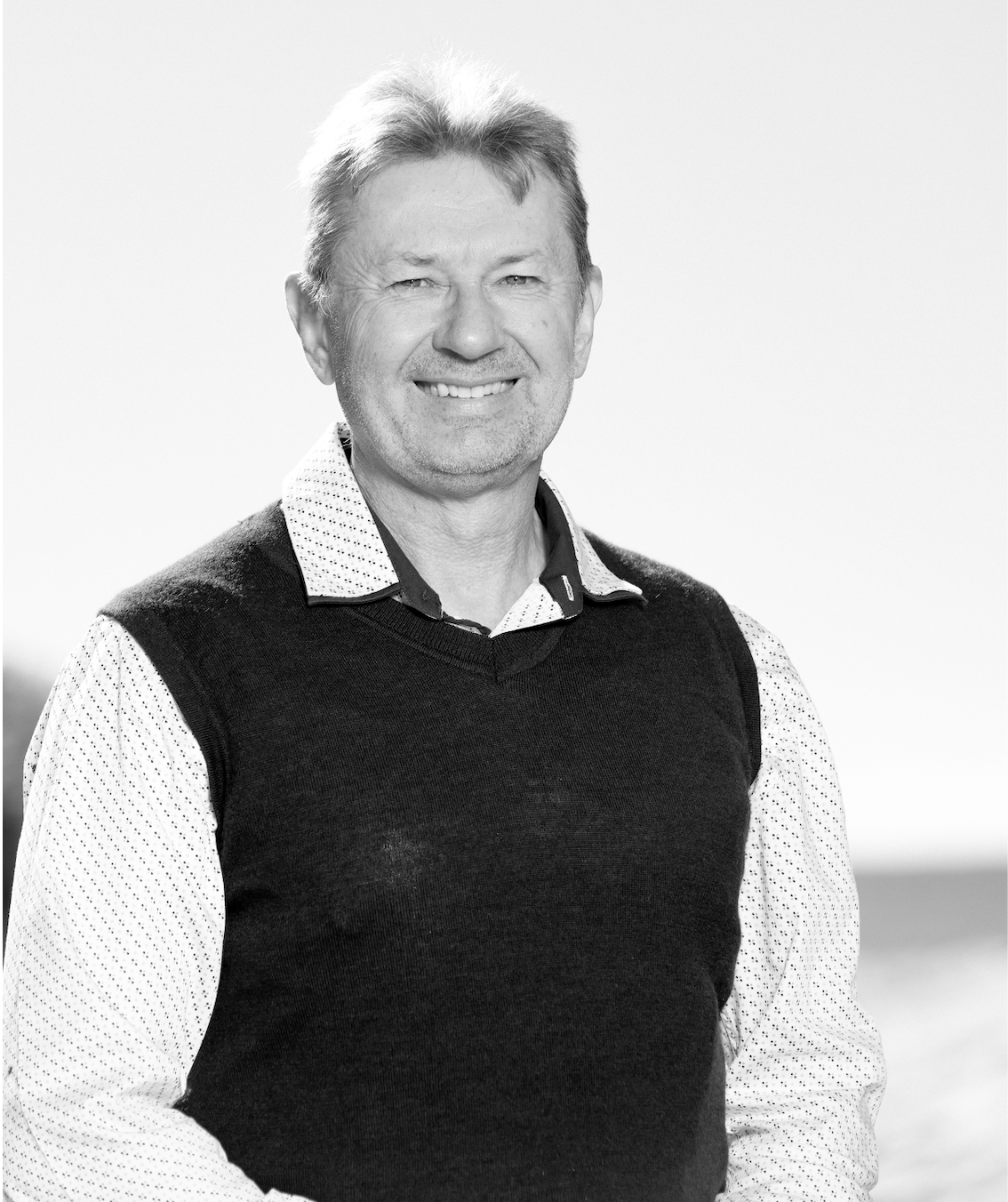
Dr Chris Waring, managing director of MC2 Energy. Sketch at right shows a freshwater reservoir that could be built in the sea as part of the Port Kembla Pumped Energy Storage Project.
'Simple logic' of deep storage
Chris’s career began with studying geology and geochemistry. After graduating, he worked in mining, including at MIM Holdings in Queensland.
“I'm very familiar with underground mines and tunnelling and those sorts of things, and large-scale infrastructure, but for most of my career, I was working as environmental scientist at ANSTO on mine rehabilitation problems and the geochemistry associated with it, so in touch with climate change issues quite deeply.”
The current proposal has its origins in a 2014 partnership with economist Ross Garnaut, who co-founded MC2 Energy with Chris to develop renewable energy storage solutions to help fight climate change.
“It was just that simple logic: The energy transition requires renewables. Renewables require deep storage,” Chris said. “We were both bouncing off each other possible ideas for large pumped hydros.”
Back then, they faced an uphill battle in convincing government of the need for long-duration storage as it was assumed coal-fired power stations would run forever. But renewables gained traction and in 2019, Ross Garnaut published Superpower: Australia’s Low-Carbon Opportunity, a book that became a bestseller. In 2022, the partners split – in a friendly way – to work on different projects in Wollongong and western Sydney.
MC2 Energy's 3D Flyover Port Kembla Energy Storage Precinct
Power for green industry
Pumped hydro is basically a big battery, capable of storing solar or wind energy until needed.
“If there's abundant solar in the middle of the day, you'll use the turbines to pump water uphill into the upper reservoir, and when power is scarce at night or at peak times, you can run the water back down again and create power and energy from running the turbines,” Chris said.
Capable of powering industry, pumped hydro aligns with the federal government’s Future Made in Australia agenda and Chris thinks his proposal would work well with a green iron project. With Australia rich in sun, wind, critical minerals and rare earth elements, he believes drilling for oil would be going backwards.
“The future is obviously in metals production – it's a positive future for the Illawarra where green industry can grow," he said.
“We have many major advantages in the Illawarra, but cheap firm power contracts for those big companies to set up in the Illawarra and produce those green products is only going to happen if you can write a firm power contract for a relatively low cost.
“The jobs of the future will be dependent upon those firm power contracts to be able to produce primary metals like iron or aluminium…”
Next steps
The Port Kembla Energy Storage Precinct has reached a point where it needs investors. “I've done the engineering, environmental and those other studies, but to launch into the planning and apply for a DA, you have to do the feasibility studies, and they cost tens of millions of dollars on a project this size,” Chris said.
Consultants such as Pottinger, GHD and AMOG have provided pre-feasibility advice. Now, in giving presentations and talking to the media, Chris is starting a conversation with the community, which he hopes will be driven by “rational discussion”.
“By going public like this, it’s opening the doors to everybody to have their say, to see what it's like, to get comfortable with it, or complain about it, whatever they like, and having it there for public display,” he said.
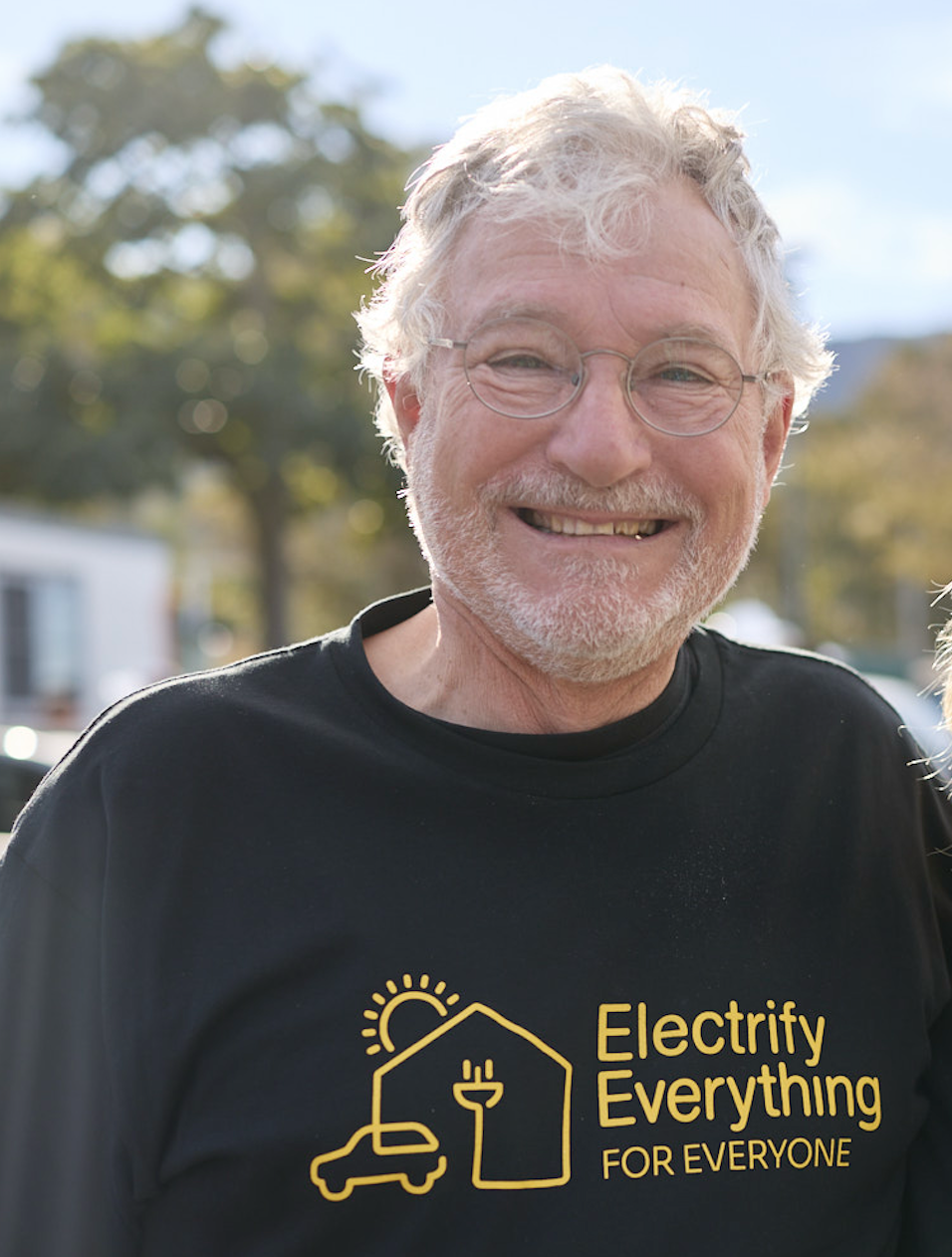

L to R: Electrify Everything advocate Peter Aubourg, Energy Futures Network Director Ty Christopher and Wollongong MP Paul Scully
Feedback on Port Kembla concept
More than 30 people attended Chris’s talk to Renew Illawarra in March, including Electrify 2515 supporter Peter Aubourg, who writes a regular Diary of an EV Driver column for the Illawarra Flame.
“Pumped hydro is a fantastic idea for long-term energy storage,” Peter said.
Peter, who recently reported on his new 24kWh home battery, said he’d be interested to hear more, including how the proposal fits alongside other options.
Home and EV batteries generally store enough energy to cover a few hours. Green Gravity’s new technology – which involves lifting and lowering weights and is being trialled at Russell Vale coal mine – has the potential for two shafts working in parallel to power 3000 homes throughout the night. Pumped hydro is the biggest form of "battery". According to Snowy Hydro, Snowy 2.0 could power 3 million homes for a week.
UOW’s Energy Futures Network Director, Ty Christopher, said the Port Kembla proposal could work “but the impacts and economics need detailed study”.
“Our grid needs long duration storage and that long duration storage has to go somewhere,” he said. “Matching the proposal with offshore wind generation would be ideal, as it would provide a source of energy to be stored.
“Other non-water consuming gravity-based storage such as the Green Gravity technology warrants detailed consideration, especially as the Green Gravity approach re-purposes mining assets and has a lower environmental impact.”
Like any big new infrastructure, public opinion is likely to be divided, with some already concerned about drinking water impacts.
“Yes, the project will draw opposition for sure,” Ty said.
“Some will be well informed, some will be more armchair experts or ‘Facebook research’ based.
“Drinking water concerns are the least concerning issue for me. Drinking water is already sourced from rain, running along the ground into creeks, gathering tons of interesting ingredients from seeds to wombat poop. The water quality impacts of pumping up and down the escarpment are minimal when compared to the normal water pathway we experience every day.”
Wollongong MP Paul Scully, the Minister for Planning and Public Spaces, said he’d seen the concept but no detail.
As NSW Planning could be the consent authority in a future application, he declined to provide an opinion but did say community consultation is part of any assessment process.
“The state government is required by law to assess proposals that come before it. So if there's a community engagement piece for any critical state significant infrastructure – because generally pumped hydro is classified as that – it is a requirement under the approach to planning [that] there will also be a period of public exhibition, where feedback is sought from the public.
“But this all depends on an actual proposal. So until there's an actual proposal, it remains an interesting idea.”
For more information, visit the MC2 website.


