

Landcare wages war on weeds at historic Helensburgh site
Volunteers have come up with novel ways to outfox alien invaders - with mixed results - but the battle goes on after 30 years

Helensburgh’s Glow Worm Tunnel is haunted but not by an old coalminer. (Yes, in 1895 a train did run over a man in an Illawarra line tunnel, but it wasn’t this one.) Instead, it is weeds that rise, time after time, from the dead.
Merilyn House, an award-winning local Landcare leader, has tried drowning, poisoning, cutting off their flowerheads, and experimenting with biological controls. But even after three decades of work, Helensburgh and District Landcare has not been able to eradicate the alien invaders.
It’s not for lack of effort or ingenuity, however.
Right from the start, this site has been a labour of local love.
Trains once ran through the Glow Worm Tunnel to the Metropolitan Colliery but its eastern exit was buried in rubble for 70 years. In 1995, Merilyn’s husband, Allan, realised what lay beneath and worked with the mine to dig up the old station platform and the tunnel.
Helensburgh Landcare volunteers have worked here since, restoring the site to its natural glory, cleaning up rubbish and protecting the glow-worms from thoughtless visitors armed with graffiti paint, fireworks and camera flashes.
After heavy rains, the mine still co-operates by opening a valve at the other end to drain floodwater, and a few years ago, its staff helped with a plan to drown the area’s toxic arum lilies.

“One year when it all flooded here, we asked the mine to close off the valve at the other end, and kept it flooded here for … it must have been about two months,” Merilyn says. “We thought that might have helped, maybe they don't grow underwater. But it didn’t.”
Instead: “Lots of people came down with their canoes and their kayaks.”
In 2018, Crown Lands appointed Helensburgh Landcare as the site manager and today the group – mostly made up of volunteers in their 70s and 80s – raises money through commercial filming fees to pay contractors to come and do the heavy weeding.
So Disney's Kingdom of the Planet of the Apes, shot in here in October 2022, not only generated publicity, it also boosted the environment.
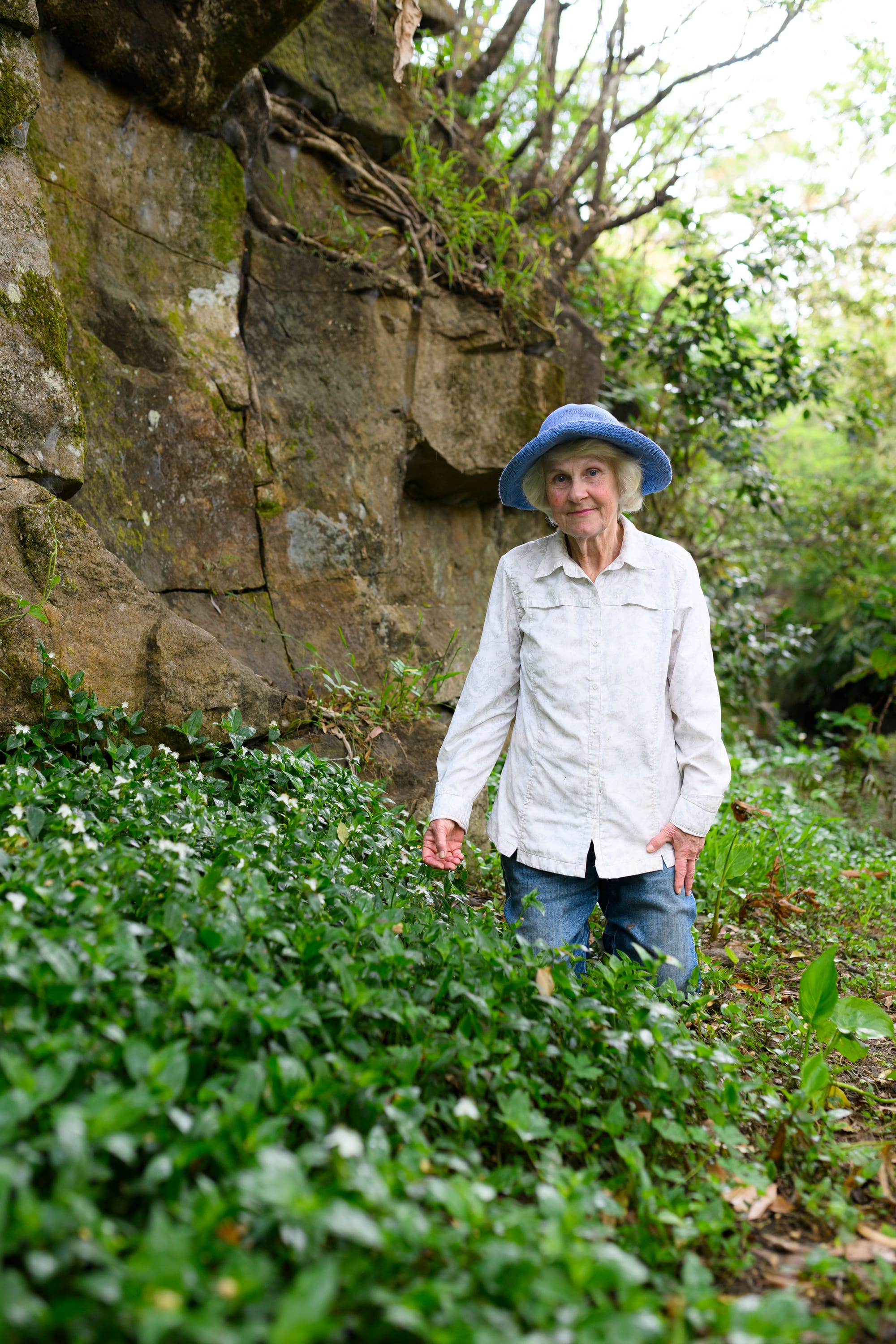
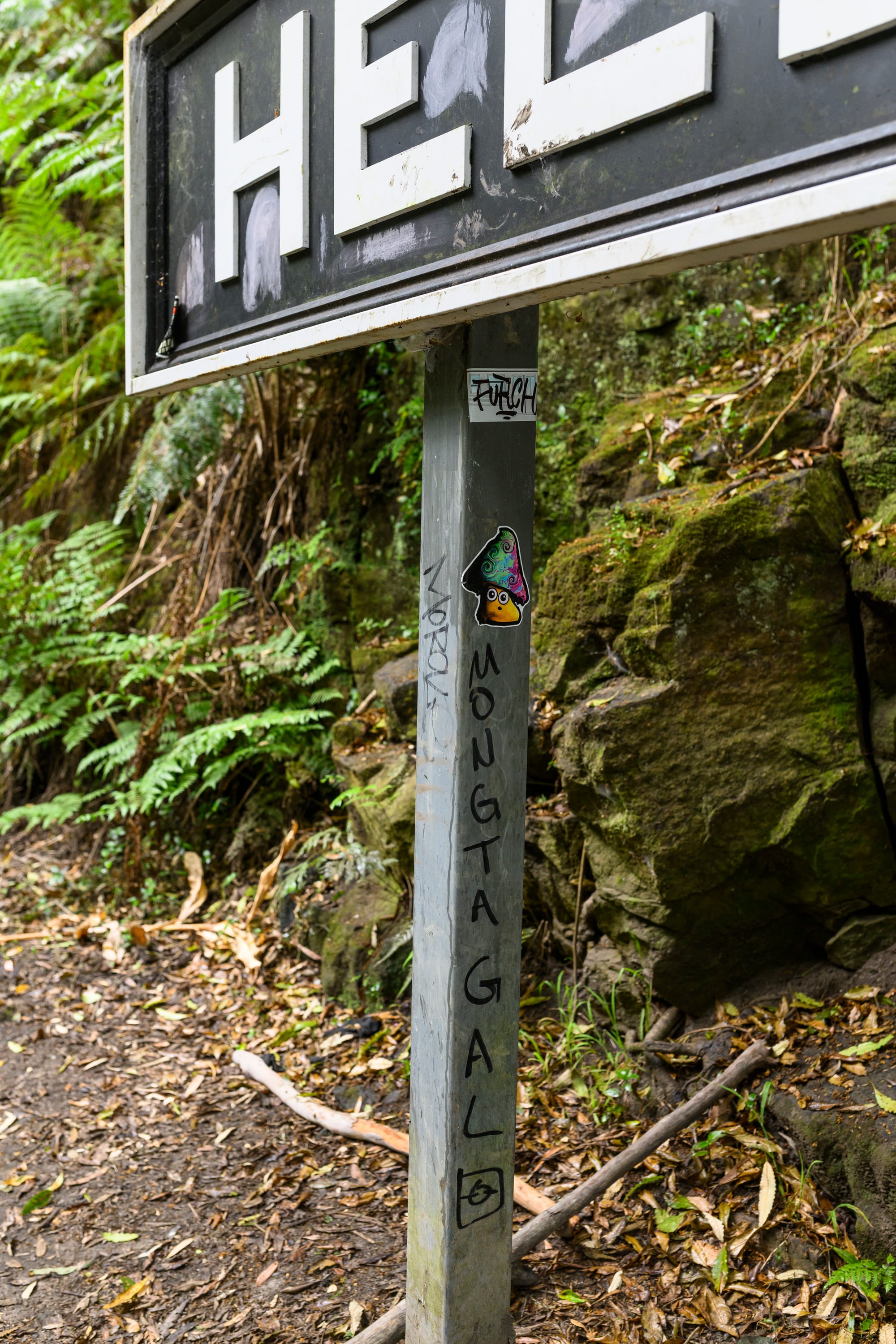
Merilyn inspects a patch of wandering trad. At right: graffiti marks the old station sign replica. Photos: Anthony Warry
While the Glow Worm Tunnel is a beautiful place, shaded by tall trees and ferns growing out of the rockface beside the reconstructed rail line, three weeds remain a particular problem: wandering trad, arum lily and ginger lily.
Helensburgh Landcare has found ingenious solutions for these invasive species, just three of about 3200 weeds plaguing Australia. Many are garden escapees, introduced to decorate suburban backyards, but their seeds have been spread via birds, wind and water into our bushland.
This is why Merilyn’s top tip for gardeners is to pick the flowers off any exotics before they turn to seed.
Weeds threaten native plants and animals, and wreak havoc in agriculture, costing Australia’s economy $5 billion per year, according to CSIRO. The national science agency continues to search for biological control agents to manage the problem, and Merilyn has tried one of their fixes: a leaf-spotting fungus (Kordyana brasiliensis) that targets trad, the South American groundcover that grows in dense mats, clogging water courses and outcompeting native plants.
“The CSIRO provides pieces of trad that have the fungus in it – so you plant them in amongst the trad, and it spreads,” she says.
“The only problem is you can't start pulling it out while you're waiting for it to spread – you just have to plant it and leave it. Once the leaves all go yellow, then it can't photosynthesise anymore, and so it just gradually starts dying off. It's definitely made a difference.”
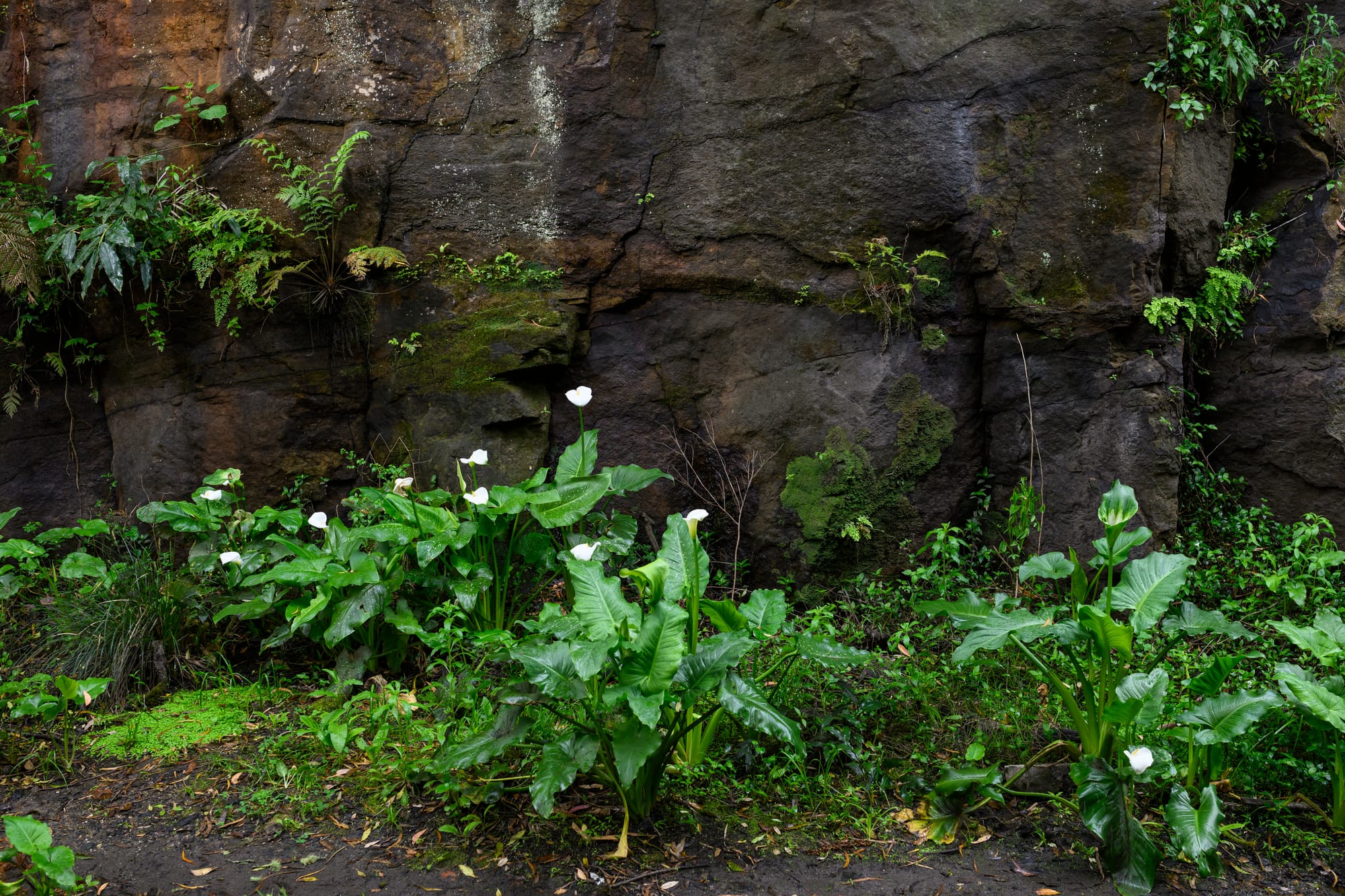
Injecting herbicide into arum lilies does the trick but the weed remains a problem in bushland. Photo: Anthony Warry
Arum lilies – South Africa's 'funeral flower' – are another challenge to remove as volunteers need to dig out the whole root system. By hand, this is back-breaking stuff. After a tip from a botanist friend, Merilyn tried injecting herbicide into the stems. This works well, she says, but takes out only one plant at a time, and there are hundreds growing alongside creeks and drainage lines in Helensburgh.
The Landcare team has not yet found a shortcut for removing ginger lilies, ornamental natives of India, Bhutan and Nepal that thrive in shady spots such as the Glow Worm Tunnel.
“You really need to dig up the rhizomes – the traditional hard work way,” Merilyn says.
Save the date for Clean Up Australia Day
Helensburgh Landcare will hold a Clean Up Australia Day event on Sunday, March 1. The aim is to clean up the town's footpaths, creeks and parks. Register at the Old Mine Surgery, 78 Parkes Street, Helensburgh, between 10am and 1pm. You'll receive a bag to clean up an area of your choice – your own street, the park across the road, creeks, etc. Once you've finished, return the bag of rubbish. Wear long pants and shirt, sturdy closed-in shoes, and bring gloves and water. For further information, ring Merilyn on 0414 819 742, or email merilyn@helensburghlandcare.org.au
Volunteers are also welcome to join regular Landcare work two Sunday afternoons a month at the Glow Worm Tunnel and Wilsons Creek.


