
New legislation could protect workers as coal mines close
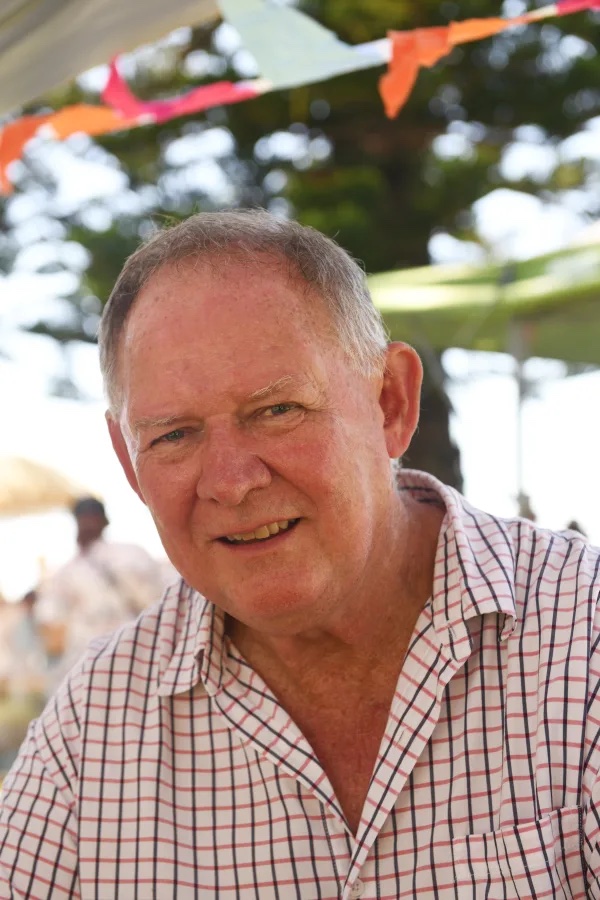
Today's opinion piece is by Darryl Best, retired miner and spokesperson for Good for the Gong

Tahmoor coal mine has sat idle for a year now. While workers are still technically employed, their future is uncertain, with ongoing speculation about a potential buyer or permanent closure. This is not a good situation for those workers or the businesses who rely on Tahmoor for their survival.
The sudden cessation of operations at Tahmoor came with no meaningful plan for creating new jobs for workers, or re-training them into existing industries. Unfortunately, this is an all too common occurrence in coal mines and creates great uncertainty amongst those who depend on the mines for their livelihoods.
This week, the NSW Parliament was considering legislation which, if implemented correctly, could help to prevent this from happening again in the future. It is called the Future Jobs and Investment Bill 2025.
The bill aims to establish both a Future Jobs and Investment Authority and a Future Jobs and Investment Fund. There will be four administrative bodies set up that correspond to the four coal mining regions in NSW. The purpose of these bodies is to advise the Minister for Natural Resources on what industries and businesses could be set up locally to ensure the community and economy thrive as mining winds down.
The objects of this bill are to provide a framework for strategic intervention to encourage economic growth and development in regions experiencing, or likely to experience, structural economic change as a result of changes in demand for coal or coal-fired power generation.
Put simply, it’s about investing real money into coal regions to attract new industries and create secure jobs, rather than abandoning communities once mines and power stations shut down.
This authority will replace the now dismantled and totally ineffective Royalties for Rejuvenation Fund. That fund had $140 million sitting unspent that came from mining royalties. The workers at Tahmoor coal mine or Russell Vale coal mine – which closed last year – would have welcomed that money being invested in new career opportunities.
A commitment of $150 million per year – equal to 5% of the coal royalties collected by NSW – is needed to properly fund the agency’s work across the four regions. The State Government has allocated $25 million per year from the royalties… less than 1% of what is received.
There are critical learnings to be made from that failure.
Any new authority must include a broad cross-section of the community on its governing body, and fossil fuel lobbyists should be excluded from decision-making roles. Also, considerations should be made to ensure the coal companies rejuvenate the land that the mine was operating on.
I travelled to NSW Parliament last week, on February 3 and 4, as part of a delegation of coal region residents to speak directly with MPs about the Future Jobs and Investment Bill.
We went to make it clear that coal communities cannot be an afterthought in the energy transition. We urged parliament to strengthen the legislation so it delivers real protections for workers, genuine retraining opportunities and long-term investment in regional jobs.
Encouragingly, the bill includes obligations for mine owners to announce closure dates well in advance and to provide transition support for their workforce. These provisions are essential, but they must be strengthened and enforced. The penalties for non-compliance are equivalent to five to 10 minutes of operation on a longwall face, a pitiful amount.
We were successful in getting a commitment from the Minister for Natural Resources, Courtney Houssos, to make several changes.
These included that the minister actually takes into consideration the recommendations from the four advisory bodies before money is allocated. Also that the four bodies conduct community consultation so there is complete transparency and the communities can have a say in the future. In addition, the four bodies are to produce a yearly report that is publicly displayed.
Disappointingly, none of these were in the original bill and the need for rehabilitation of the environment and mitigating climate change are still missing.
It was also interesting to see the level of support for changes to the bill from the many politicians that we talked to over the course of the two days. None were openly against the changes we proposed, but several were less than encouraging.
Some local Labor state members, including Keira MP Ryan Park, Wollongong MP Paul Scully and Heathcote MP Maryanne Stuart, were unavailable, which was disappointing given the mine closures in this region. Several Independents agreed to propose amendments to the bill, which showed they genuinely cared for their communities. But the stand-outs were the three members of the Greens Party who we met. Not only were they wanting the environmental failings of the bill addressed, but they were especially keen to ensure that the bill provided protection and incentives so the workers and communities were not abandoned.
The legislation is necessary and welcome. However, its wording needs to be tightened so that it does protect workers and provide meaningful avenues for new careers. Too often, fossil fuel companies reap the rewards of a booming market but walk away leaving the communities and workers high and dry as coal markets cease.
NSW Parliament has a real opportunity to create an authority that truly supports workers and regional communities. To succeed, it must be implemented with integrity and funded properly, with meaningful penalties for noncompliance.
Anything less would be selling our fossil fuel workers and the regional communities short.


