

Smoke on the water: When bushfires strike vulnerable wetlands
University of Wollongong researchers are beginning to understand how coastal wetlands are responding to damage from bushfires six years ago
Summer in Australia is synonymous with “bushfire season”. We all remember where we were when the 2019 Black Summer fires hit the South Coast.
The extraordinary duration and ferocity of the flames, which destroyed more than 2000 homes and 5.5 million hectares of land, grabbed the world’s attention and renewed the call for urgent climate action. The devastation of the singed forests and broken communities was shocking.
The damage did not stop there. Pushing all the way down onto the beaches and waterways of NSW estuaries, the Black Summer bushfires had unprecedented effects on coastal wetland ecosystems and the important functions they provide for people and nature.
Researchers in the Environmental Futures Research Centre at the University of Wollongong are only just beginning to understand how these vulnerable habitats are responding to the damage.
Senior research fellow Dr Jeff Kelleway is a wetland scientist. Working in coastal wetlands and climate change, he never expected his research to branch into fire ecology.
“I never thought that fire ecology would be a part of my skillset in coastal wetlands, but Black Summer really changed that,” Jeff said. ''Seeing that these ecosystems could be heavily impacted stoked not just curiosity, but a real need to address some important questions about how they might respond to fire.”
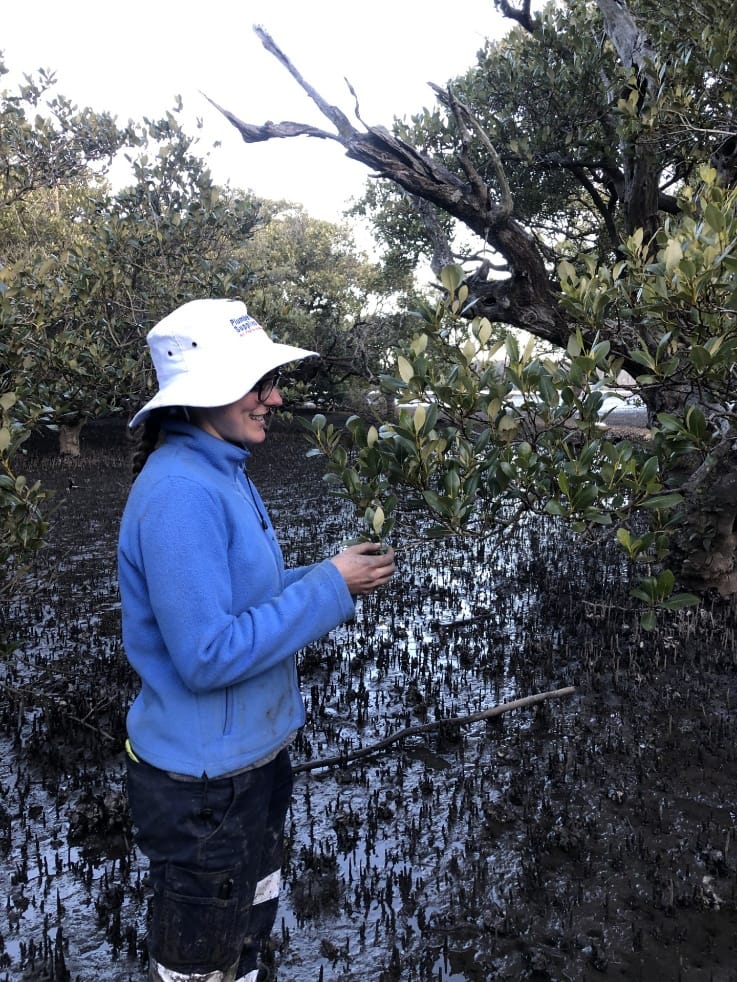
Annabel Green is a PhD candidate under Jeff’s supervision. She is looking at how coastal wetlands respond to bushfire disturbance, but why did she choose this topic?
“Coastal wetlands, which include saltmarshes, mangroves and swamp forests, are really important,” Annabel said.
''They store lots of carbon, support biodiversity and buffer coastal erosion. The swamp oak forests and coastal saltmarshes we work with are also listed as endangered ecological communities.
“These ecosystems are very vulnerable to bushfire disturbance because they don’t get impacted very frequently by fires, so they don’t really have the adaptability that other Australian plants typically have.”
A 2023 study found that about 183 ha of saltmarshes and 23 hectares of mangroves burned across 19 NSW estuaries during the Black Summer bushfires. Jeff and Annabel’s research has engaged Batemans Marine Park; the NSW Department of Climate Change, Energy, the Environment and Water; and the NSW Department of Primary Industries and Regional Development, to monitor their recovery and plan for future events.
Although Annabel has observed some regrowth, she is worried about the resilience of these environments.
“Mangroves recover very slowly,” she said. “It’s been six years since the Black Summer bushfires and in places that were more severely impacted, many of the trees died and we were hoping that seedlings would come and take over, but obviously it takes a long time for seedlings to grow.
“Saltmarsh and swamp forest wetlands seem to recover a bit quicker than mangroves, but we still don’t know the whole story.”
Using drone and field measurements, Annabel and Jeff are looking at the mechanisms controlling disturbance responses in coastal wetlands to understand how fire damage will affect their resilience to future extreme events and other climate change impacts.
Jeff reports on some of their key findings:
“Healthy coastal wetlands have an ability to maintain their elevation, which is really important in the context of changing sea levels,” he said. “They do this either through collecting sediments that wash in or via their roots growing in volume enough to increase their elevation.
“What we’re seeing in our work is that there’s plenty of sediment available after the Black Summer fires and following the floods. The problem is that dead mangrove trees lose their ability to grow new roots, and without those roots, those wetlands are actually starting to sink.
“If these wetlands are sinking at a time when sea levels are rising, then are we going to lose them?”
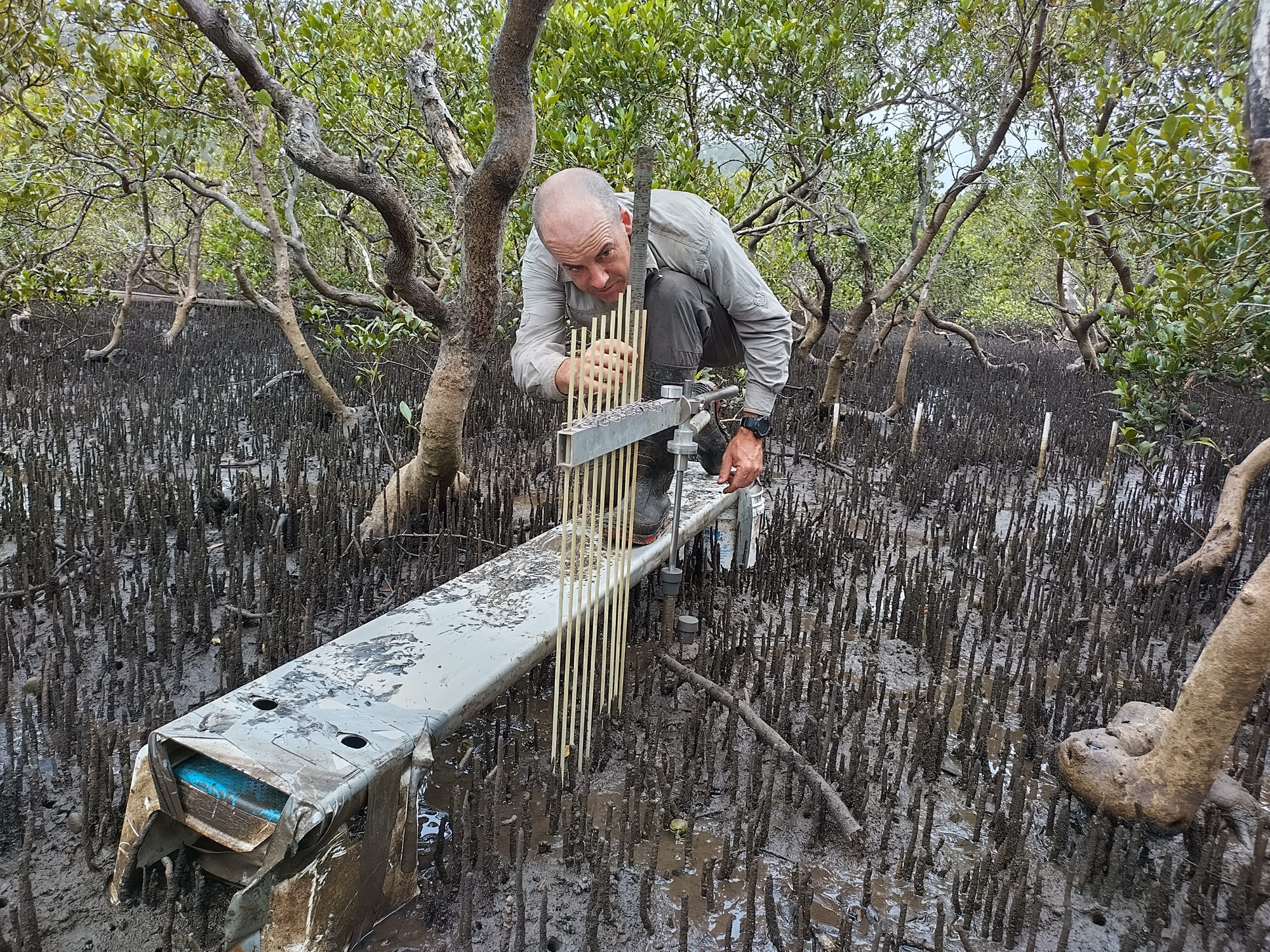
Annabel explains how the observed subsidence could affect the survival of mangrove seedlings, which are important for ecosystem recovery:
“New seedlings generally settle at higher elevations in the tidal frame. If the elevation is dropping, where can those seedlings successfully establish? We are also looking into the effects of water dynamics on seedling establishment.”
Although his work does not directly measure the impacts of fire on water quality, Jeff understands the connection between wetlands and adjacent underwater environments, and is certain the destruction of mangroves is contributing to increased levels of dirt and pollution observed after the fires in the Clyde River Estuary.
“If fires decrease the area of mangroves, this reduces the capacity of these ecosystems to filter nutrients and other pollutants in an estuary, so there is potentially a long-term water quality issue there as well.”
By understanding how bushfires affect critical accretion and recruitment processes in coastal wetlands, Jeff and Annabel are learning how these ecosystems respond to fires without intervention.
However, their work is also informing marine park management and the NSW government’s Intertidal Marine Vegetation Strategy. Jeff shares some key insights:
“When planning for climate change, it is important to understand where coastal wetlands occur now and where they may occur down the track, both under sea level rise and in the context of more extreme events, like fires. This will tell us whether our existing network of conservation areas, including marine parks, is sufficient for protecting them in the future.”
He also suggested that hazard reduction practices be explored in areas adjoining important saltmarsh, mangrove and swamp forest locations:
“Elite teams of firefighters were sent out to protect the Wollemi Pines during Black Summer fires. Is that something we might think about for some of these other important ecosystems that we now know are vulnerable to fire?”
The team are planning a workshop with NSW government agencies and are busy preparing scientific papers that will outline key results and add to the growing body of evidence that coastal wetlands are highly vulnerable to climate change impacts.
This kind of ecological research is important for understanding changes in our local environments and for informing evidence-based management that prevents further degradation and facilitates natural recovery processes.
Follow Jeff on LinkedIn for updates on the project.
Additional sources


