

If a shark station pings, does it close the beach?
When Stanwell Park drone photographer Duncan Leadbitter saw the SharkSmart app light up, he headed for the beach. What he saw prompted a question about Council's ping policy

At 11:09 on a Thursday morning, the Stanwell Park listening station pinged. Tagged White Shark #2901 – last detected two days earlier – was back.
The SharkSmart app lit up and local ocean photographer Duncan Leadbitter took out his drone and headed for the beach. He flew a few laps but couldn't spot any sharks, even though it was a sunny spring day in November and the conditions for aerial photography were good.
Duncan did notice, however, that the red-and-yellow flags stayed up.
He wondered why – what was lifeguards' ping policy?
When a white, bull or tiger shark with an acoustic tag swims within about 500 metres of the buoy off Stanwell Park Beach, the station sends an alert to the SharkSmart app. The human response is less straightforward.
The Illawarra Flame asked Wollongong City Council what its ping policy is, and the answer can be summed up as: it depends.
“The SharkSmart app is only one of the tools Council’s lifeguards use to monitor shark activity at our patrolled beaches," a Council spokesperson told the Flame.
"When our lifeguards are made aware of possible shark presence, including notification via the SharkSmart app, they remain alert and monitor conditions closely.
"As a shark ping on the app does not always pose an immediate risk to swimmers, lifeguards will use visual confirmation to verify if the shark is within or near the swimming zone or if there are other indicators such as large schools of fish that could attract sharks.
"If this is confirmed, lifeguards will close the beach for public safety. The closure includes lowering the red and yellow flags and any required additional measures, such as signage, to let the public know of the closures.”
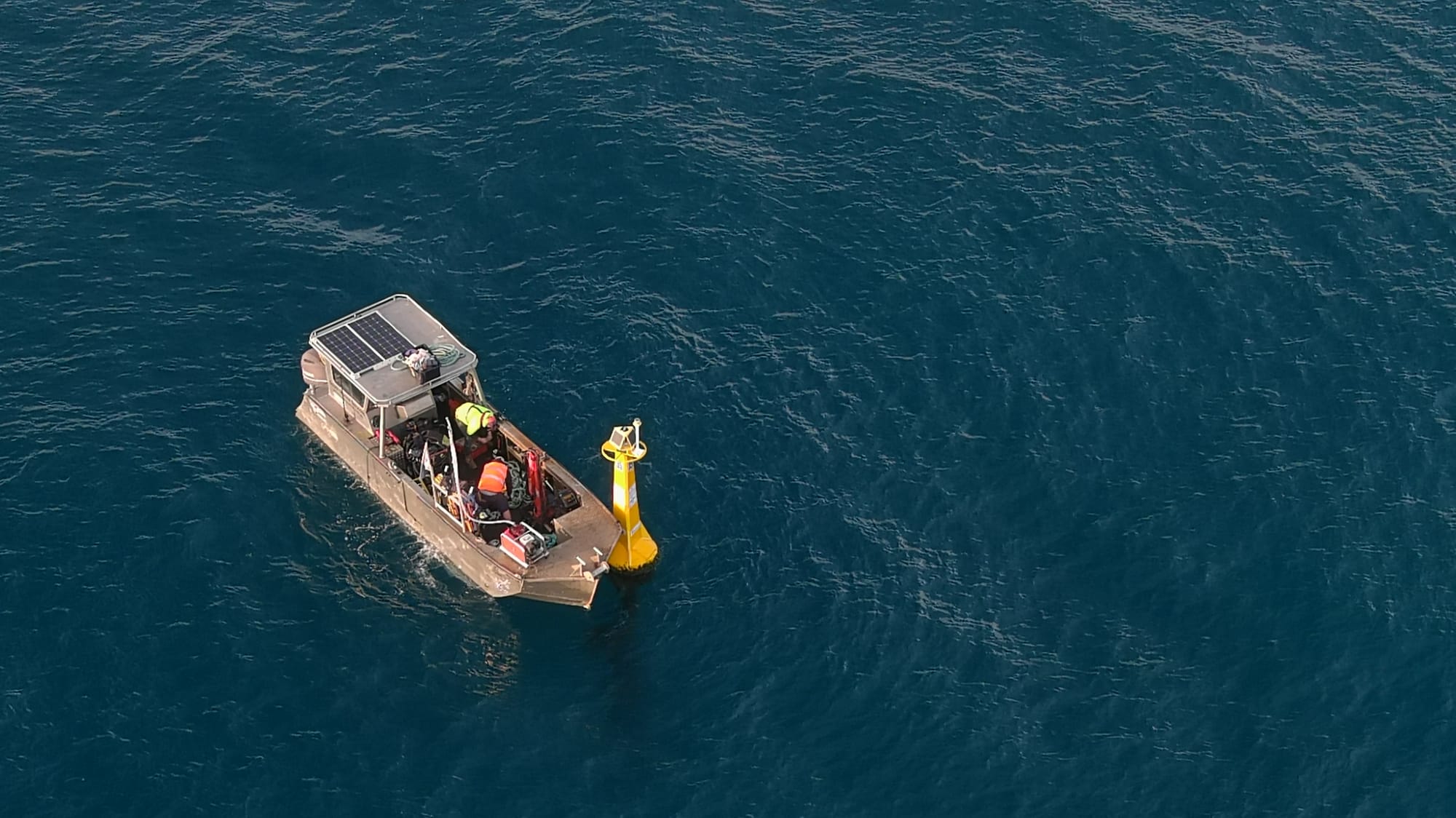
The yellow 'shark listening station' off Stanwell Park Beach. Photo: Duncan Leadbitter
Stanwell Park’s shark listening station is one of four along the Illawarra coast, with more yellow buoys afloat off Wollongong, Shellharbour and Kiama Surf Beach.
The SharkSmart app – which lists acoustic pings and where drone surveillance is used – is free to download on Apple and Android as part of the NSW Department of Primary Industries and Regional Development's Shark Management Program.
While the app, drones and listening stations employ new technology, the $21.4-million-a-year Shark Management Program is better known for its controversial netting policy – which made headlines last year after a juvenile humpback whale died wrapped in a net off Coledale Beach.
New technology has limits, though. Drones are weather dependent and at the start of summer Surf Life Saving Illawarra's UAV coordinator, Robert Gorkin, told us that spying sharks from 'the eye in the sky' is rare. “It's another way of doing observations and mitigating potential negative interactions with wildlife. It's not the silver bullet," he said.
Listening stations register only sharks with acoustic tags (and there are plenty more in the sea). The most recent alert at Stanwell Park, for example, was five days ago, at 11.40pm on January 7, when bull shark #953 swam by on its way south from Cronulla.

Duncan Leadbitter at Stanwell Park Beach. Photo: Anthony Warry
Duncan Leadbitter – a keen scuba diver, snorkeller and photographer who writes a column called ‘Hello Fish’ for The Illawarra Flame’s monthly print magazine – has noticed another interesting human response to the SharkSmart alerts.
“The detection buoys collect a lot of data,” he writes in January’s article, 'Sydney commuter wins Frequent Visitor Award'.
“There have been some detailed scientific papers produced but it’s not that clear how all this protects bathers.
“I often sit on the headland at Stannie and talk with the boardriders, most of whom simply ignore the pings, if they even have the app.”
Duncan's drone footage of a white shark off Stanwell Park in September 2025.


