

Riled residents resist plan to upend Bellambi housing
The NSW government wants to redevelop the beachside area and build up to 2500 dwellings of two to six storeys over two decades

About 100 people have rallied at Bellambi Beach to protest against plans for land that has been a housing commission area since the 1970s.
Over the next 20 years, the state government wants to redevelop Bellambi Point and build up to 2500 dwellings of two to six storeys.
At the protest, organised by NSW Socialists, the crowd chanted: “1, 2, 3, 4, public housing for the poor; 5, 6, 7, 8, stop supporting real estate.”
“Paul Scully, you’ve picked on the wrong community, man – Bellambi will stand strong,” one man told the crowd at the March 28 event.
A woman took to the mic to ask: “Do you want to live in a shoebox unit? Do you want to stay where you are – with a yard, a garage?” A mother said her children had had anxiety, worried about moving house and being homeless.
“About 100 people came out, lots of public housing tenants,” rally organiser Luke Hocking said.
“Several spoke from the platform about their experience with Homes NSW ignoring their requests for maintenance and their anxieties about the proposal and what it will mean for family, friends and neighbours.”
On the Monday before the protest, the NSW Socialists representative had addressed Wollongong City Council’s March meeting and promoted the rally, saying: “There are more than enough houses to go around. But in Australia today, houses are treated not as places for people to live but as commodities to be traded on the market.”
Luke said properties “should be expropriated by the NSW Government and turned into public housing if they're left empty for more than 12 months” and described the Bellambi plan as one “ to rob from the poor, to give to the rich”.
NSW Socialists was set up late last year as part of a nationwide expansion of Victorian Socialists, and it is one of two new political parties catering to the disaffected in Wollongong. At the opposite end of the spectrum, One Nation launched a Cunningham branch at Bulli Workers Club in January.
While Bellambi's protest responded to a single redevelopment, it was a symptom of a wider problem that stretches well beyond changes ahead for Wollongong.
Inequality is rising across Australia. People are struggling with the cost of fuel, food and housing, putting pressure on social services.
At the same time, the Illawarra Shoalhaven is set to become the fastest-growing region in NSW. Within it, the Wollongong Local Government Area – home to 214,657 people in the 2021 census – is expected to attract an extra 77,000 over the 25 years until 2046.
Wollongong struggles to house the vulnerable. Homes NSW – part of the Department of Communities and Justice – says there is a social housing waiting list for 2300 households in the Wollongong LGA.
“There are 68,000 households eligible and waiting for social housing in NSW,” said Nicky Sloan, CEO of Community Industry Group, peak body for not-for-profit community and human service providers across southern NSW.
“In the Illawarra, wait times for social housing is over 10 years, and with some of the least affordable rentals in the state, that means people on low incomes are being increasingly forced into homelessness.”
“We are highly supportive of initiatives which ensure the greatest number of safe, affordable and appropriate social housing for our region’s most vulnerable people and families.”
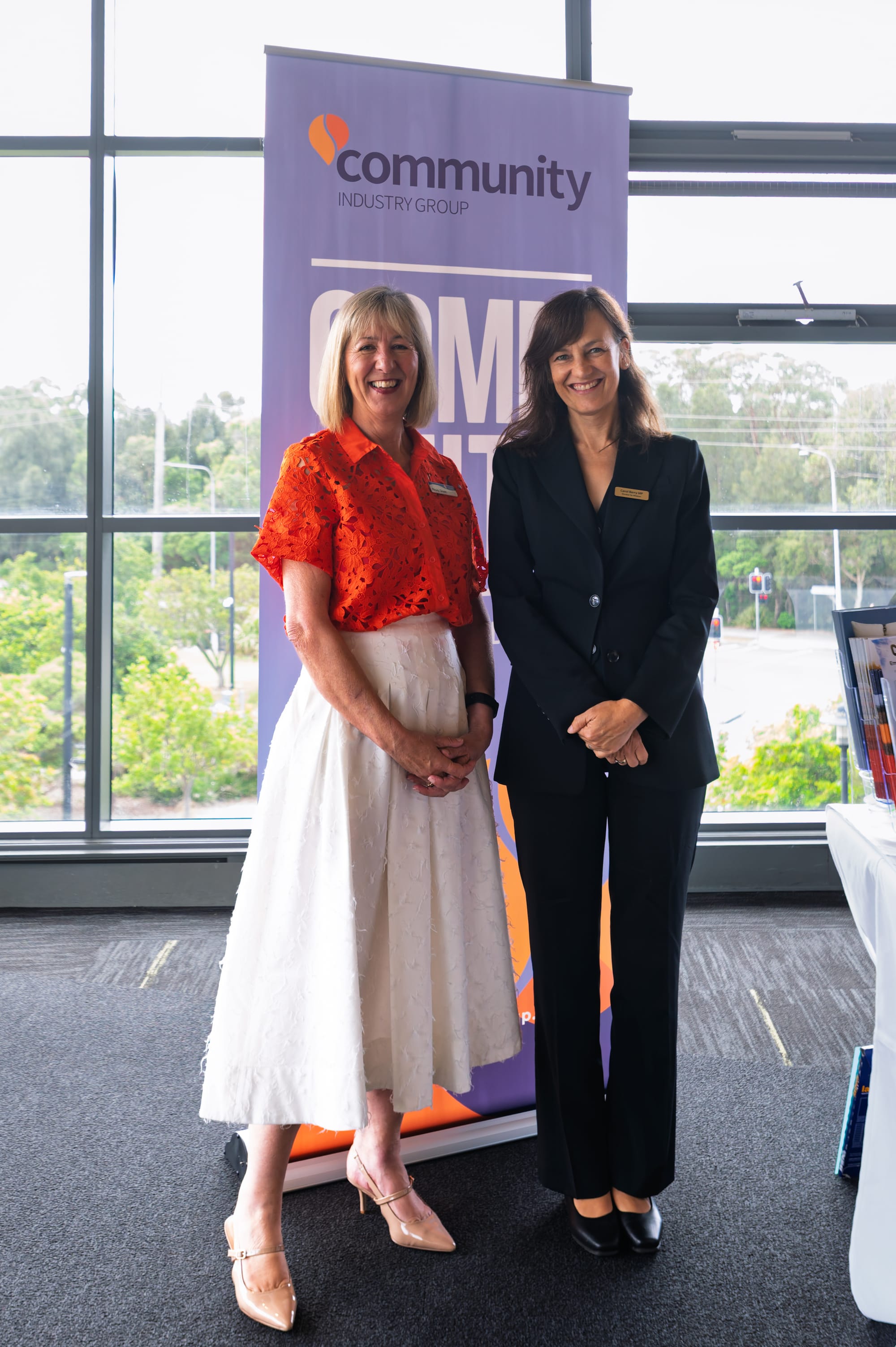
On World Social Justice Day in February, CI Group hosted a Fairer Australia workshop for its members. Recently released findings include calls for reform, with participants wanting a “major expansion of quality, diverse and inclusive social housing”.
“Housing and infrastructure are central to dignity, stability and participation,” CI Group's report said. “Without secure housing and accessible transport, inequality deepens and pressure on community services intensifies.”
Housing stress in Wollongong is higher than the regional state average. The median house price has increased to $1.3 million and the median rental for a one-bed unit is $495 a week, according to RealEstate.com.
Many locals would have seen evidence of the city’s struggles and the rise in rough sleepers, be it people living in cars with pets or camping in beach dunes. Last year, council issued a Homelessness Info Card to connect people with emergency housing, legal aid, free meals, mobile laundry and shower services.
It was against this backdrop that Wollongong City Council met on March 23, with staff’s draft submission on the Bellambi Point Rezoning as Item 1 on the agenda.
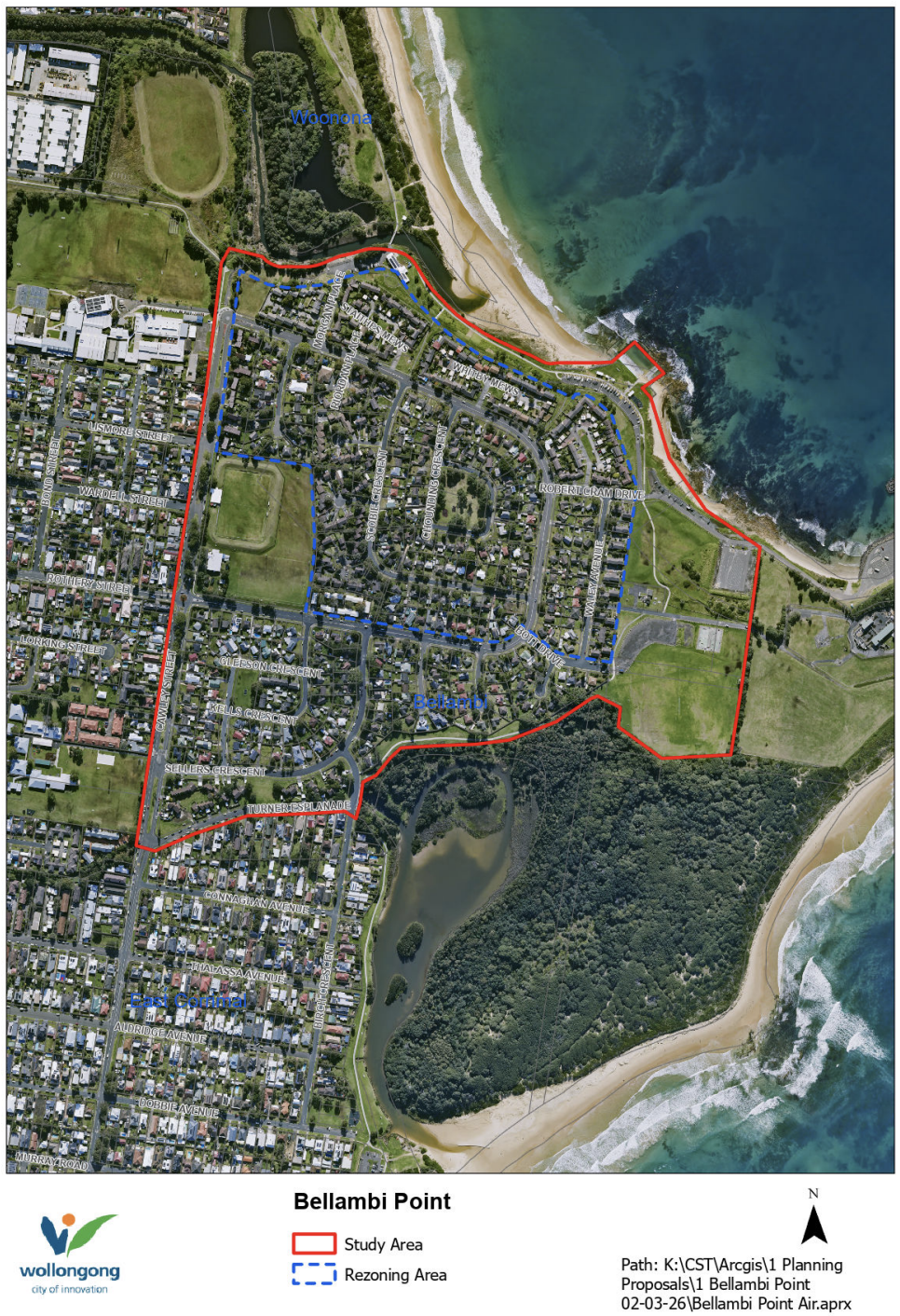
The proposal – which council overall supported – included rezoning land from low to medium density residential, raising building heights from 9m to between 13 and 22m, and more than halving minimum lot size, from 449m2 to 200m2.
In their discussion, councillors agreed on the need for social housing, but were split on how much was best in the Bellambi development. The Greens wanted a target of 50%, while Labor councillors supported staff’s draft submission, which simply stated “Council would support a higher percentage of social housing”.
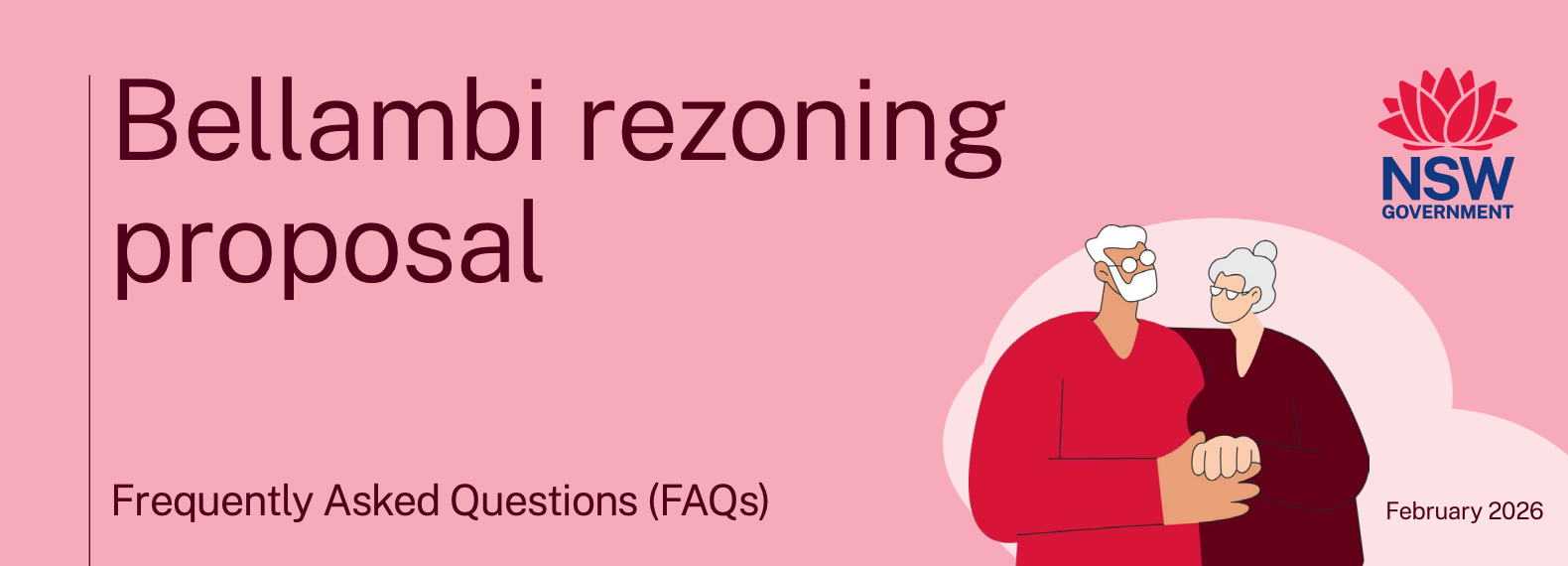
Labor's Ward 1 Cr Richard Martin said Bellambi’s renewal had been talked about for 15 years but neglected by “the previous government”. To address “mistruths”, he recommended Homes NSW's Q&A and said: “Their plan is to build and move within Bellambi.”
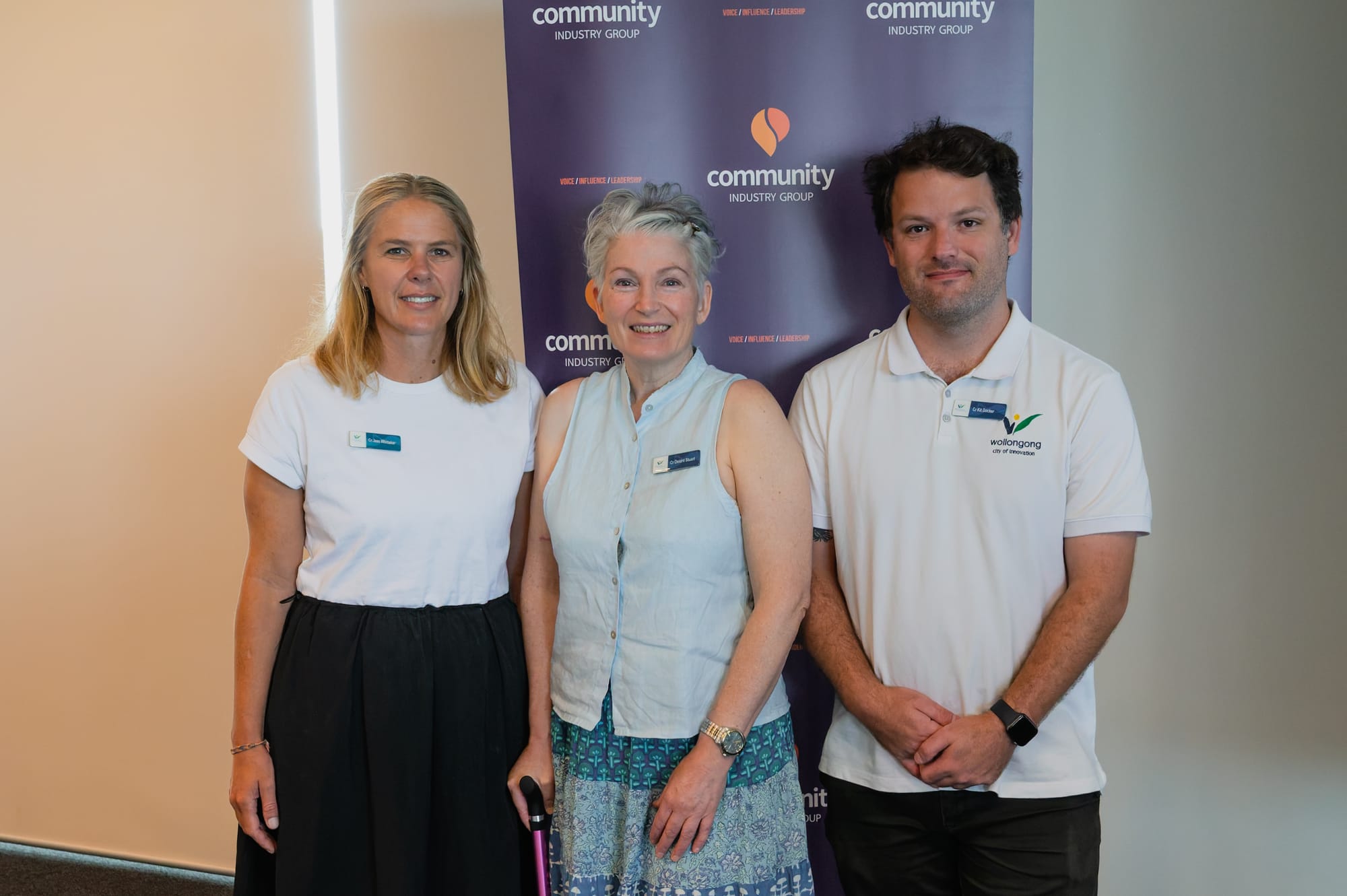
Greens Cr Deidre Stuart then proposed an amendment to ask for half of new homes to be public housing.
“I do think that we should put a number on what we are asking here,” Ward 1 Cr Jess Whittaker said. “Being specific is helpful.”
Fellow Greens Cr Kit Docker said: “The uplift in density represents a far more efficient use of land, both for people and the environment.” But he added that dropping the proportion of social housing from “around 95% of dwellings” to 30% was concerning and would be “fundamentally shifting the purpose of this community”.
Labor Cr Dan Hayes spoke in favour of a “salt and pepper” mix of social housing and private homes, saying: “This is the current approach. Because everyone has recognised that the previous approach of clustering public housing or social housing has not worked in the long run.”
Deputy Lord Mayor Linda Campbell said: “I come from it from a very unique perspective, having spent my childhood growing up in public housing in Berkeley and then in Koonawarra.”
She said “being in the same boat” did not help people: “You need to have, as Cr Hayes described, the salt and pepper approach, because socially, that's how you allow everyone to lift so we've finally figured that out, after years of getting it wrong and creating slums.”
Lord Mayor Tania Brown backed staff’s draft submission. “I appreciate the detailed economics that it takes and that Home NSW has to go through to make all of this stack up and the need for private housing to subsidise the construction of the social component,” she said.
“But given the long wait list in our region and the ever-growing demand, I do ask that serious consideration be given by Homes to increasing the output.”
The Greens amendment was lost and council’s submission was endorsed to go to the NSW Department of Planning, Housing and Infrastructure.
The department is reviewing feedback and will send the final recommendation to the Minister for Planning and Public Spaces for determination. If approved, new planning controls will apply and Homes NSW will prepare more applications for future stages. There will be more community consultation.


