
Seen the new wildlife crossing on the M1? It’s 'bewildering'
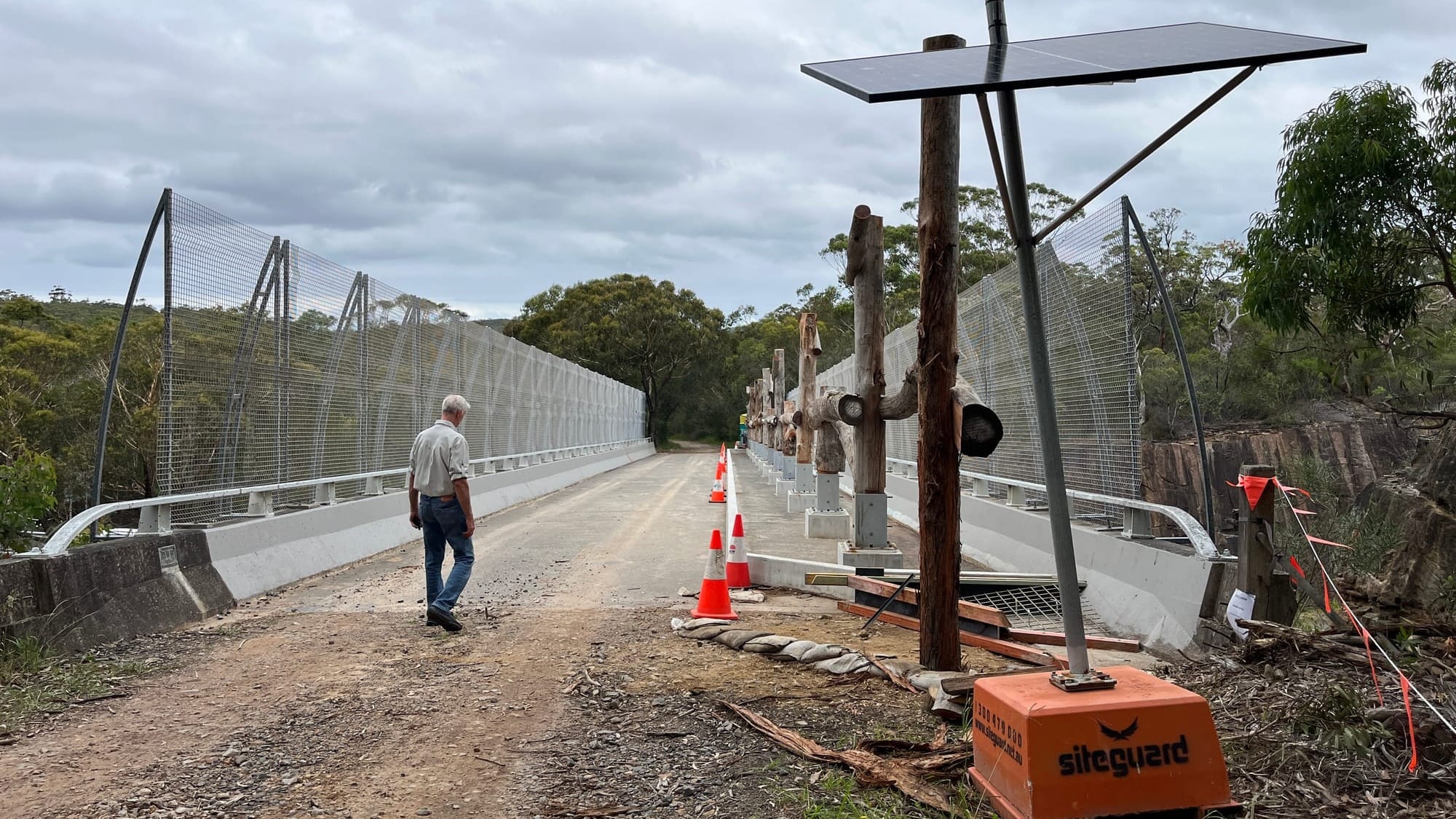
A new wildlife crossing is rising on Cawleys Road Bridge above the M1 between Helensburgh and Waterfall

Hidden in bushland in the far north of Wollongong, something incredible is happening. Ants are crossing a bridge.
“They weren’t here yesterday,” says Bob Crombie, a lifelong conservationist who first backed the idea for a wildlife crossing on Cawleys Road Bridge in 1974, when he was a young ranger in the Royal National Park.
“It’s very exciting,” he told the Flame on a walk-through in the Garawarra State Conservation Area on Friday.
The new structure on the southern side of the bridge is bare bones: a series of logs have been bolted in place, including blackbutts cut down in the Mt Ousley Interchange works. Still to come are soil, plants and a $2000 rope overhead for sugar gliders and possums.
Even so, creatures are coming.
“The ants that we've got here, they’re little black ants – they’re going from one side to the other,” Bob says, pausing to film this remarkable proof of concept.
"Life finds a way.
“Everyone thinks it’s for koalas, possums, kangaroos and all that. It's right down to the insects and frogs and lizards and snakes; they're just as important. In many respects, they’re more important.
“A lot of insects won't go into open areas, because immediately they do, they get eaten by a bird. And insects are our major pollinators.”
Traffic on the M1 roars below and headlights are still blinding at night, but just the shelter of a few logs has been enough for some.
Possums and goannas have been caught on wildlife cameras, and butterflies have also used the crossing. “They were just flittering along, down low."
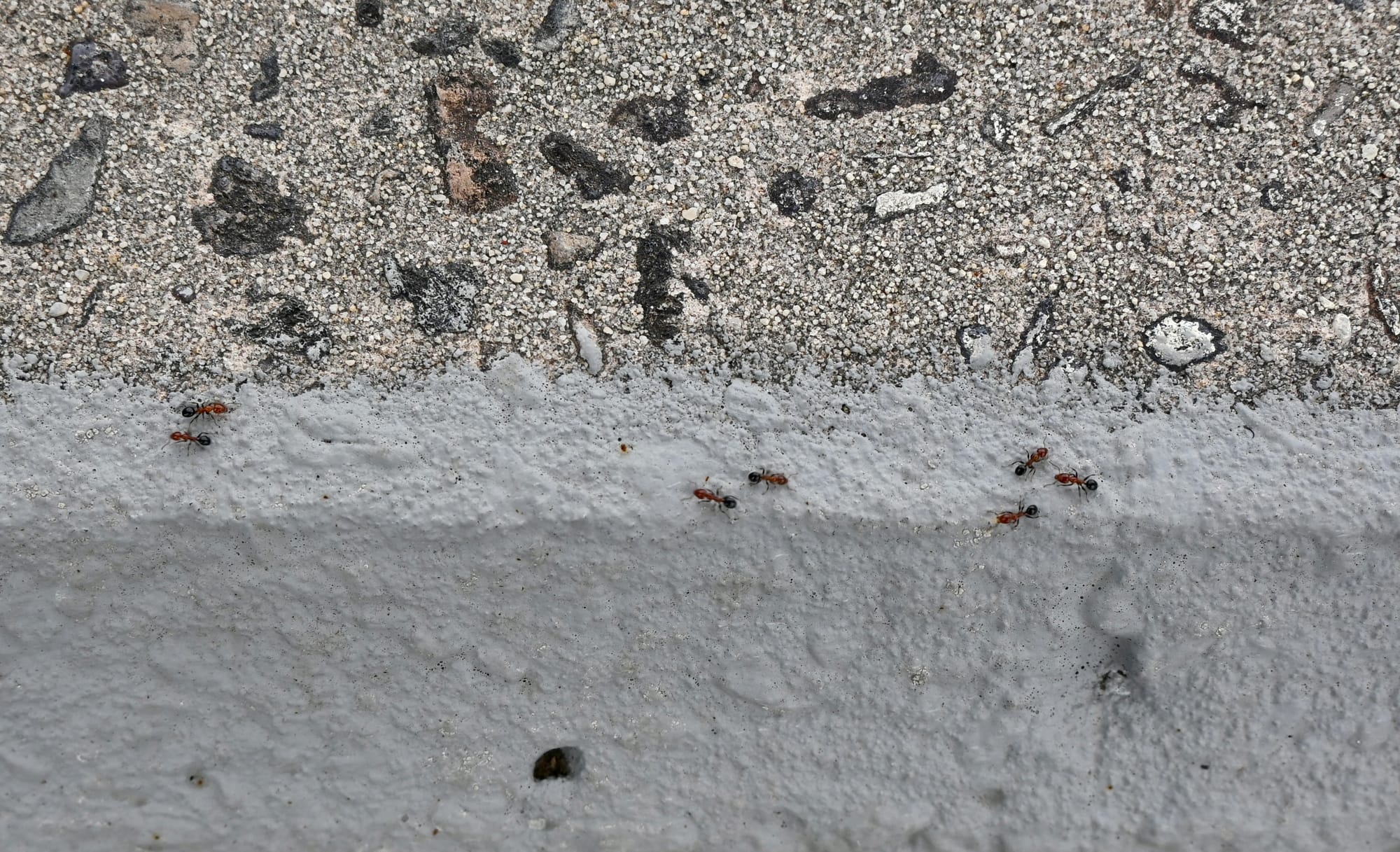
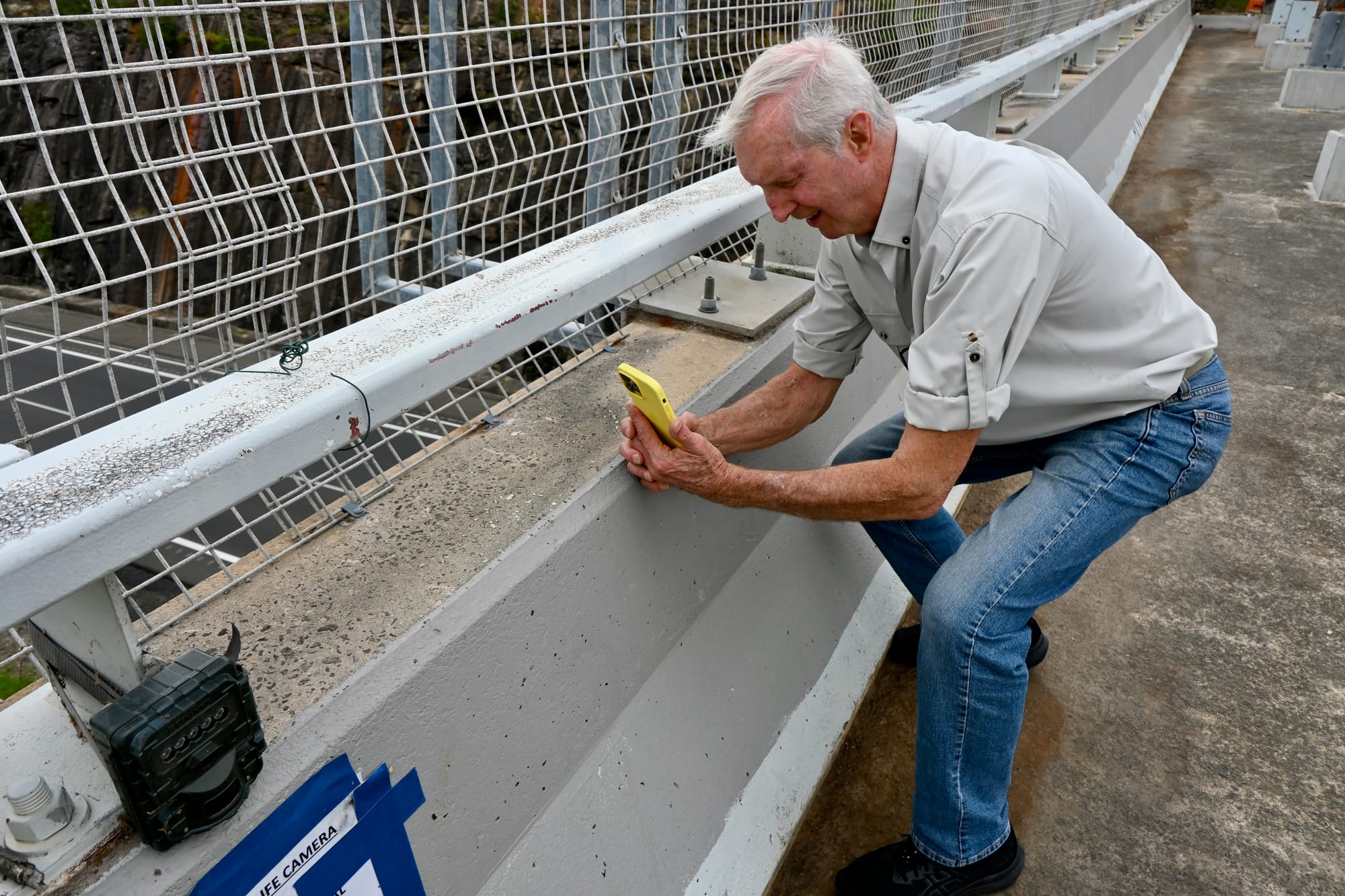
Ants on the move across the bridge, an early sign of success.
For Bob, this is not just any wildlife bridge. This is a 52-year-old dream to link a biodiversity hotspot carved up by four lanes of traffic on the motorway from Helensburgh to Waterfall.
“I waited for a long time. I’m very pleased,” Bob says. “It's signalling a change in our society, because we first put this forward in 1974 – and the enthusiasm by planners, engineers and the like was right there.”
However, a crisis in politics and funding intervened and the project was mothballed. Bob moved on from his ranger role and started teaching environmental management at TAFE, but he never forgot the missed opportunity at Cawleys Road Bridge.
“When I wrote the ecology courses, I used to write this bridge into all of them, as an example of how you can do this [create wildlife corridors] with what's available and how to repurpose it.”
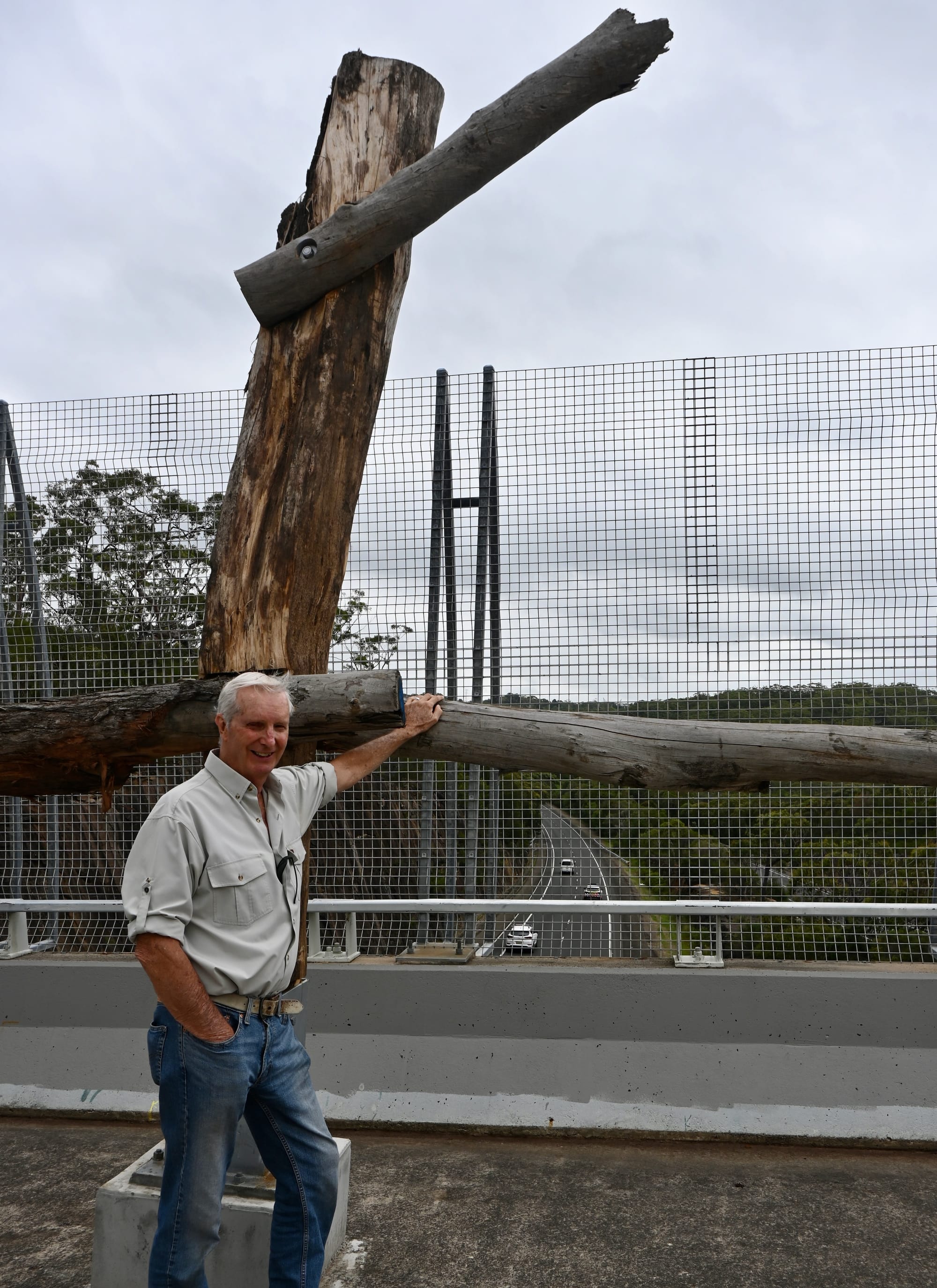
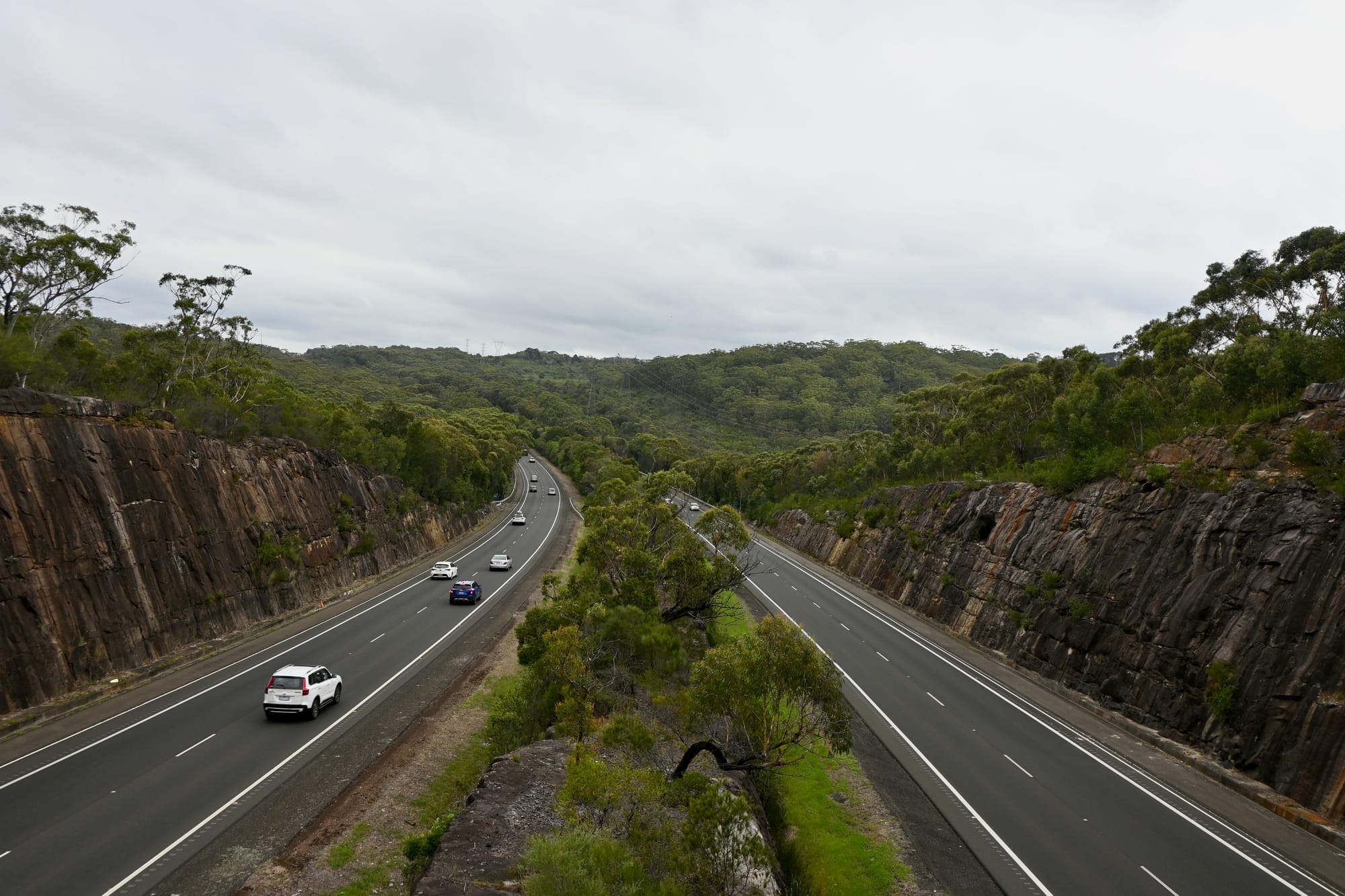
The bridge over the motorway between Helensburgh and Waterfall
As a shared bridge, to be used by people and wildlife, the Cawleys project is a prime example of Bob’s philosophy of ‘bewildering’, of humans and nature at last learning to live side by side.
Bob first used the word back in 2008 in a talk he gave on verge gardens at the Royal Botanic Gardens in Sydney. In ancient times, ‘bewildering’ meant “to be as the wilderness”, a pagan concept invoking connection with nature and the divine.
“I resurrected that old word and brought in this extra concept of rewilding, so I’ve redefined the term,” he says.
“It's recognising that we are part of nature, and wild things are ultimately very important, not only for us but for our wellbeing as well. So bewildering is looking after the wellbeing of all life on Earth. It's a wonderful word.”
Australian gardening greats Don Burke and Costa Georgiadis thought so, and so did King Charles, who read about Bob’s theories in a London newspaper. “It inspired him to bewilder his estates rather than to just landscape them when he was refurbishing them around 2007 to 2009,” Bob says.
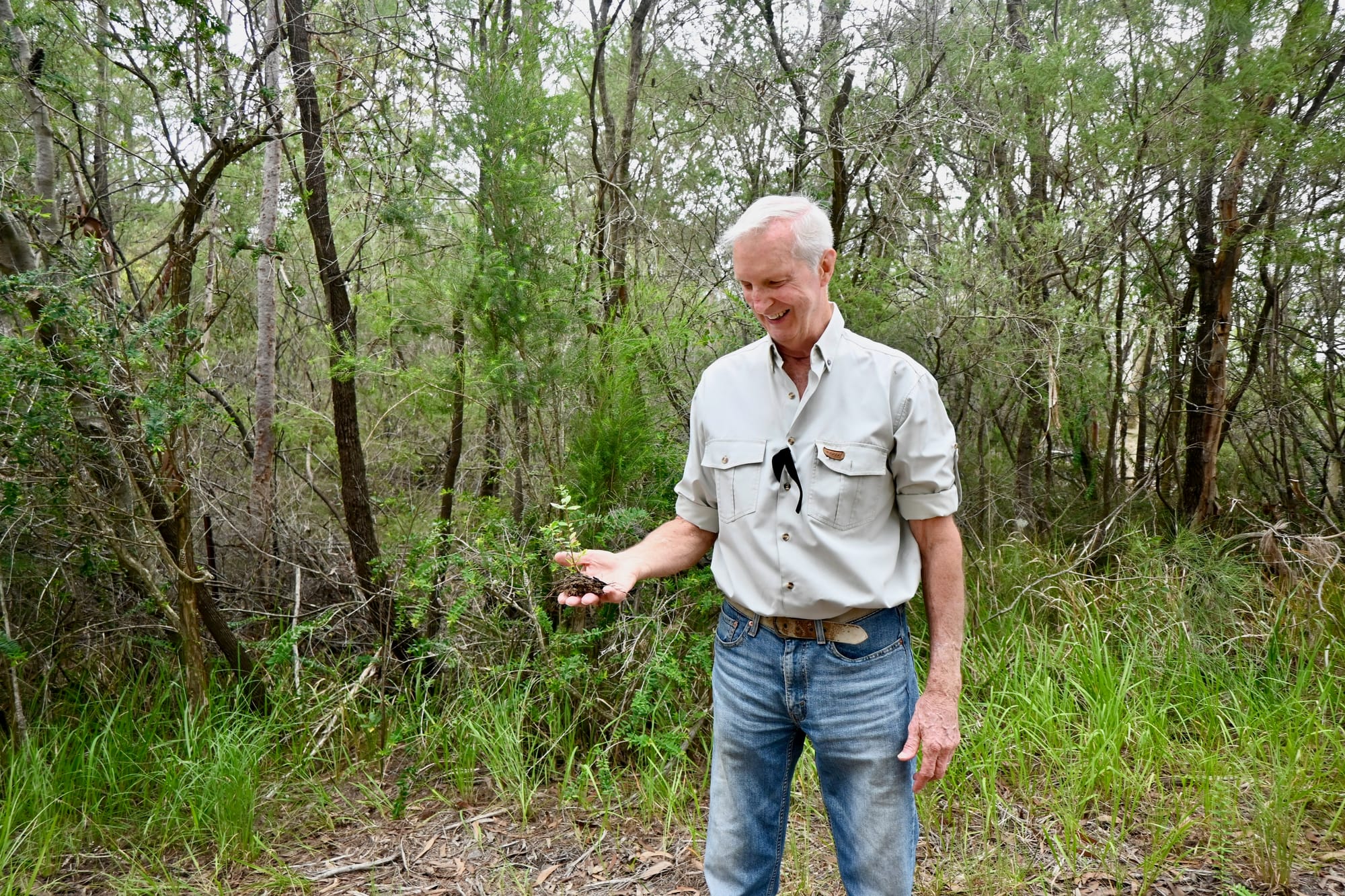
Bob with a Melaleuca hypericifolia seedling, a native shrub that might be suitable for planting on the crossing
Bob is long retired, but has carried on bewildering and working with the Sutherland Shire Environment Centre, where he is a life member. This is where he met Dr Catherine Reynolds, a former leader of the centre who helped put his dream of a wildlife crossing back on the table.
“Catherine's very, very supportive of a whole host of issues. She does tremendous work, promoting things and she's a very good researcher and letter writer,” Bob says.
“Cath has been overseeing all the work that I do and makes sure it gets all the publicity – she did a lot of work promoting it.”
In 2019, he made a submission to the Royal NP’s Plan of Management. He wrote to ministers and government bodies, saying they should repurpose Cawleys Road Bridge as a multi-purpose overpass for wildlife and essential services. He spoke to community groups, National Parks Association meetings, and then finally, a koala group.
“They knew nothing about wildlife movement. They were just looking after koalas. So then I went and educated them on the significance of movement to support their communities."
Bob explained there weren’t many different populations but one dispersed population in the area. “If it existed by itself, you'd only have one fire, and you've got the lot gone, or two or three fires in five or 15 years, and that’s it. It’s extinct.
“How do they repopulate? You have to have movement.”
Somewhere in the halls of bureaucracy, the wheels turned and government scientists started investigating. Last year, out of the blue, Bob had a call from the Department of Climate Change, Energy, the Environment and Water (DCCEEW).
“They said, 'Bob. We got something really exciting to tell you.' I said, 'I can't believe it.'”
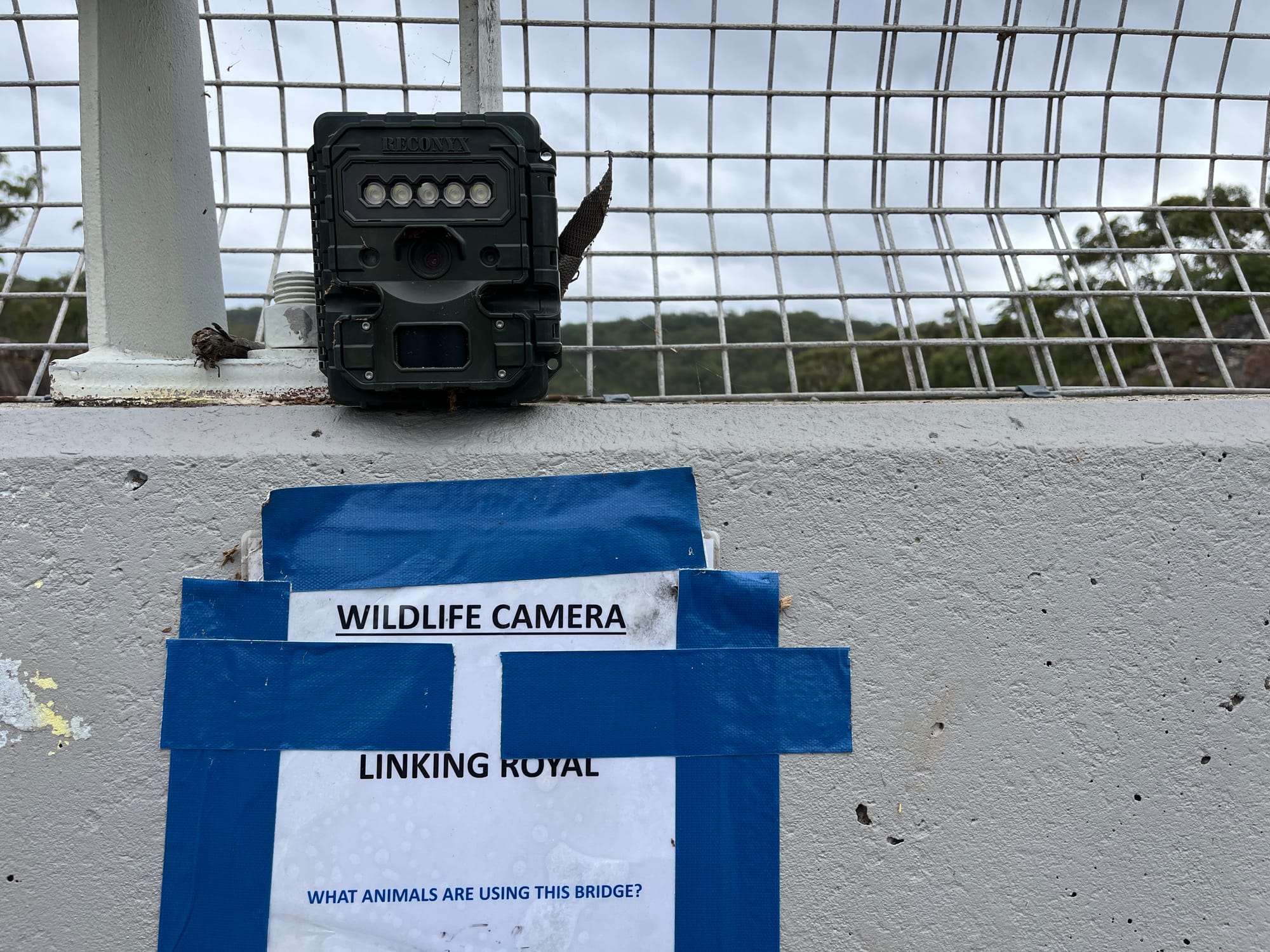
Wildlife cameras have captured goannas and possums
One reason he's so thrilled is that, while the region has other wildlife crossings, Cawleys Road Bridge serves a unique local purpose: it links distinct areas in the Royal.
“There’s heathland, woodland, the dry forest and the rainforest. They're almost four separate parks in one. Everyone thinks that 14,000 hectares is a big park. No, it's not … they're all separate communities, and each of those is not big in area – ecologically not big. And so, to keep them viable, you really must have connection between those areas.”
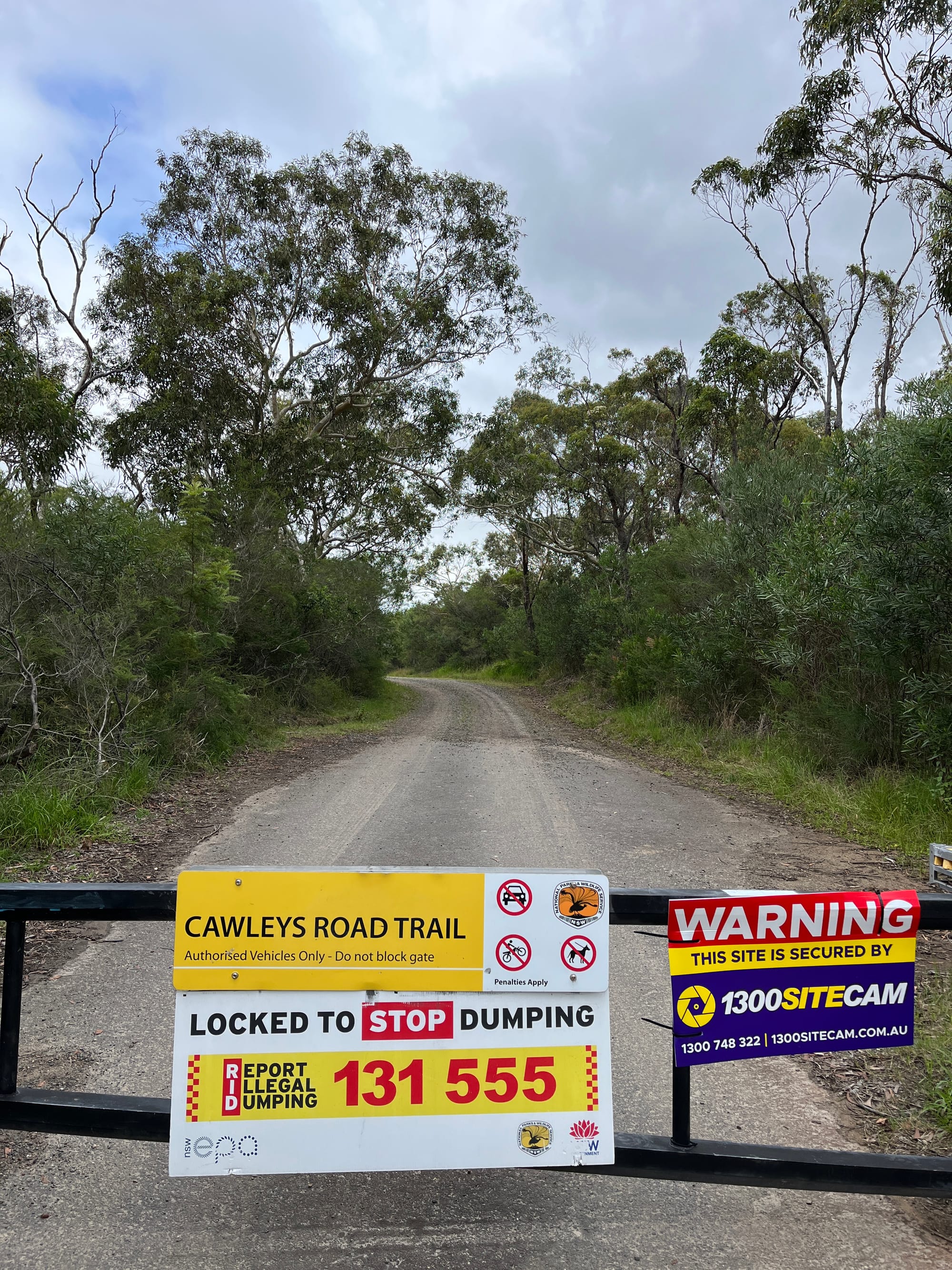
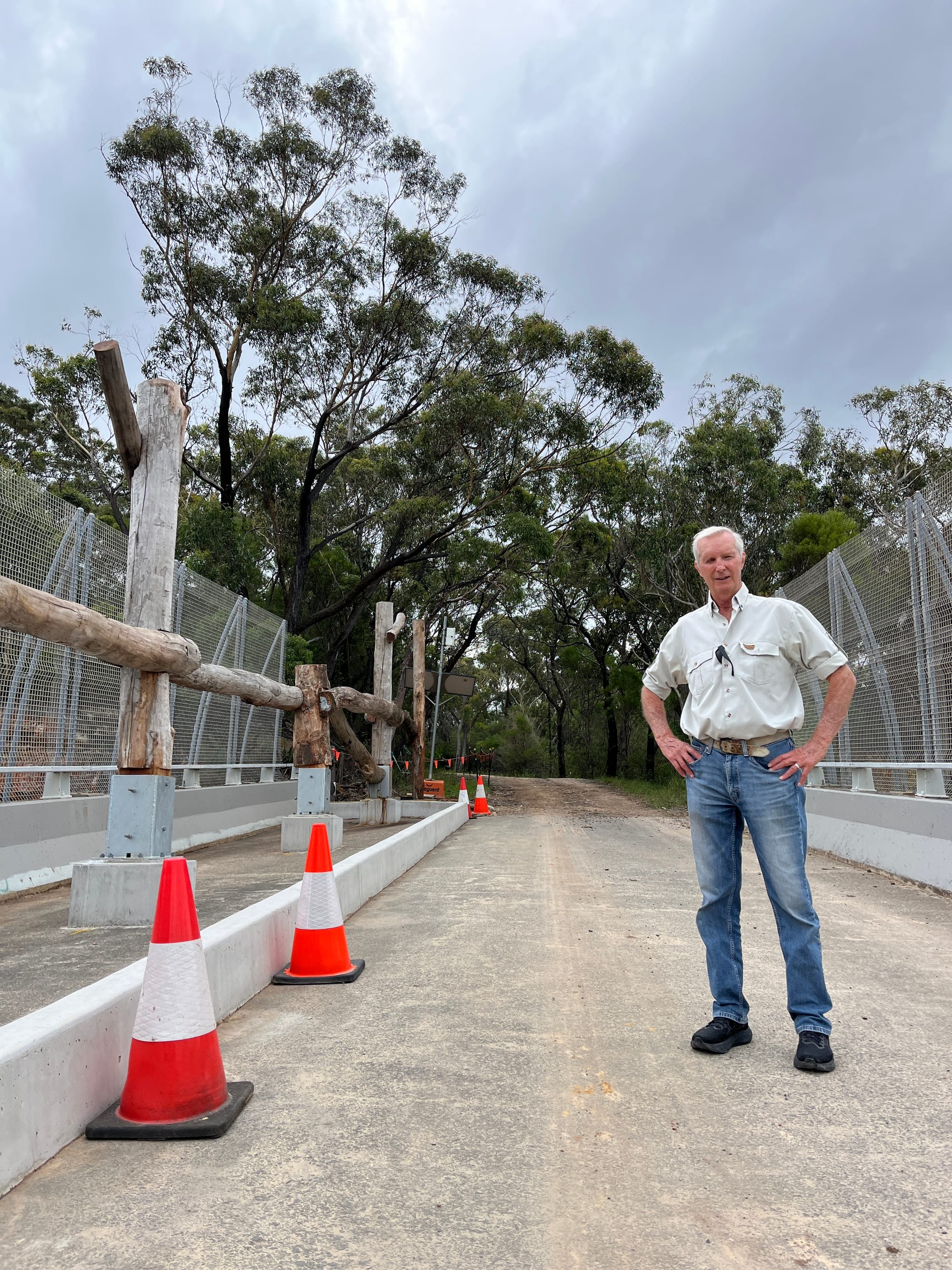
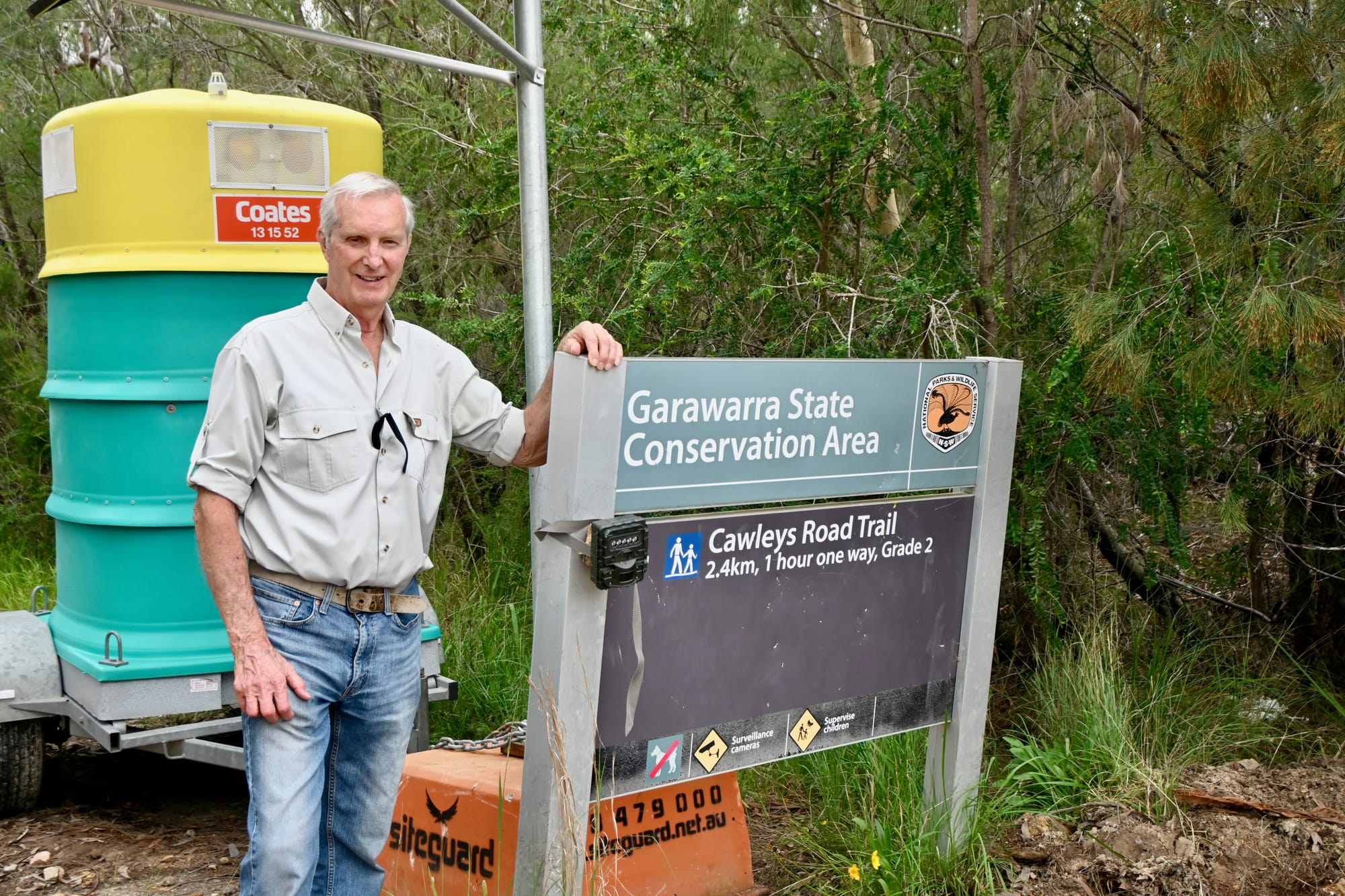
The entry point on the Old Princes Highway leading to Cawleys Road Trail
The crossing is another boost for the Royal National Park, which in the past few years has also welcomed the successful reintroduction of platypus, now breeding in the Hacking River.
Bob says it is a positive step. “It’s a real change of attitude by everybody in government and in Australia that we can now accept some of our responsibilities of wildlife, and we're making concrete efforts, costly efforts to overcome the barriers and make major efforts towards conserving what we've got left. I think that's tremendous.”
“This will be part of the evolutionary progress of these species, to begin to learn to live with us. So it's a real bewildering project.”