

Signs from the sea: Why studying whales matters in the Anthropocene
This Sunday is World Whale Day and there's lots to learn, writes Dr Katharina Peters, leader of UOW's Marine Vertebrate Ecology Lab

Each year on the third Sunday in February, World Whale Day invites us to celebrate these remarkable animals. Along our coast, whales are a familiar sight for half of the year, as thousands of humpback whales migrate between their Antarctic feeding grounds and tropical breeding areas. While many people enjoy whale watching, an important question remains: why should we study them?
The answer is as simple as it is intriguing. Whales offer us something more than wonder: they offer insight.
We live in the Anthropocene, an era in which human activity has become a dominant force shaping Earth’s systems. Nowhere is this more apparent than in the ocean.
Our seas absorb most of the excess heat generated by climate change, take up large amounts of carbon dioxide, and receive the runoff, plastics and chemicals produced on land. Although the ocean can seem vast and resilient, its health is closely tied to our choices.
Whales are uniquely positioned to tell us how the ocean is coping. Many species live for decades and travel vast distances across multiple ecosystems, integrating and reflecting environmental change over time.
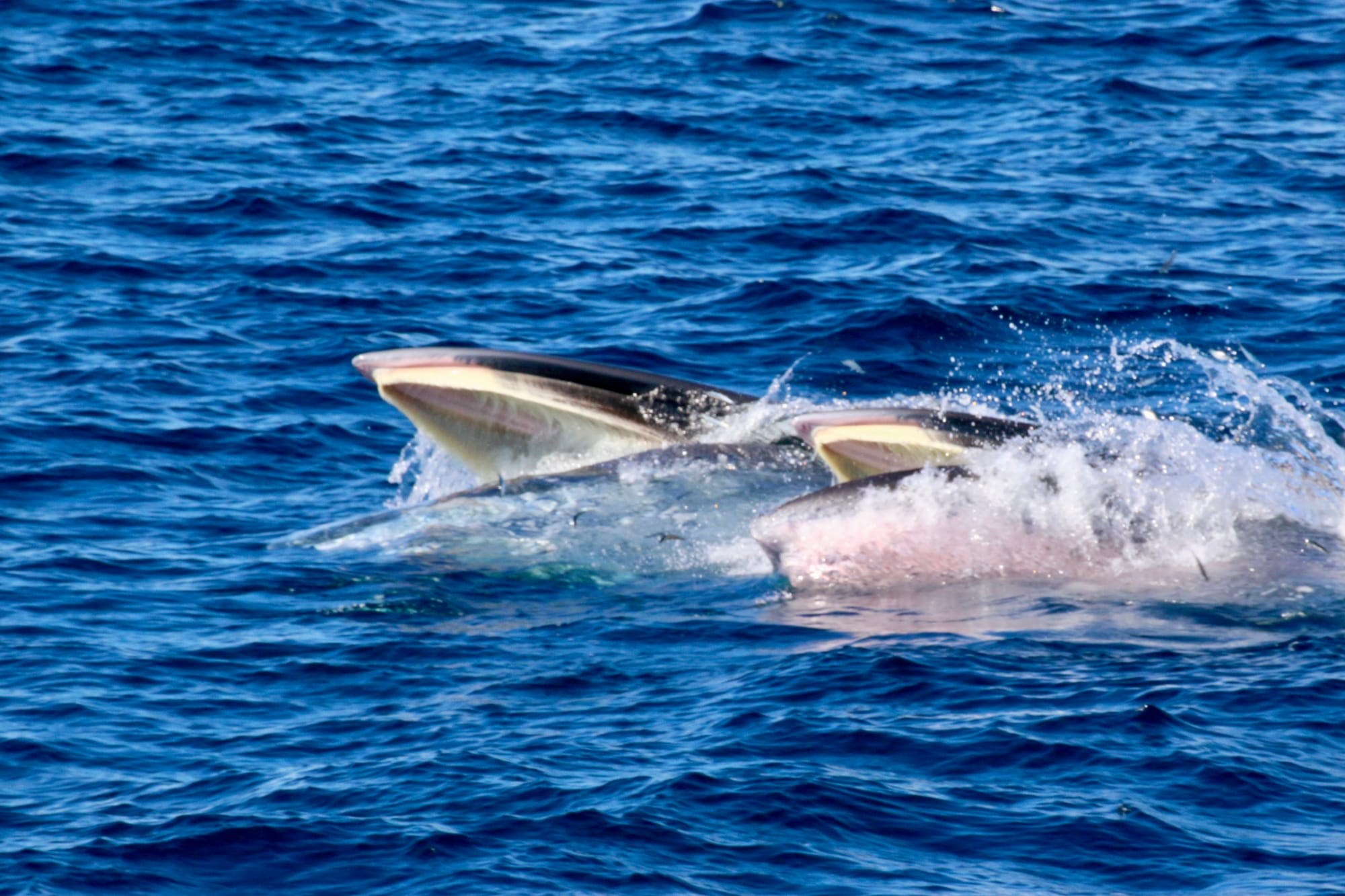
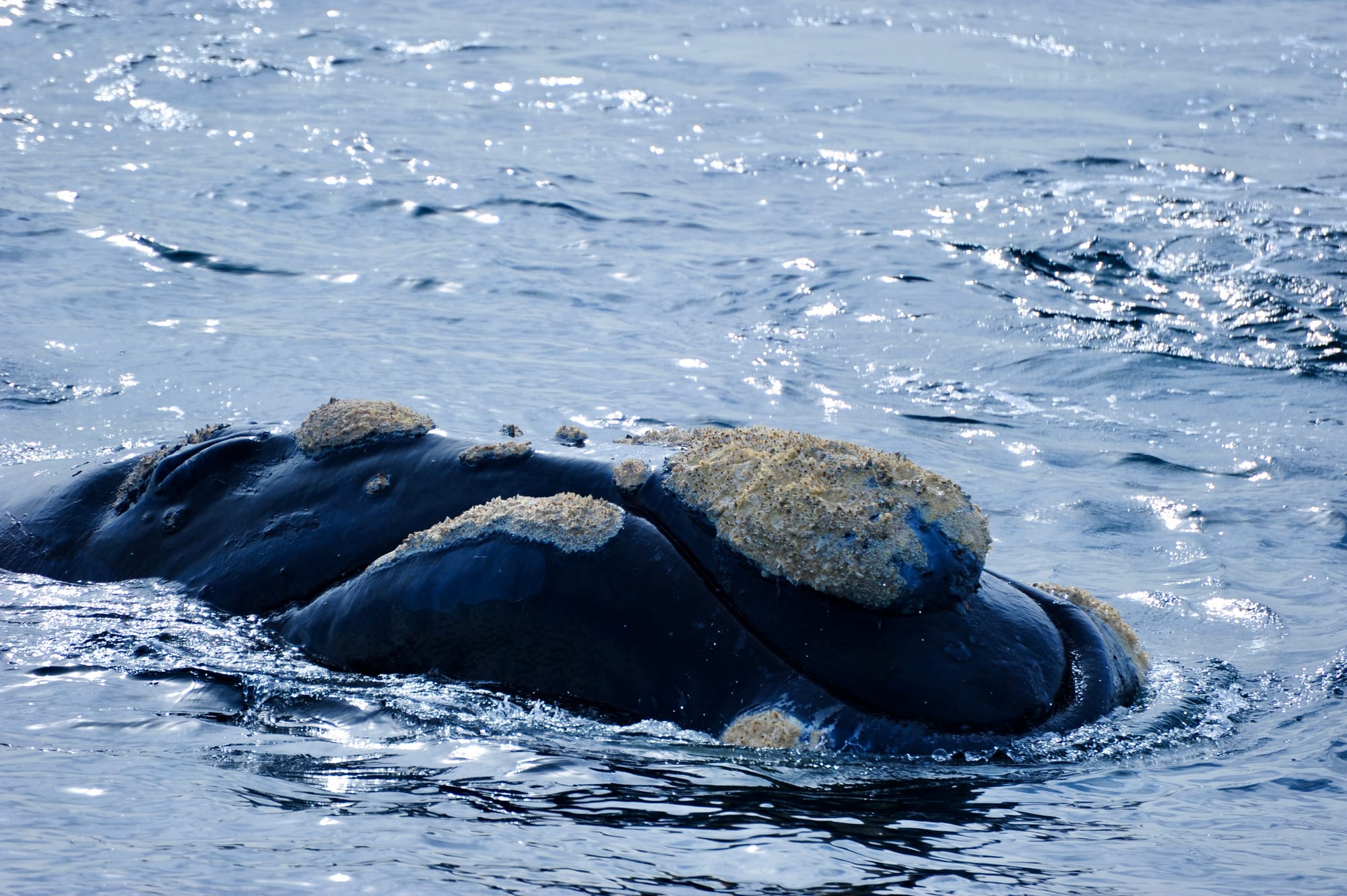
Bryde’s whales feeding on small bait fish. Right: a southern right whale raising its head. Photos: Katharina Peters
Changes in body condition can signal reduced food availability. Shifts in distribution and migration timing often track ocean warming. Analysing chemicals that accumulate in whale tissues provides a record of pollution exposure across years or even lifetimes.
Bit by bit, studying whales helps us understand entire ecosystems, not just a single species.
Yet the ocean whales inhabit today is very different from the one of even a few decades ago. It is more crowded, noisier and increasingly altered by human activity.
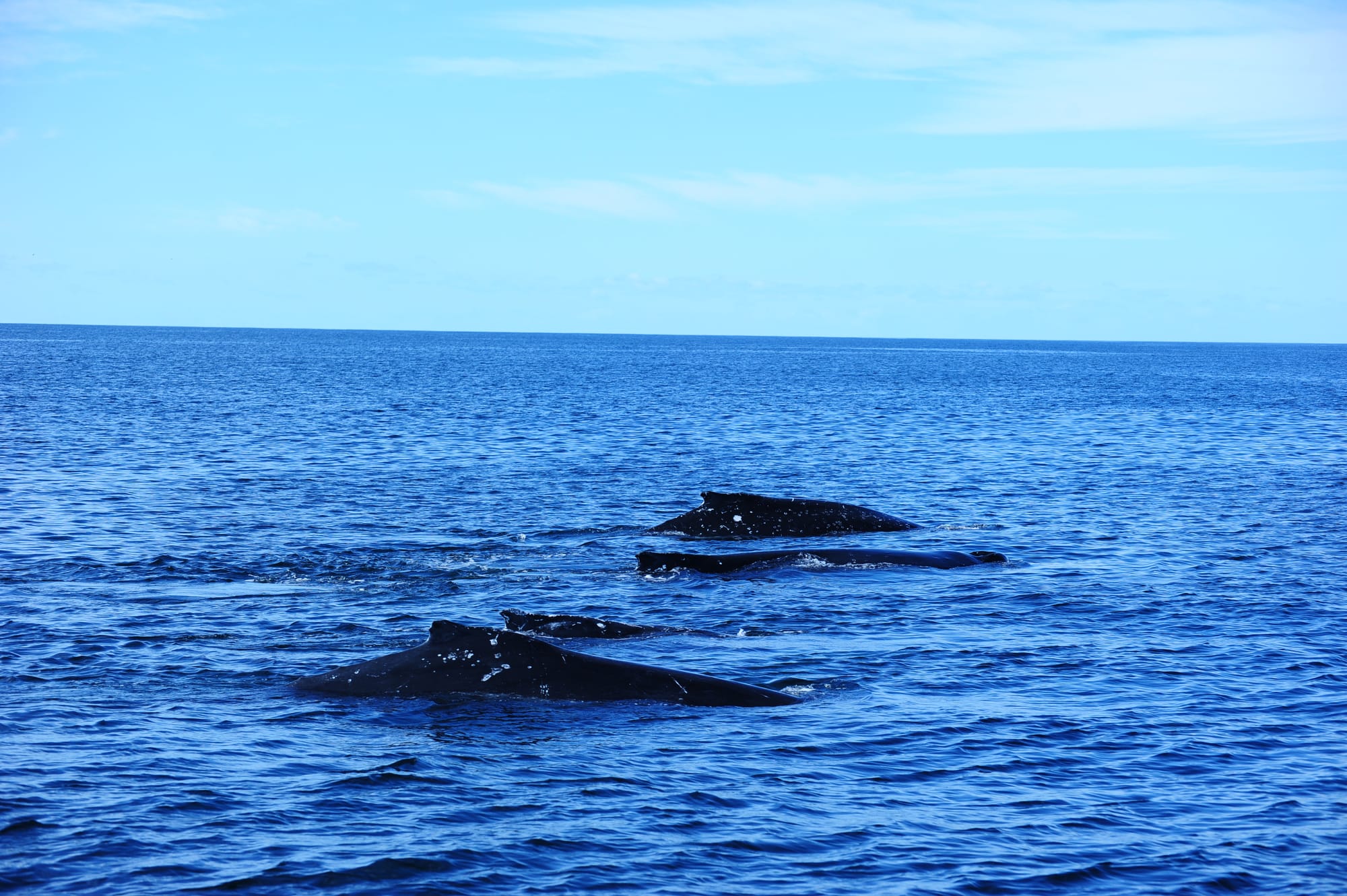
A group of humpback whales travelling down the coast towards Antarctica. Photo: Katharina Peters
Overfishing reduces key prey such as krill and small fish, forcing whales to travel further or feed longer to survive. Even in remote regions like Antarctica, growing demand for krill products is placing pressure on important humpback whale feeding grounds.
Coastal development, expanding shipping routes and offshore infrastructure increasingly overlap with whale habitats, while underwater noise disrupts the sounds whales rely on to communicate and navigate.
Pollution (from plastics to persistent industrial chemicals) accumulates through marine food webs, and entanglement in fishing gear remains a largely unseen but often lethal threat.
Climate change intensifies all of these pressures by altering prey distribution, shifting migration timing and destabilising ocean systems. These threats do not act alone. Together, they place cumulative stress on whale health, reproduction and survival, reflecting the broader pressures now affecting marine ecosystems worldwide.
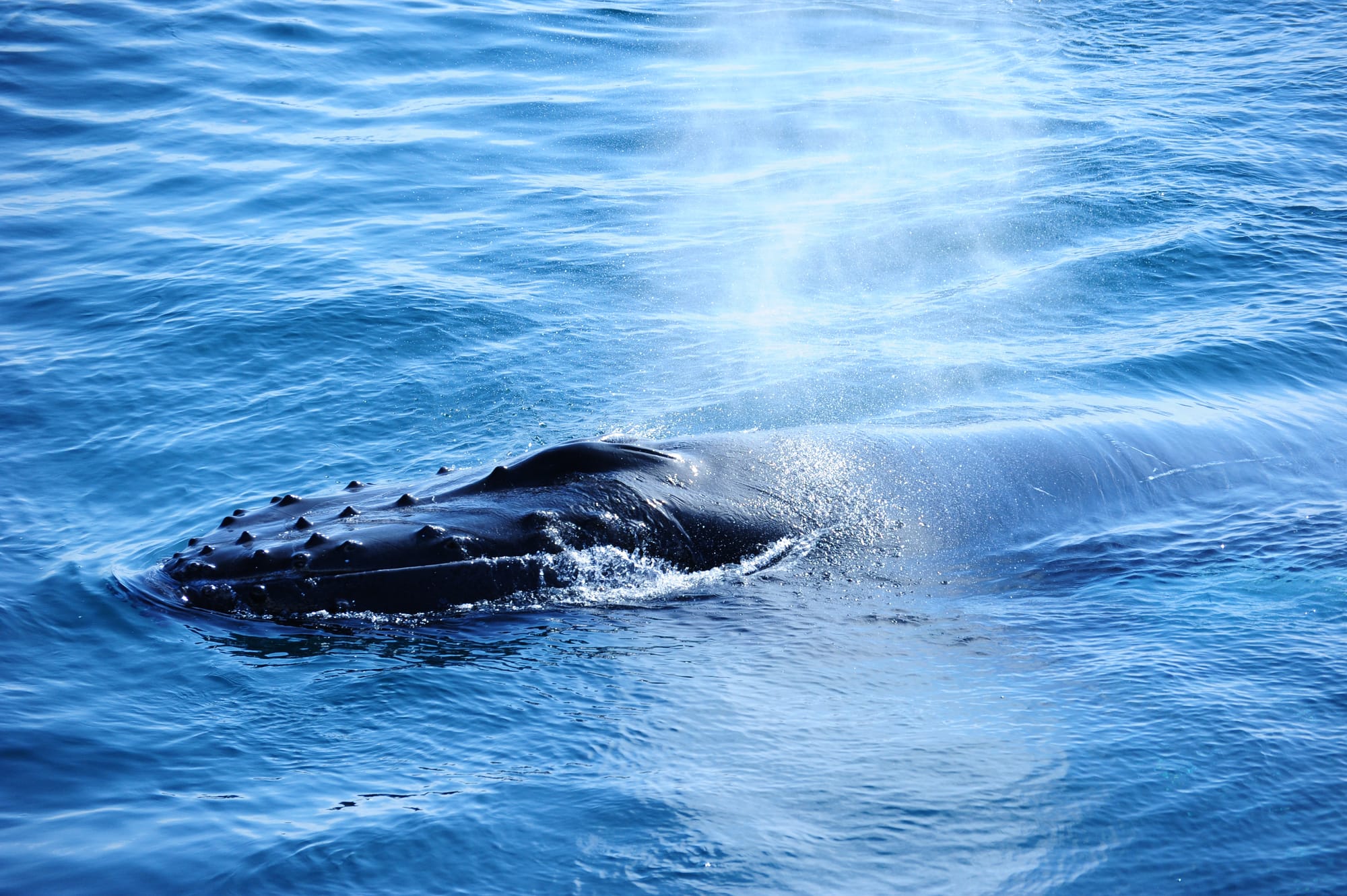
A humpback whale exhaling after a dive. Photo: Katharina Peters
Understanding these changes is only possible through long-term whale research. By monitoring whale health, movements and behaviour over time, scientists can detect early warning signs of ecosystem disruption that might otherwise go unnoticed.
This knowledge informs practical decisions, from fisheries management and shipping regulations to marine spatial planning and conservation policy. Australia hosts globally significant whale migration routes, and what we learn here contributes not only to protecting local ecosystems, but also to understanding the broader health of the Southern Ocean.
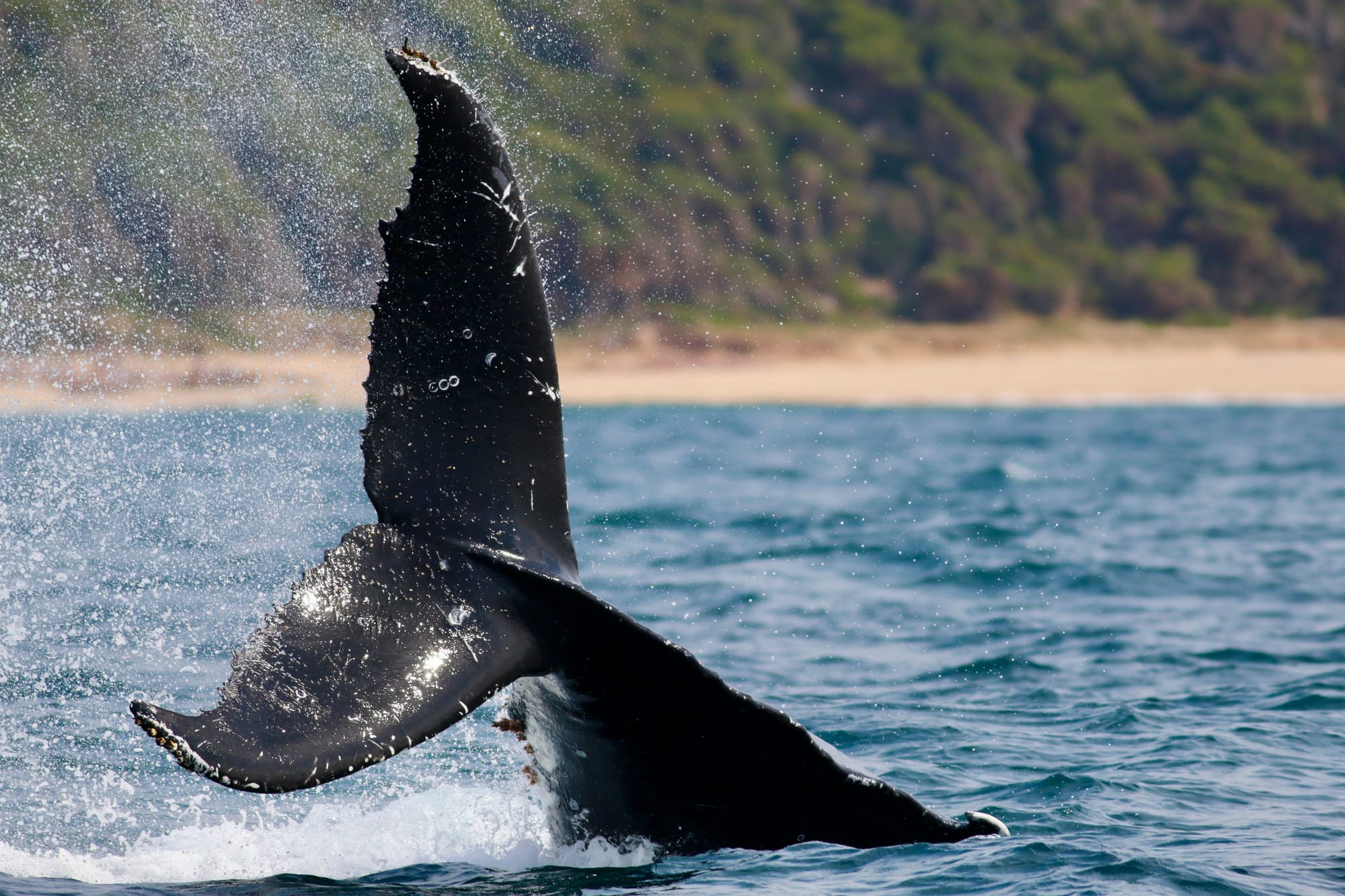
A humpback whale throwing its powerful tail. Photo: Katharina Peters
World Whale Day is more than a celebration; it is an invitation to listen.
Whales carry the story of our oceans in their bodies, their behaviour and their migrations. When their health declines, it signals deeper changes unfolding beneath the surface.
By investing in whale research and reducing the pressures we place on the ocean, we are not only safeguarding whales — we are protecting the marine systems that sustain us all. In the Anthropocene, paying attention to what whales are telling us may be one of the most important steps we can take toward a healthier ocean future.

About the writer
Katharina J Peters is a Lecturer and Researcher at the University of Wollongong, Australia, where she leads the Marine Vertebrate Ecology Lab (MAVE Lab). Her group studies the ecology of marine megafauna such as whales, dolphins, and seals in Australian waters and beyond. Together, they work towards a better understanding of the ecology of these iconic species to improve their conservation in regard to anthropogenic threats such as fisheries interactions and climate change.


