
Story of steelworks pending for man who has 'lived its history'
Recording of the Port Kembla steelworks' near-century of history takes another step


In the past, BlueScope, and BHP before it, hasn’t been great at recording and retaining the remarkable history of the Port Kembla steelworks.
As long-serving employee Craig Nealon told a group of supporters of ambitious plans for a museum of people, country and industry this month, he’s in the process of addressing that issue.
Craig is in the final stages of completing his first book (working title "Australian Icon”) which will document the remarkable 100-year history of the steelworks. It’s going to be an epic.
“At the moment it’s at 120,000 words, which is quite a lot,” Craig said in his presentation at BlueScope’s visitor’s centre. “It’s at a stage now that I’m super-happy with what I’ve done, but it isn’t finished yet because things are still happening here.”
Craig said for the past 25 years he had “lived the history” of the place. Now he wants to capture the incredibly complex steelworks story in book form.
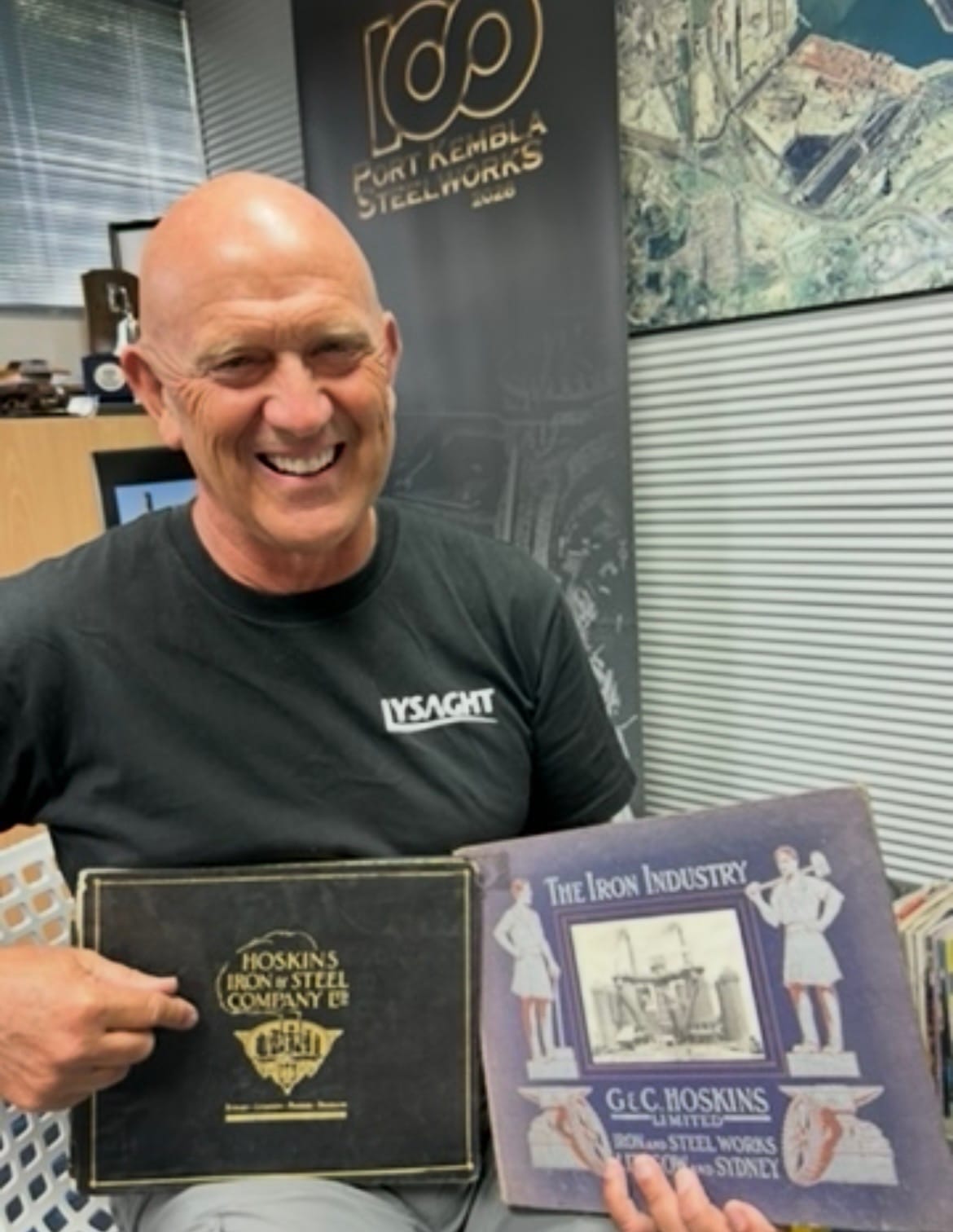
As a research and writing project, it’s been a lengthy but rewarding process – a true labour of love.
“No one asked me to do any of this. I’m doing it because I’m interested in the stories behind this place. The company is very supportive, but it won’t have BlueScope logos all over it," he said.
“I’ve spoken to as many people as I possibly can. I needed to go and visit all of the places in the story and I’ve made a little video of every place I’ve visited.”
Craig presented a “world premiere” of the first of his videos, which will complement his book, to the assembled group. The entire video series will be released early next year.
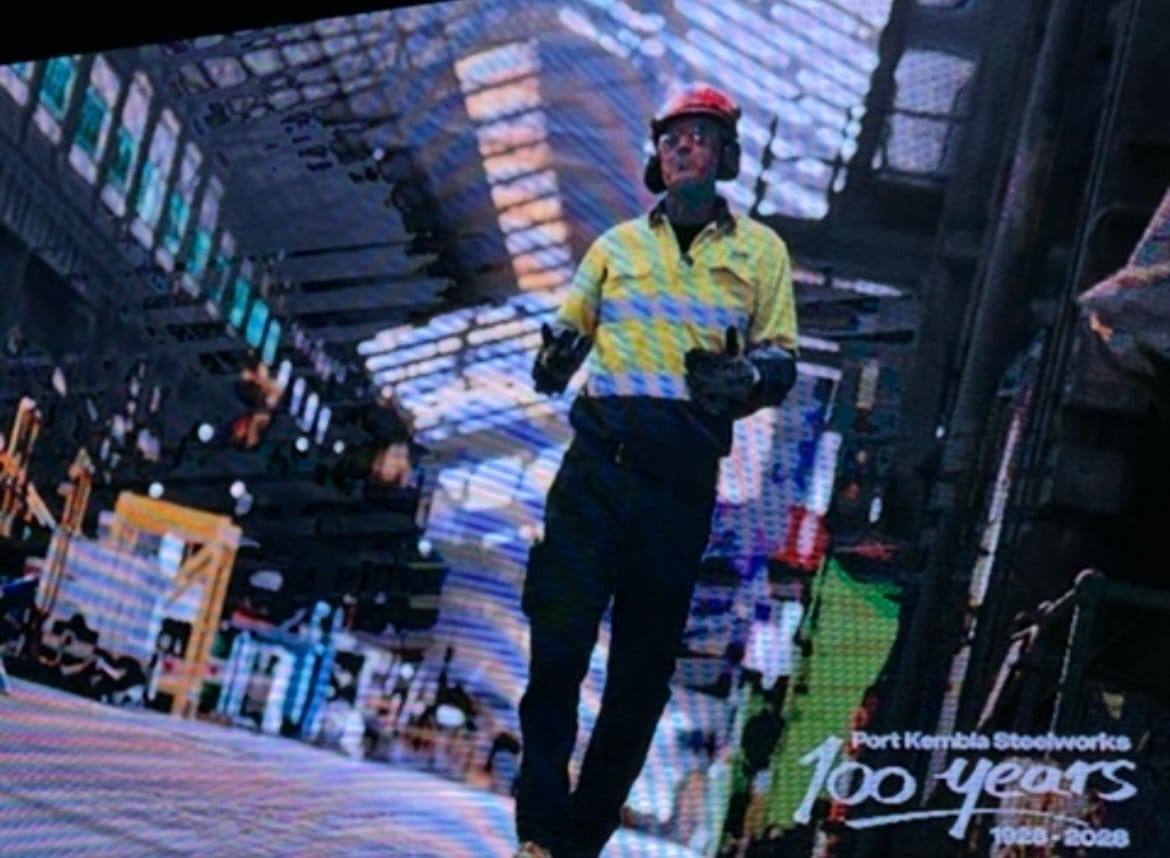
The key players
Craig’s book captures stories of the key people who had the greatest impact on the successful operation of the steelworks plant, starting with Charles Hoskins, who made the decision to relocate his family’s steelmaking business from Lithgow to Port Kembla in the 1920s to take advantage of the deep water port.
As Craig explained, Charles didn’t live long enough to see the new steelworks opened and operating. He died in 1926, leaving his sons, Cecil and Sidney to lead the new venture.
On August 29, 1928, Emily Hoskins, Charles’ wife, lit the first blast furnace and that blast furnace was named Emily in her honour.
Craig recounts the first decade of the steelworks, when Australia followed the rest of the world into The Great Depression.
“During the Depression, a lot of people moved here to get a job.”
He shared the story of Matt Hogan, who moved to the Illawarra to work from Lithgow. His story was no different to so many others.
“He lived in a tent alongside Flinders Street, and at one stage, there were 1000 men living in shanty towns close to the steelworks with no water and electricity.
“During World War II, Matt worked for two years straight without a single day off because there weren’t enough men to run the plant due to the war effort.
“There’s a lot of evidence to show that after World War II, Port Kembla was making the cheapest steel in the world,” Craig said.
His book also documents people who never worked at the steelworks but still had enormous influence.
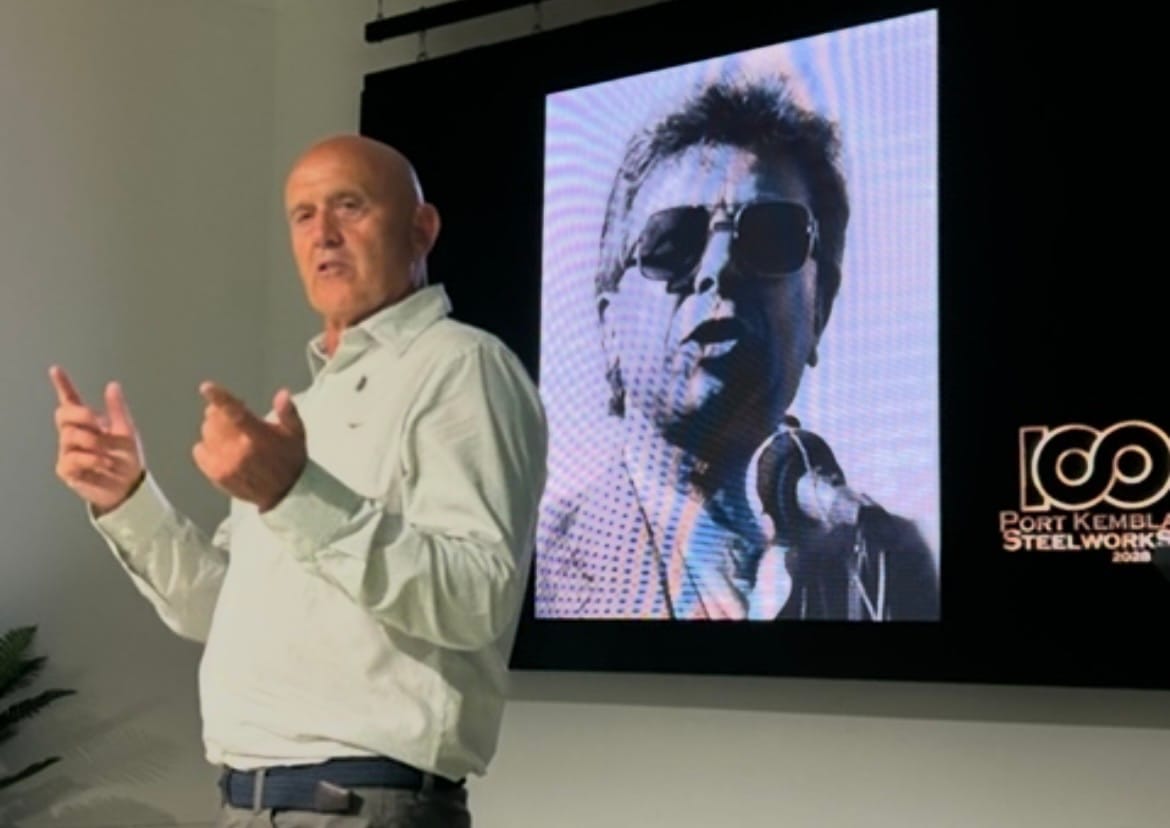
Nando Lelli was a firebrand trade union leader in the 1970s and 1980s who exercised enormous authority and power.
“Nando spoke for a lot of people who didn’t have a voice here, especially people from non-English speaking backgrounds. He was a character who belongs in the history of the steelworks,” Craig said.
“Things were very bad, and in one year there was an average of more than one strike a day. If a problem arose somewhere, there was a strike. One person's sole job here was to collect statistics each day on the number of strikes.”
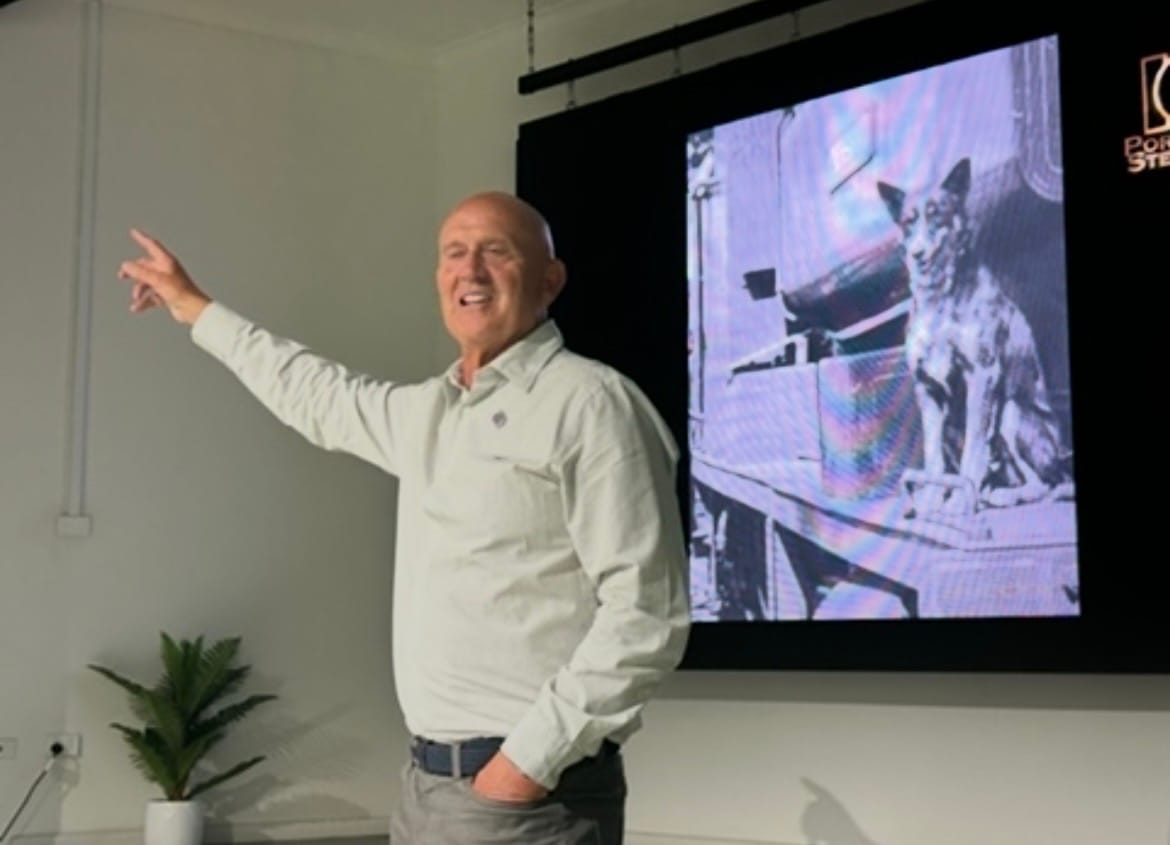
Craig’s book also includes quirky characters such as Blue, a cattle dog who loved riding on steam trains which delivered coal to the steelworks.
“He rode them all around the steelworks and even started jumping on the public trains, riding them to Thirroul and back, until one day he just disappeared.”
Craig dedicates a chapter to the opening of the host strip mill by then prime minister Robert Menzies in 1955.
“It changed the Port Kembla steelworks radically, and it was probably the most significant project ever built here.
“After 10 years of planning and construction, 1300 people attended the official opening. It led to a huge expansion of the plant, and the hot strip mill has been getting it right for over 70 years. I believe if it hadn’t been built, the steelworks wouldn’t be in existence today.”
Following his presentation, Craig met with former Steelers CEO Bob Millward, sharing memories of a time in the 1980s when the steelworks hit hard times and had to lay off thousands of workers in an attempt to stay profitable.
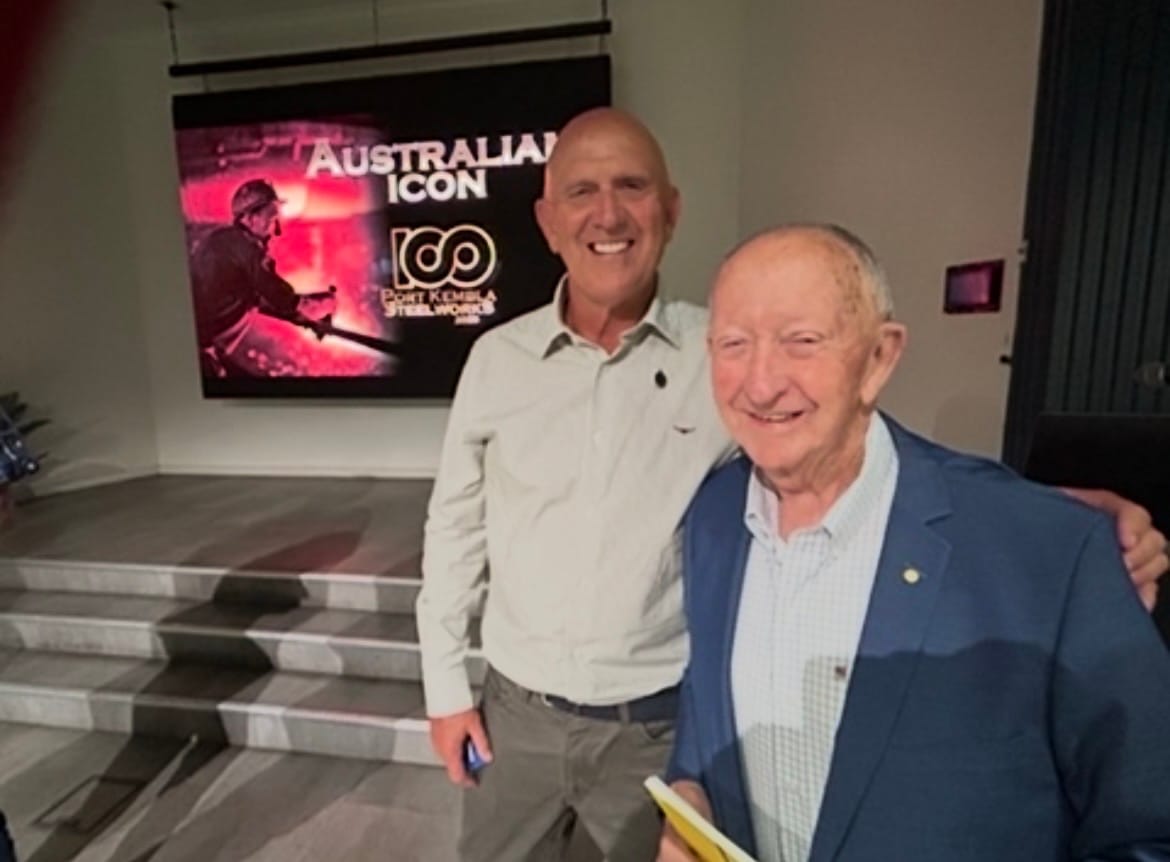
Craig told Bob that when the Steelers entered the big time, Jerry Ellis, who was boss in the '80s, would say that when the Steelers had a win, productivity would go up on the Monday, Tuesday and Wednesday that followed.
Craig explains in his book how the business found itself at the crossroads at that time, creating uncertainty in the community.
'Dollar for dollar'
“BHP’s steel division returned to profitability in 1985 but questions were starting to be asked about whether the company planned to stay in the steel industry at all, or pivot to a much smaller version of its steelmaking operation.
“As a response to this community concern, BHP announced significant financial support to the Illawarra’s three professional sporting teams in 1985, when it became the major sponsor of the Illawarra Steelers (rugby league), Wollongong Wolves (football/soccer) and Illawarra Hawks (basketball).
“A program was even set up for employees to contribute to these three clubs, which the company matched dollar for dollar.
“These sponsorships didn’t appear to be in keeping with the struggling industry, but BHP was conscious of its public image and standing within the Illawarra. This was a very visible and popular way to be seen to be giving back, especially when profits began to return.
“It wasn’t only about sports, however. In 1986, at a function at Glennifer Brae, the company announced a major sponsorship of what became known as as the BHP Steel Training Orchestra.
“This orchestra of young musicians is part of the Wollongong Conservatorium of Music, and the sponsorship continues to this day for what is now called the BlueScope Youth Orchestra. It is one of the longest running sponsorships of its kind in the arts in Australia.”
A place to tell our stories
Franca Facci, who hosted the event as the chair of the Illawarra Migrant Heritage Project and the driving force behind the push for a museum of people, country and industry, said the story of the steelworks and the tens of thousands of people who worked there over the past nearly 100 years – many of them migrants – deserved to be told, shared and retained.
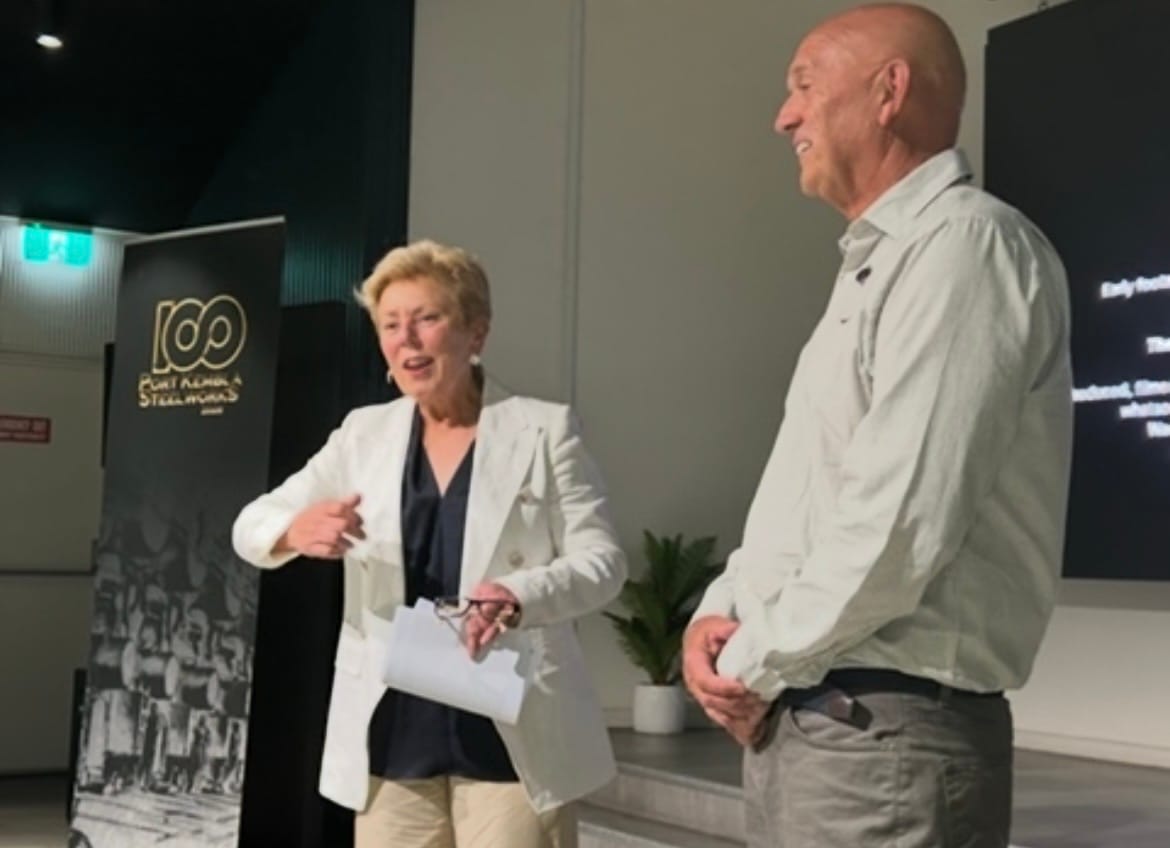
“Love it or hate it, our industrial heritage is pivotal to understanding who we are,” Franca said. “Everything that plays a part in steelmaking has contributed to the mix of people who live here. Whether directly or indirectly employed in the steelmaking business, it was indisputably the huge magnet that attracted so many people to the region post World War II. It wasn’t the beaches or the escarpment, it was the jobs.
“Understanding that and unravelling the stories of the people behind the industrial heavyweights helps us to understand why and how our city grew, and why it is made up of the current industries and people living here today.
“What happened under the huge chimneys and inside the cavernous sheds shaped our values and ideals. These principles and tenets permeated throughout the city and influenced other workplaces and shop floors, creating a unique city character.
“To understand where we have come from helps us to navigate and shape our future and that’s why our industrial heritage is so important.”
Franca and Craig share the same vision for a world-class museum, hopefully on surplus BlueScope land currently undergoing a masterplanning process.
The history of the steelworks, its people, the wave of post-war migration and the First Nations custodianship of Country would all be major elements of the proposed museum.


