
Strangers saved my life: Cardiac arrest survivor nominates gym goers for award
A simple device saved David Crossley – and his rescuers didn't even know how to use it
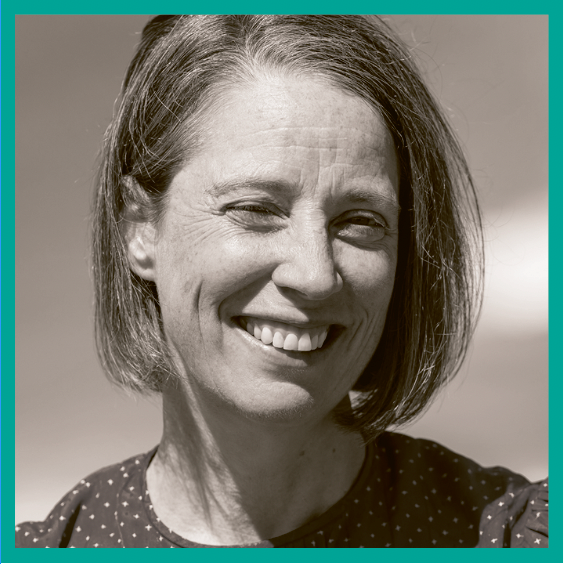

At about 6.25pm at his regular evening gym session, David Crossley was preparing to do a military press. Instead of reaching for a barbell, the 58-year-old Wombarra local collapsed in cardiac arrest.
Three strangers – none of whom had used a defibrillator – rushed to his aid.
Their rapid response is why he’s here to tell his story today, Dave says.
“I’ve been told by the doctors in Wollongong Hospital that I would have died except for the quick actions of members of the public and the paramedics who acted to save my life.
“The story goes that on Tuesday, the 7th of July, I was at Plus Fitness in Thirroul, and I suffered a cardiac arrest. My heart went into ventricular fibrillation.
“I was in between exercises, so I wasn't loaded, and I fell backwards onto the floor. According to witnesses, I quickly started turning blue.
“I wasn't breathing; they checked for vital signs and they found I didn't have a pulse.
“Luckily, there was a defibrillator at the gym that was functioning correctly, and they got the defibrillator. It's very easy to use.”
An automated external defibrillator (aka an AED) delivers an electrical shock to try to restore a normal heart rhythm. They're portable devices, kept in a box on the wall at many surf clubs, libraries and sporting venues.
Australia’s Heart Foundation says that if both CPR is performed and an AED is used within the first three to five minutes of a cardiac arrest, a patient’s survival rates can increase to 60-70 per cent.
Ironically, Dave knew how to use a defibrillator, thanks to his years as a volunteer lifesaver at Scarborough Wombarra Surf Life Saving Club. None of his rescuers had prior training but they acted on the simple directions for an emergency: turn it on and follow the prompts.
“The defibrillator detected that my heart was in ventricular fibrillation, and it applied the shock,” Dave says. “My heart went back to normal rhythm, but I was still unconscious. So they kept performing CPR and called triple 0. The ambulance guys arrived, and I was taken to Wollongong Hospital, where I was in ICU for 72 hours on life support.
“I was transferred to the coronary care unit in Wollongong Hospital for a further 11 days, and then I had a defibrillator implanted into my chest on the 21st of July, and was then discharged from hospital. So that's my on-board insurance policy if it happens again.”
Dave is recovering at home in Wombarra, attending regular check-ups with his cardiologist. “I and my family will never forget the actions of the rescuers,” he says.
Plus Fitness owner Rodd Parks was swift to act, while gym members Ian Thorburn and brothers Ethan and Noah Snowsill were first on the scene.
“I'd probably seen them in the gym, but I hadn't spoken to any of them. And they’re really the only reason why I'm alive,” Dave says. “I've nominated them to receive a NSW Ambulance Award.”
At the time of his cardiac arrest, Dave was in good shape and he’d had no warning signs of pain, nausea or dizziness. “The doctors are still investigating the cause; it's possibly an electrical issue with my heart.”
He does have a history of heart disease and high blood pressure on both sides of the family.
“My father died of a heart attack when he was 57. I'm 58.
“So I've known about that family history for 40 years since my dad died, and so I've been careful to watch my diet and maintain an exercise regime. I surf most days and do a bit of cardio and strength training."
David is a long-time member of the Scarborough Boardriders Club, having joined to support his three children – now aged 20, 19 and 17 – who grew up surfing at local beaches and competing in the club’s monthly pointscores.
“I do compete in the over 55s, but it's been more about my kids,” Dave says.
The whole family went into shock when he collapsed.
“I think the emotional impact was more on them than me. When I woke up in ICU, I had to ask and be told what had happened – that I had a cardiac arrest and I'd been unconscious for two days.”
Dave has no memory of the paramedics who took him to Wollongong Hospital but he is writing a letter of thanks that will go on their record with NSW Ambulance. He has nothing but praise for the medical treatment he received.
“The hospital experience was fantastic. ICU people were amazing, just dedicated, skilled, probably overworked, but they were the saviours of me, and same when I was up in the coronary care unit – fantastic doctors and nurses up there.”
Dave is an electrical engineer who works as the national technical manager for a peak industry body, the Lighting Council Australia. It’s a role that can be stressful and involves travel around the country. Because of his family's medical history, he has always paid close attention to where defibrillators are located. Now he’s keen to raise public awareness of their importance by sharing his story.
“The more defibrillators there are in the community, the better off people who have heart attacks and cardiac arrests will be. So that's one thing – they need to be present.”
Secondly, Dave wants to highlight the need for bystanders to act fast.
“Every minute counts. So don't stand back. It doesn't take any any prior knowledge, you can just open the case and the directions are all there.
“Step up because you might save a life. If those people hadn't acted within about five minutes, I wouldn't be alive today.”
Where to find an AED
Automated External Defibrillators (AED) are located in public places, including inside many gyms, surf clubs and community centres. However, if it's after hours, the building may be locked and the AED inaccessible. To find your local AEDs, check the NSW Ambulance map – but be warned, this is a slow-loading page.
In an emergency, always call Triple Zero (000).


