

The Return of Berry Picking in Jujinbellily
Blue Flax Lily is a source of bush tucker we have planted extensively in the Stanwell Avenue Reserve. It has attractive dark blue flowers that produce a berry of the same colour
Early colonial records dating back to 1832 suggest that the Dharawal name for the area between Stanwell Park and Bulli was Jujinbellily or some variant of that spelling. Stanwell Park for many years was known as “Little Bulli.”
It was common for the colonial settlers to shorten Aboriginal names, an example being Kurranulla becoming Cronulla. The practice continues with “The Gong”. The name Bulli sounds very much like a shortening of Jujinbellily.
Blackberry picking from Stanwell Park to Bulli became quite common on weekends when steam trains travelled between Sydney and Wollongong.

Stanwell Park Railway 1920. Photo from the Collections of Wollongong City Libraries, P02482
In an Australian reversal of the European conquest of Latin America, the tasty European invader, Blackberry (Rubus fruticosus), was slowly smothered by the toxic Latin America conquistador, Lantana (Lantana camara). Green Lantana berries can be toxic for children and animals, but birds seem to be able to eat them without ill effects, except for the environmental damage their excrement leaves behind.
The house in Stanwell Park that I bought in 1972 was surrounded by Lantana that reached to the roof gutters. My original tool for controlling the Lantana was a billy goat, because the comic books of my childhood had regaled me with the fake news that goats could eat anything, even tin cans. Lantana would have been a pushover.
I gave my ugly and aggressive billy goat the lovely sounding name of Syphilis, which I incorrectly assumed was Ancient Greek. Having a goat named Syphilis had its disadvantages. There were times at a party when friends asked me, in the presence of strangers, “Do you still have Syphilis?” Syphilis finally died, probably because of his restrictive Lantana diet with its toxic seeds.
In 2019, I bought some Brush Cherry seedlings (Syzygium australe) from the Wollongong Botanical Gardens and planted them in the Stanwell Avenue Reserve where I had been removing the Lantana. After a few years they gained size and started to flower and fruit. I made some delightful jam from the fruit and then I germinated the leftover seeds into a new generation of trees.
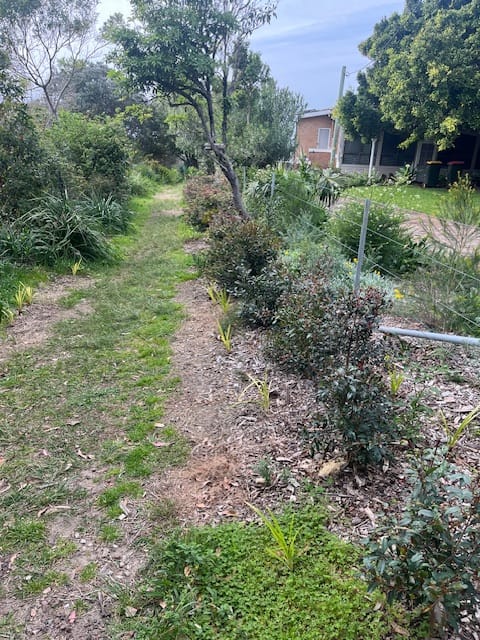
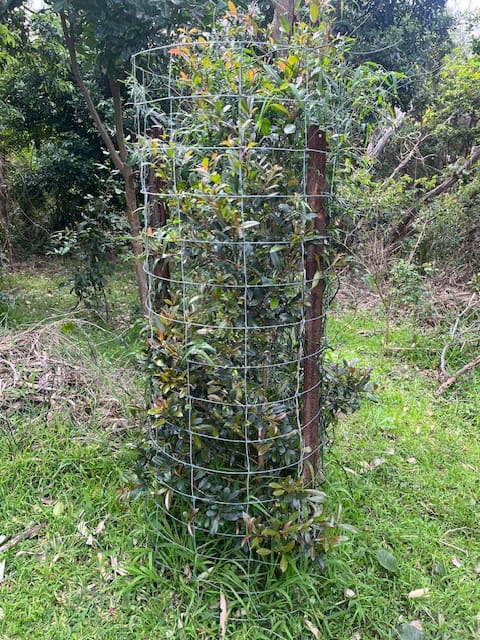
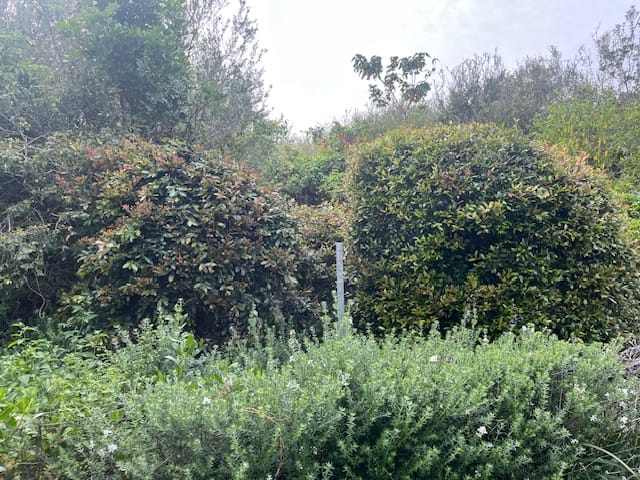
Photos: Kieran Tapsell
We planted about 190 Brush Cherry seedlings throughout the Reserve, and where necessary, protected them from deer with cages.
A recipe for making Lilly Pilly jam can be found here.
Blue Flax Lily (Dianella caerulea) is another source of bush tucker we have planted extensively in the Reserve. It has attractive dark blue flowers which produce a berry of the same colour. Before eating them you should read this information on the Flax Lily for eating, cooking and making jam from them.
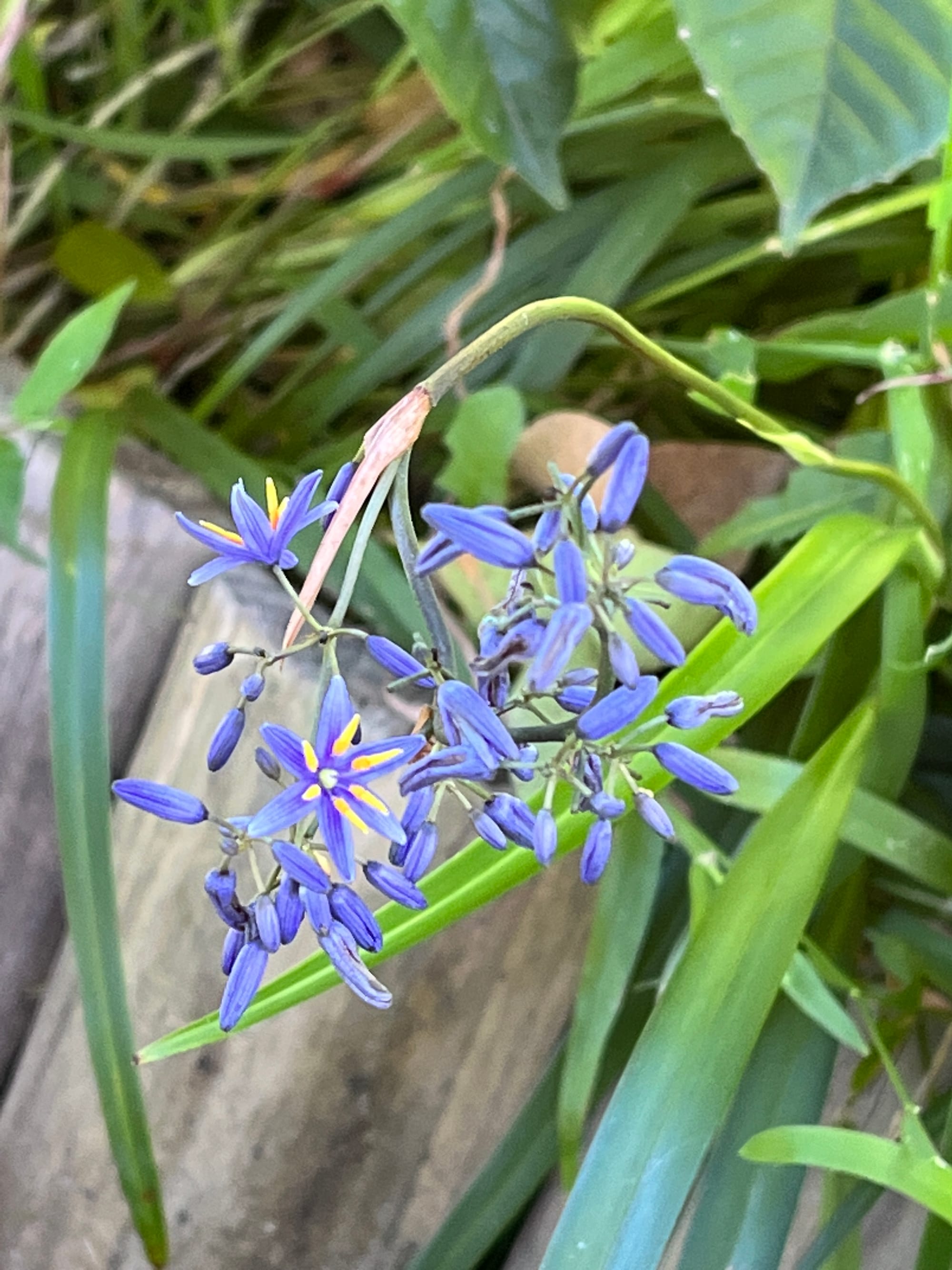
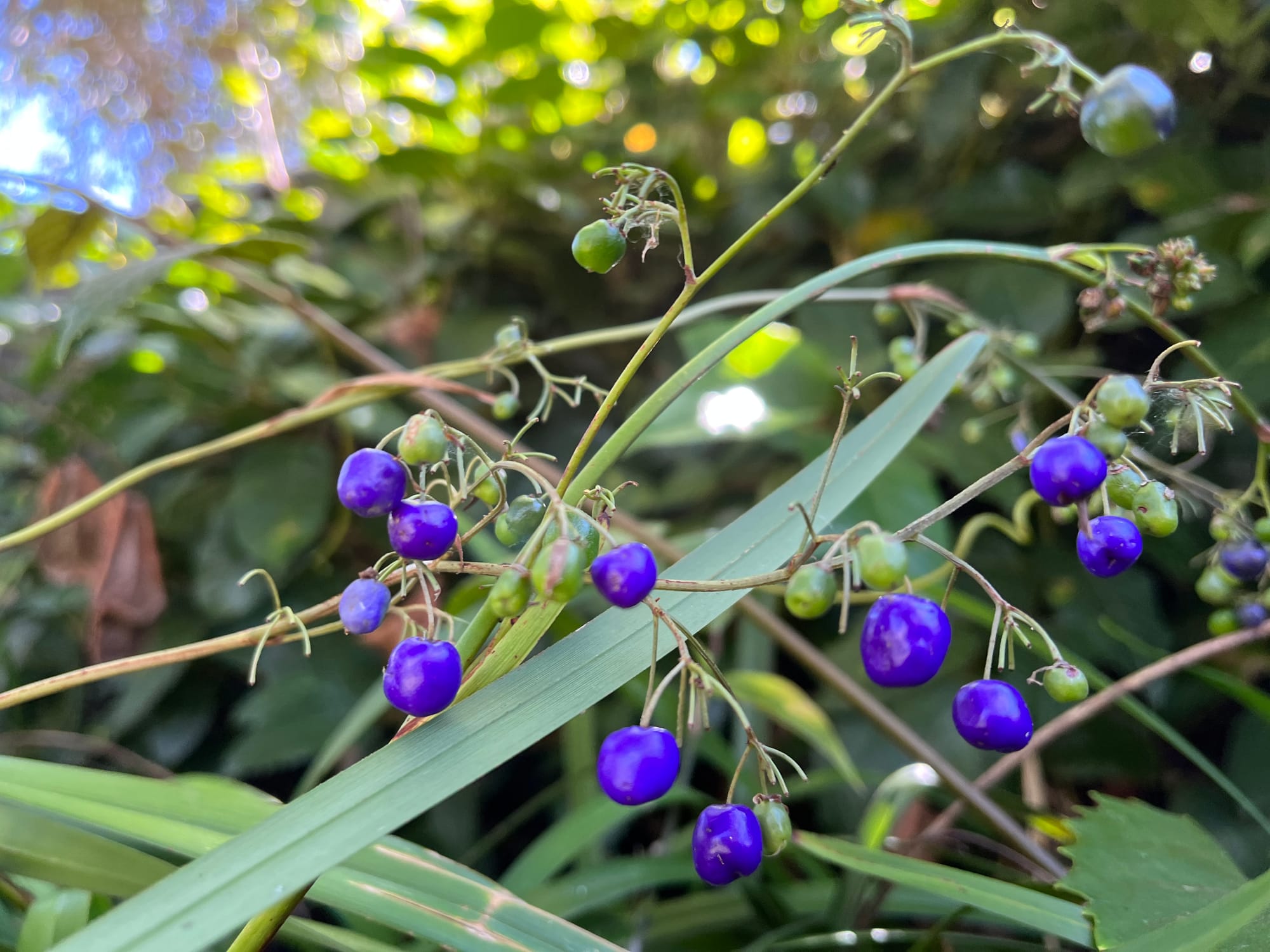
Flowers and fruit of the Blue Flax Lily. Photos: Illawarra Flame
Blackberry picking in Stanwell Park disappeared with the Lantana invasion, and experience proved that Syphilis did not deter the march of the Latino invader.
Now, with the removal of the Lantana by other means and the regeneration of the Stanwell Avenue littoral rainforest, we may have achieved a gastronomical reconciliation of our Aboriginal and colonial cultures. We have converted the practice of picking the berries of another colonial invader, the Blackberry, into a real bush tucker gathering of the indigenous Brush Cherry and Flax Lilly in the area our forebears called Jujinbellily.
About the writer
Kieran Tapsell is the author of Tales Old and New from Stanwell Park in which you can get the full story on the adventures of Syphilis and his nanny, Gonorrhoea. Hard copies are available at the Palms Café and the Beach Kiosk in Stanwell Park. An ebook version is available on Amazon.


