

Transport stress: The true cost of getting around the Illawarra
Census data shows half of Illawarra households are spending at least 35% of total household income on cars

Callum lives in Haywards Bay on the western side of Lake Illawarra and is studying music at UOW. He has been working in retail since he was 14 years old and managed to save $11,000 over the past four years.
What does a 21-year-old aspiring musician do with $11,000?
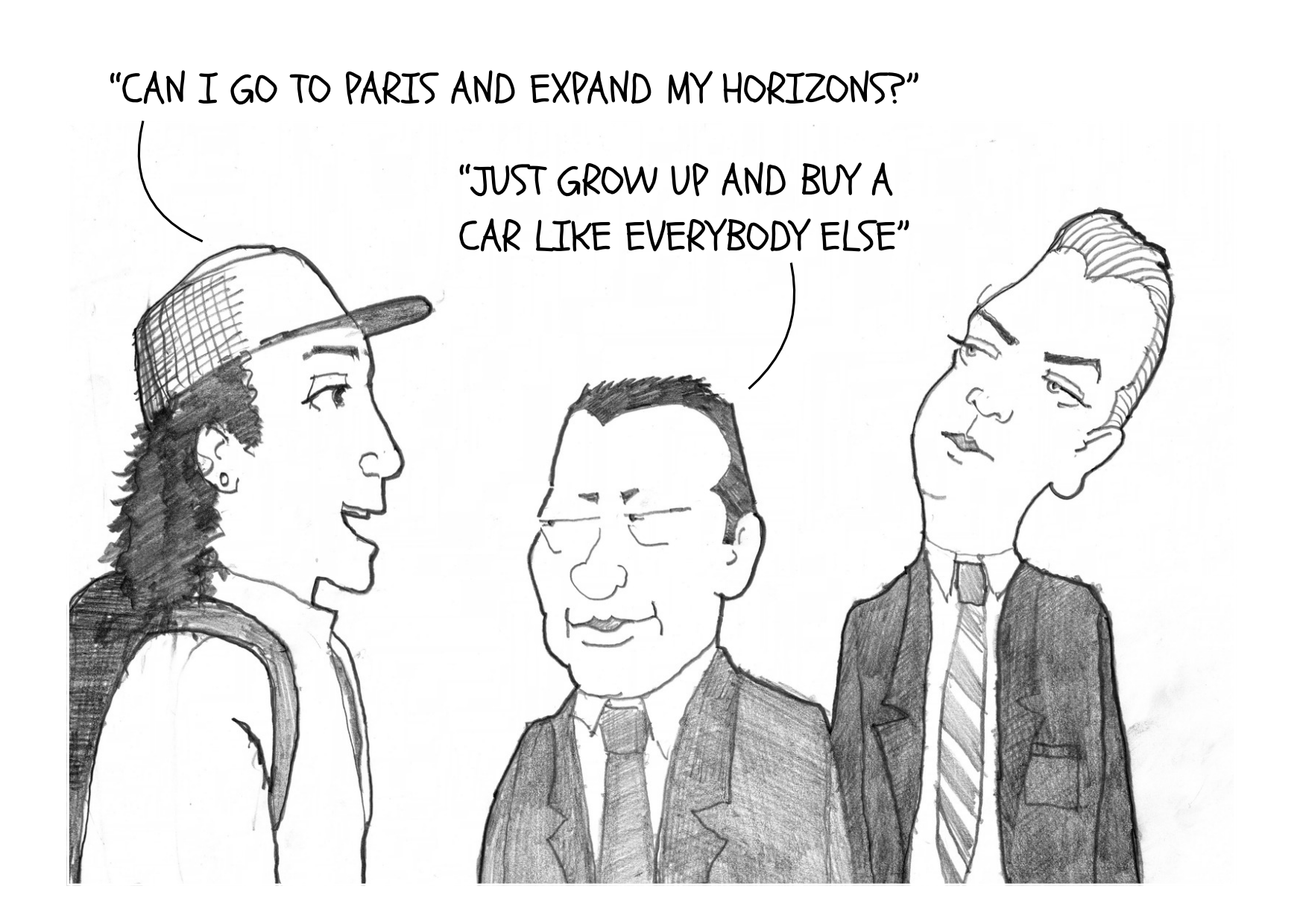
They go to New York, London, Paris or New Orleans and get immersed in the music scene, right?
Well, while they continue to live in the Illawarra, they will typically spend that $11,000 on a car.
Without that car, Callum would have to catch the 37 bus from Haywards Bay to his work in Shellharbour Square. The bus takes 20 minutes which is the same time it takes to drive, but it only runs hourly, so if Callum misses that bus he will be very late for work. The last bus home leaves at 8.57pm, which is earlier than the time his evening shift ends, so without that car he would have no affordable way to get home at night .
Getting to UOW from Haywards Bay is also challenging. The best option is the 57 bus to Wollongong Hospital then the 55C Loop Bus to UOW, but the 57 bus only runs hourly and the entire trip takes almost an hour.
Callum could alternatively take the 37 bus south to Albion Park station, then get the train to North Wollongong and jump on the 9N to UOW, but that takes well over an hour. If Callum drives to UOW outside peak hour, the trip takes 15 minutes but driving during peak hour can regularly be a nightmarish 45 minutes.
The really crazy thing is that the railway line runs straight past Haywards Bay but there is no railway station there, even though it is located roughly in the middle of that long eight-kilometre stretch between Dapto and Albion Park.
Until Haywards Bay railway station is completed, Callum genuinely needs that car, even if it tangles him up in frustratingly unproductive gridlock and consumes most of his hard-earned savings. With car ownership reaching four or five vehicles per household in many suburbs, particularly west of Lake Illawarra, this problem is clearly widespread across the region and Callum’s experience is not isolated or unusual.
Data from the last census reveals that half of all households in the Illawarra are spending at least 35 per cent of total household income on cars. Spending more than 30 per cent of household income on rent or mortgage is an accepted indicator of “housing stress”, and housing affordability has become a major issue across the nation.
If half of all households in the Illawarra are spending more on their cars than on housing, “transport stress” is an even greater financial burden in this region and it is reasonable to expect that transport affordability be addressed by our state and federal representatives as an urgent political, social and economic issue.
It is well documented that this burden decreases in proportion to increased availability of effective public transport. If the state government established a viable transportation system in the Illawarra, we would have a choice, but the network is currently inadequate. Like Callum, we have little option but to fund our own private transport, and for most households, this is an unaffordable necessity.
For the 8 per cent of households in the region with no access to a car, the main alternative is the inadequate public transport network, which effectively restricts fair and equitable access to education, employment, healthcare and services.
A primary teacher at a school near Wollongong recently revealed that they have high levels of absenteeism because many families do not have regular access to a car, and there is no bus service offering transport to the school.
This indicates the depth of social inequity borne from neglect of our public transport infrastructure, and there are countless examples of this problem creating unnecessary barriers for a significant sector of the local community.
All the relevant politicians and government bureaucrats understand there are huge problems with public transport in the Illawarra but road projects attract the bulk of transport funding because moving road freight in and out of Port Kembla is the top transport priority for this region and the dominant voices from the community are consistently demanding better and bigger roads in the misguided belief that this will alleviate traffic congestion.
All transport planners know that bigger and better roads only attract more traffic and ultimately generate worse congestion – just look at the chronic gridlock on the new $630 million M1 Albion Park Rail bypass.
We need to be sending our politicians a different message demanding world-class public transport.
If we can achieve this, young people such as Callum will have no problem getting to work or uni without the need to buy a car, and that $11,000 they save could instead finance something truly wonderful.
If you want to get involved in Illawarra Public Transport Action, email us at serveorganiselearn@gmail.com.


