

What goes around comes around for Illawarra cyclists' evolving revolution
For anyone who’d like to try cycling, it needn’t be a solo endeavour. IBUG, which has more than 100 members, empowers people to ride around the Illawarra

For Ed Birt, cycling isn’t just a sport – it’s the most convenient way to incorporate daily movement into everyday life.
"It's incidental exercise, really. It's the most logical way to get the exercise you need on a daily basis… is the way that you get to or from work or school," says Ed, president of llawarra Bicycle Users Group (IBUG). "Why not use that time to do that exercise that you try to find time for elsewhere? Then you're done, tick.
"You got to work and you got the exercise."
And we need the exercise. The 2025 NSW Health Survey has revealed that 35 per cent of NSW residents aren’t getting enough physical activity.
For anyone who’d like to try cycling, it needn’t be a solo endeavour. IBUG, which has more than 100 members, empowers people to come together to enjoy the physical, mental and social benefits of cycling.
Their Bike Buddies program makes cycling more accessible to women and LGBTIQ+ communities by pairing experienced riders with those looking to get back on the bike. New riders can learn safe routes, build confidence and connect with a community of local cyclists.
“We've got lots of great programs in the Illawarra for people who want to get into cycling. With IBUG, we've got loads of members who are willing and able to help people who want to get back into cycling, who are happy to give up their time to help somebody get back in,” Ed says.
“I think there is a generational issue – older people my age, they haven't cycled for a long time. A lot of them are very fearful of cycling or may never have learned to cycle.
“Sometimes it just makes a huge difference having somebody who knows the little routes and byways, the sneaky little paths that you can get through. There's actually lots of connective routes through any town like Wollongong.”
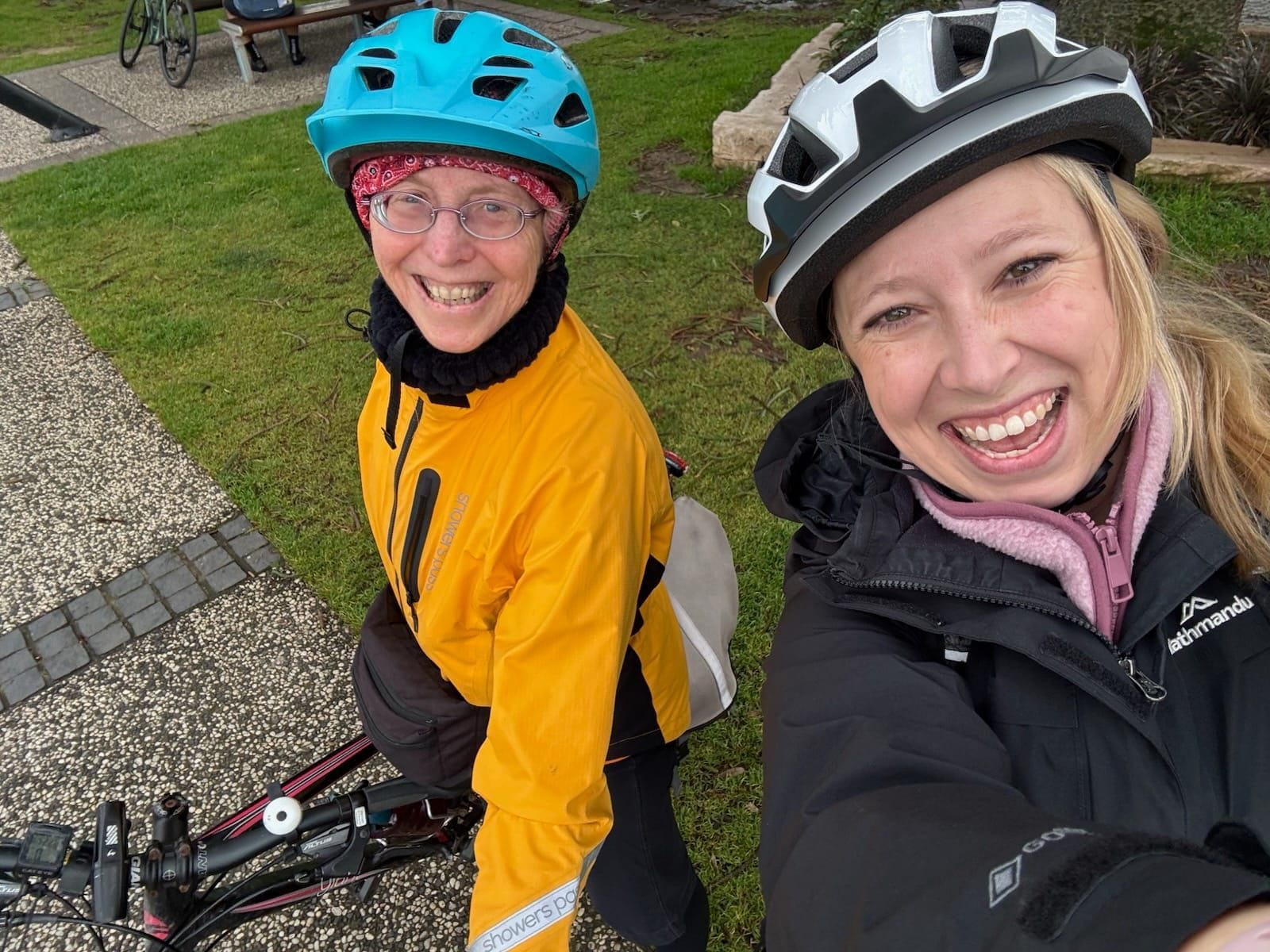
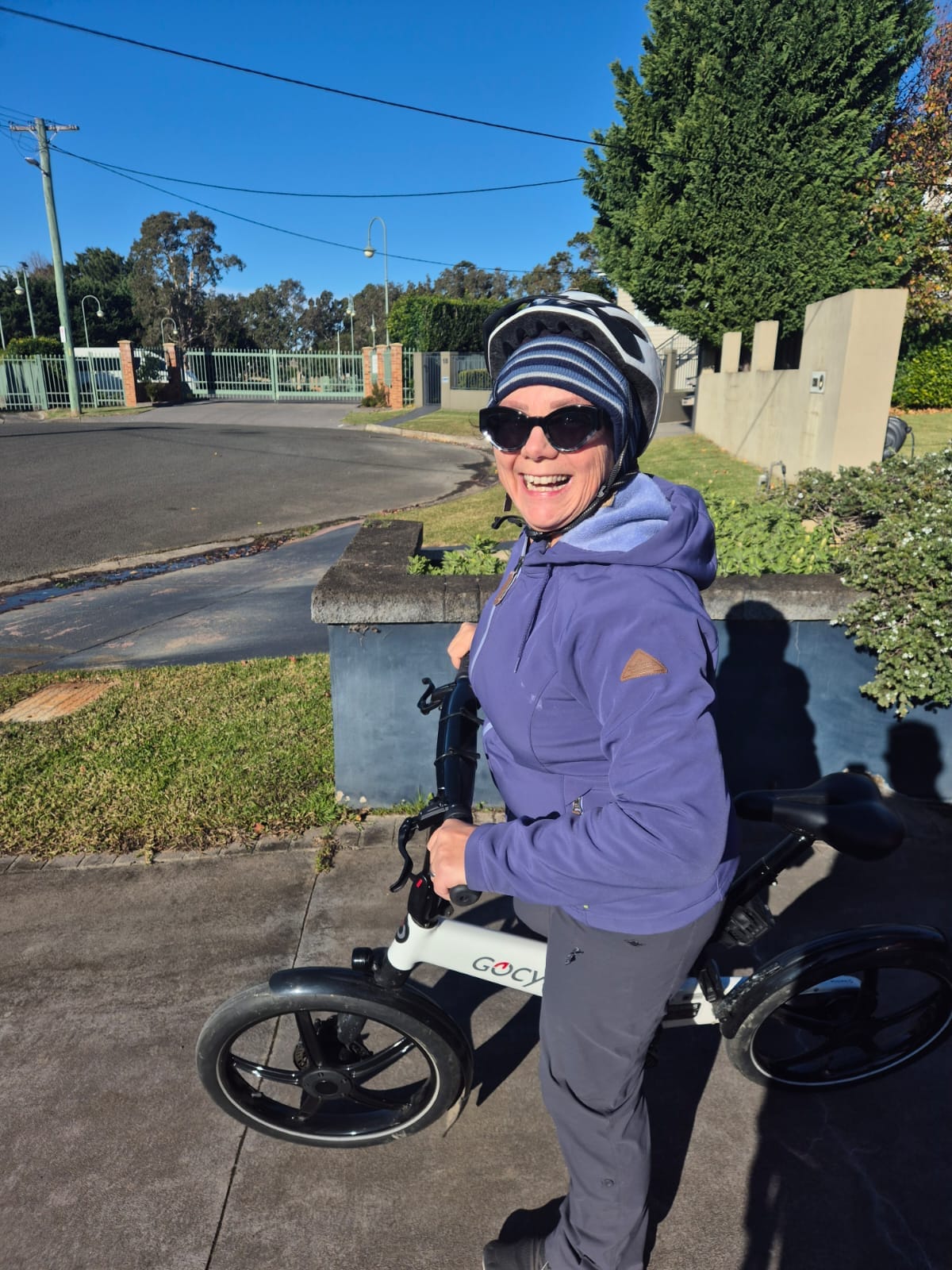
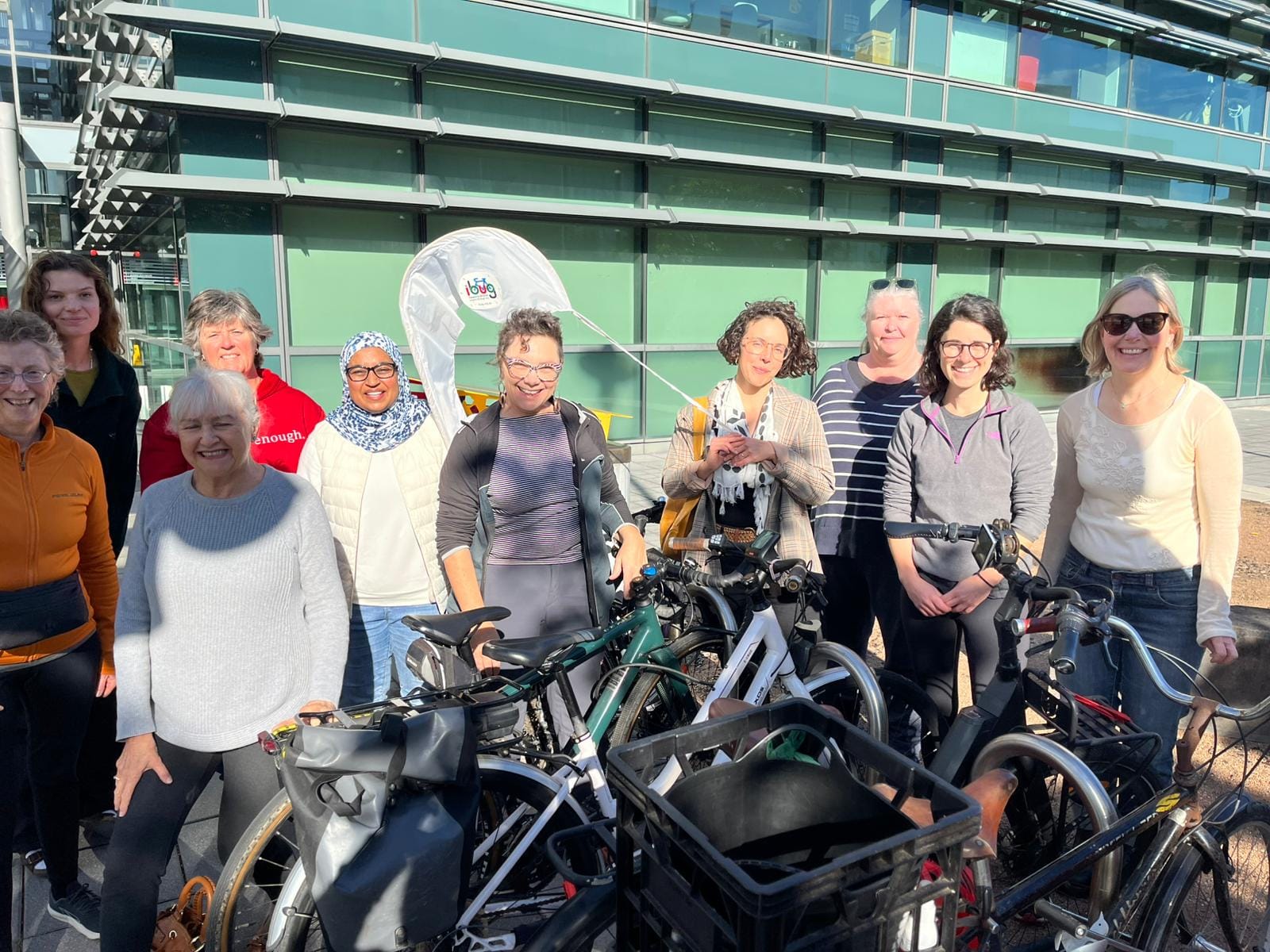
Marie (left) and Kaitlyn, the first pair of buddies connected by IBUG's Bike Buddies program. At right: Rhonda Hunt, vice president of IBUG, on her bike in Fairy Meadow. Photos supplied
Ed says that the convenient allure of the car could contribute to higher rates of social isolation and sedentary habits, and that he prefers the social connectivity his bike provides.
"You bump into people all the time, say g'day, you're visible, people see you... I have chats with random people. I think of all the people who don't meet their future husbands or wives because they're stuck inside their cars,” he says.
Regular cycling improves cardiovascular fitness, lowers blood pressure and reduces risk of illnesses including heart disease, stroke and some cancers. Studies show that consistent cyclists have up to a 46 per cent lower risk of cardiovascular disease and a 40 per cent lower risk of dying from cancer compared to non-cyclists.
“We still have a very auto-normative mindset, where everything revolves around the car... the convenience of it is an addiction. But we've got so many vehicles in terms of e-Bikes or regular bikes... you’ve really got the world at your feet in terms of transport options with bicycles nowadays that even 10 years ago we didn't have,” Ed says.
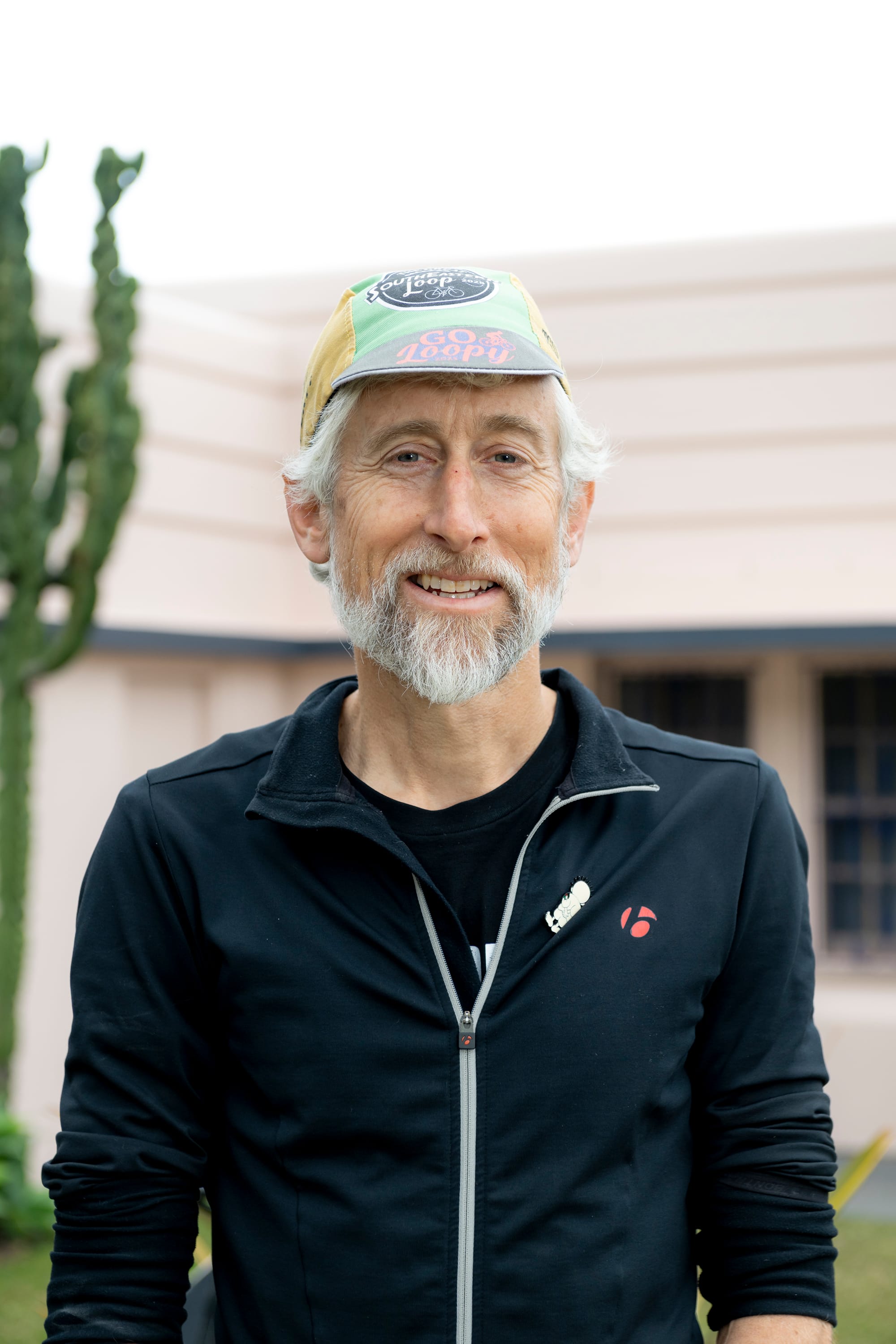
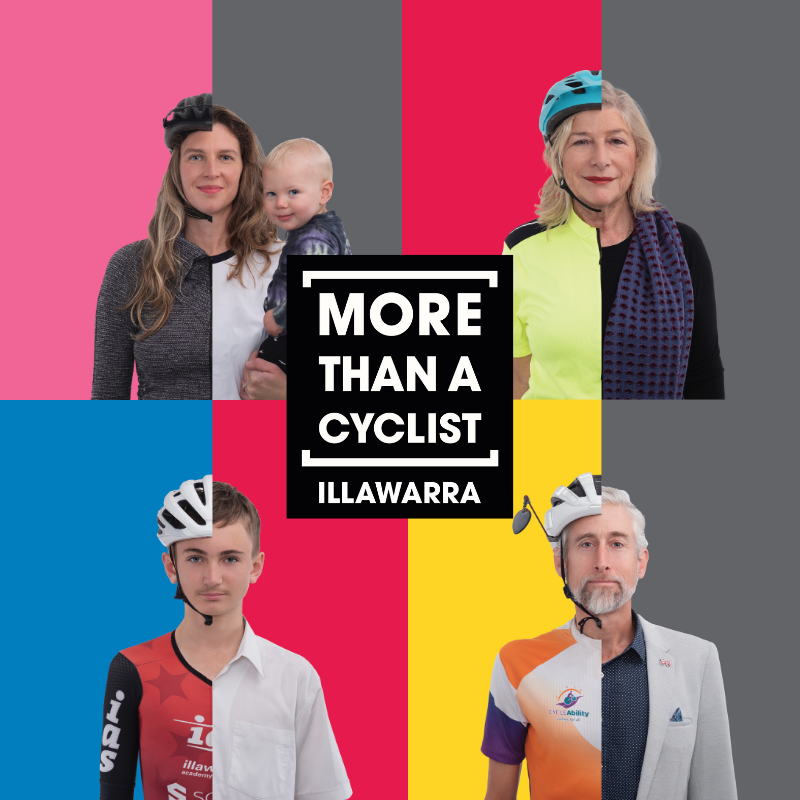
IBUG president Ed Birt featured in Healthy Cities Australia's "More than a cyclist" campaign posters. Photos: Anthony Warry, HCA
Cycling is a low-impact activity that helps with weight management and strengthens muscles without stressing joints, making it a great option for people with health challenges – and the benefits extend far beyond the physical. Cyclists enjoy lowered levels of stress and anxiety, improved sleep quality and the endorphins released through movement.
"A favourite saying of mine is that the journey is the destination. I'll often ride down the coast, and it might take me twice as long as in the car, but I had heaps more adventures – on a bicycle, the journey is the destination," Ed says.
"But it's really those smaller rides that are most important – 50 per cent of trips under 1 km are done in a car. That would take you five minutes to walk or ride. That's really bad for people's health – they’re trying to stay fit, get their steps up and this and that, and it's staring them in the face.
“It doesn't have to be putting on your active wear and going out when the kids or the dog need feeding. See that little opportunity to go and get that coffee as not just getting coffee. You're getting a little stroll in - change the mentality, because we've got a sickness.”
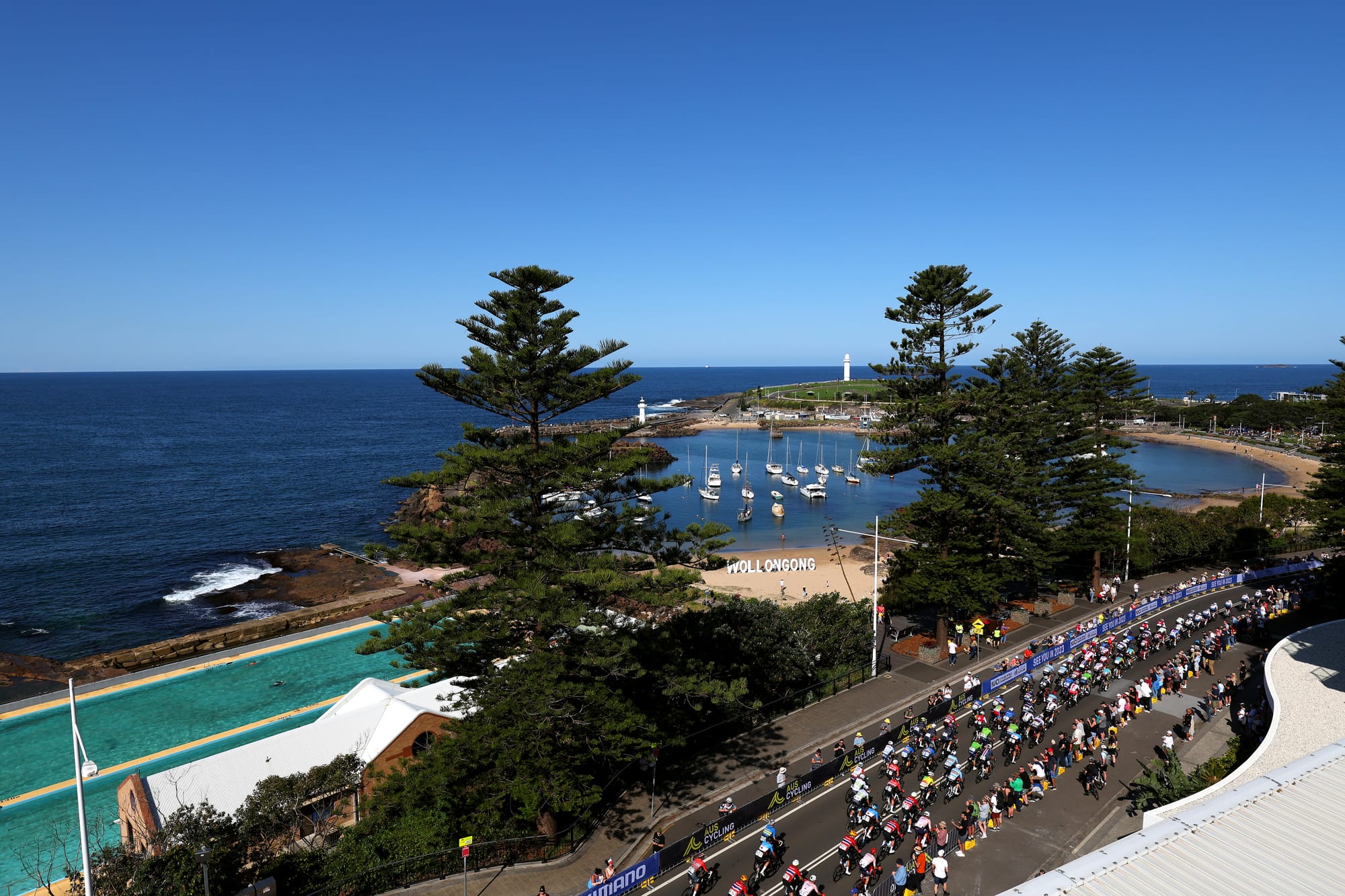
Wollongong hosted the UCI Road World Championships in September 2022. Photo: Getty Images
Wollongong, Australia’s first UCI Bike City, is embracing the rewards of cycling. The city's diverse and scenic terrain includes coastal cycleways, mountain trails, and flat paths suitable for all skill levels. There are plans to expand the local cycling network to 215 kilometres by 2030, with environmental sustainability being a major benefit.
“If you're environmentally minded, it's a big tick,'' Ed says. ''It's extraordinarily economical as well - there's just no comparison. For wear and tear on infrastructure, a 120-kilo person on their bike is nothing to the concrete and paths compared to a two-ton vehicle. People have ‘Drive safe in villages’ stickers on their cars, but maybe they should ride their bike down to the village and see what happens.”
Overcoming Road Blocks: The More Than a Cyclist Campaign
Despite clear benefits, there are factors that commonly prevent locals from taking up cycling. The biggest deterrent is fear of collisions with motor vehicles. Vicki Wallace at Healthy Cities Australia says cyclists face dangers because many drivers are "annoyed that they can't get around them quickly" and feel they "don't have to share the road".
"I think a lot of people who would take it up are apprehensive because of how many cyclists are hit. Cyclists are often viewed as objects or hazards on the road rather than people, and research shows that this perception gap has a very real and dangerous impact on attitudes that lead to negative consequences for safety,” she says.
Research confirms the problem: 55 per cent of non-cyclists and 30 per cent of cyclists in one large Australian study rated cyclists as less than fully human. This attitude contributes to aggressive driving behaviours such as deliberately blocking cyclists, or driving too close. Drivers are often taught to perceive cyclists as "hazards" rather than legitimate road users, which makes aggression and indifference easier to justify.
“Many times, people fly past me far too close, and then I pass them and they’re sitting in their driveway, scrolling on their phone. They’ll spend hours at home watching Netflix, but they had to tear past you to save 10 seconds? It just doesn’t make sense,” Ed says.
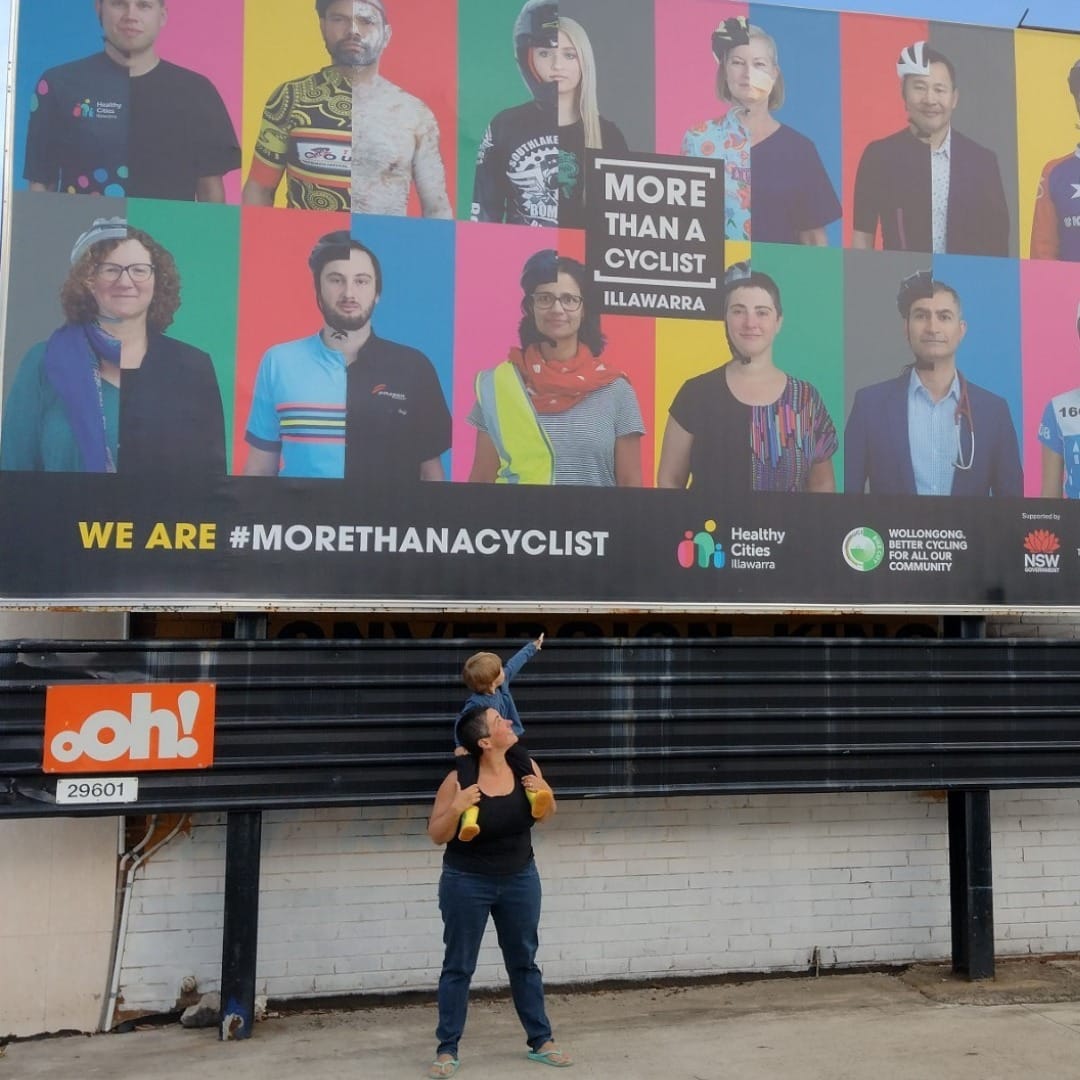
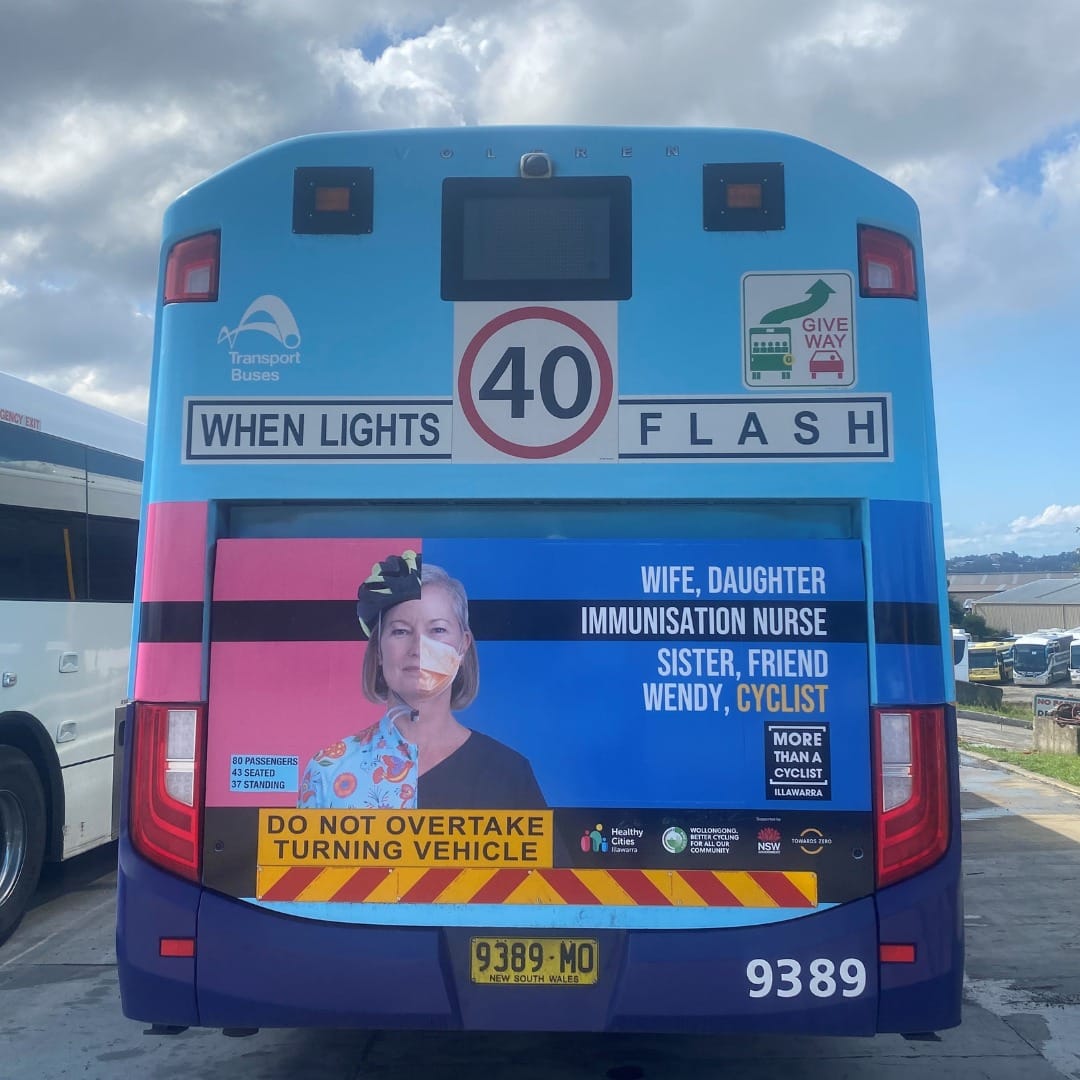
Healthy Cities' campaign appeared everywhere from billboards to buses in Wollongong. Photos: HCA
"It’s just bizarre that when it comes to people’s safety, they’ll put that in jeopardy - and not just safety, but fear stops people from cycling. You might not kill somebody, but you scare the living shit out of them... It's just absolutely terrifying and you feel like people don't care about you. You feel like your life is at risk. We just need to think about each other - cars are terrifying things, big chunks of metal moving through space very quickly,” Ed says.
To combat this, Healthy Cities Australia (HCA) launched the More Than a Cyclist (MTC) campaign. The campaign aims to:
- Humanise cyclists by reframing them as neighbours, friends, co-workers and family members.
- Shift language and imagery to reduce dehumanisation and build empathy and respect.
The campaign uses imagery of diverse, everyday individuals, like a "SINGER, FOODIE, MOTHER, 'MUMMA', WIFE, FRIEND, ISABELLA, CYCLIST." It reminds drivers: "the cyclist you are sharing the road with could be someone you know".
As Vicki explains, the campaign is about putting a face to the rider. By showing real people, like a mother, wife, and friend who also happens to be a cyclist, the campaign disrupts the "othering" of riders.
"It really is about people not seeing cyclists as real people. And that's why that campaign is very important – to put a face to the rider, because they can be anyone."
Join in
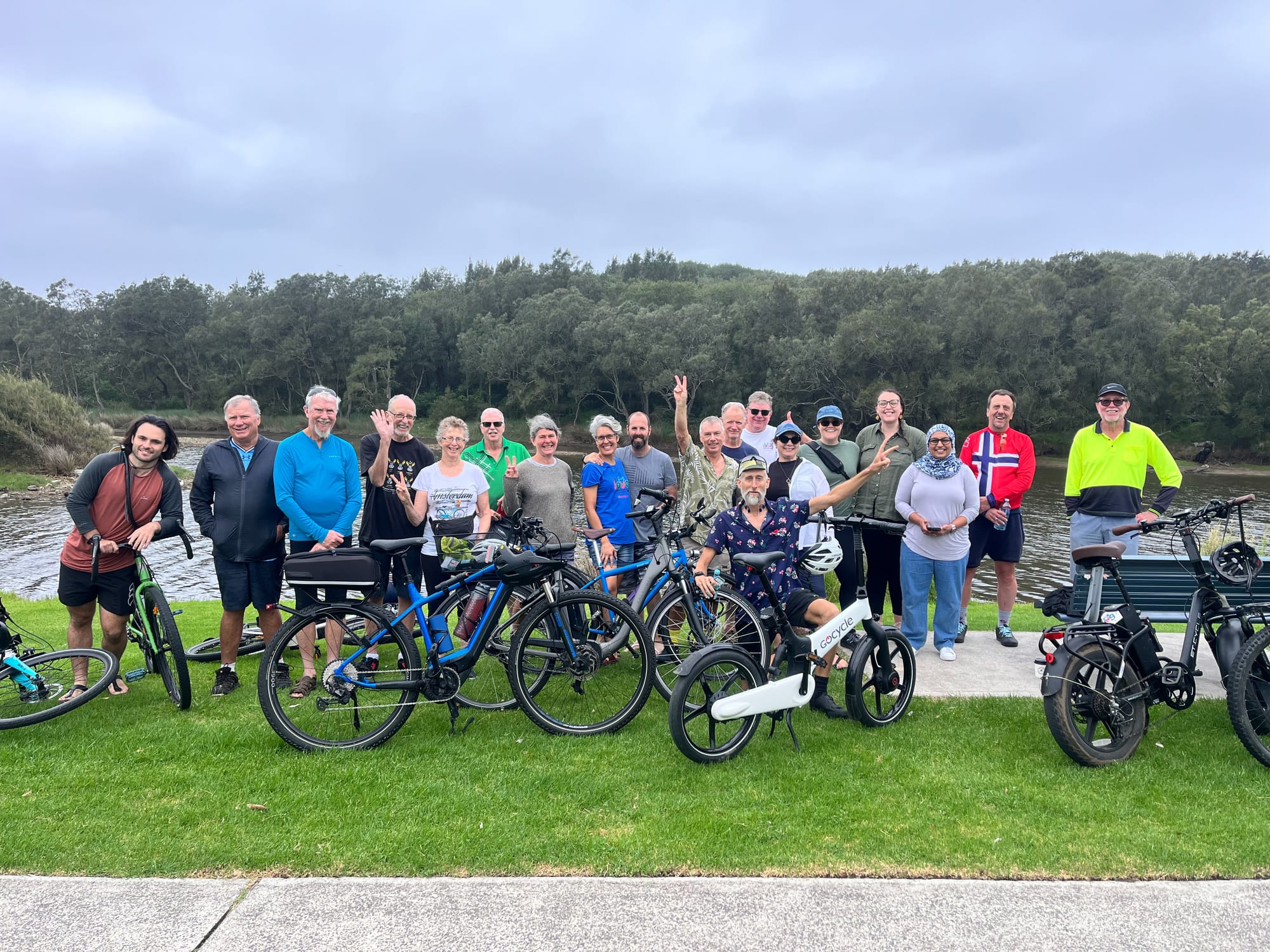
Ed says the cycling revolution is happening, and locals can get on board by joining IBUG. A $5 membership offers riders all of the resources and support they need to start cycling or and face challenges with friends. Learn more about IBUG through the website.
“You might have gotten swooped by a magpie and it freaked you out, but you had an adventure, you got a story to tell when you get to work. Don't be defeated by it,” he says.
Locals can also support the More Than a Cyclist (MTC) campaign. Healthy Cities Australia is offering a free starter pack to help organisations across Australia deliver the MTC message. This pack includes digital assets, social media tiles and suggested copy.
To register interest in this pack, email morethanacyclist@healthycities.org.au.


