
Why former councillor kayaked into coal shipping channel
Cath Blakey faces a long legal battle for her part in a mass protest action she says helped garner massive publicity for phasing out fossil fuel

Former Wollongong city councillor Cath Blakey is facing a long legal battle and a fine of up to $1100 after taking part in a mass act of civil disobedience at Rising Tide’s blockade of Newcastle coal port last year.
Cath, who represented the Greens in ward 2 for eight years, made hometown headlines after her arrest on November 30. But would the news have come as a surprise to anyone who knows her – would high school classmates have thought she was destined for arrest?
“Yes, I bet they did,” she says.
From age 12, Cath volunteered with the Wilderness Society, canvassing supporters to protect native trees from logging. Environmental activism led to political awareness, which only grew during her teenage years at Wollongong High School.
“I was at high school when [John] Howard was elected; we organised a high school walkout, which went from high school to the university, which isn't very far.
“We all had permission slips,” she says, laughing.
Cath's first arrest was at Sandon Point in August 2002, when she joined protestors to save the heritage site from developers, an action that eventually led to the government declaring it an Aboriginal Place.
At 2025’s Rising Tide – a “protestival” mixing climate action and entertainment by the likes of Lime Cordiale – things became “more serious”, she says.
Organisers had planned a “people's blockade” to disrupt coal shipping and draw attention to calls for the government to stop approving new fossil fuel projects and heavily tax coal companies. It was Cath’s third Rising Tide, but the first time she was set to defy police orders.
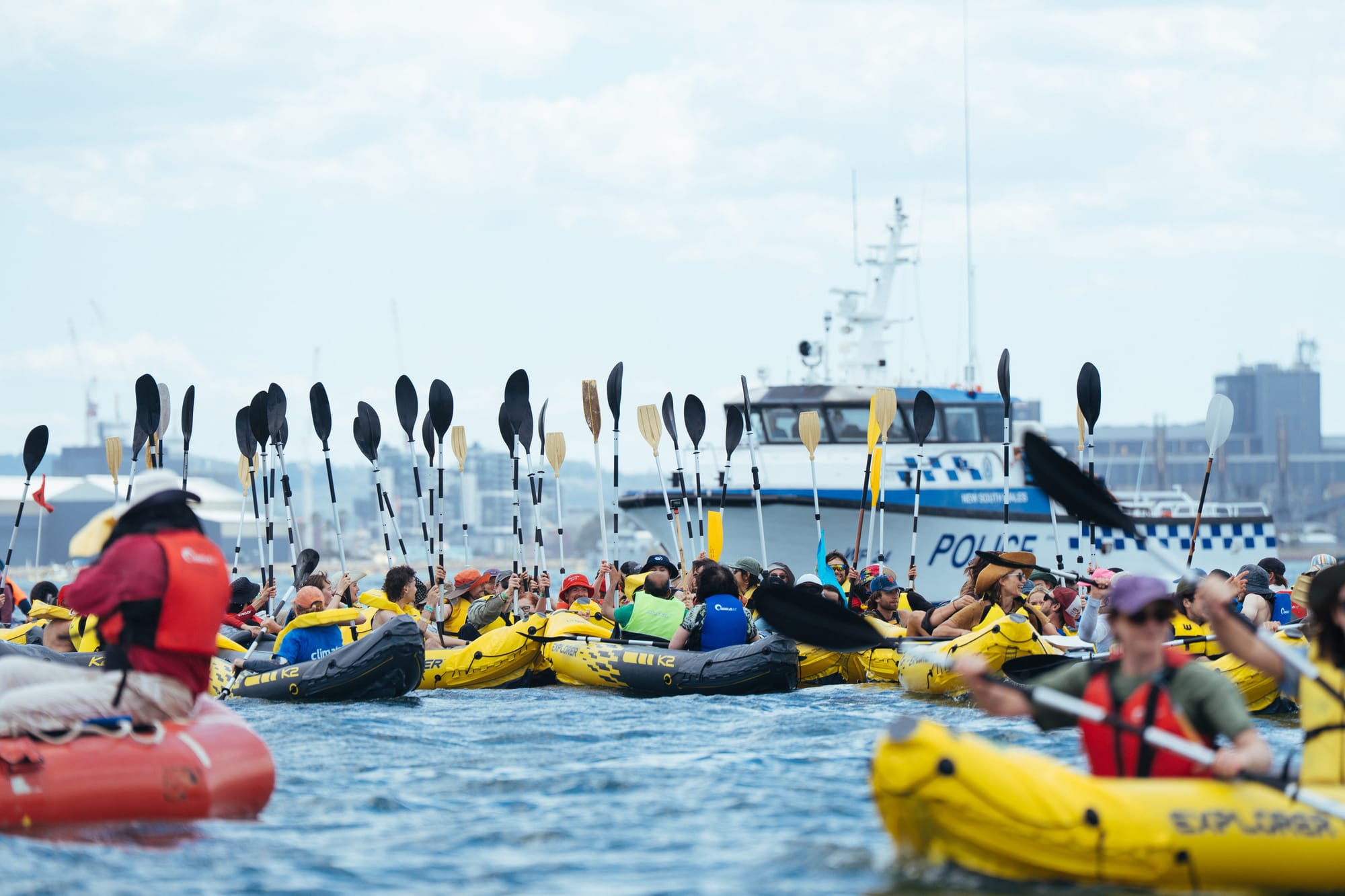
On Sunday, November 30, she launched her kayak from a spot west of Horseshoe Beach at the Hunter River mouth. “I clambered down the rock wall and put my kayak in the water and kayaked towards the shipping channel, and then waited there.”
Cath wore wetsuit boots to protect her feet from oyster cuts and all-over UV gear, from hat to diving gloves. She was in an inflatable kayak, rather than her own, and relieved to find there was very little wind.
“It was very calm, easy kayaking,” she says. “I'm pretty experienced, and we had some practice sessions at Wollongong Harbour. I really love kayaking.”
Nonetheless, entering the water was stressful, not knowing if the drones above belonged to police or media, and Cath remembers paddling on an adrenaline rush into the shipping channel, where police were prioritising the retrieval of swimmers.
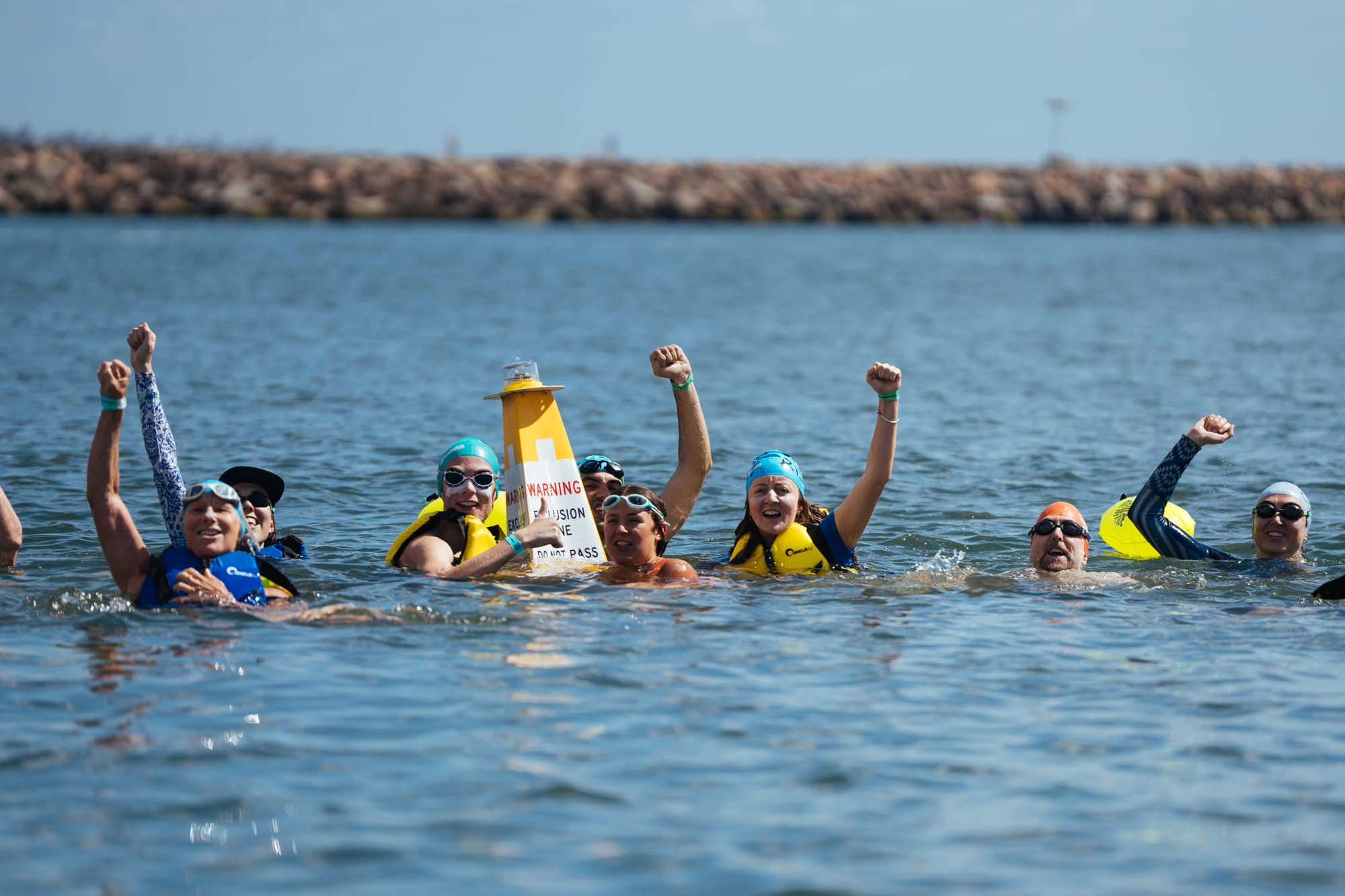
Swimmers, pictured at right alongside a yellow exclusion zone buoy. Photos: Lee Illfield
“Under section 18B of the Marine Safety Act, the state government had declared a marine exclusion zone, which gives them the power to issue fines.
“We tried to time our kayak into the shipping channel before the next coal ship was coming. There’s a bit of a safety window where you hope to get there, so that the coal ship turns around. But of course, you have to make sure that everybody's safe and no one gets run over, so we went in there a bit beforehand.
“I was just waiting in the shipping channel by myself, far away from anyone else.”
She wasn’t there long – from paddling out to processing her arrest took about an hour and a half.
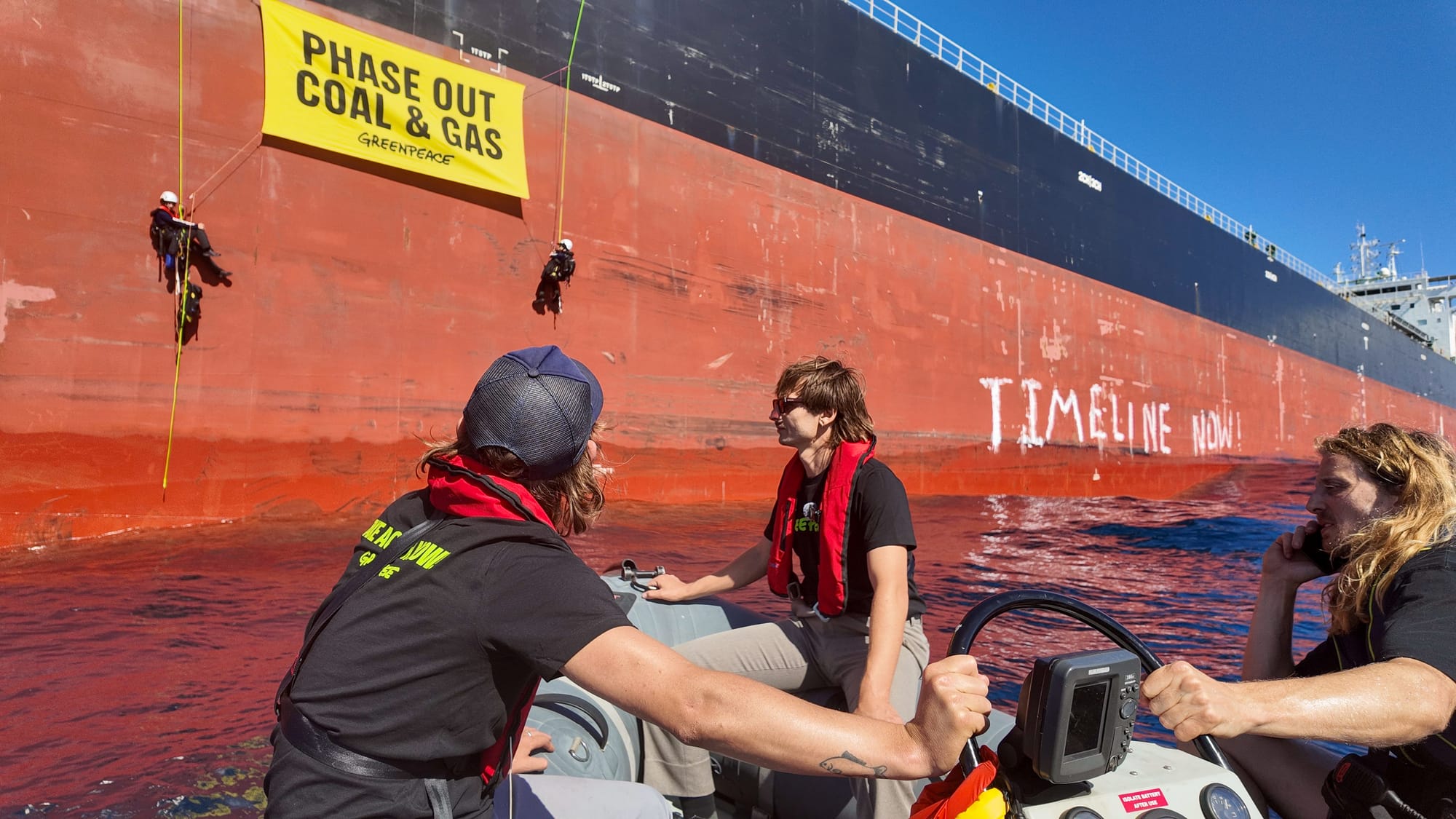
Hundreds of people joined the flotilla but only 141 were arrested, including two Greenpeace activists who hung off the side of a ship and unfurled a banner reading “Phase out coal and gas”.
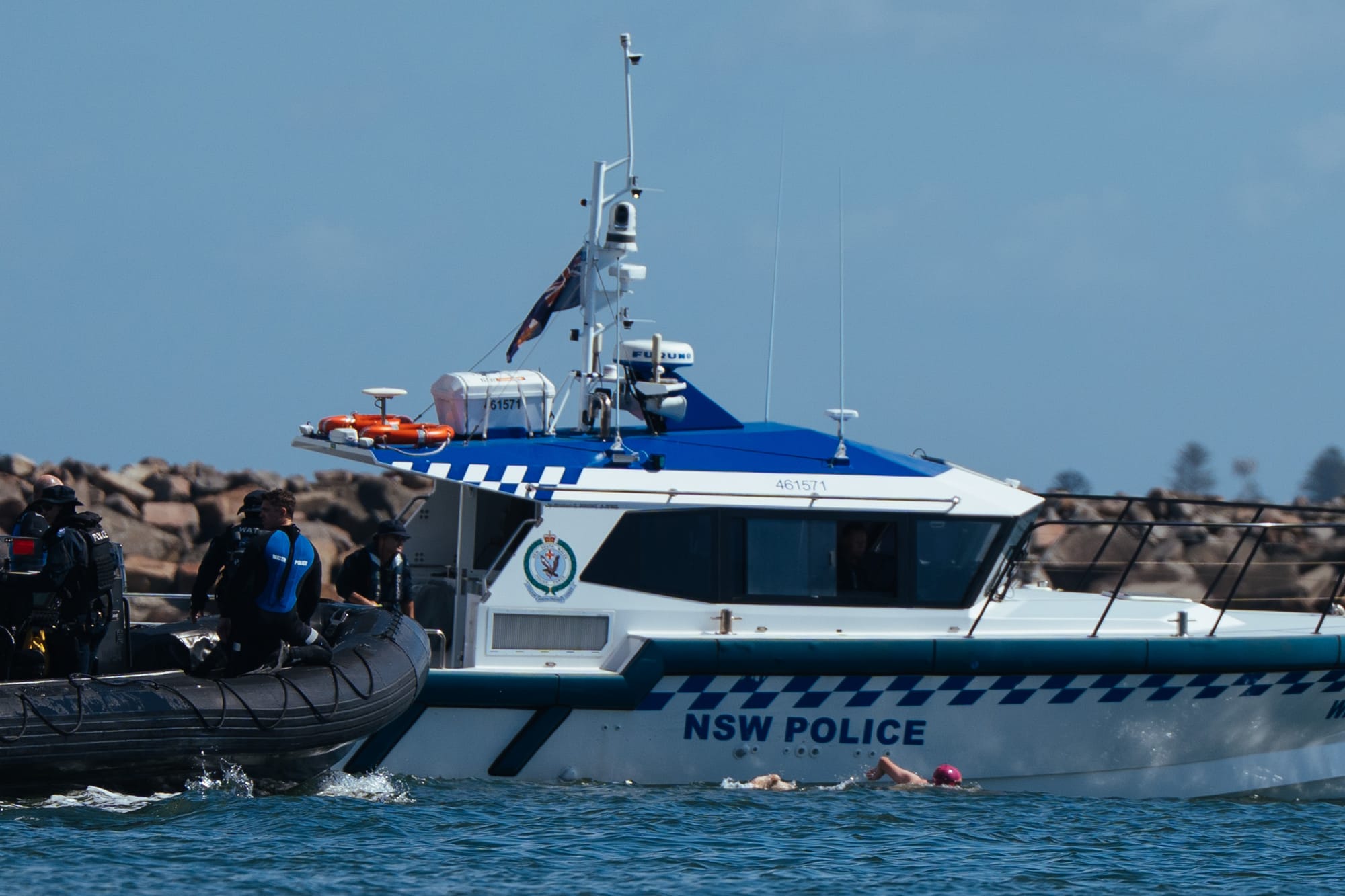
Cath remembers finding the black-clad riot police intimidating. “But when you got up close and saw the zinc on their cheeks, and the fact that they were out there in the sun [doing their job] – they were professional. A police boat came up, and the police reiterated that under the Marine Safety Act, this was an exclusion zone, and they gave me direction to move on, and asked me if I would, and I said, ‘No’.”
At this point, Cath was officially arrested.
“Officers asked me to pass my paddle over to them while they held my kayak and then two officers hoisted me by the lifejacket up onto the boat.”
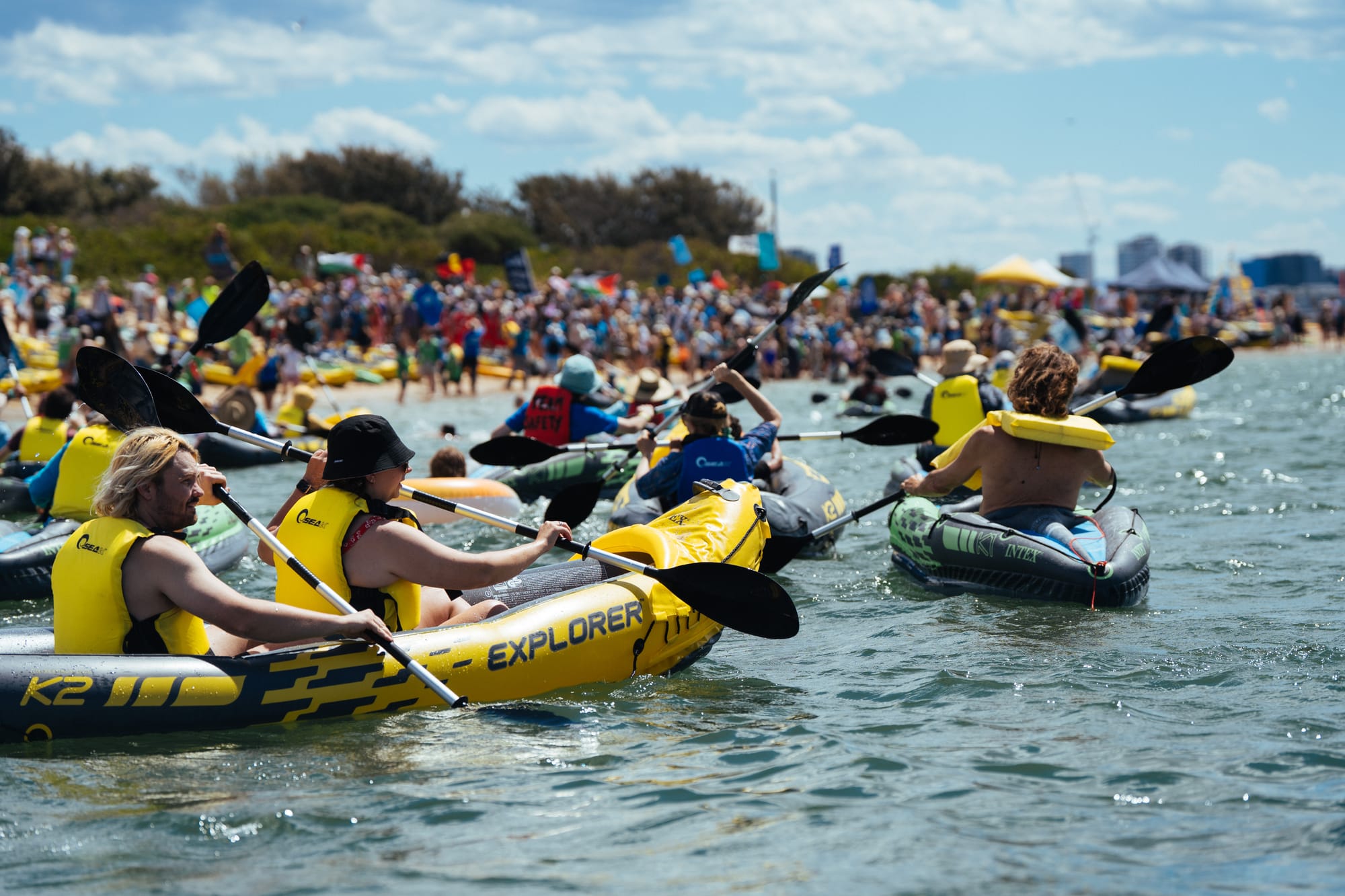
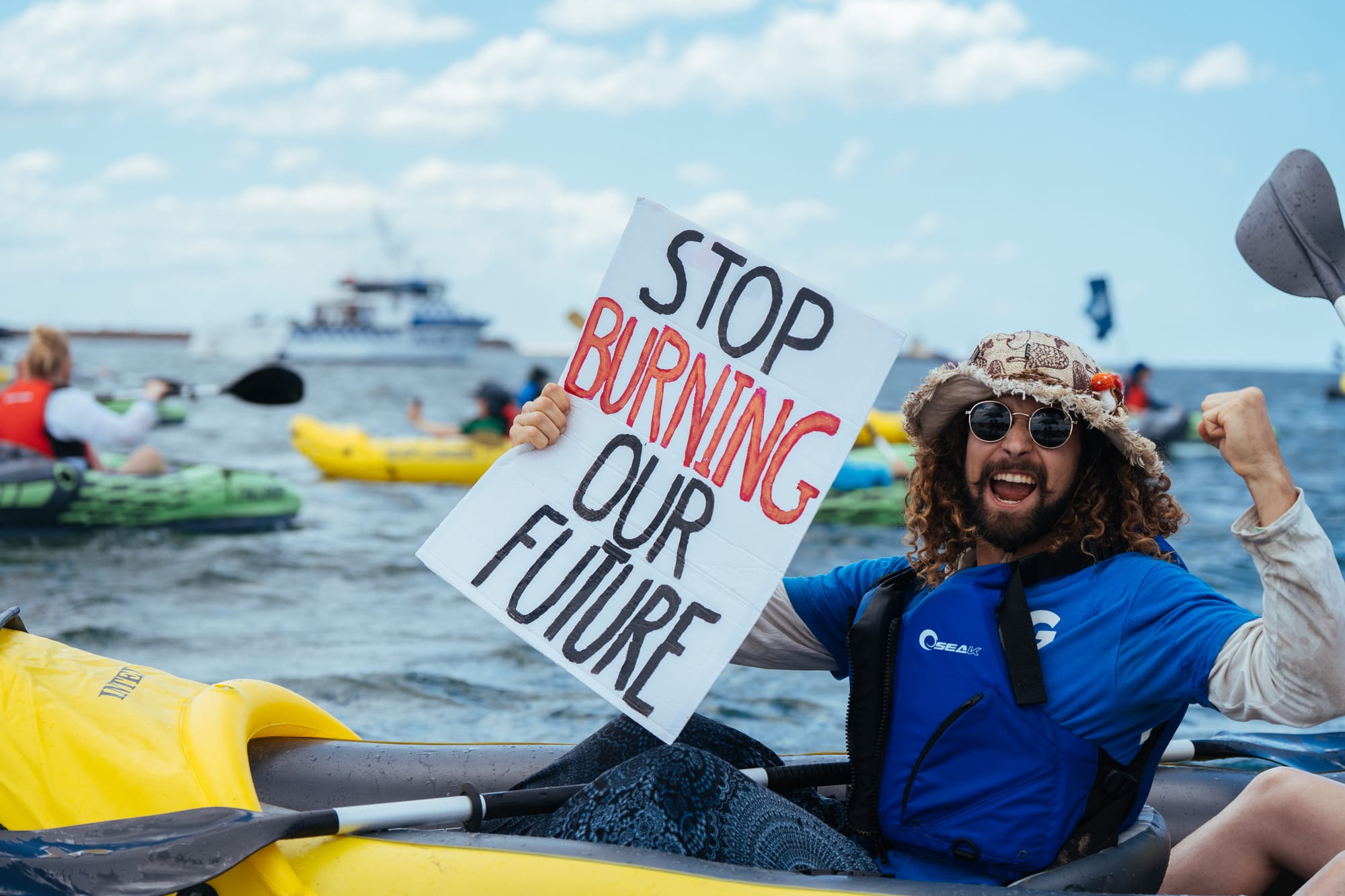
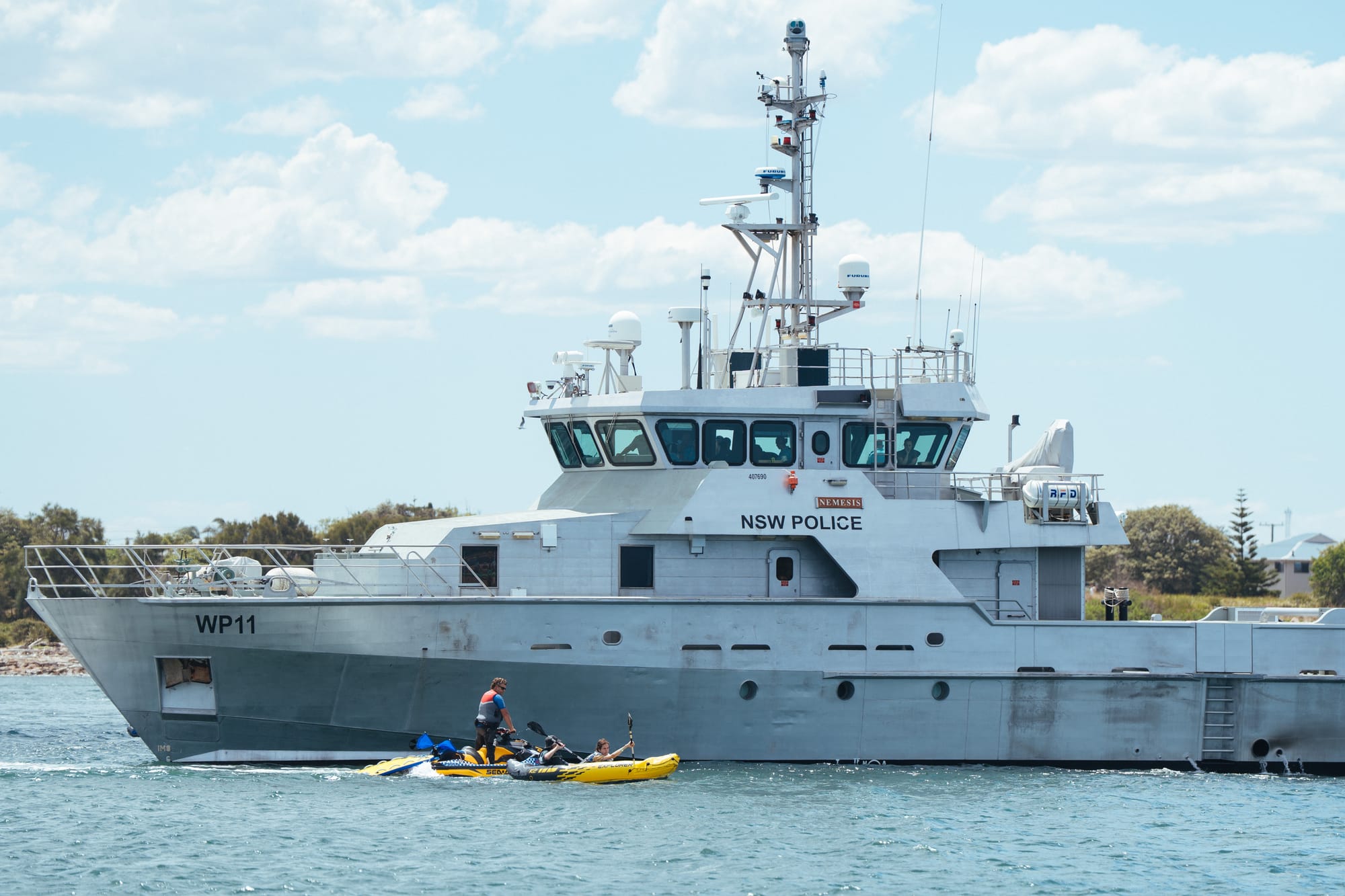
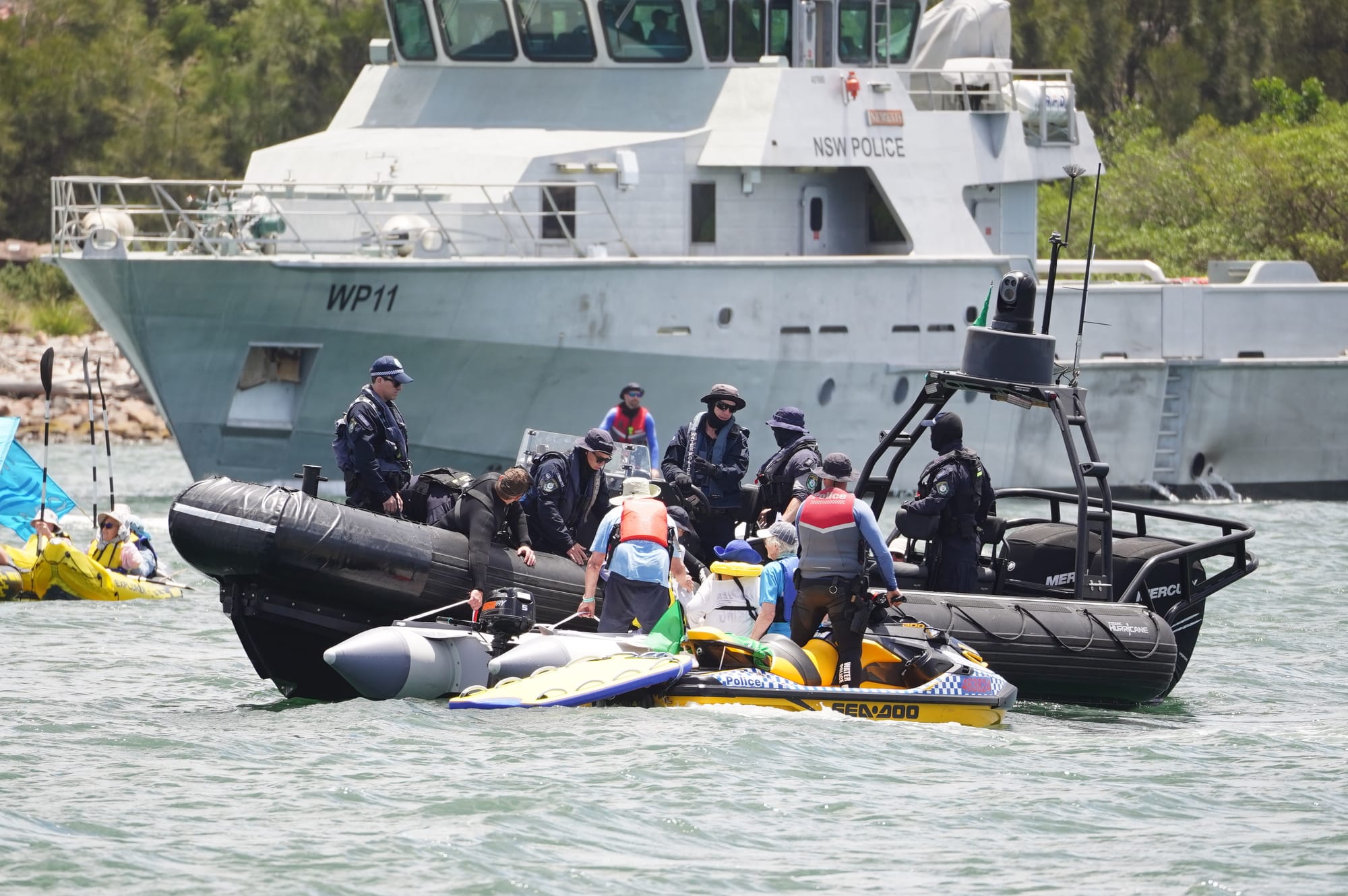
Kayakers protesting at 2025's Rising Tide. Photos: Lee Illfield
After being taken to shore, processed and discharged, Cath was met by volunteers, who brought water, lollies and fruit, and drove her back to camp, where she was reunited with family.
“We gave each other a big hug,” she remembers. “My daughter was nervous about me doing it, because I guess what she knows of police is mostly just from Peppa Pig and TV shows. But we did talk through the process. I felt very well supported. It's a very well organised team at Rising Tide, where there's volunteers that are professional psychologists and public interest lawyers.”
Afterwards, local radio station New FM reported the blockade had also led to two cruise ships not being able to dock in Newcastle, taking an estimated $800,000 from the local economy. The Newcastle Herald ran with a 'People Power' headline, while back home, the Mercury splashed Cath's story on the front page.
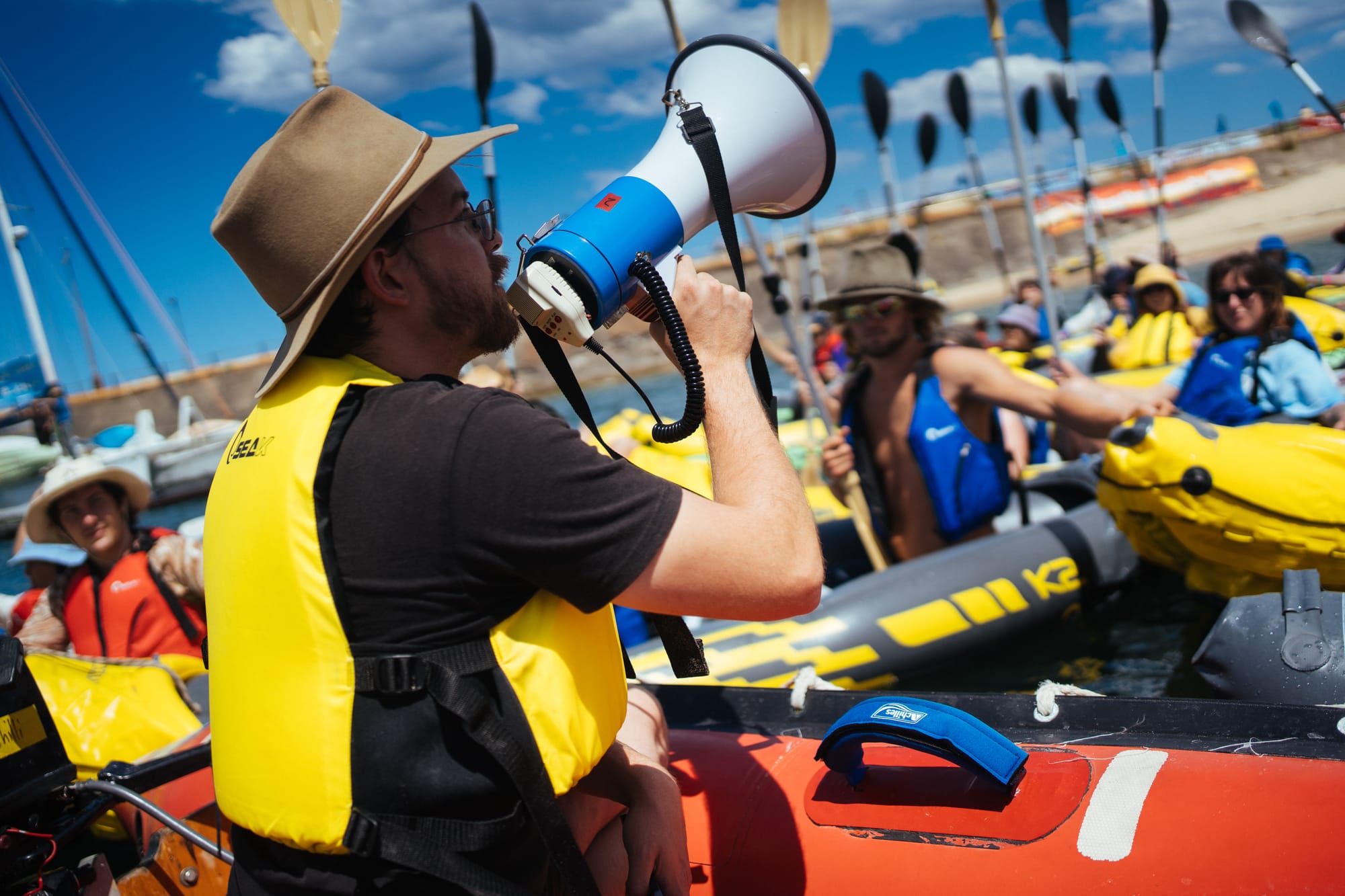
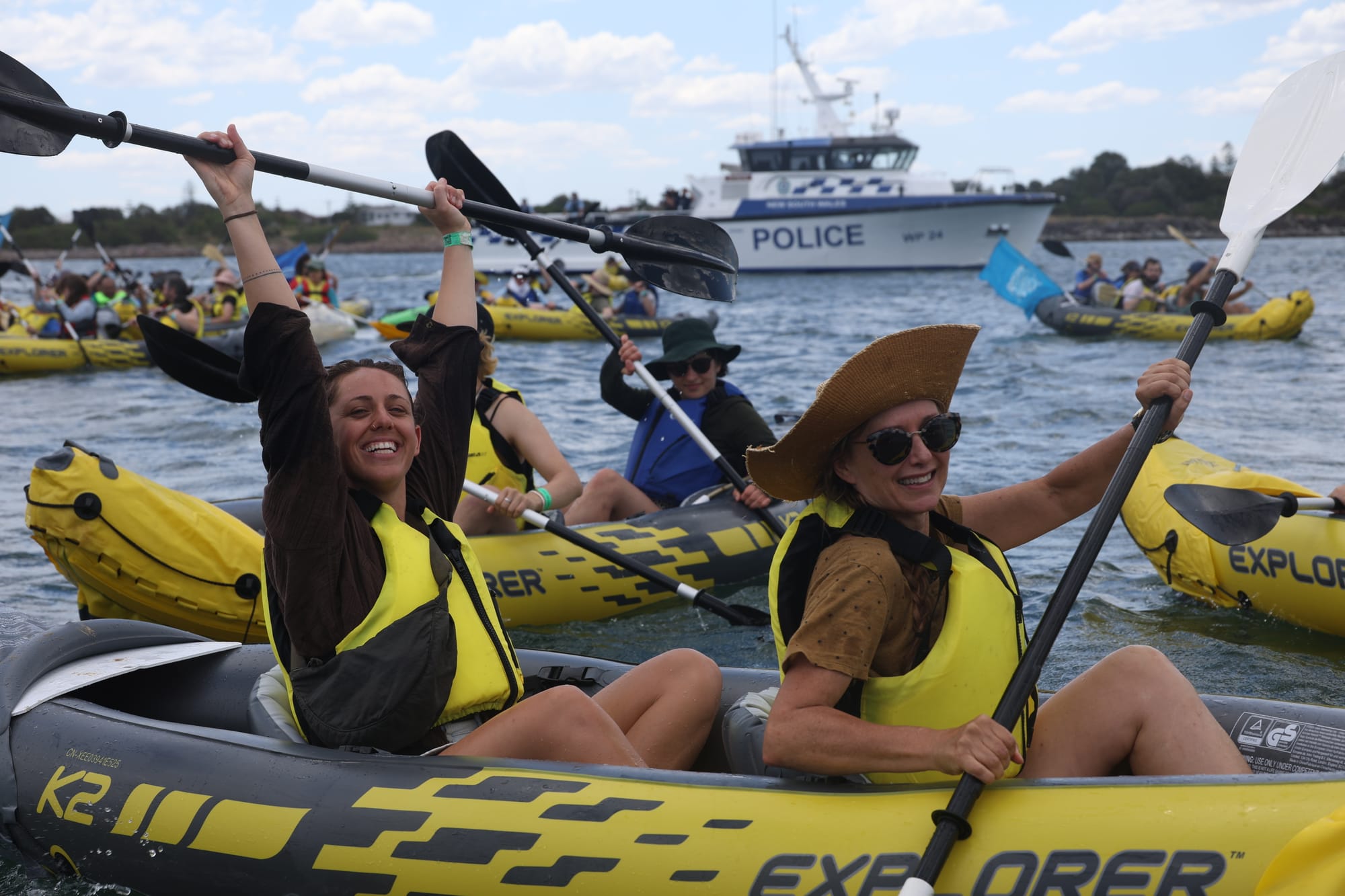
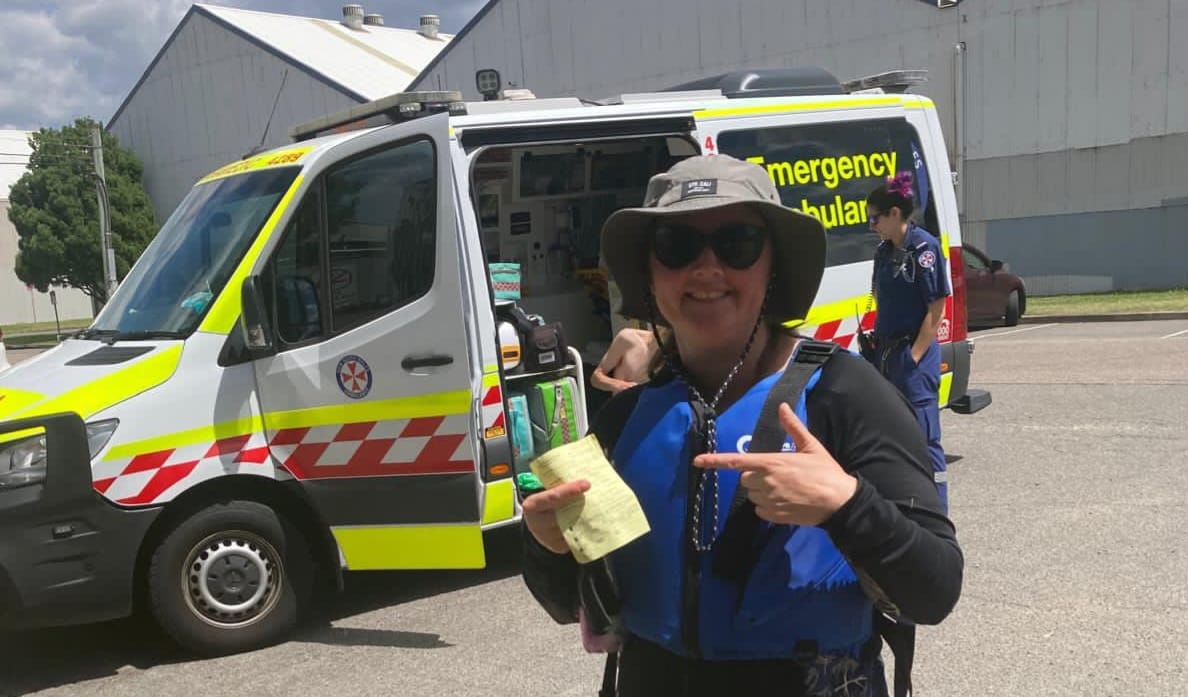
Kayakers in the shipping channel and, at right, Cath Blakey with her charge sheet. Photos: Alex Bainbridge, Lee Illfield
On January 12, Cath was among 129 people who appeared in Newcastle Local Court over the Rising Tide protest. While she plans to plead not guilty, Cath now expects to face a long legal process, with more court dates in February and no ruling anticipated for at least a year.
“I was doing what I was doing, with a conviction that I would be held accountable for it,” she says. “We did disrupt and delay some of the coal ship movements, but that is only really a minor part of it.
“It did bring a lot of attention to the issue in Australia and internationally. When it comes to climate action, it’s quite a long-term campaign goal to change the direction of an energy system.
“We've seen protest movements throughout history push government action to go further and that's why I got involved.
“I think the call that Rising Tide makes to phase out coal exports from Newcastle is an important one, and including increasing the coal export tax – we’ve seen Norway do that successfully since the '90s, and they've been able to fund essential services and build up a sovereign wealth fund.
“We need to see that investment in the transition so that it's not just boardrooms of multinational mining companies that are making decisions about the economic future of a town, but that there's actually planning going into industrial diversification, so those coal workers can be supported.”
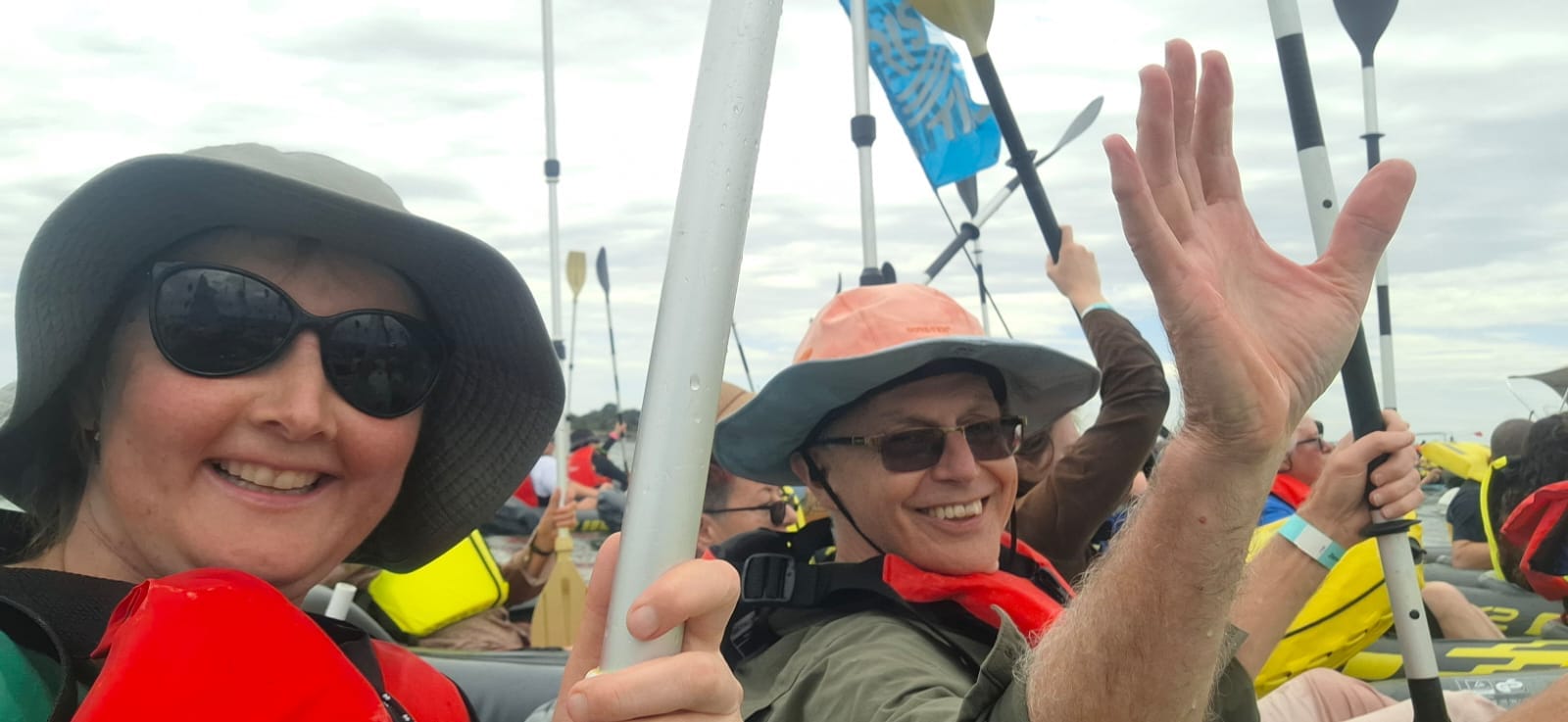
Cath served two terms as a Greens councillor and is known as the driving force behind the city’s introduction of FOGO, which allows food and garden waste to be put in household green bins and turned into compost. She retired in 2024 and now works in environmental education.
Online, the response to her arrest has ranged from people offering to pay her fine to saying “send in the bull sharks”.
Cath says the protest was personally important to maintain momentum.
“For me, I've tried to minimise my environmental impact as an individual for a long time, but that only gets you so far.
“So coming together with a great group of people that all want to see positive change in reducing emissions and having a clean energy transition, it was actually quite uplifting.”