Backyard Zoology: rock pool finds
It’s been a while since I spent time down at the rock pools. Sure, I’ve had a quick rock ramble here or there on the way to buying my body weight in hot chips (hello, Summer!) but not a real head down, bum up kind of look. We changed all that...


It’s been a while since I spent time down at the rock pools. Sure, I’ve had a quick rock ramble here or there on the way to buying my body weight in hot chips (hello, Summer!) but not a real head down, bum up kind of look. We changed all that a few days ago, on a very low tide and at the end of a long, overcast day when I was suddenly overcome with the need to get my feet wet and to see all the amazing creatures, hopefully at the same time.
It’s no secret that I think the rock pools around Sandon Point are incredible. The diversity is amazing and there is something different to unearth each time you head out. You’re still dealing with the ocean though and so a quick check of the tides before you get too engrossed is super important. You don’t want to be on the outer rock ledges with your back turned on a fast rising tide.
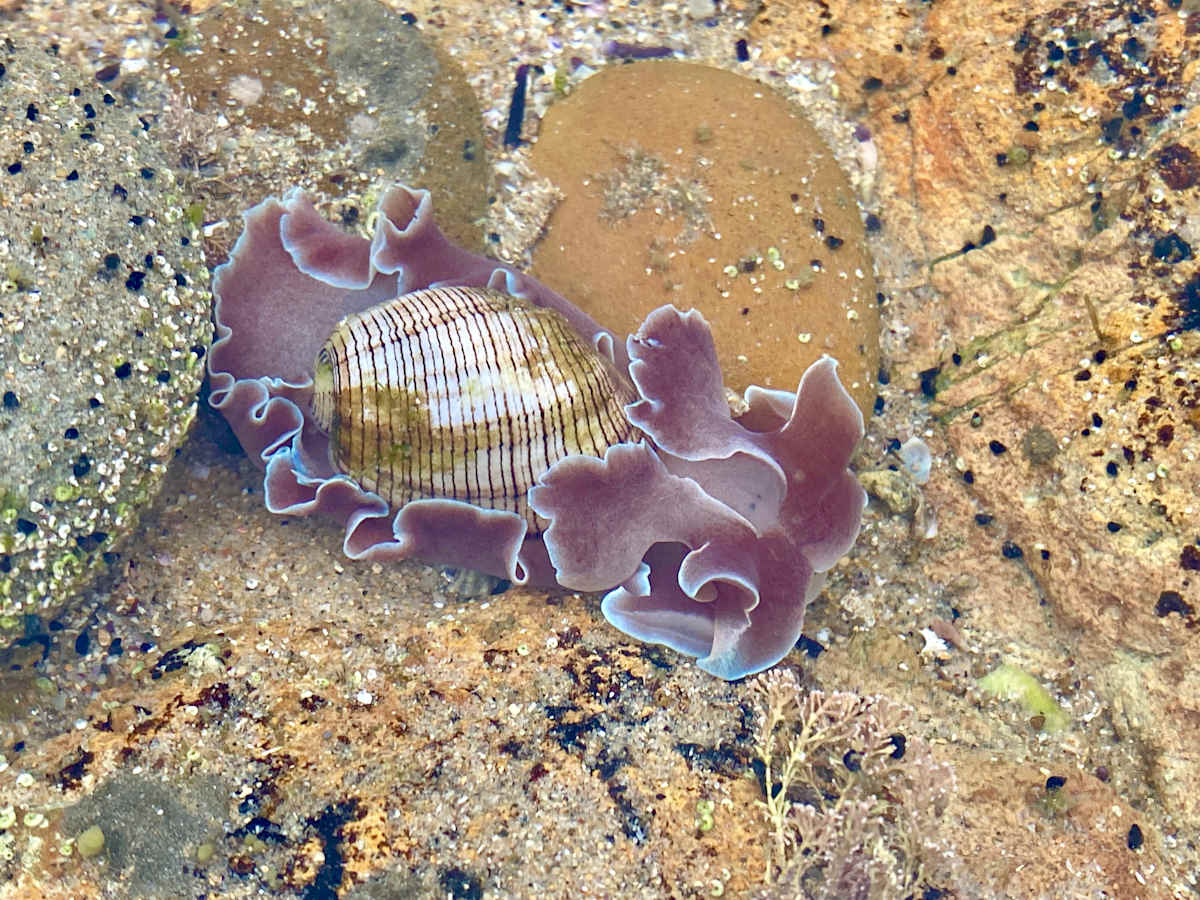
After such a long time away, we really got in the spirit and scoured what felt like every single body of water from one side of the point to the other. First cab off the rank was a beautiful, and quite large, Rose Petal Bubble Snail. Despite their delicate frills and paper-thin shell, they’re actually carnivores eating bristle worms and mussels. They spend their time mostly in shallow water and burrowing sand so look in pools with a decent amount of sand. Their breeding season, summer to autumn, is the perfect time to spot them.
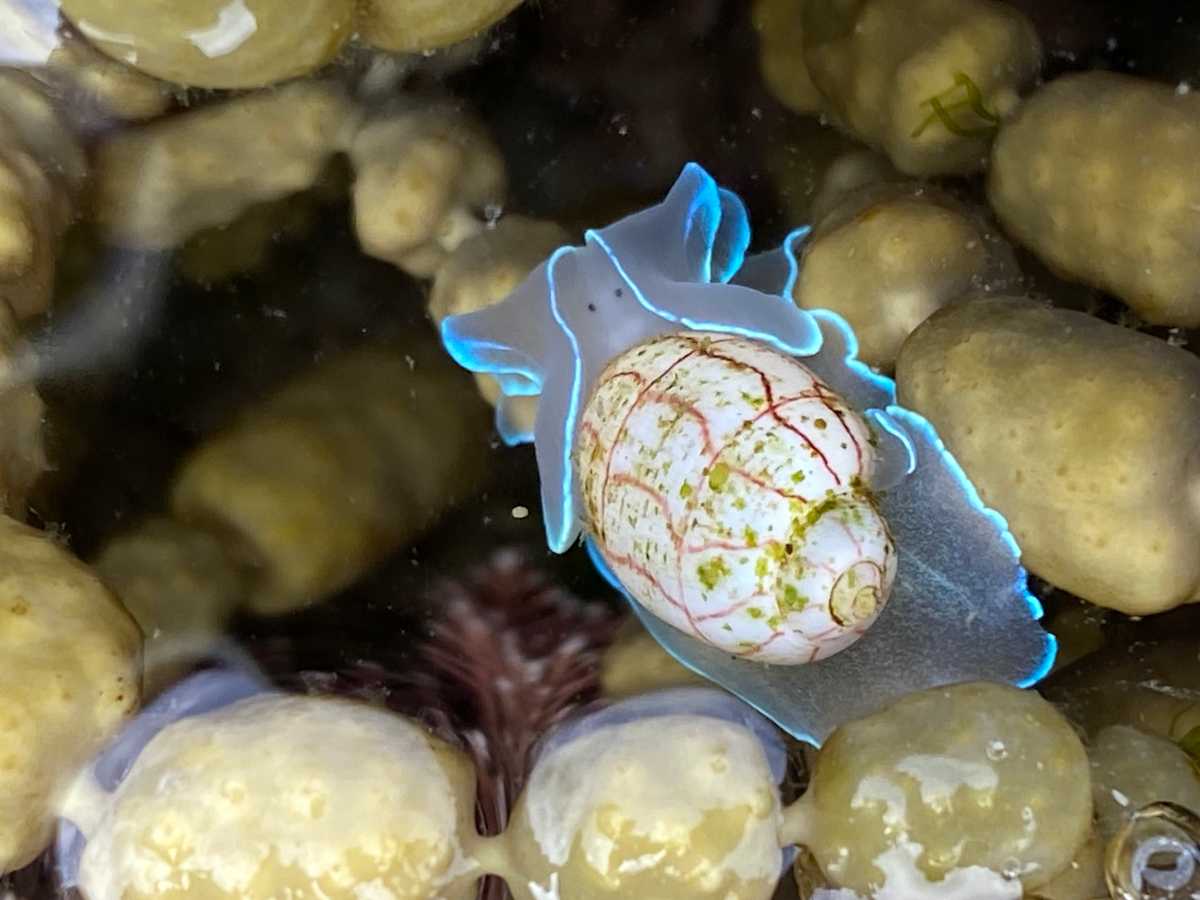
We also found several similar but even more beautiful Red-Lined Bubble Snails, much smaller at around 2cm in length and with the mantle outlined in this incredible iridescent blue. Like the Rose Petal, they have eye spots instead of complex eyes, which aside from looking comically adorable, help them detect light. Similarly they are both hermaphrodites, meaning they have both male and female reproductive organs. Once they mate, each snail can then go on to lay their own egg ribbons.
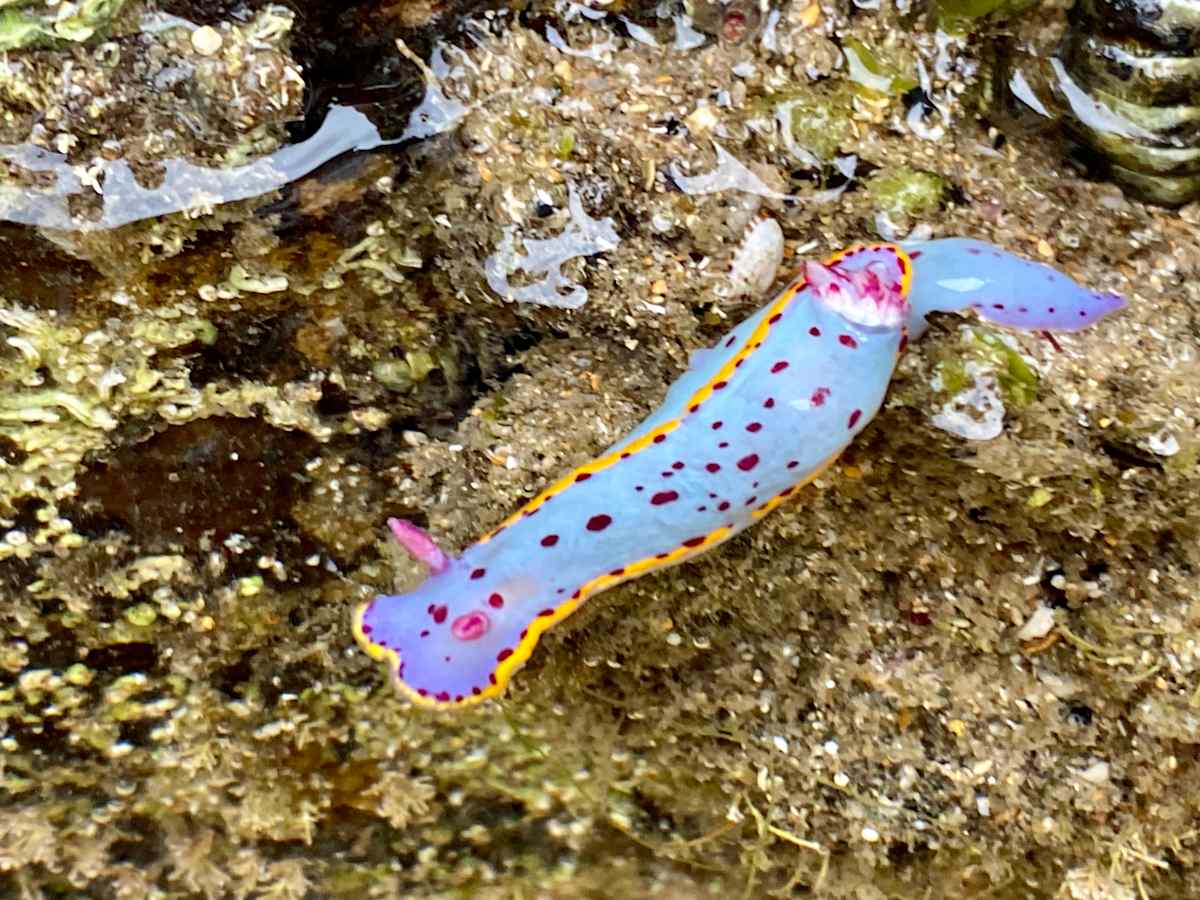
I was pretty excited, okay I squealed, as soon as I spotted the sky-blue body of the Bennett’s Sea Slug, its body dotted with red, its mantle a bright yellow. They can reach up to around 5cm in length but the ones I come across are usually smaller than this, a riot of colour, usually in the pools closer to the edge of the rock ledge.
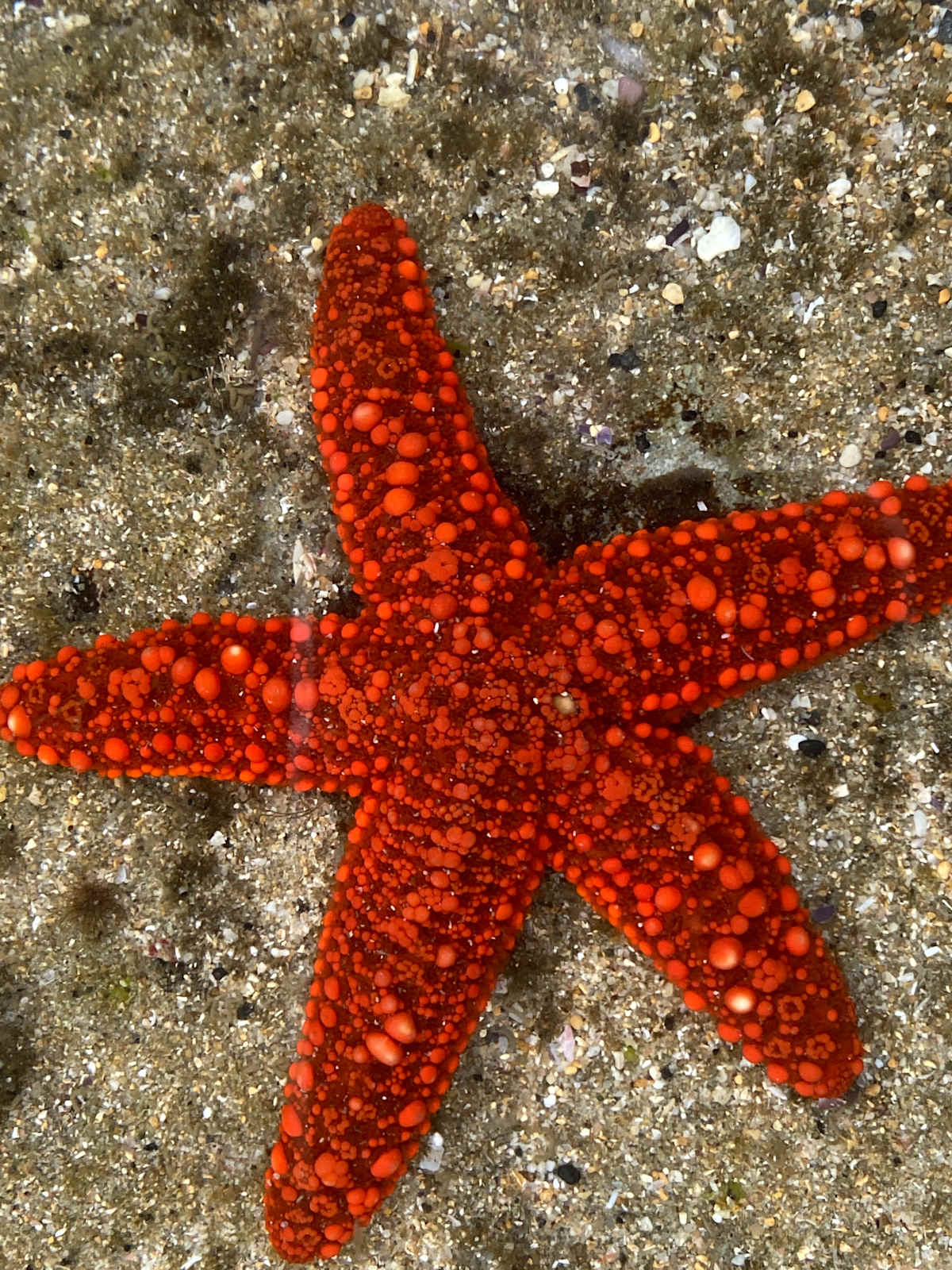
Finally, our backs sore from all the bending, our shoes completely abandoned, our pants wet to the knees, we decided dinner was calling and so we stretched and readied ourselves to leave. “Just going to look around one more corner,” I yelled over my shoulder to my long-suffering husband, only to find a species of sea star I’ve been looking for, for what feels like years: the Rough or Granular Sea Star! Ranging in colour from orange to brown to purple, this one was a super-bright red/orange hue, and covered in knob-like spines. They can be found close to the ocean floor up to a depth of around 30 metres. And so, yes, we stayed longer, because any time in nature feels good but time spent with your new favourite sea star? Amazing.