

Beetling About après le déluge
With Dr Chris Reid of the Australian Museum

The Illawarra has been inundated with bogong moths (Agrotis infusa). And although many moths are still around (at least 200 on melaleucas in my garden as I write this on 17 October), many have died. There have been postings of black strandlines due to moths getting blown out to sea and then being washed up dead. The heavy rains in early October seem to have drowned many.
But this is an endangered species, right? So what is going on?
Firstly, the bogong moth is not listed as threatened or endangered under any Australian legislation. It got listed by the International Union for Conservation of Nature (IUCN) but that is not recognised here. The reasons are numerous. The bogong moth is an agricultural pest (favourite crop is lucerne), it breeds from south Queensland to Tasmania and it exists as both migratory and non-migratory populations.
So how do you estimate the total population? How to estimate threats if we are growing crops for it to eat?
The phenomenon the popular press is fixated on is the habit of a majority of adults to move away from their winter breeding grounds, on alluvial soils in semi-arid south Queensland, western NSW and northern Victoria, to form dense clusters hidden in the granite tors of the Snowy Mountains where they rest in summer (called aestivation).
It’s been estimated that in normal years there are 2-4 billion moths in these crags. Half of them die there – enriching the soil by 7 tonnes of phosphorus among other things. After about four months, they re-disperse to their breeding grounds.
The number of moths arriving in the Snowies has been declining since the 1960s. The reasons are probably complex – pesticide use in irrigated alluvial crops, replacement of low herbs with grasses (which the caterpillars don’t eat), climate change with increased aridity in the breeding grounds and perhaps also the increasing brightness of our cities at night when moths migrate. The moths are attracted to light, as many of you have probably noticed.
The decline of moth numbers in the Snowies led to their endangered listing by the IUCN. But this is decline in a phenomenon, not necessarily in a species. Bogong moths also have non-migratory populations and occur as far west as Perth.
For me, what has been interesting about the invasion is the other species that the press and social media haven’t talked about. With the Bogong came large numbers of a smaller reddish-brown moth, Helicoverpa punctigera, a pest of crops out west. And large numbers of a hoverfly, a species of Melangyna. Melangyna feeds on aphids, pests of crops out west. Both are also well-known migrants.
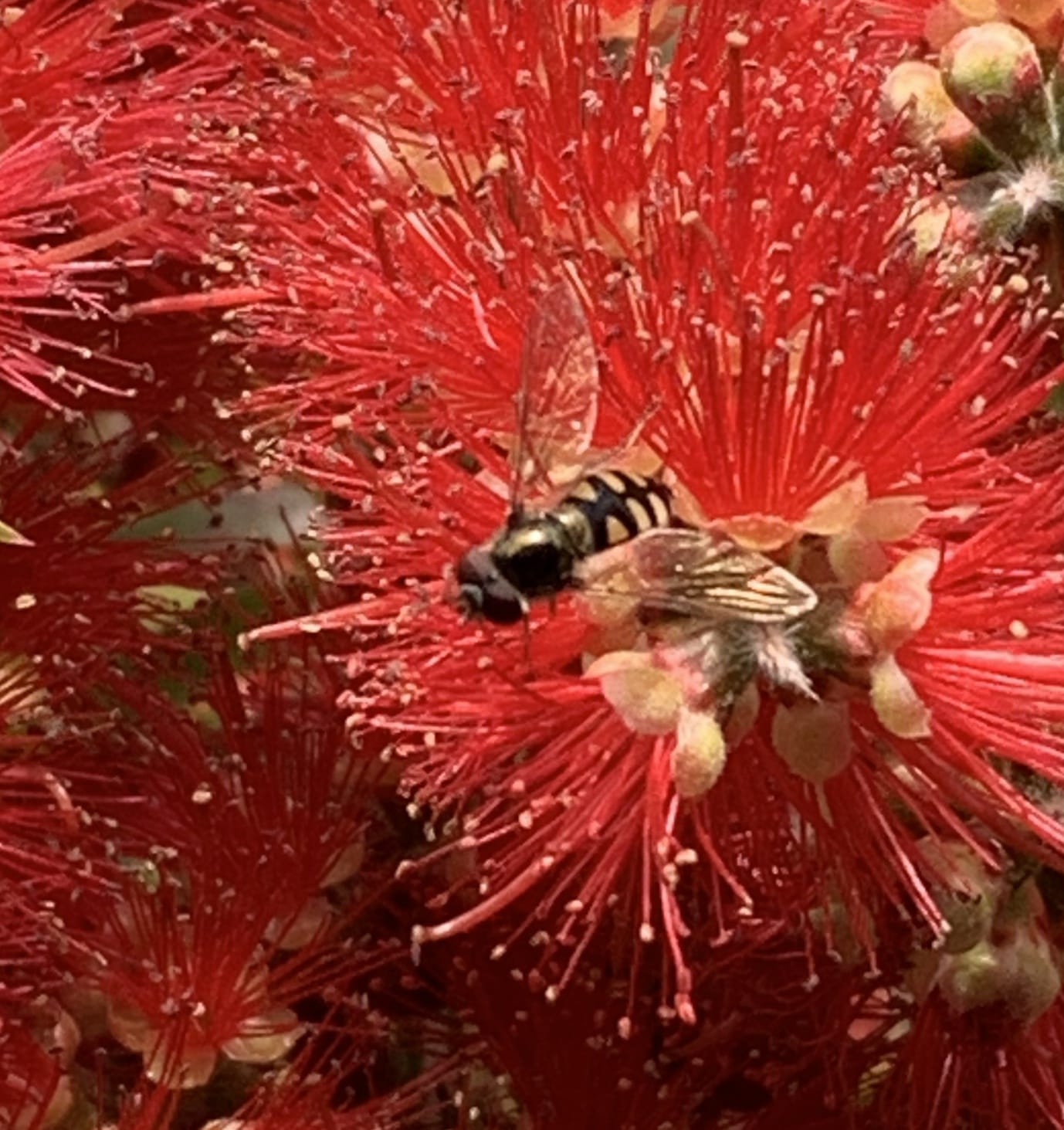
So perhaps what we have seen is the result of our artificial manipulation of the ecology of the semi-arid west combined with a warm and wet winter, favourable winds and some attraction to the bright lights of Sydney and the Gong.
This an excellent free review of Bogong biology and I also recommend Josephine Flood’s book The Moth Hunters (1980) & Ken Green & Will Osborne’s Field Guide to Wildlife of the Australian Snow-country (2012, 2nd ed).
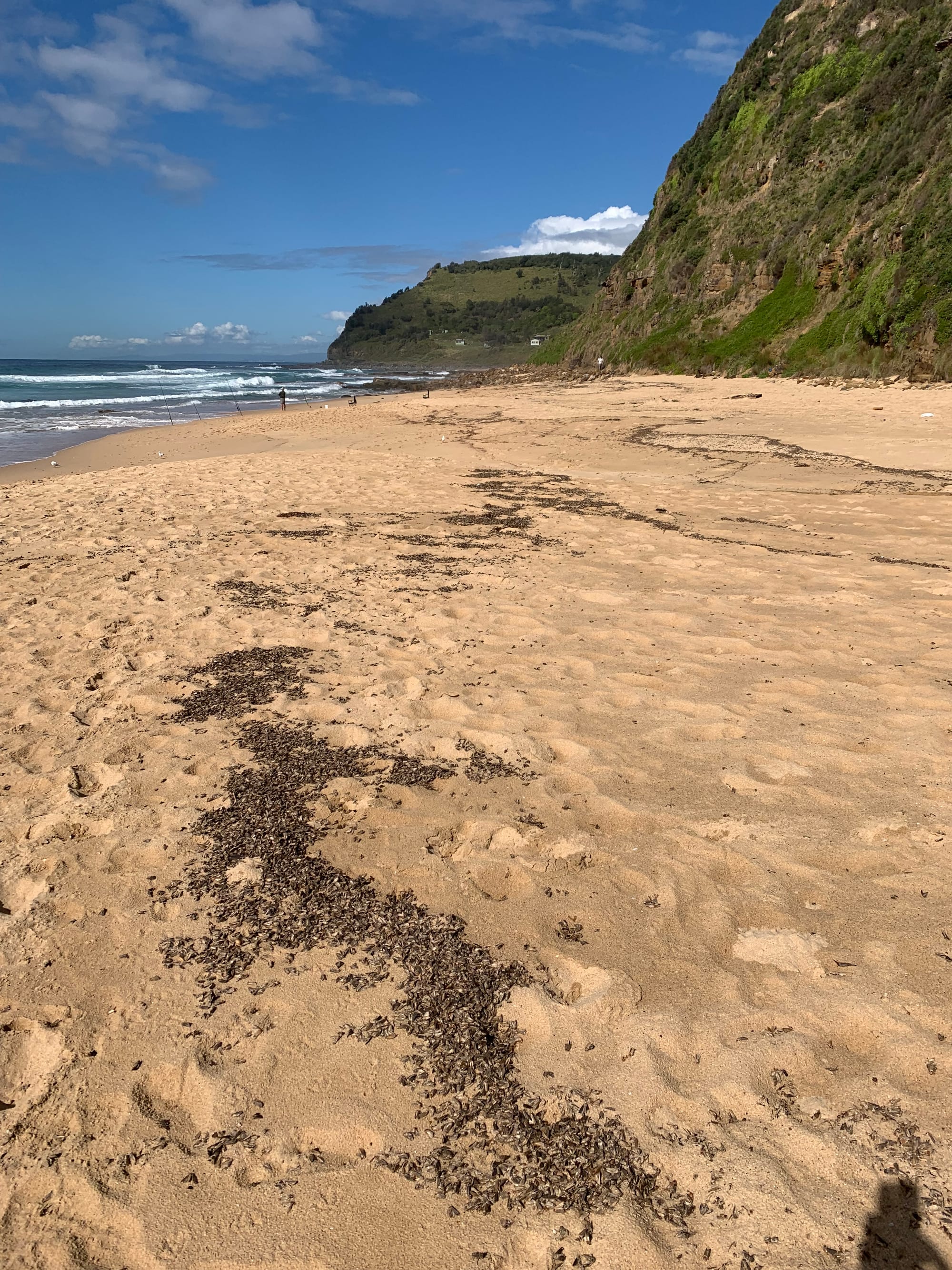
Postscript: I’ve just been to Garie Beach where the strandlines are black with dead bogongs. Rough estimate: 4000 per metre-wide traverse of beach, beach 500m long, so 2 million dead moths. This mass stranding also included est 50,000 ladybirds.
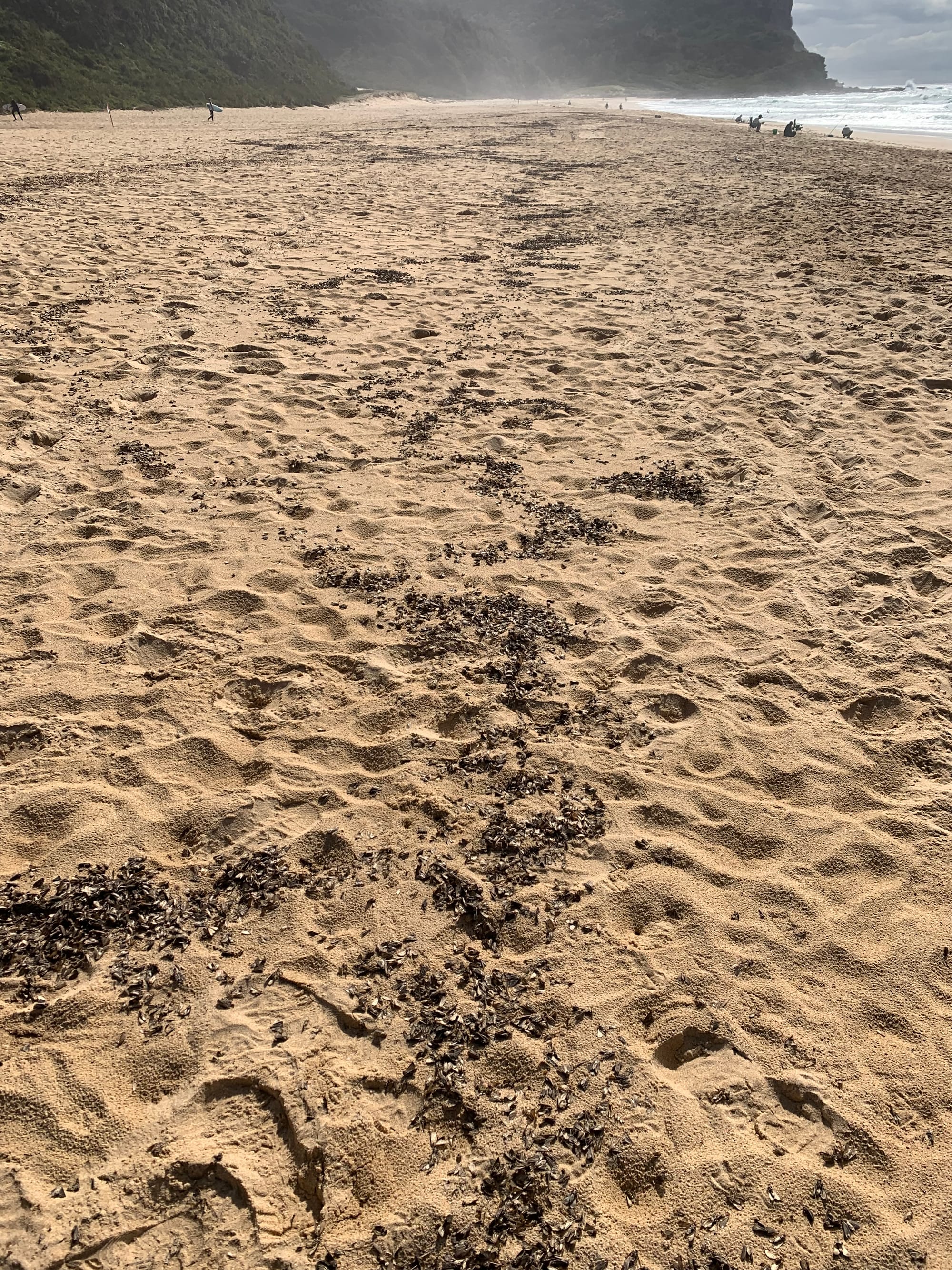
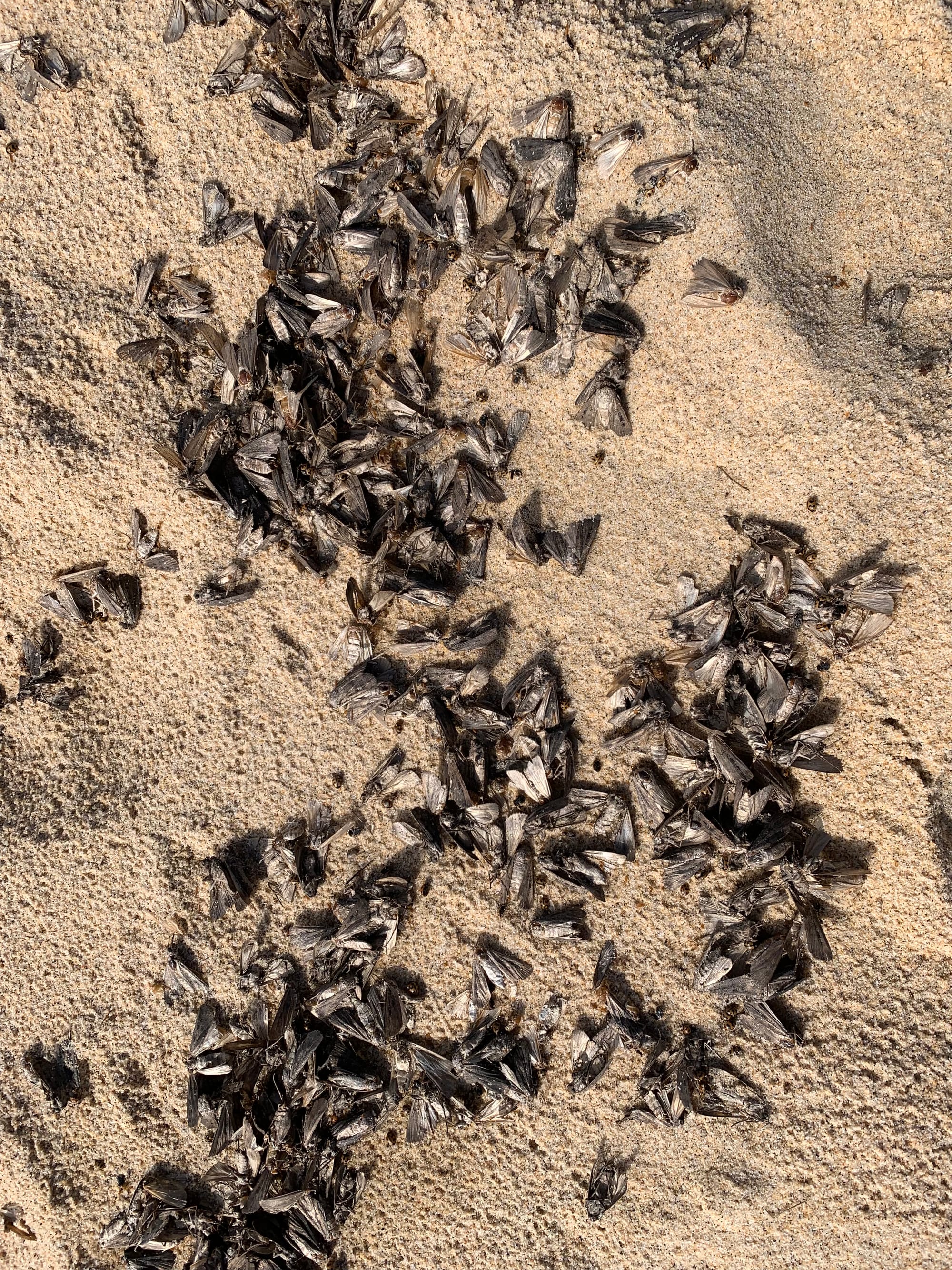
Strandline of moths at Garie Beach.


