

Croom in bloom: Little beauties to see in this special woodland
Croom Reserve is a significant area of Illawarra Lowlands Grassy Woodland, with really high diversity in its understorey

I had the great pleasure of participating in Shellharbour City Council's third bioblitz last weekend, at Croom Reserve in Albion Park Rail.
The bioblitz is an annual event where community members can find and record as many species as possible within the reserve. It covers plants, animals and fungi.
Experts assist participants to use the iNaturalist tool to photograph and upload their finds. From there, they can use a combination of their own skills, the iNaturalist AI and inputs from other iNaturalist users around the world to identify the species they've found.
It's a great, participatory way to learn about the world around us.
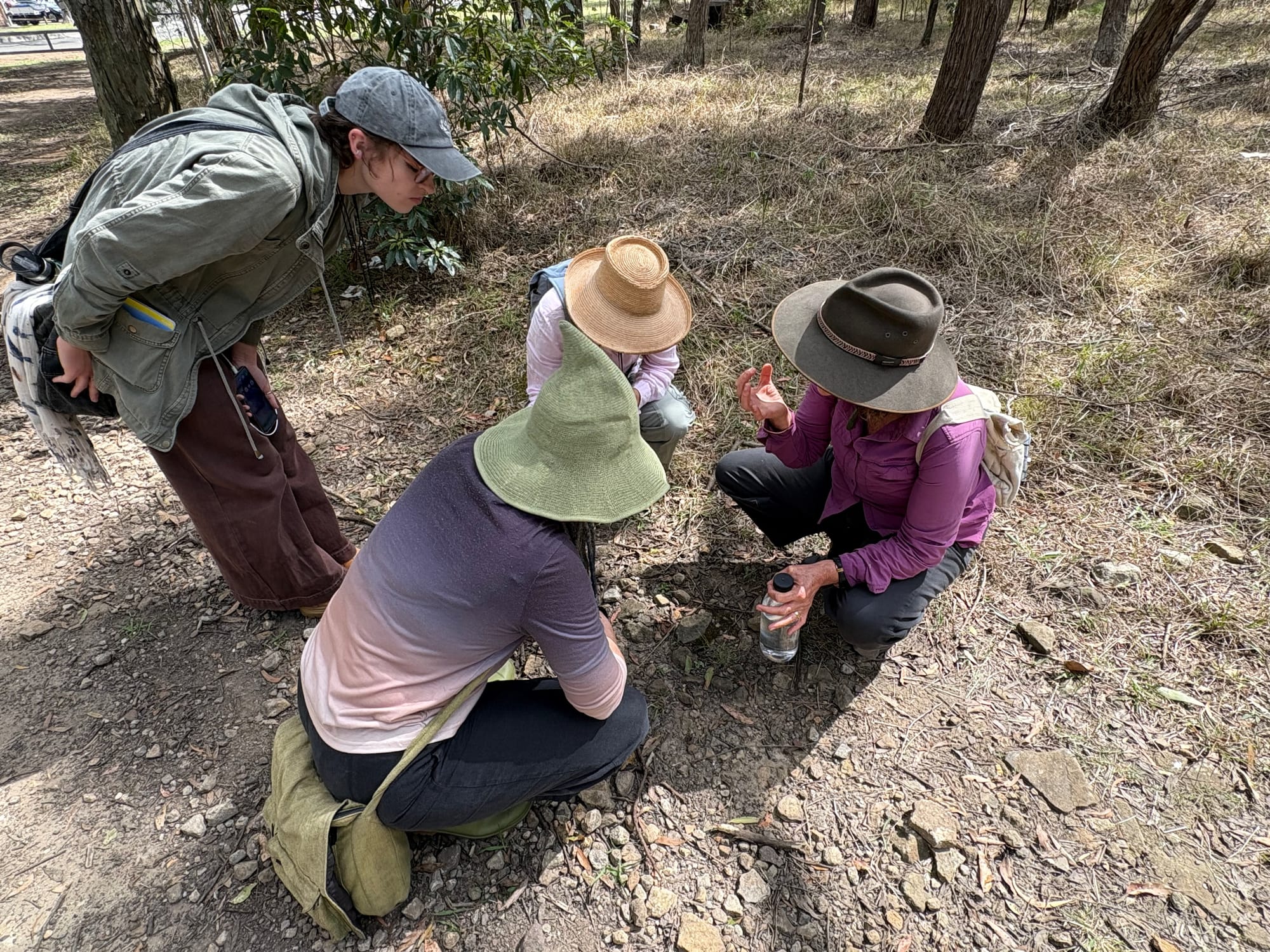
On this particular bioblitz, participants had the opportunity to learn from Dr Alison Haynes, an expert in mosses, who recently started writing for the Illawarra Flame.
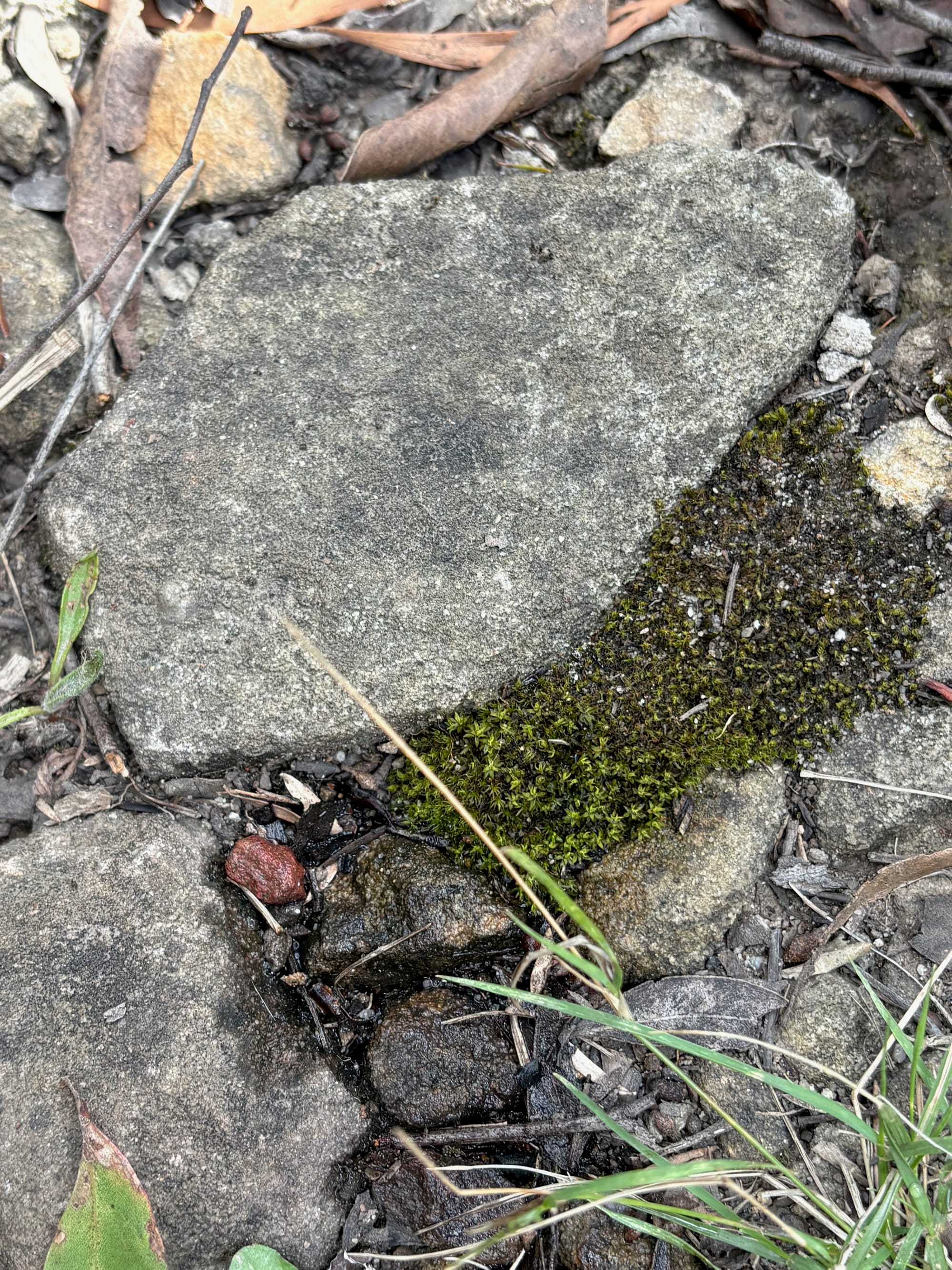
She vividly illustrated mosses' ability to survive for long periods without water by wetting parts of some specimens in the reserve. You can see the contrast between dry and wet moss in the image below.
But back to Croom blooms. Croom Reserve is truly special, being a significant area of Illawarra Lowlands Grassy Woodland with some protection status. It contains unique assemblages of plants and animals, and has really high diversity in its grassy understorey. It's always worth a visit. Some of the beauties flowering there right now are pretty special.
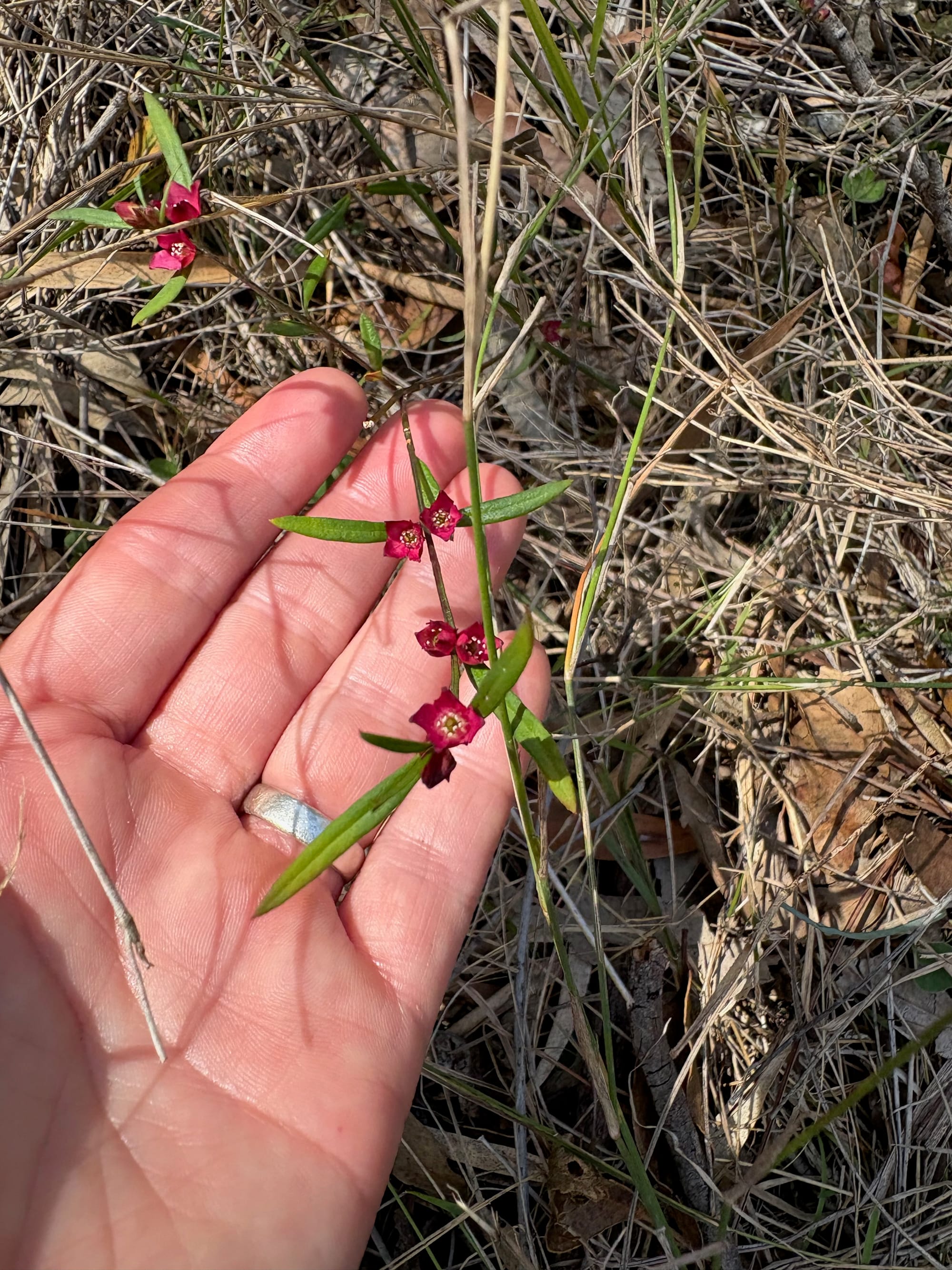
First up, the Dwarf Boronia (or Boronia polygalifolia) is looking absolutely spectacular, although on a very small scale!
The image at the top of this article shows Dwarf Boronia in its usual pinkish tones. But the plants spotted at the bioblitz by local plant legend Carl Glaister had stunning port-wine-coloured flowers.
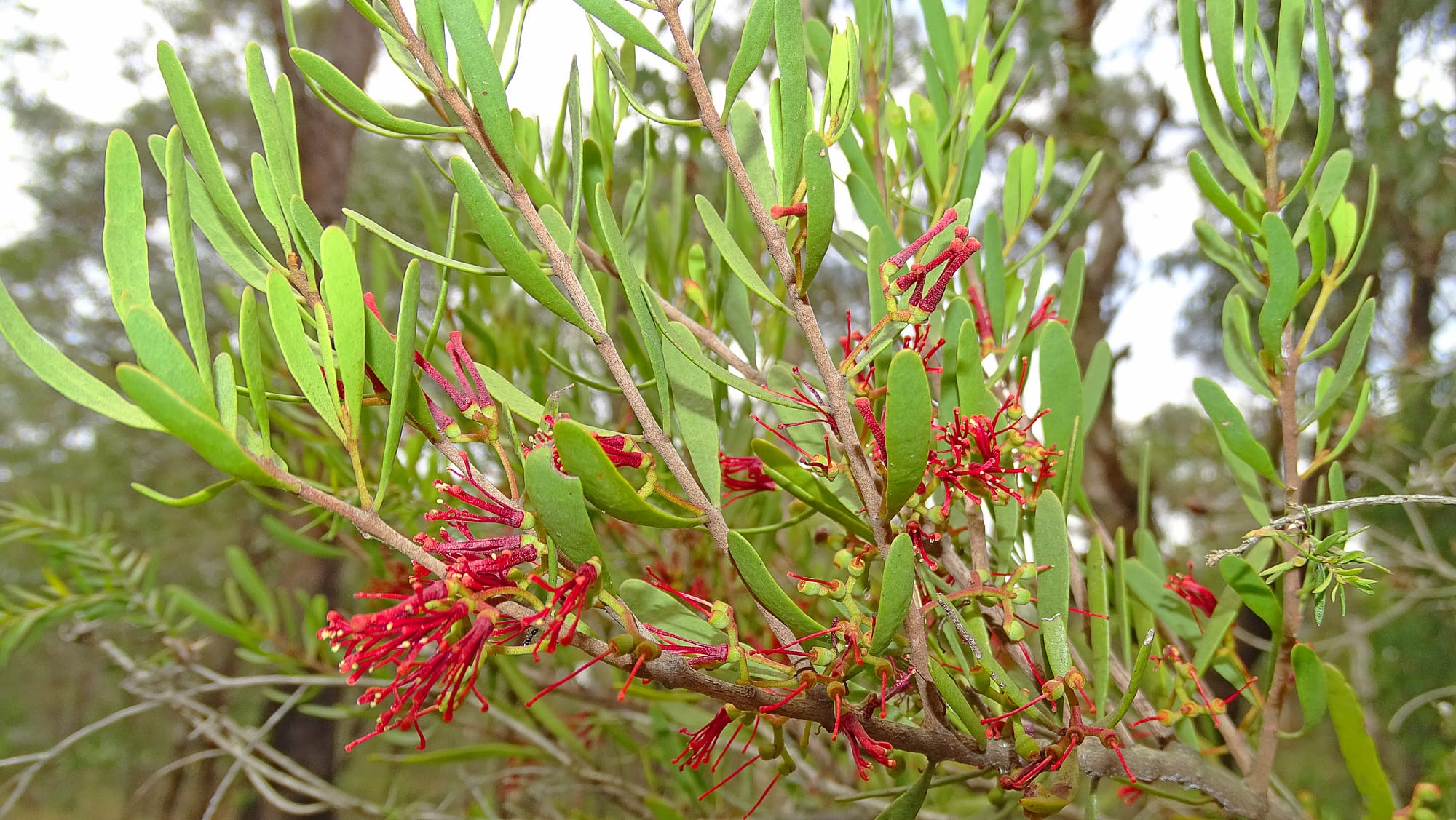
Another fascinating plant on show at the bioblitz was the Melaleuca Mistletoe (Amyema gaudichaudii) with its festive red flowers.
This plant is an important parasite of local melaleuca (paperbark) trees, attracting insect pollinators with its colourful flowers and drawing in the Mistletoe Bird to eat and spread its fruit. It's also a larval food plant for butterflies including the Red-spotted Jezebel. It is widespread and common at Croom, and easy to spot in the low-hanging branches of some of the Melaleucas there, including right round the main carpark.
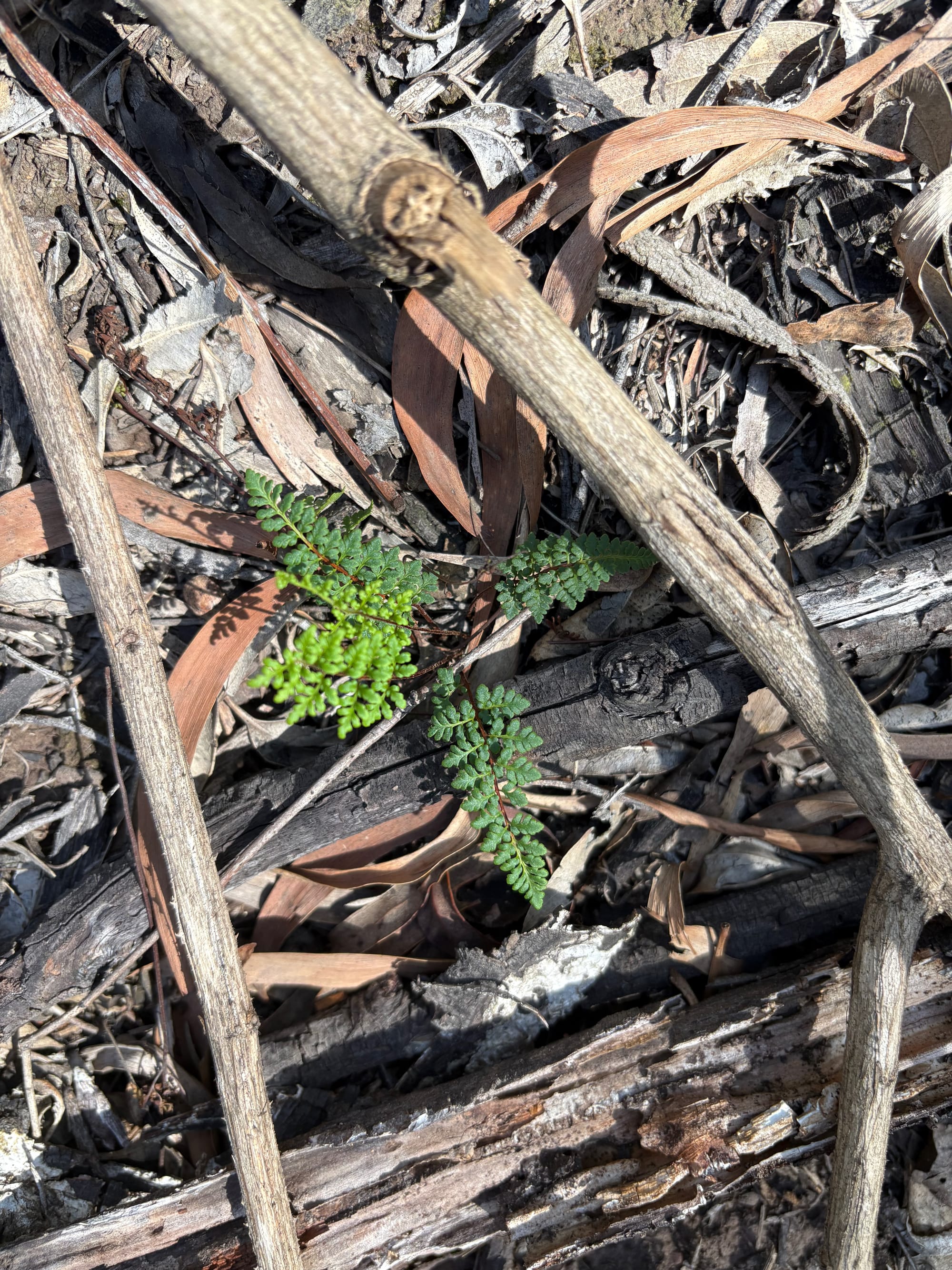
Despite the dry conditions and fairly sunny aspect at Croom Reserve, there are even some ferns that call the area home.
This little Poison Rock Fern (Cheilanthes sieberi) – don't ask me about that common name! – was perfectly at home among the dry leaf litter in the reserve.
There's still plenty in flower in this special woodland, and that's not to mention all the birds, lizards, frogs and invertebrates that live there. So pop down to Croom Reserve one day soon, and see what you can see.
References
- Illawarra Remnant Bushland Database (n.d.), accessed 9 November 2026, http://irbd.com.au.
- Watson D (2011), Mistletoes of Southern Australia. Collingwood, Victoria: CSIRO Publishing.


