
Everlasting daisies colouring up the woodlands
'Xerochrysum bracteatum' are much loved in gardens but can you spot one in the wild? Growing Illawarra Natives coordinator Emma Rooksby tells us where to look
I've been noticing a few Everlasting Daisies (Xerochrysum bracteatum) flowering around the place in the last couple of weeks. It's one of many daisy plants that grow in Wollongong and the Illawarra, and easily the brightest and most obvious in the landscape.
It's no wonder that this species has been widely adopted in gardening and landscaping, where dozens of cultivars have been developed to meet the demand for plants with certain sizes, colours and longevity.
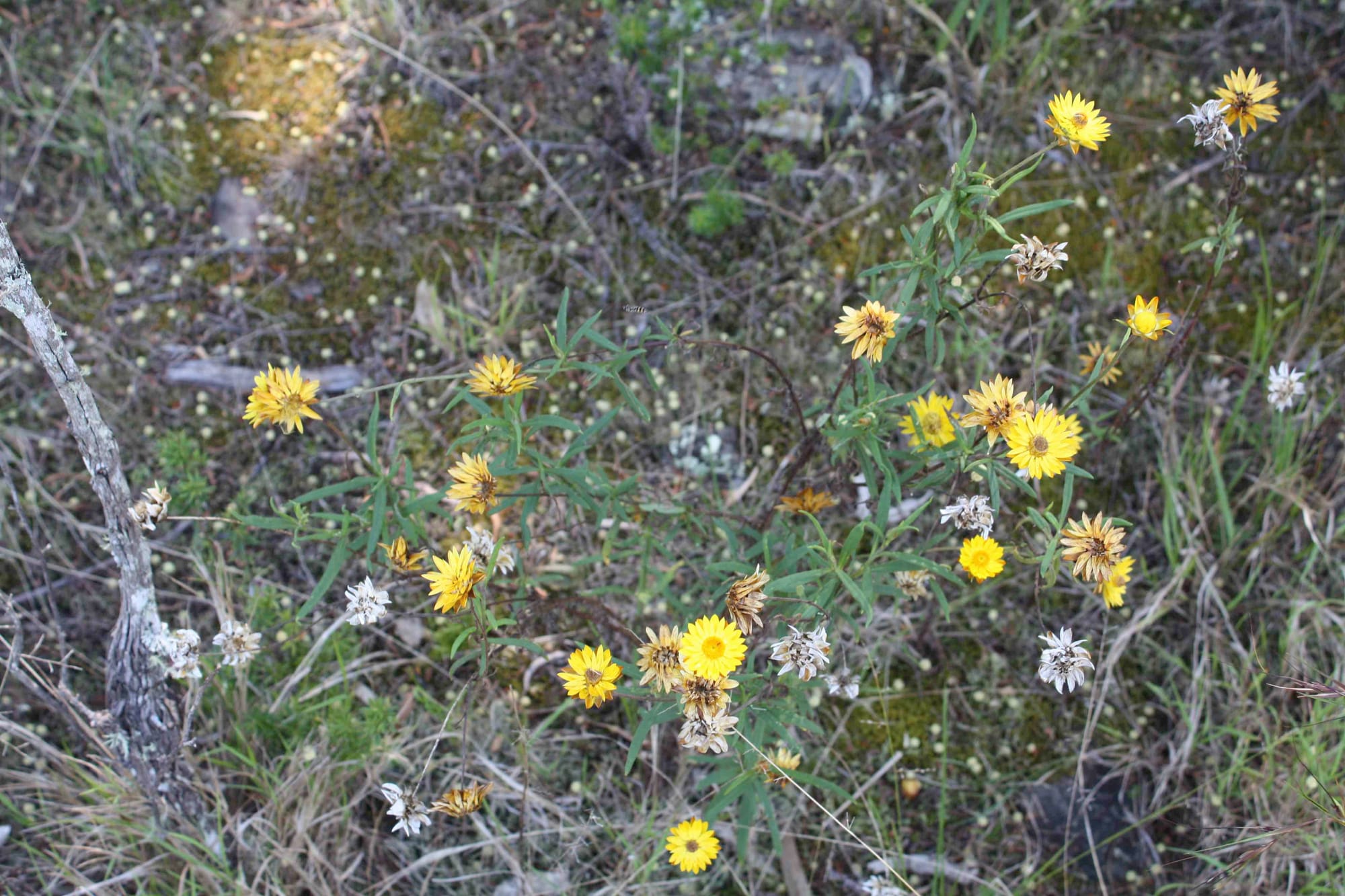
The classic Everlasting Daisy is a bit different from the pruned and pampered specimens you might see in botanic gardens or for sale in nurseries.
In the bush it can grow to over 1 metre high, and may be more like a flower or two on a stalk than a dense and compact shrub. To be honest, with the windy, warm, dry winter we're having, most of the plants I'm seeing look like almost dead thistles with a touch of yellow at the top. But I say this with love: the Everlasting Daisy is an incredible plant, which can survive really tough conditions and still produce masses of seed for subsequent generations.
In the Illawarra, you'll find Everlasting Daisies in woodland communities such as the Illawarra Lowlands Grassy Woodland locally famous at Blackbutt Reserve and Croom Reserve in Shellharbour, plus in clearings on the edge of eucalypt forest.
There's quite a lot of it on the escarpment below Broker's Nose, alongside the informal tracks that get plenty of sun. And Wollongong Botanic Garden usually has Everlasting Daisies growing in its woodland section.
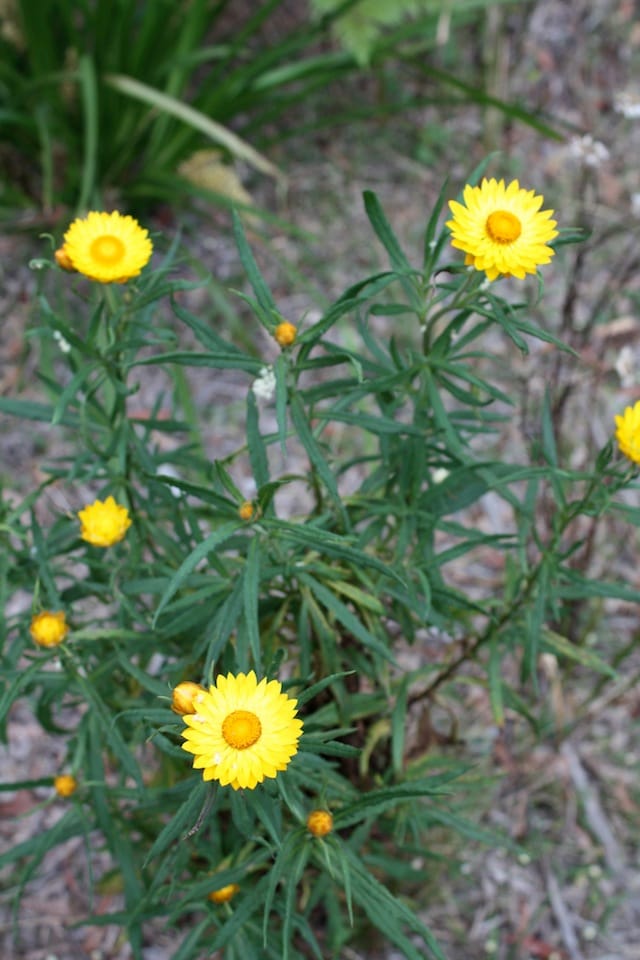
I love spending time with Everlasting Daisies for so many reasons: for that initial moment when I spot their yellow flowers among the dominant greens, browns and greys of the bushland; for their amazing papery 'petals' (which are technically a modified form of leaf), which bend and then spring back under the gentle pressure of a finger; for the crazy fractal experience of realising that the 'flowers' are actually a compound of dozens or hundreds of individual minute flowers organised together; and for the distinctive sticky or 'cobwebby' feeling of the stems.
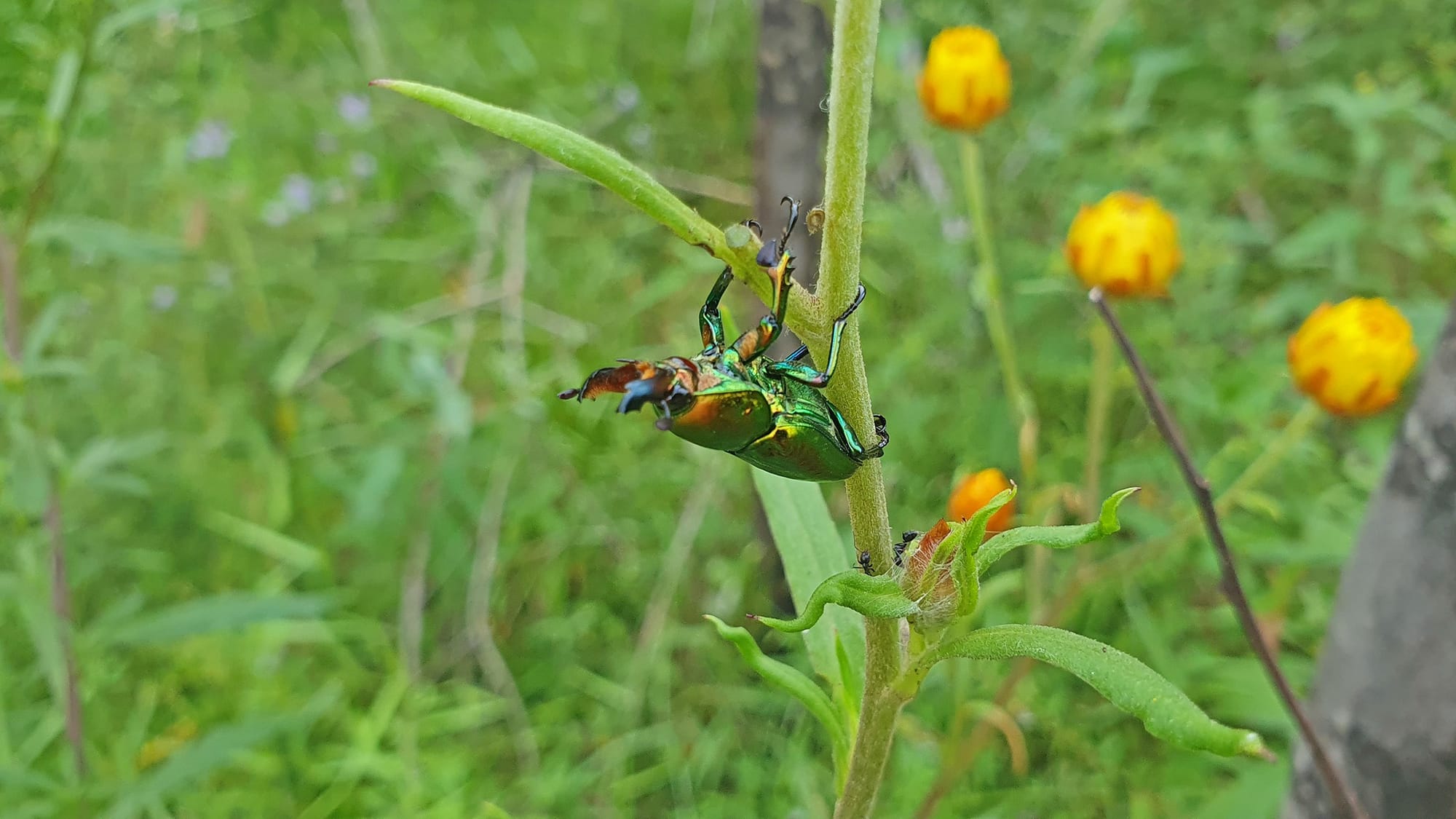
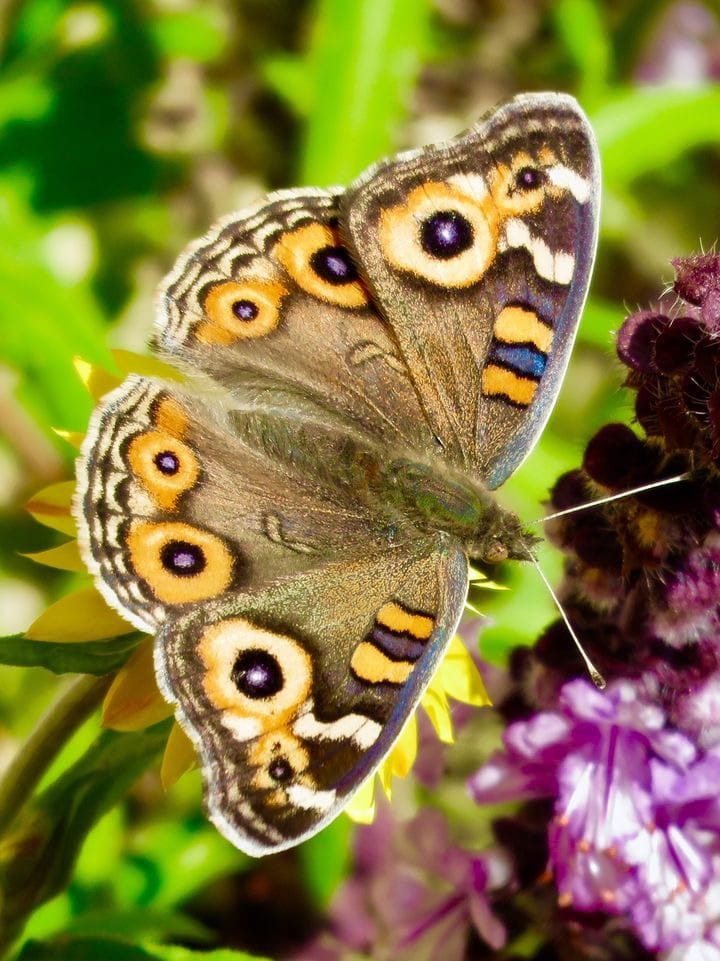
Everlasting Daisies are also great for attracting native animals. The Growing Illawarra Natives project has recorded several insects interacting with this plant, including some really interesting species such as the Rainbow Stag Beetle and the Meadow Argus butterfly.
I hope you see this daisy flowering near you soon, and maybe get the chance to see what insects or other animals are hanging out with it!