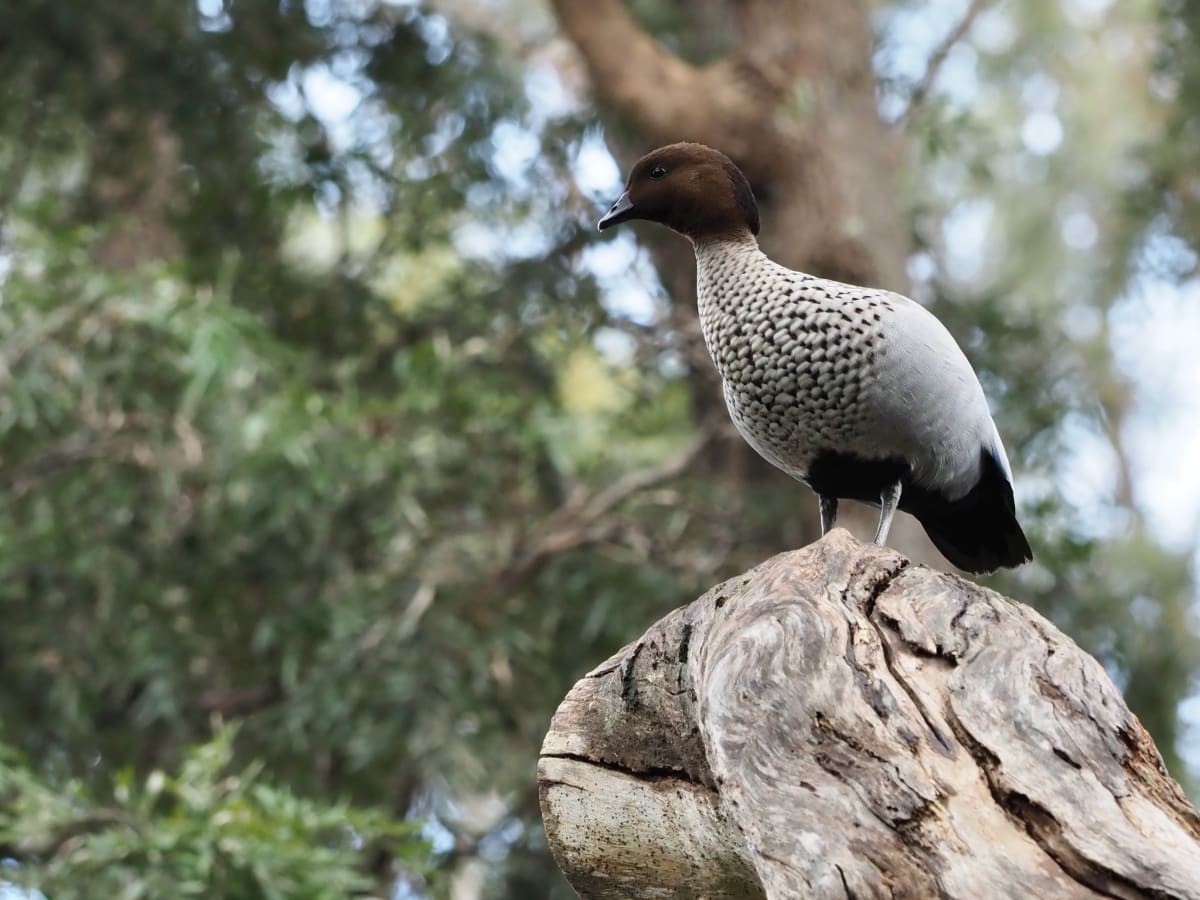
What will I grow up to be?
I build my nest, up off the ground It keeps predators from lurking around But after the eggs hatch, There’s a bit of a catch, Because what goes up, must come down! What on earth am I?


I build my nest, up off the ground
It keeps predators from lurking around
But after the eggs hatch,
There’s a bit of a catch,
Because what goes up, must come down!
What on earth am I?
I’m Australia’s most common duck, the Australian Wood Duck.
So it looks like this Wednesday edition is about me admitting publicly, all of the things that I don’t know. Fair warning, this is either going to be a very long edition or a not very comprehensive list. Still, I’m happy to put my hand up to this one. I’ve written about Australian Wood Ducks a few times previously. They’re super common and found throughout Australia, everywhere from urban parks, lakes, golf courses, rice fields, anywhere near a water source. They like foraging around the water but not necessarily swimming on it. I love them because they are really beautifully patterned birds. And the boys have a mohawk or a mane.
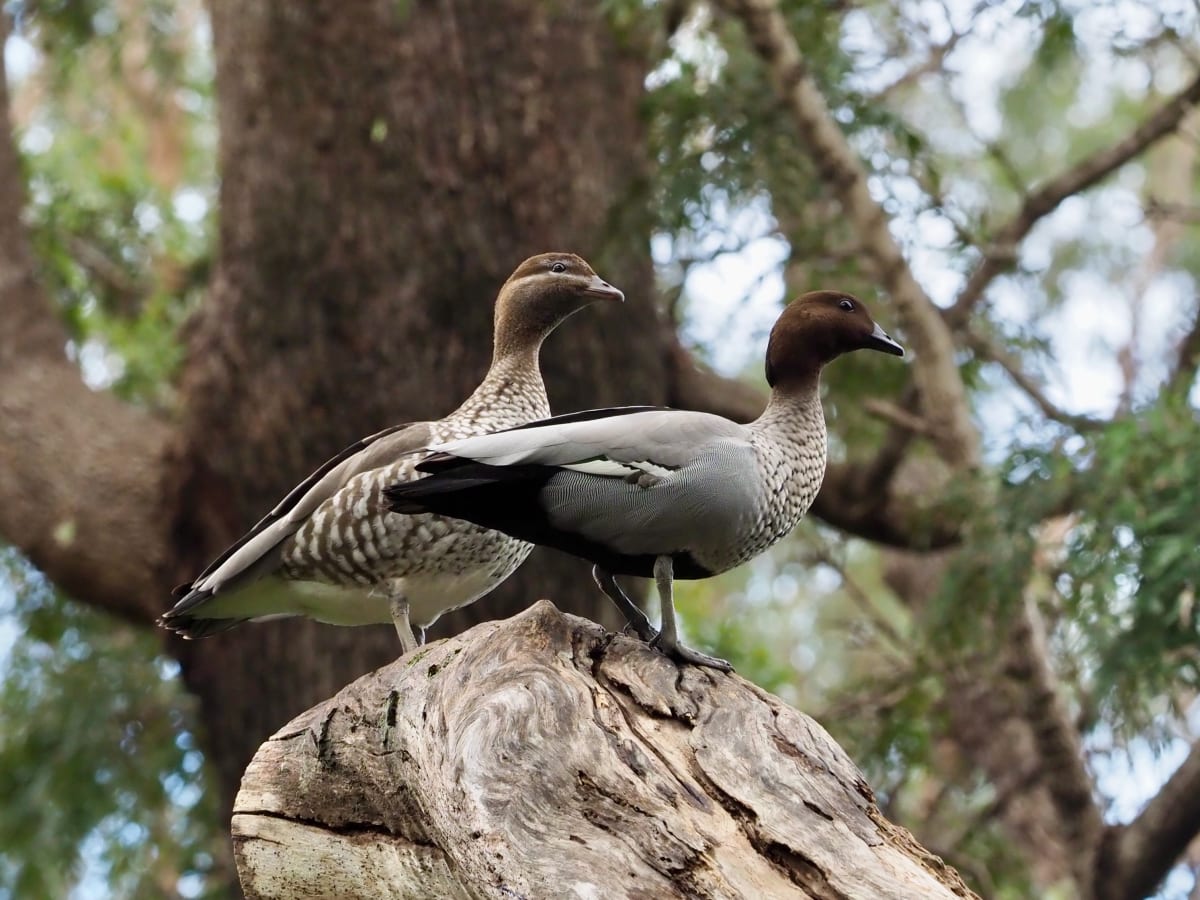
What I didn’t realise though, was that the early days for the chicks can be rough. Sure, the parents build their nests up off the ground, often in tree hollows but they have been found nesting even in chimneys. I actually photographed these two at the Wollongong Botanic Gardens, chatting away amongst themselves, before the female flew higher up on the dead tree. She then stuck her head down into the hollow with only her bum sticking out, still quacking away. Clearly they were looking for a suitable nesting site. And tree hollows, as many birds and mammals have found, make nice, secure nesting sites.
But it’s once the eggs hatch that things get, ah, a tad tricky. The clutch of 8 to 10 cream-coloured eggs, which are sat on by the female while the male keeps watch below, hatch and a few days later, the young chicks make their way to the edge of the hollow. Once there, the parents call to them and they jump (or are pushed by an impatient sibling) out of the hollow. Yes, from the hollow, which is often many metres above the ground!
Now, these new chicks can’t yet fly and so their light little bodies tumble out and bounce, and sometimes bounce again and surprisingly the survival rate for this leap of faith is incredibly high. Hey, my dad took one look at me after I was born and said I was ‘ugly, red and with a pointed head’. Maybe he went to the Wood Duck school of parenting. It’s fair to say though that I bounced.
The little troop of ducklings are then shepherded towards the water where they start feasting on clover and soft grasses and hoovering up an occasional insect. Not the easiest start to life, but at least there’s snacks.