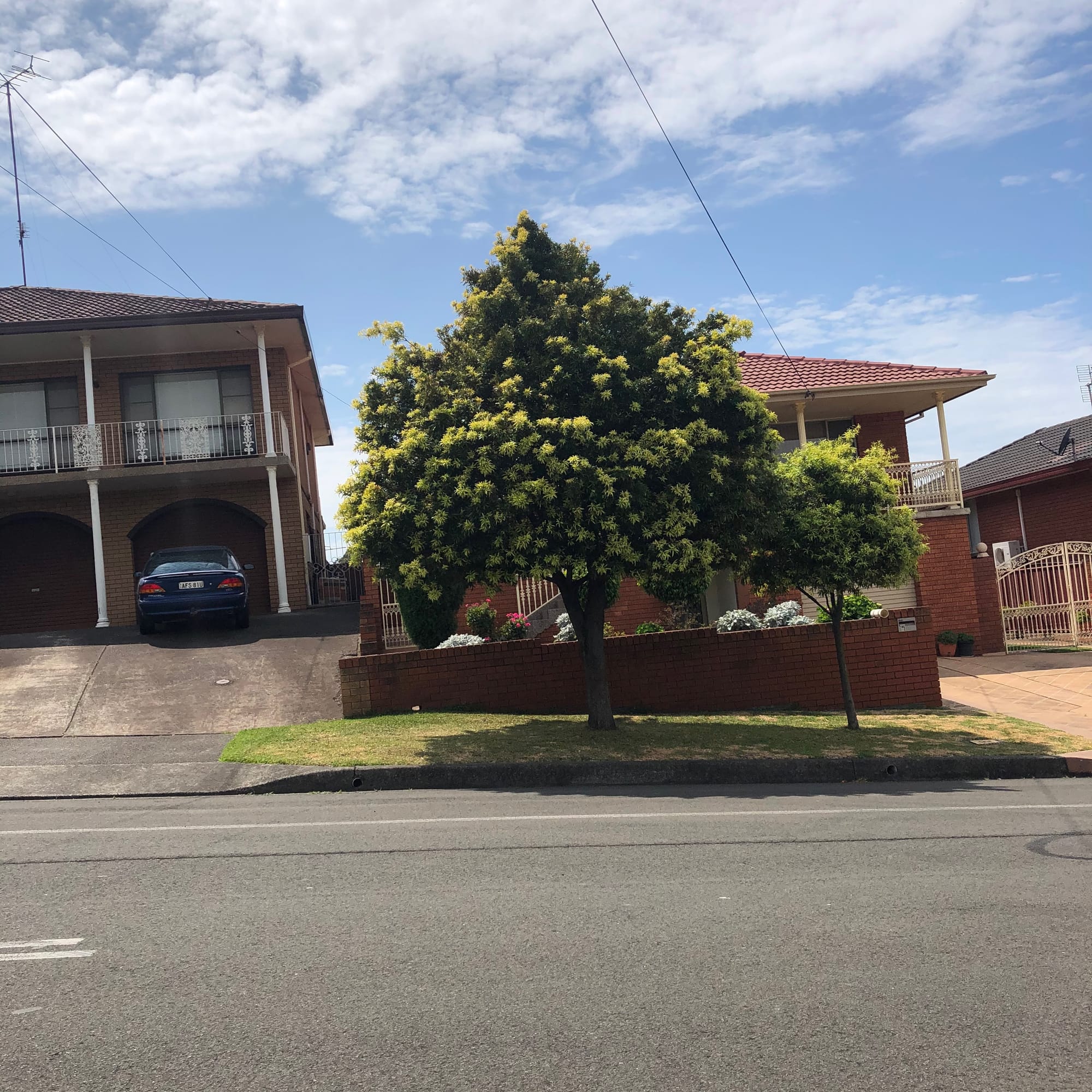

Is it a plum? Is it a pine? Yes!
Discover an Illawarra conifer that has its roots in the Gondwana rainforests

This week I'm obsessing over an absolutely magnificent local tree, the Illawarra Plum Pine. It's a conifer, meaning it doesn't have flowers, but instead bears separate 'male' and 'female' cones on male and female plants respectively.
This means it can turn up in all sorts of places, including urban gardens around the Illawarra. The large tree below is growing in highly urbanised North Wollongong. I've also seen mature trees in gardens and on verges Mount Pleasant, Balgownie, and Warrawong. It is truly a survivor.
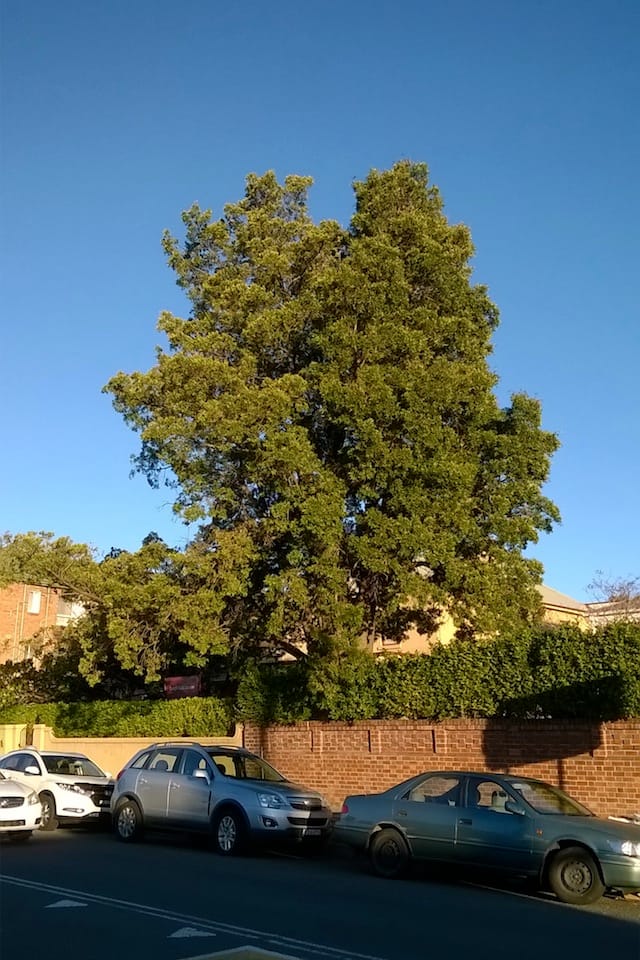
Illawarra Plum Pine is a tree of the Gondwana rainforests, with a lineage that reaches back tens of millions years or so when the first Podocarpuses evolved. Plants in the Podocarpaceae family stretch back even further, being found in both hemispheres at least to the Jurassic period.
Those that were on the super-continent of Gondwana, evolved into the modern Podocarpus genus, and today can be found not only in Australia but also in Africa, Asia, Central America and South America, not to mention some of the Pacific islands. A lot of genetic work has been done on the Podocarpaceae in recent years, helping explain the evolution of the family and the relationships among its contemporary representatives.
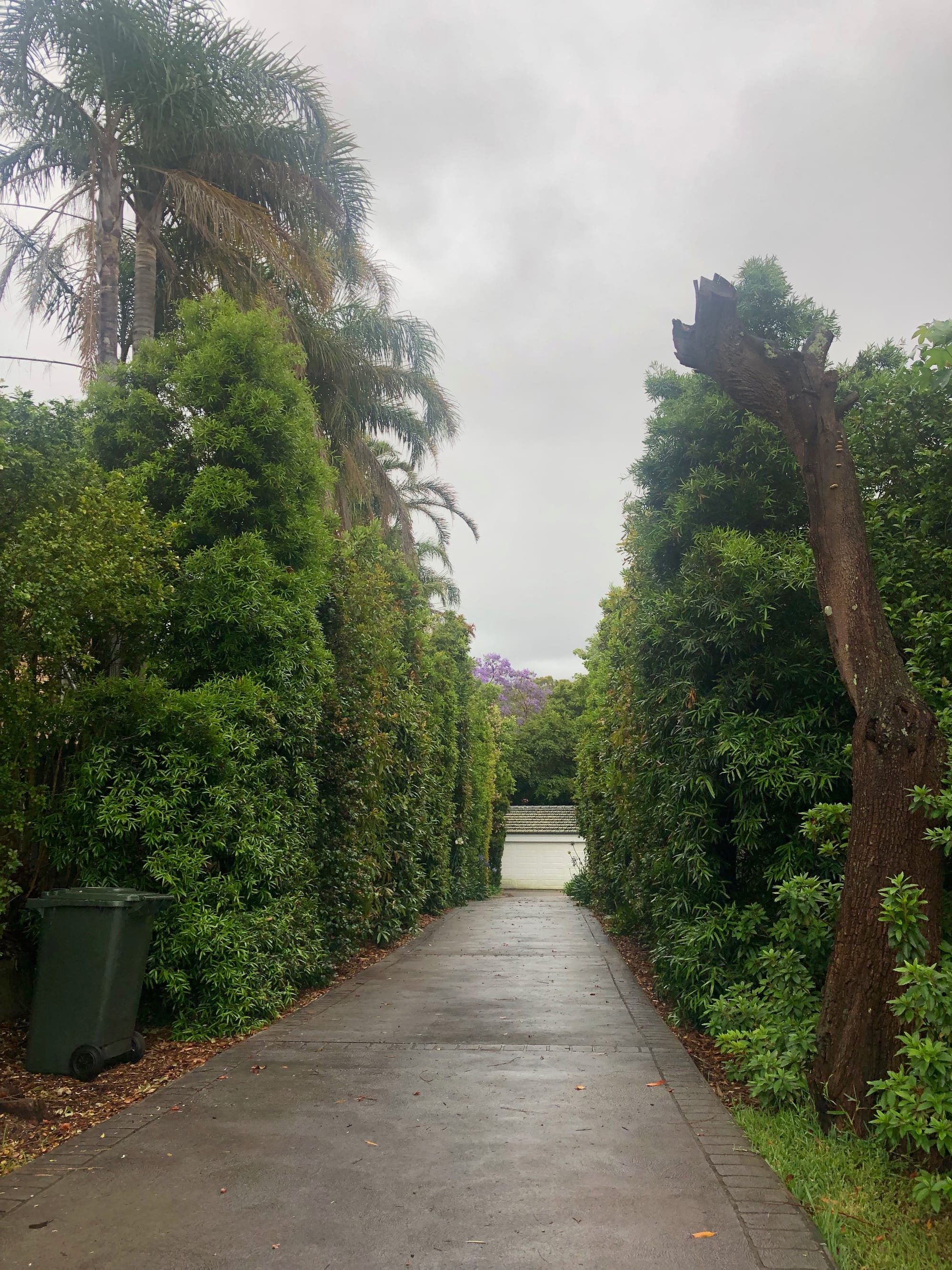
It is a large tree, eventually, though very slow-growing. You can even topiary or hedge it if you want to. It has many uses in horticulture, landscaping and gardening. For example, the image below shows very tall Illawarra Plum Pine hedges on an urban driveway in Mount Ousley.
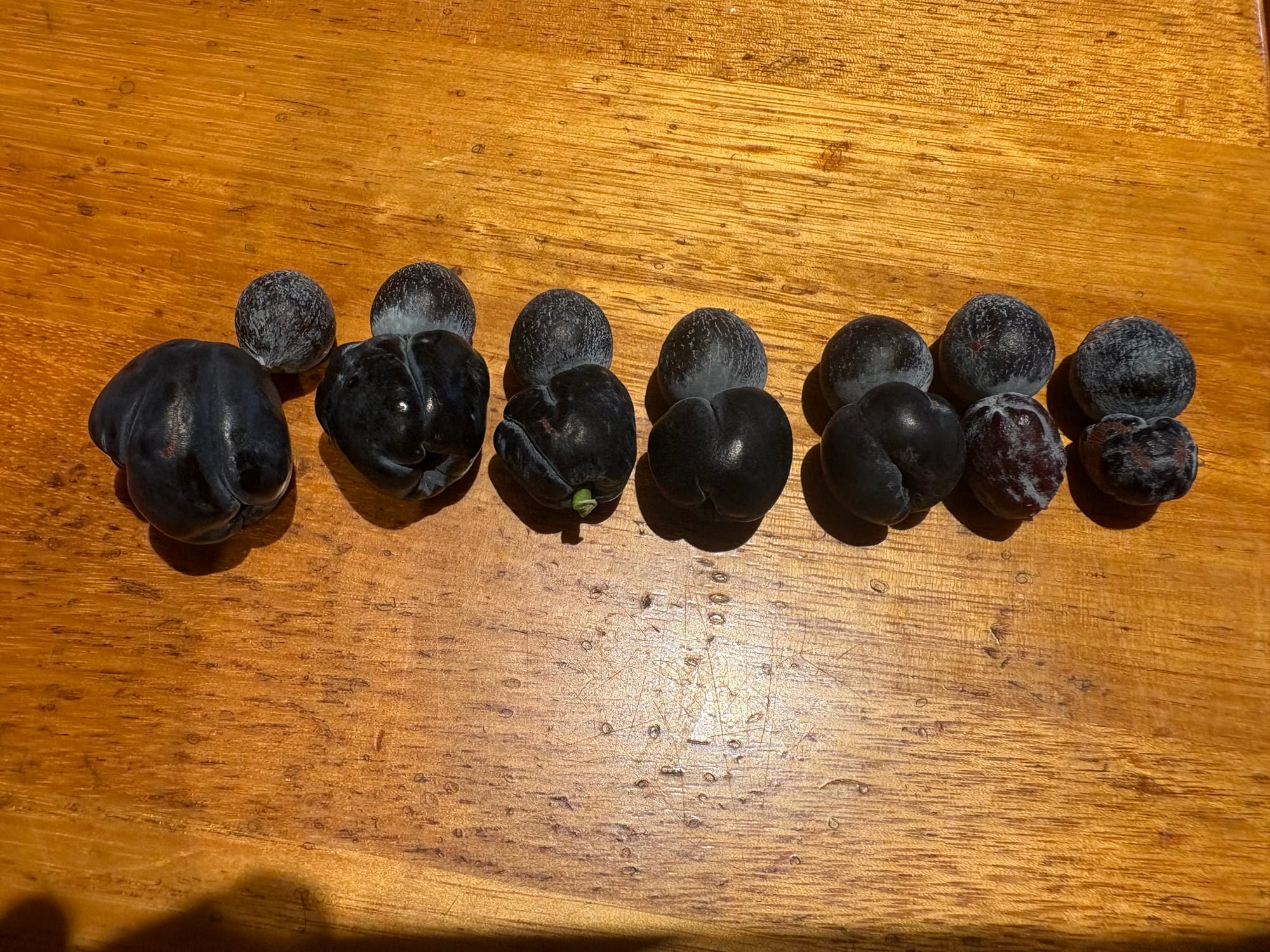
Going to the level of small detail, the fruit of this tree are interesting, and edible, and quite tasty, accounting for the 'plum' in 'Plum Pine'. But they're not fruit in the conventional sense! The juicy purple-black item that looks like a fruit is actually a swollen stem. The middle of the 'fruit' has the narrow fibrous stem running through its centre.
The image below shows the swollen stems, which are quite shiny, topped by the round black seeds, which have no covering at all.
The Illawarra Plum Pine has found commercial uses in the Illawarra in recent years, including in the manufacture of food and alcohol. But in its own terms, it just keeps keeping on, in landscapes that have changed dramatically since they were part of the Gondwanan continent all those millions of years ago.