
'I’ve got a soft spot for ugly animals'
I also like animals who are seen as having ugly behaviours. What can I say, I love a challenge.


I’ve got a soft spot for ugly animals. No offence to my husband. The first one. Or the second one. Or my dogs, one of which is actually ugly, in the traditional sense. But I also like animals who are seen as having ugly behaviours. What can I say, I love a challenge.
My first ever encounter with an Australian Brush Turkey was at the Wollongong Botanic Garden, where there are loads. It wasn’t an adult though, but an adorable baby. They are the cutest little things as chicks, like little fluffy quails, and it was strutting along like it owned the place.
You’ll often hear these birds before you see them, scratching around in the leaf litter looking for bugs, worms and fallen fruits and seeds. This alone can make them enemy number one for those who spend a lot of time making their garden just so, but it does aerate the soil, dig through organic material and even helps reduce combustible material for hot ground fires. There is a bit more to it though.
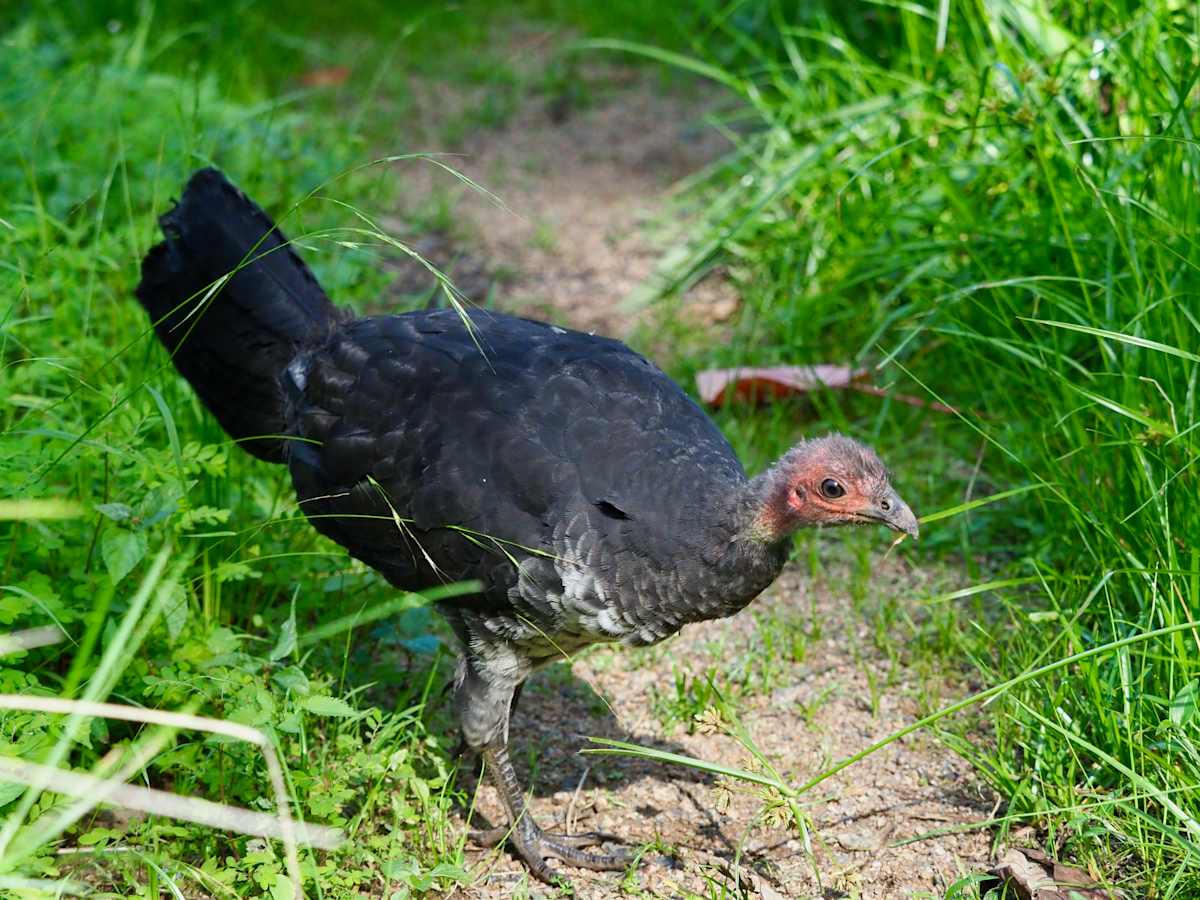
My next encounter was with a male, a large mound of leaves and poor female digging away in the mound while he watched, readying herself to lay her eggs. Every time she stopped or went to leave, he’d be right there kicking and pecking at her to keep going. And the worst part? He does this, so that she lays her eggs faster, so that the mound is ready for the next female to come in and lay her eggs!
The mounds are built by the males and they are huge. They scratch up lots of leaf litter, the bigger the better, and several females will lay their eggs in the same mound. Eggs are usually laid a few days apart and once she lays those eggs, the female leaves. Now, one of the other reasons that some people aren’t huge fans of the brush turkeys is this mound building and maintaining.
You see, the eggs need to be kept at around 34 degrees to successfully hatch. The breeding season is from August through to February, so you can imagine how much the weather can change during the time and so to maintain that temperature the male bird constantly moves the mulched material around, heaping it up and taking it back off again. If you happen to have a mound built in your garden, prepare for a fair bit of mess making for about 60 days.
And at the end of those 60 days, you might even spot the fruit of all of the male’s hard work; one of those adorable little babies, completely independent and able to walk and fend for itself from the moment it digs itself out of the mound (which can take up to 48 hours). Totally worth the mess if you ask me.
You can read tips on how to manage brush turkeys in your garden by clicking on the ‘Manage’ tab here.


