

Plinths in a park tell story of how famous port town grew
Two Kings art project in Port Kembla - you might walk past it if you didn't know it was there
In the 1980s and 1990s, mass unemployment and a heroin epidemic decimated the once vibrant township of Port Kembla. In the 2000s, the suburb began to rise again thanks to an urban renaissance led by community workers, local artists, permaculture gardeners, Aboriginal elders, migrant communities, long-time residents and an influx of newcomers.
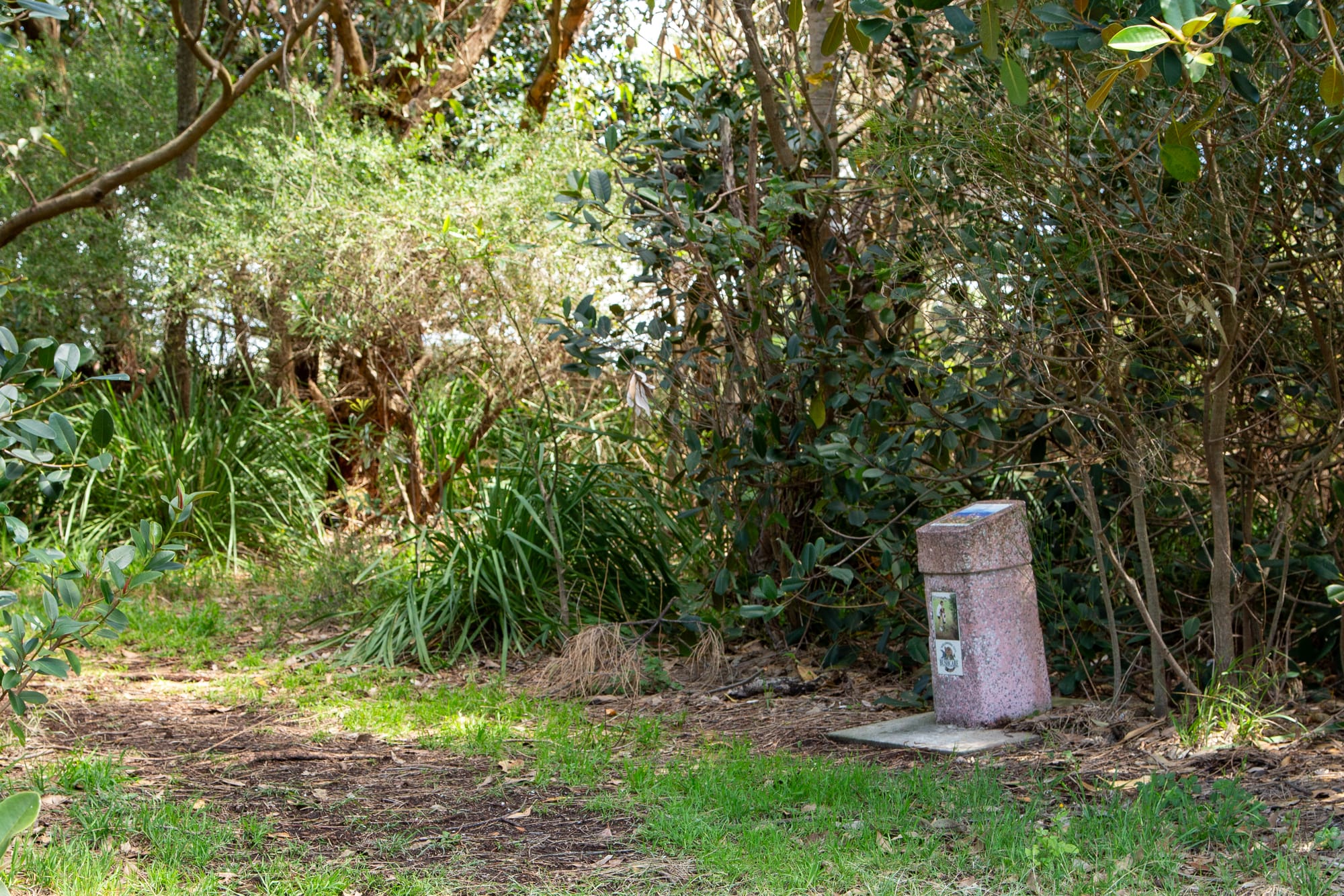
This history is celebrated in a little-known public art project that pokes its head out of the bush at King George V Park, Port Kembla, known as Two Kings.
Today the vibrant, multi-purpose green space of the park well reflects the hopes expressed by the Port Kembla Labor League in July 1952 that tree planting and improvements to the area, located behind Port Kembla beach, would make it into a pleasant place for leisure.
When I moved to Port Kembla in the early 2000s, however, the park had become a dry, treeless, windswept landscape. Community members associated with the Port Kembla Community Project (now Our Community Project) and King George Bushcare group consulted with the community to green the park, and by December 2009 had completed an initial planting of mature fig trees.
Volunteers worked for many years to create protective plantings of local native species around these magnificent trees, creating a living landscape that tempered the howling southerlies coming up from Port Kembla Beach.
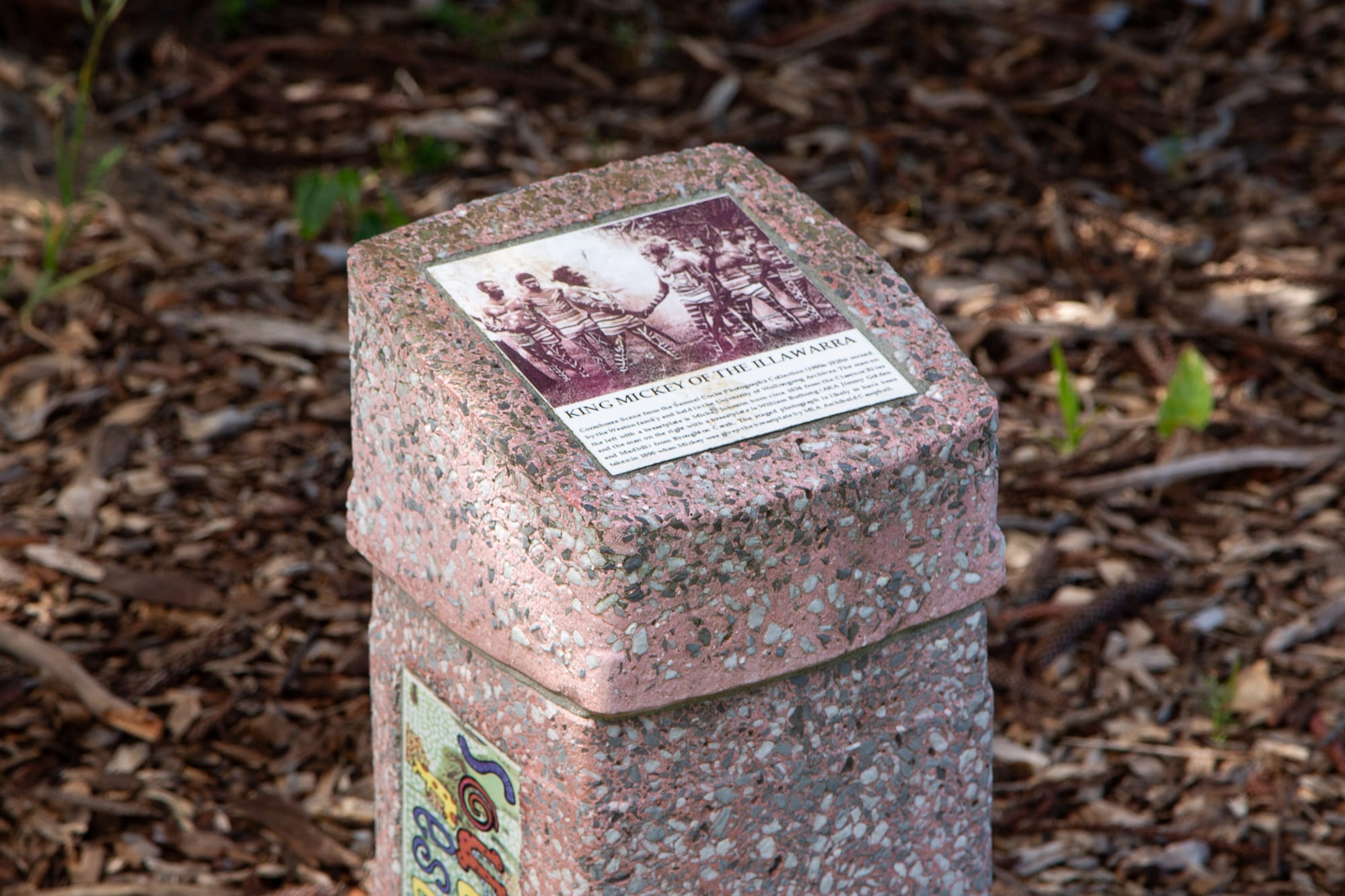
Photo: Melanie Barnes
Designed by local artist Michael Keighery and created with the assistance of mosaic artist Terry Cook, Two Kings consists of eight terrazzo plinths inlaid with tiles printed with photographs and text that tell the story of the people who have made Port Kembla and the park what it is today. The choice of terrazzo – a composite material incorporating stone chips and a cement binder – reflects the way a multitude of constituent groups built a community in Port Kembla.
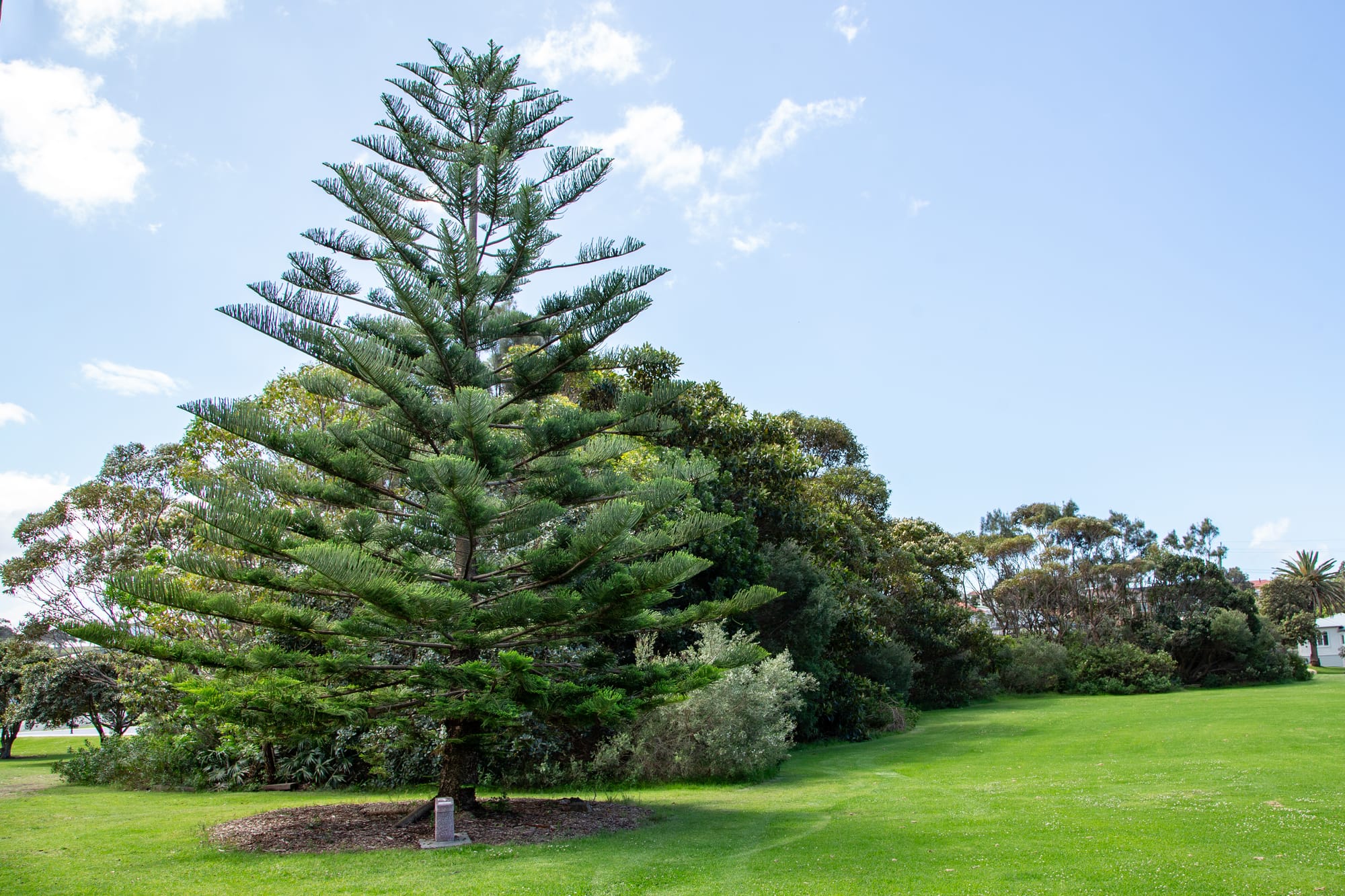
Photo: Melanie Barnes
The plinths begin on the Tobruk Avenue side of the park, where tiles representing two significant kings stand on either side of the entrance to the park.
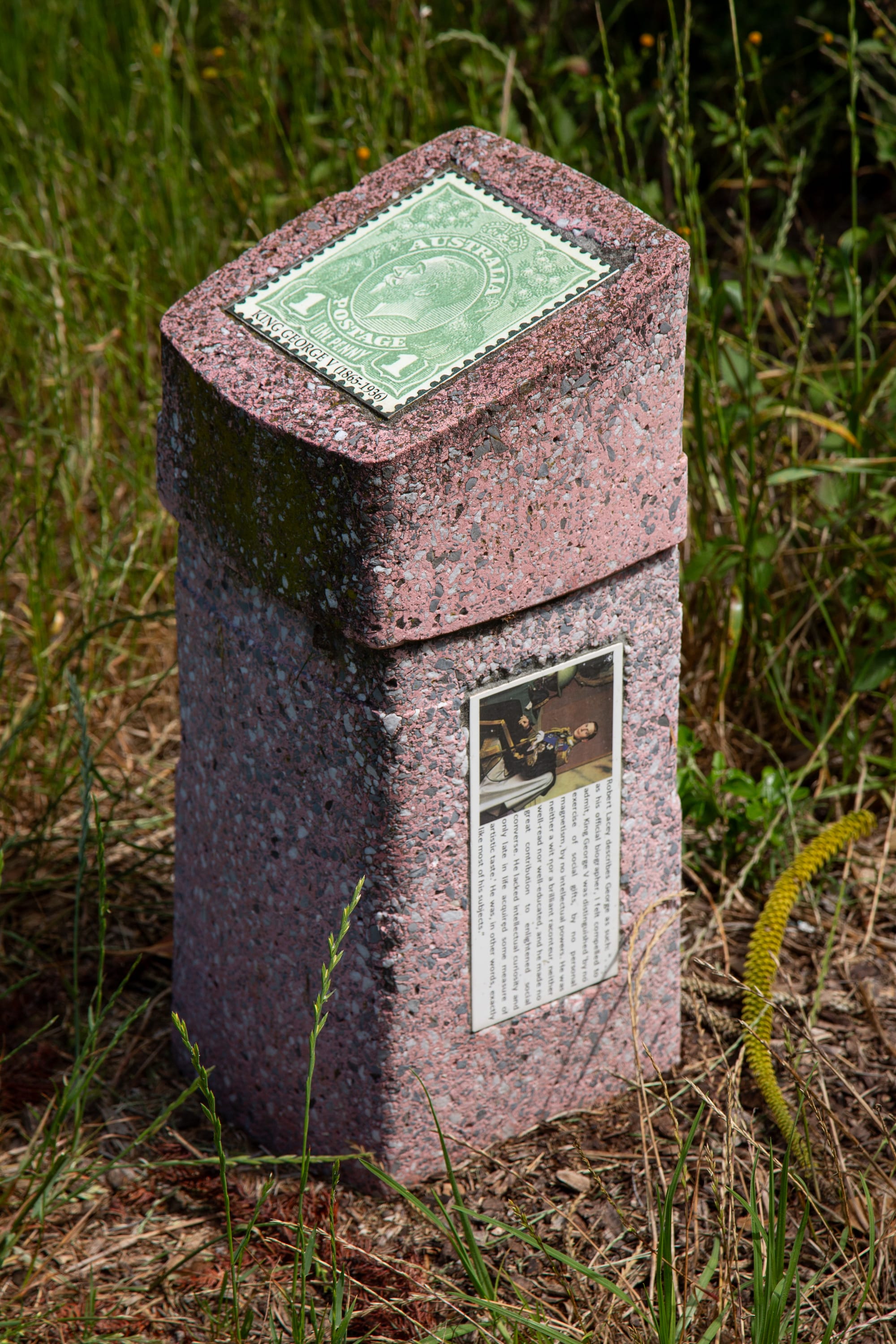
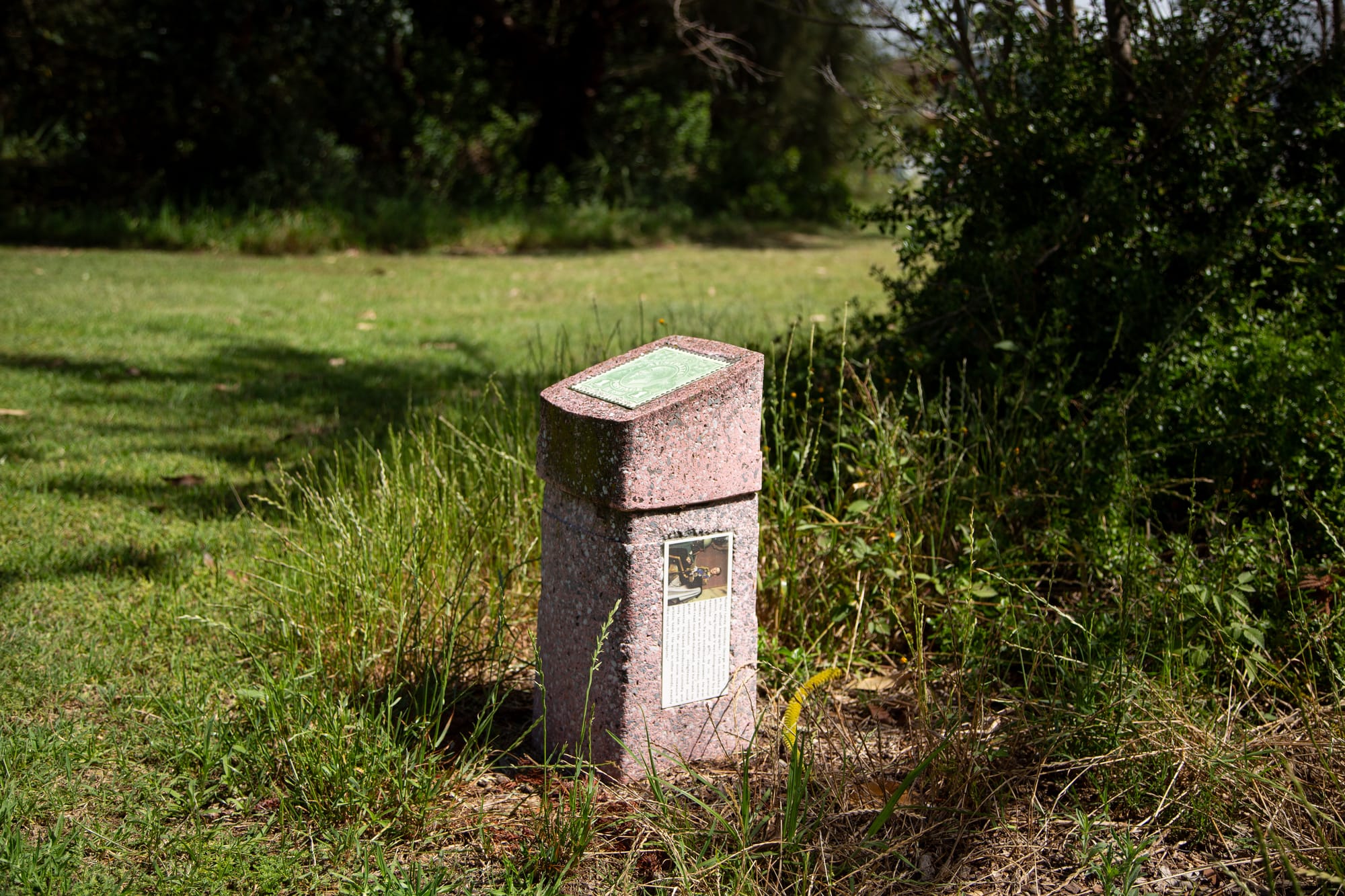
On the right is the British King George V (1865-1936), represented with an image of the classic green postage stamp bearing his face. Below, another tile pokes fun at the colonial monarch using a quote from his biographer Robert Lacey: ‘King George V … was neither a wit nor a brilliant raconteur, neither well-read nor well-educated, and made no great contribution to enlightened social discourse.'
Photos: Melanie Barnes
Having skewered the park’s eponymous king, Two Kings reinserts into the landscape the older sovereignty of the Five Islands People who have continued to live, fish and conduct ceremony in this landscape since the beginning of time.
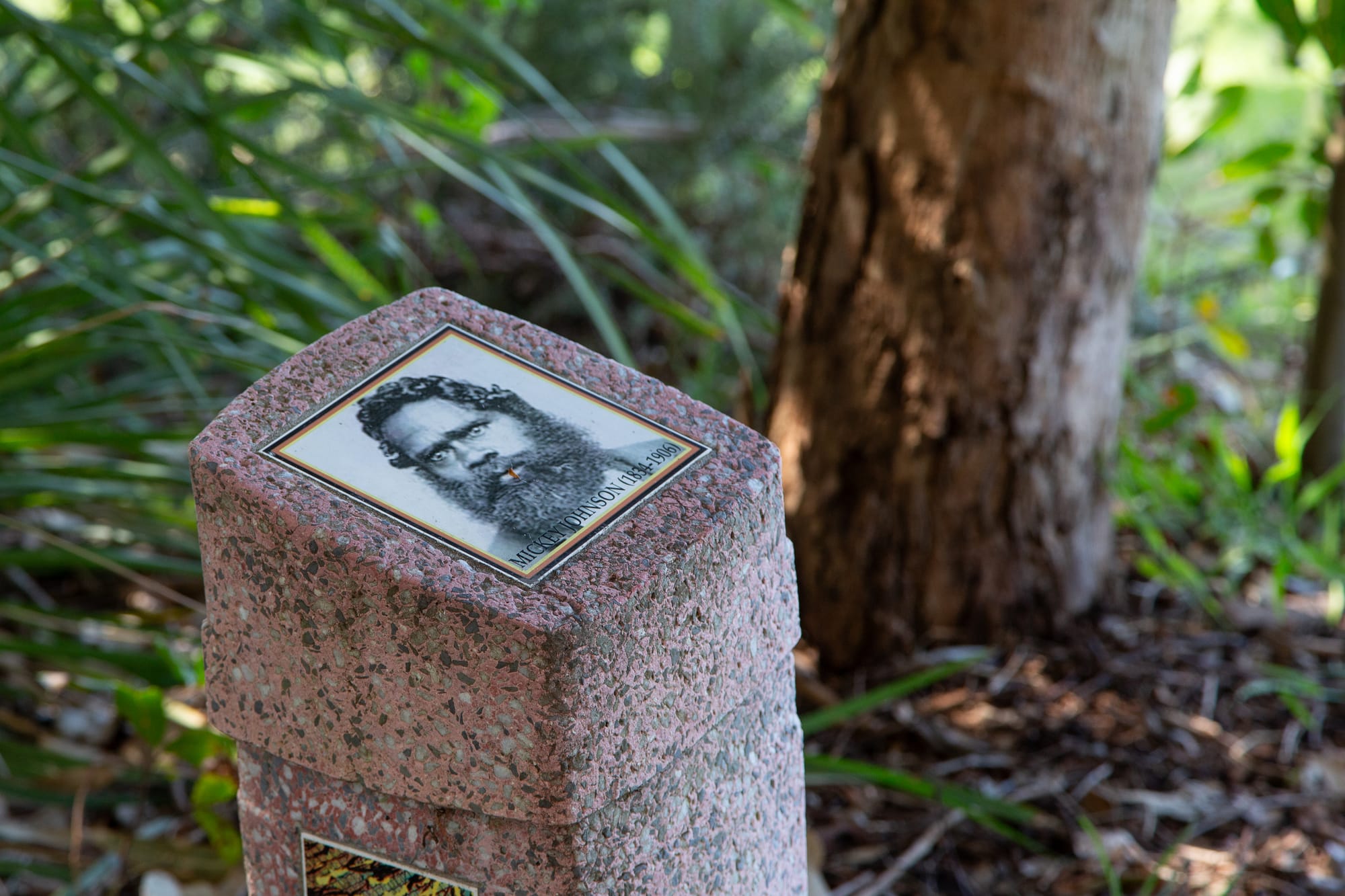
On King George’s left is a plinth topped with a photograph of King Mickey of the Illawarra (c. 1823-1906), a prominent Aboriginal man recognised with a brass "king plate" by MP for the Illawarra Archibald Campbell MLA in 1896.
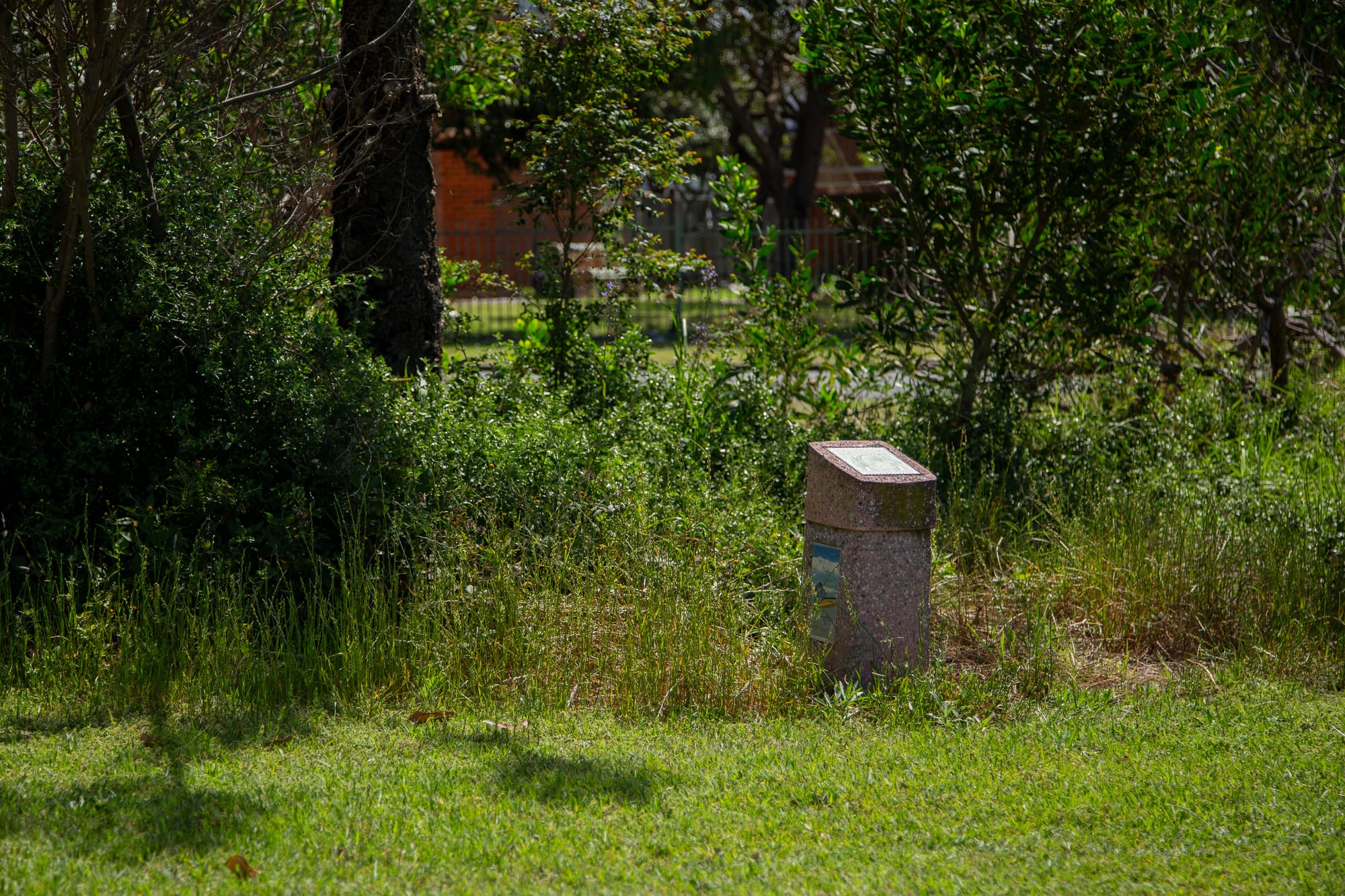
Other plinths tell the Aboriginal history of the landscape in tiles such as Elouera: The Five Islands People and Illowra (Red Point, Ti-tree Hill or Hill 60), depicting the hill visible from King George V Park where Aboriginal people lived autonomously from the white community up until the 1940s, when they were forced to make way for a military camp during World War II.
Photos: Melanie Barnes
Other plinths depict Port Kembla’s more recent history. There are images from the magnificent Southside Festival, a community arts festival held annually on the shores of the nearby Coomaditchie Lagoon during the 2000s, and other tiles with pictures of the Port Kembla Men’s Group, Bushcare Group, and school children.
The industrial history of Port Kembla is remembered in images of the (in)famous Port Kembla Stack taken in 2009 and of the working harbour of Port Kembla.
The text atop one of the plinths explains the intention of the work:
"By referencing the two kings, King George V and King Mickey of the Illawarra, this project acknowledges the contribution of past and present people who have worked to ensure the ongoing vitality of this parkland. The relevance of this parkland and how it develops relies on the involvement and participation of the communities who have a connection to this place."
This spirit is alive and well in the latest addition to the park: the Port Kembla DIY skate park. Built out of plywood and community spirit by residents during the COVID-19 pandemic, it was fixed in concrete last year following a grassroots campaign. Two Kings commemorates the evolution of this landscape and the ways in which it has been shaped by those who live in it while reminding us of those who have lived in and cared for it before us.
Further reading
- Hill 60 Stories, Illawarra Stories, Wollongong City Libraries,
- Mike Donaldson, Les Bursill and Mary Jacobs, A History of Aboriginal Illawarra, 2 vols, Dharawal Publications, 2017.
- Erik Eklund, Steel Town: The Making and Breaking of Port Kembla, Melbourne University Press, 2002.


