

RFS chainsaw trainer awarded
Illawarra/Sutherland Group Captain Will Lee was awarded at a St Florian's Day ceremony last month

Considering the training acceptable for tree fellers in the 70s, it’s lucky Illawarra/Sutherland Group Captain Will Lee is around to pass on his skills at the Rural Fire Service.
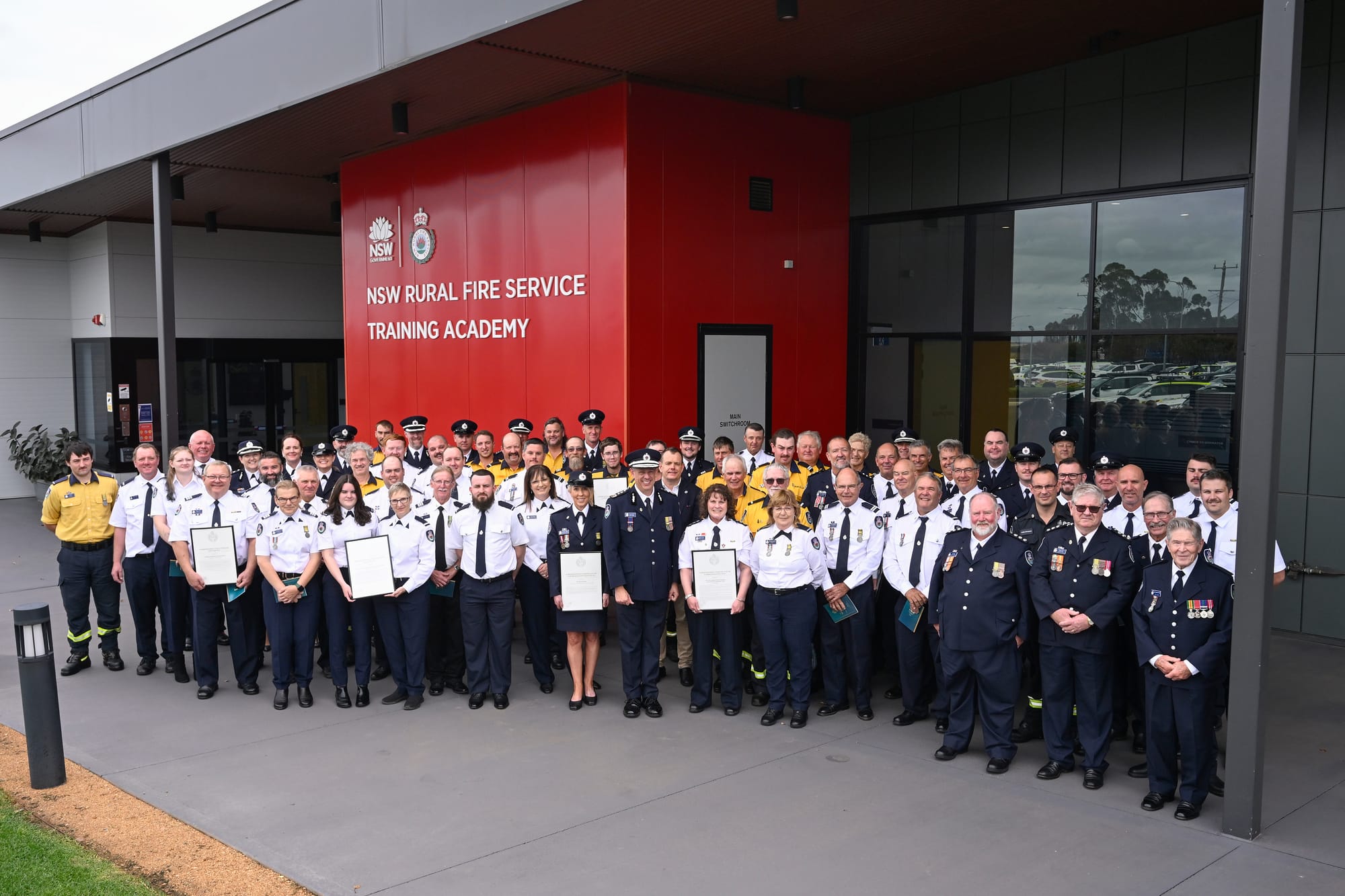
On 4 May, International Firefighters’ Day and the feast day of St Florian, patron saint of firefighters, Will was one of more than 30 individuals and teams awarded at a St Florian's Day ceremony at the NSW RFS Training Academy in Dubbo.
"Group Captain Lee's countless volunteer hours reflect his unwavering commitment to enhancing RFS training programs and improving firefighter safety and professional development," his commissioner’s certificate of commendation reads.
Will said he felt “really honoured” by the recognition of his role in developing chainsaw training courses for the RFS, a task that has required a lifetime of experience and over 300 hours of meetings to shape course content.
“The job of an old firefighter is to train young firefighters to become old firefighters,” he said.
“We want them to stay, but we want them to be safe.”
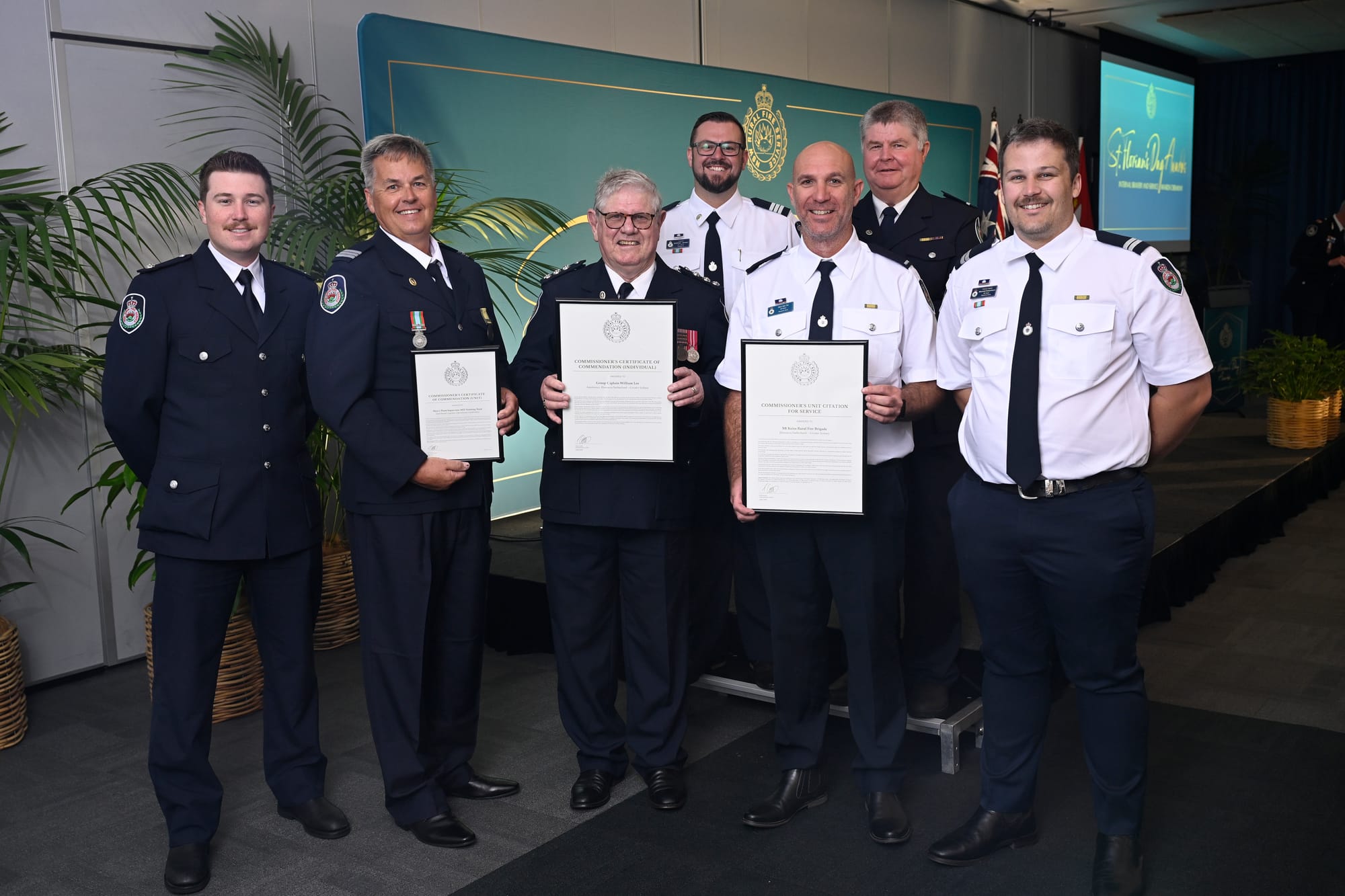
Will is also the lead trainer of the heavy plant supervisor training team, which includes another Illawarra local: Peter Field, captain of the Darkes Forest Brigade. This unit was commended for enhancing safe and effective firefighting, while the crew from Mt Keira Brigade won a commissioner's unit citation for service following their exceptional dedication during the April 2024 floods.
“Over the last four or five years, I've been working with Rural Fire Service – initially it was working on the chainsaw training packages. Then there was the intermediate tree felling and the advanced tree felling, and also the polesaw training.”
Will drew on his background in training management to redesign the courses, serving on four national committees to establish the units of competency.
It’s a far cry from his own learning curve, wielding a chainsaw on the job as part of a subsidence crew working for BHP in the 70s.
“I’m actually an engineering surveyor,” he said. “We used to do a lot of work for the coal mines, all on top of the mountain. The subsidence crew went out there and measured the height of the land from known points above the coal mines to see how far the land was subsiding with the mines underneath.
“So back in early 1970, they said, ‘Here’s a chainsaw. Here’s how you start it – off you go.’
“I did that for for a long time, when I was surveying, and then got into the Rural Fire Service, and I had a good knowledge.
“Then in the mid 90s, I did a formal training course the Rural Fire Service put together. And I walked out of there and said, ‘I should be dead.’ The amount of things I learned on there about everything I was doing was completely wrong.”
The RFS’s attitude to safety and training is the biggest change Will has seen in the organisation since he started volunteering in 1970.
“When I first started, it was, jump on the truck, go and buy your own stuff before you jump on the truck. Then you get to a fire and you'd look around and someone would say, 'oh, grab a hose'.
“But now, before anyone actually does that, there's formal training.”
Technology has also come a long way, with the Hazards Near Me app for the public and FireMapper for teams in the field. “We can map a fire and someone in head office in Sydney can actually see in real time what's happening.”
Will’s last job before retirement (from paid work) was running a training company, where he built courses and moderated technical jargon, breaking it down to simple components that people can understand.
Today the RFS offers all kinds of training courses, from chainsaw work to community engagement to aviation.
Yet some skills remain unique to years of experience. In 2022, Will was selected to join the RFS Chainsaw Working Group for the tree fall fireline, tree fall intermediate and trim and crosscut felled trees courses.
“In the Illawarra fire district, there’s about four of us that have got the qualifications to put trees down that have been affected by fire,” he said.
“If there’s a machine there, we’ll get a machine to push it over, but sometimes we might have to do it manually, and that’s an extremely dangerous process, so you really need to have a lot of training."
Cutting down a tree on fire is “not fun”, he says.
“You wrap yourself up, you do your collar right up to the top. You’ve got your flashlight over the back. You’ve got everything around you and then you’re cutting and you’ve got sparks going everywhere.”
Will has been volunteering with the RFS for 56 years. He’s a life member of Austinmer Brigade and, as an Illawarra/Sutherland group captain, he looks after Bulli, Mount Keira, Mount Kembla and Illawarra communications. He’s also a Justice of the Peace and president of Austinmer Thirroul RSL Sub-Branch. Every year he organises the ANZAC and Remembrance Day services.
“I'm a very young 74,” he says.
“It keeps me active, it keeps me young, because I'm dealing with a lot of young people.
“I lost my wife, close to two years ago now, so my outlet is to go out with people in the Rural Fire Service.
“It's the life that I've had, helping other people.”


