

Stringybarks: underrated woodland trees we should encourage
Two Illawarra versions tend to tag-team feeding fauna during the year - and they look great, too
I never get tired of singing the praises of the Illawarra's local eucalypts. The region is home to a range of eucalypt species, from the mighty blackbutt (Eucalyptus pilularis) down to the cute shrubby privet-leaved mallee (E. ligustrina) that grows in exposed areas high on the top of escarpment cliffs such as at Broker's Nose.
And they all need their praises sung, as there is widespread concern about the negative sides of these trees, particularly in urban areas. People worry that eucalypts may drop branches, increase bushfire risk and attract termites. These concerns are real, but can be blown out of proportion.
For example, a 2022 epidemiological study of injuries relating to falling trees and branches in Australia found that the of injury risk is extremely low, including for eucalypts, and that it is far outweighed by the benefits of urban tree plantings.
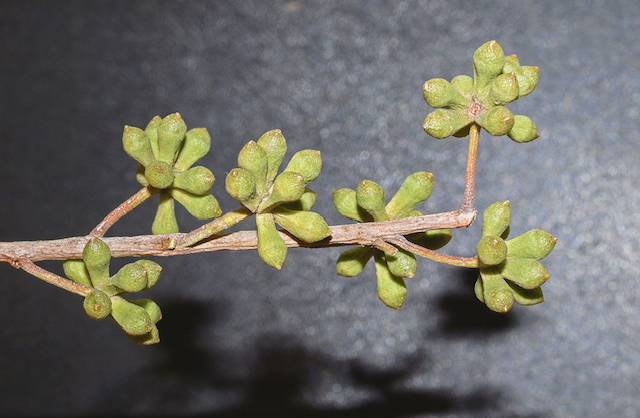
That context aside, I wanted to focus this week on some underrated local eucs, namely the stringybarks. They are represented locally by two species – the thin-leaved stringybark (Eucalyptus eugenioides) and white stringybark (E. globoidea). Similar-looking, they are both medium-sized trees reaching 6m to 12m tall, with fibrous or "stringy" bark, creamy-colour flowers and globular clusters of small, hard "gum nut" fruit.
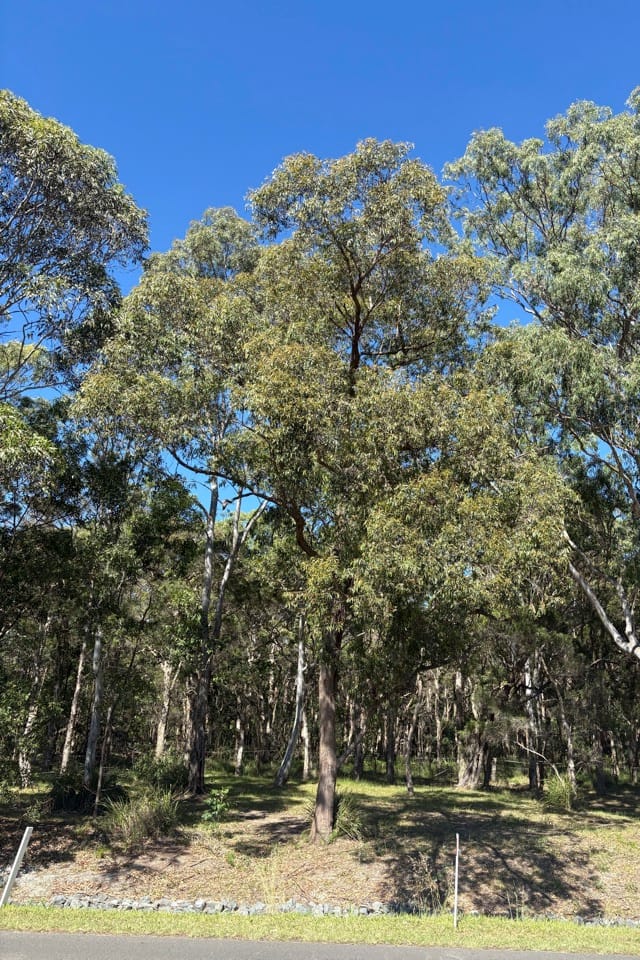
Both local stringybarks are attractive trees, often with a leaning habit and copious flowers and fruit. They appeal to a wide range of fauna, including birds and flying foxes that consume the flowers' nectar, assorted insects, spiders and microbats that enjoy resting in crevices in the bark.
The two local species have complementary flowering times, with thin-leaved stringybarks generally flowering in late winter or spring, and white stringybark in autumn to early winter, which is very convenient for the fauna that depend on them.
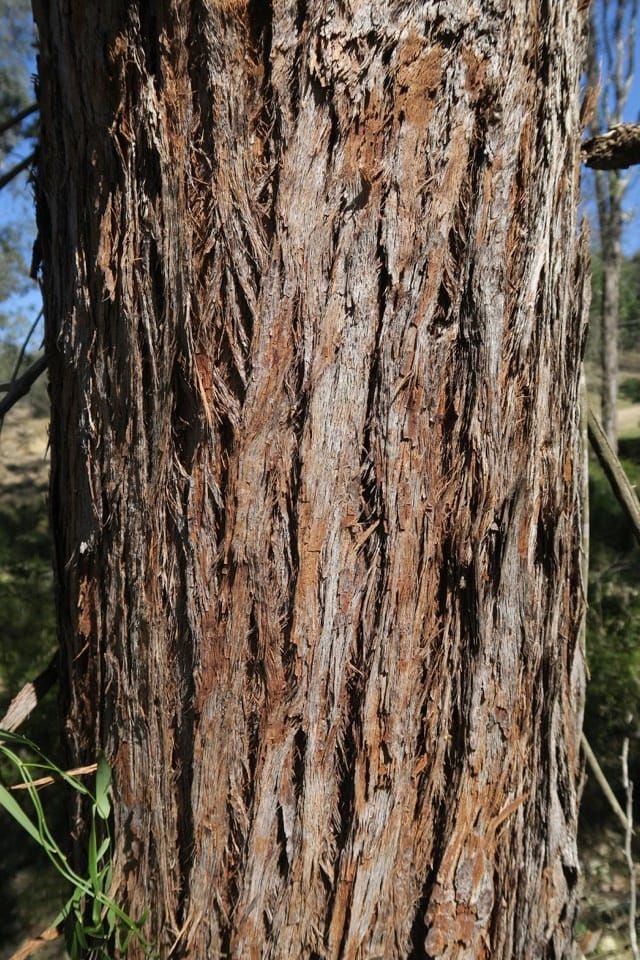
These stringybark trees are almost completely absent from cultivation across the Illawarra, although they would once have been widespread along the coastal plain as components of the endangered Illawarra lowlands grassy woodland. I have never seen one as a street tree or in a garden (though I'm sure there are a few out there). As such they are more or less untried.
But they are just crying out to be grown in gardens on the coastal plain, such as in Corrimal, West Dapto and Calderwood. Planting them will help the grassy soodland recover as much as possible given the many challenges it faces.
References
Way TL and Szolt JB (2022), The epidemiology of injuries relating to falling trees and tree branches, Australian New Zealand Journal of Surgery, 24 January 2022, accessed 14 June 2026, <https://onlinelibrary.wiley.com/doi/10.1111/ans.17481>.


