Snail doors for a shell ‘house’
We think of the shell of a snail as being its house, but did you know that many of these houses also have doors? By Amanda De George Sea snails are delicious. I assume. It’s an educated guess really, what with them being on the menu for many of...


We think of the shell of a snail as being its house, but did you know that many of these houses also have doors? By Amanda De George
Sea snails are delicious. I assume. It’s an educated guess really, what with them being on the menu for many of the animals they share the intertidal zone with including birds, crabs and fish. My dad would regale me with stories of using pins to remove periwinkles from their shells as a boy when he was fresh from England, and there was that one time in Japan, just me and the new husband, a handful of terrestrial snails and lashings of garlic butter. But I digress.
The point is, for a good deal of marine snails, the shell alone is not enough to keep their soft, fleshy bodies safe from hungry animals. Or from the receding tide and the risk of being dried out that it brings.
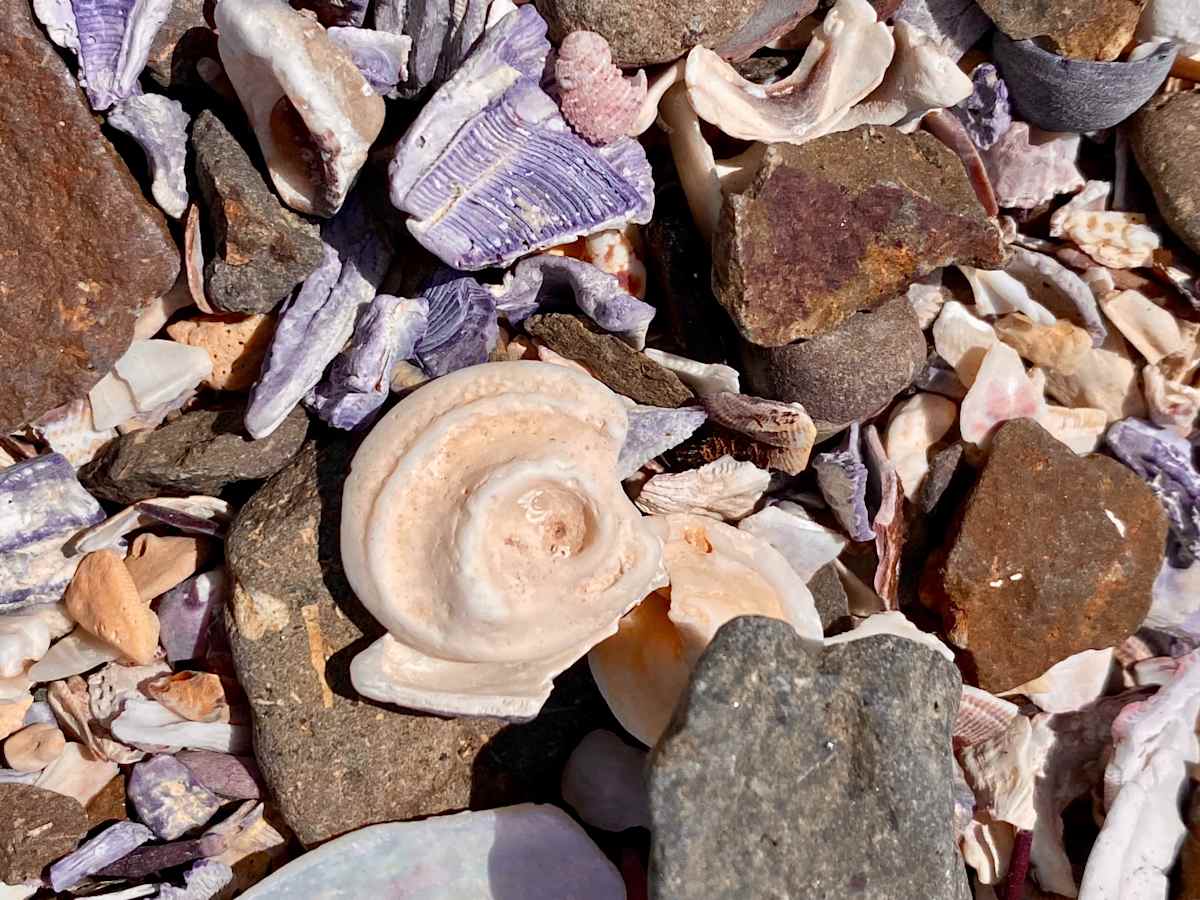
Enter the ‘operculum’, a hard lid or trapdoor that is made by most species of marine snails consisting mostly of calcium carbonate. You might have already stumbled across these on your beach walks, washed up on the shoreline, hard and shell-like and becoming part of the ocean debris once the animal dies.
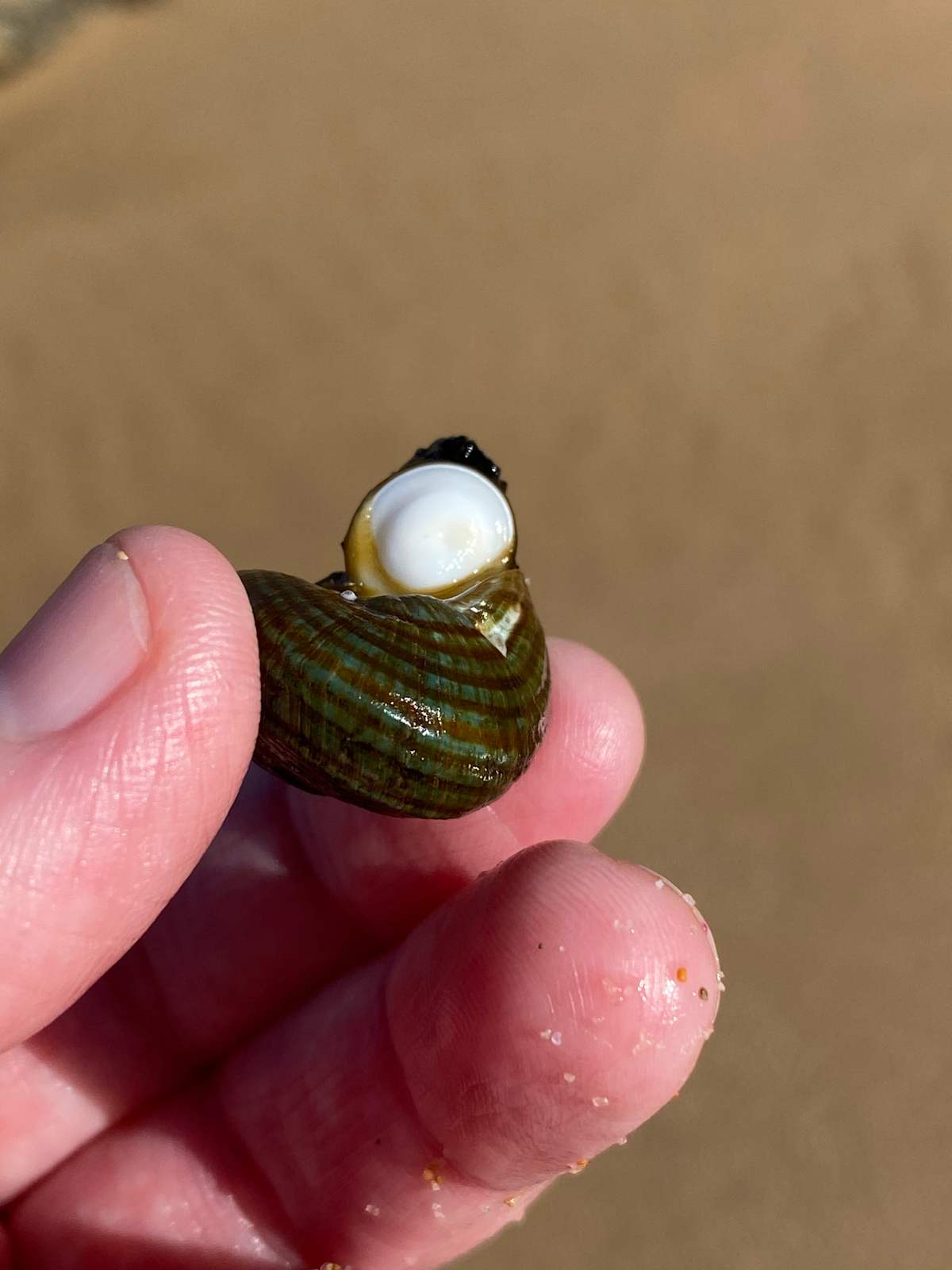
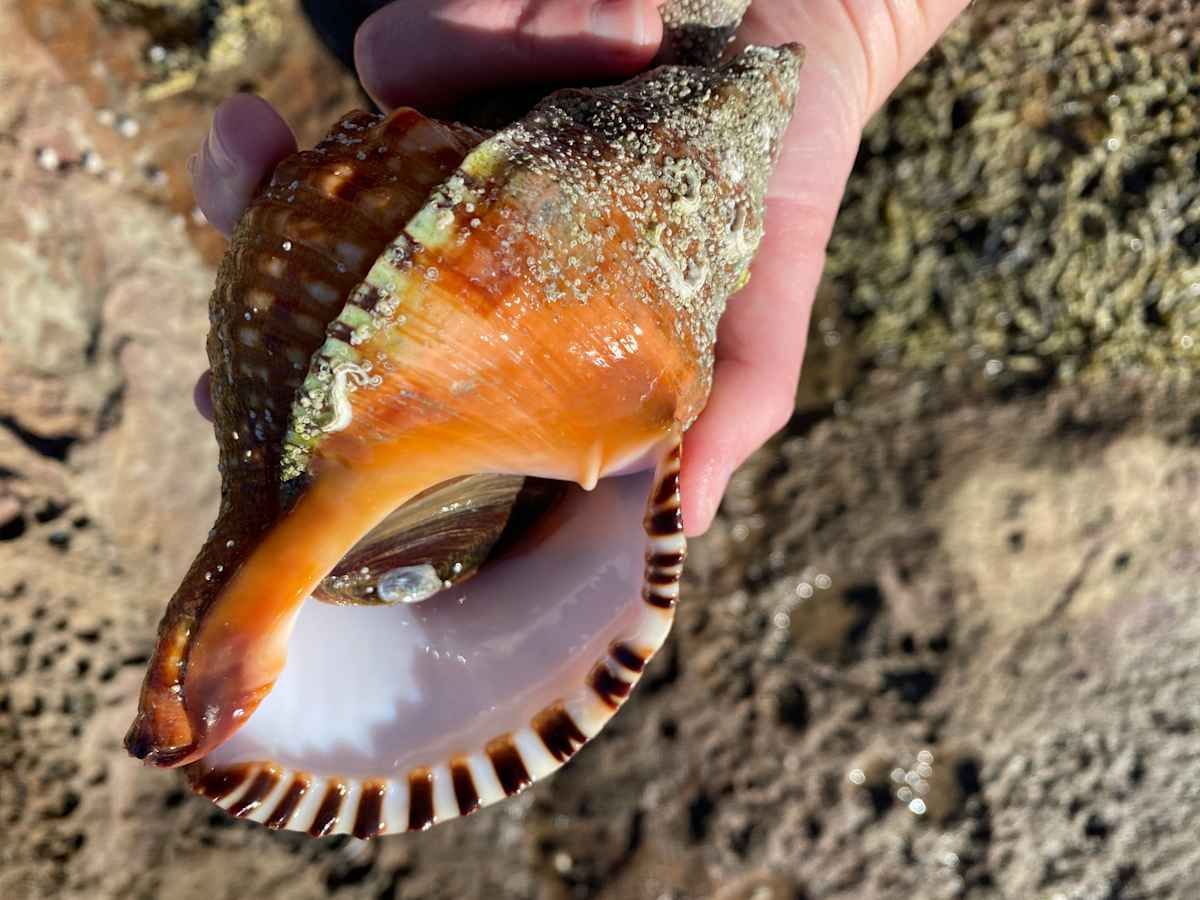
The shape varies from species to species but the ones from the Turban Snails (Turbo marmoratus) are the ones I see around here the most, with their deep, spiralled grooves on one side, the other side smooth and flat and lined with a faint whorl. That of the hand-size Red Triton Snail is oval, much thinner and made up Saturn-like rings of brown.
Whatever its shape, the operculum serves the same purpose, growing with the snail and attached in such a way to the foot that when in danger, from either food or flood (or lack thereof) the animal can pull itself up inside the shell and close the door, sealing in the moisture until the tide rises again, or sealing its deliciousness away.
Not a bad trick if you’re even half as tasty as these creatures appear to be to the other tide pool dwelling animals, with or without the garlic.
Visit www.backyardzoology.com