

State’s biggest meeting of mayors and councillors sets policy priorities
The 2026 Local Government NSW conference brought leaders from across the state to Wollongong

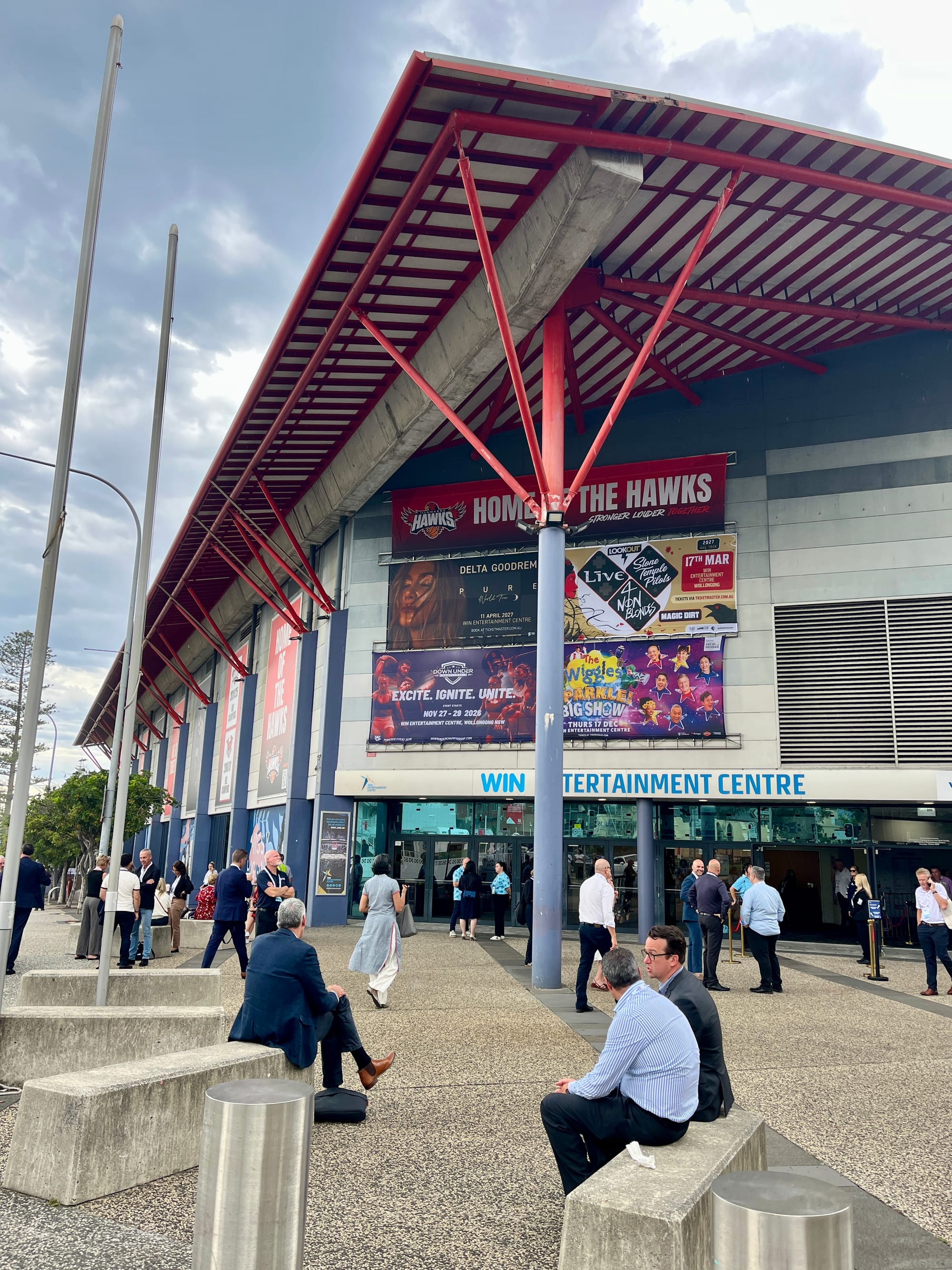
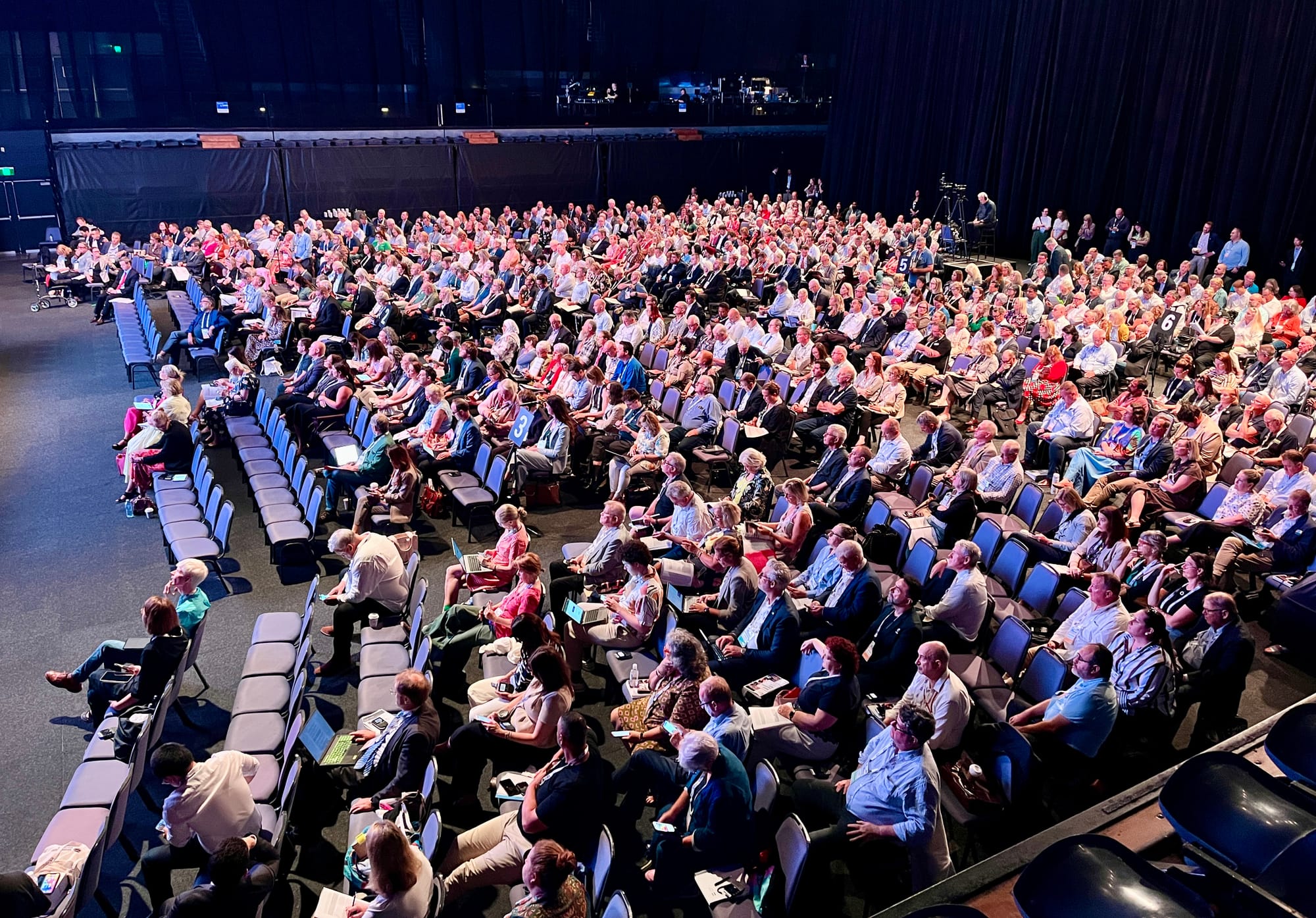
About 900 mayors and councillors from Tweed Shire to Bega Valley gathered at WIN Entertainment Centre from Sunday to Tuesday for their annual conference, run by Local Government NSW, the peak body for councils.
The power of this enormous exercise in democracy is best illustrated by a collective noun picked up on the sidelines.
What do you call a group of mayors?
A mugging of mayors.
Because when council leaders unite, they’re so powerful state and federal governments simply have to show them the money.
Housing a key theme
As a result of the 2026 conference, one of LGNSW’s next big tasks is likely to be lobbying for funding and policy changes to open up more housing.
“There's a lot of motions around the housing crisis and the infrastructure that needs to go with that,” Wollongong Lord Mayor Tania Brown said during a break in Monday’s debate.
“So hopefully we'll see some recommendations out on that that will improve the situation, and free up some state money to help with that infrastructure, getting on with the roads and the footpaths that are needed.”
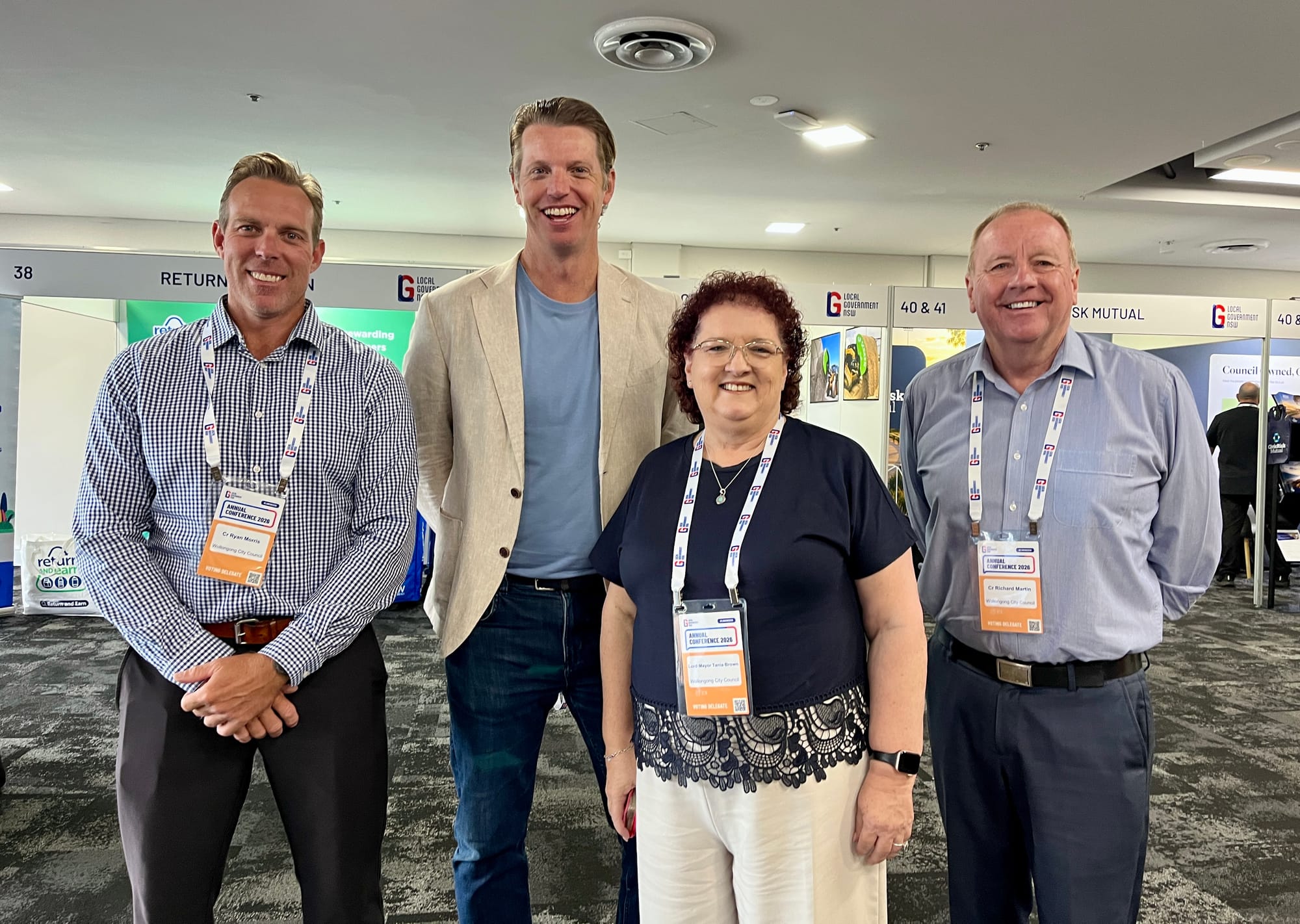
Wollongong city councillors, L to R: Ryan Morris, Dan Hayes, Lord Mayor Tania Brown and Richard Martin.
More than 100 motions
Councillors considered more than 100 motions, plus amendments, in a business paper that ran to 268 pages and meeting that ran for almost eight hours.
Monday’s motions debate showed how broad councils' role has become. The agenda was loaded with far more than the traditional three Rs – roads, rates and rubbish. (Although those were not neglected, with motions on FOGO and safe lithium-ion battery disposal.)
Other topics included: financial assistance grants, data centres, water buybacks in the Murray Darling Basin, renewable energy developments, community wellbeing, biodiversity threats and the banning of wearable surveillance technology.
Kiama council asked that the Local Government Minister be able to temporarily reduce councillor numbers to avoid costly by-elections; Shellharbour wanted councillor conduct complaints to be dealt with independently of councils. Both motions were successful.
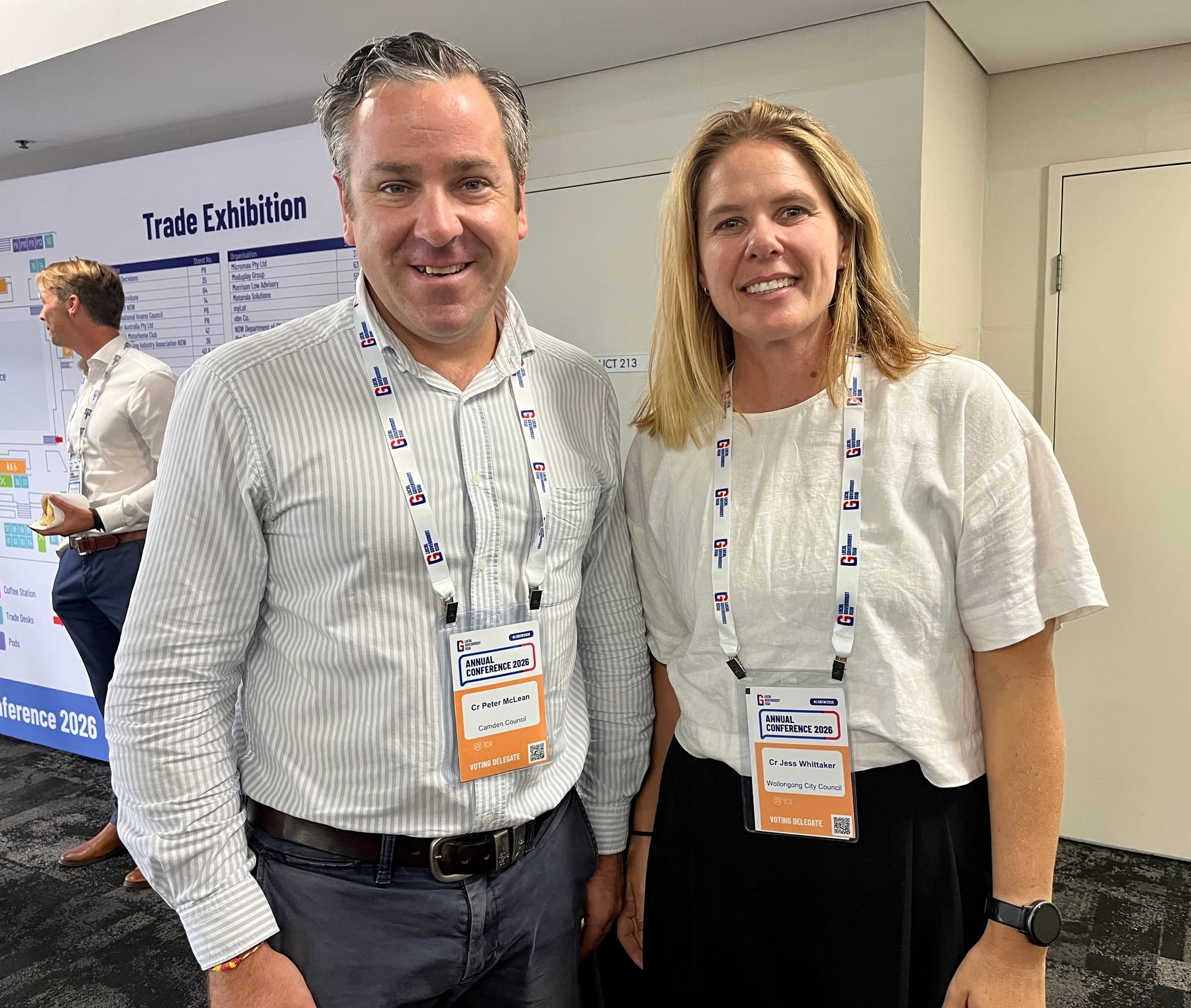
Peter McLean of Camden Council and Jess Whittaker of Wollongong.
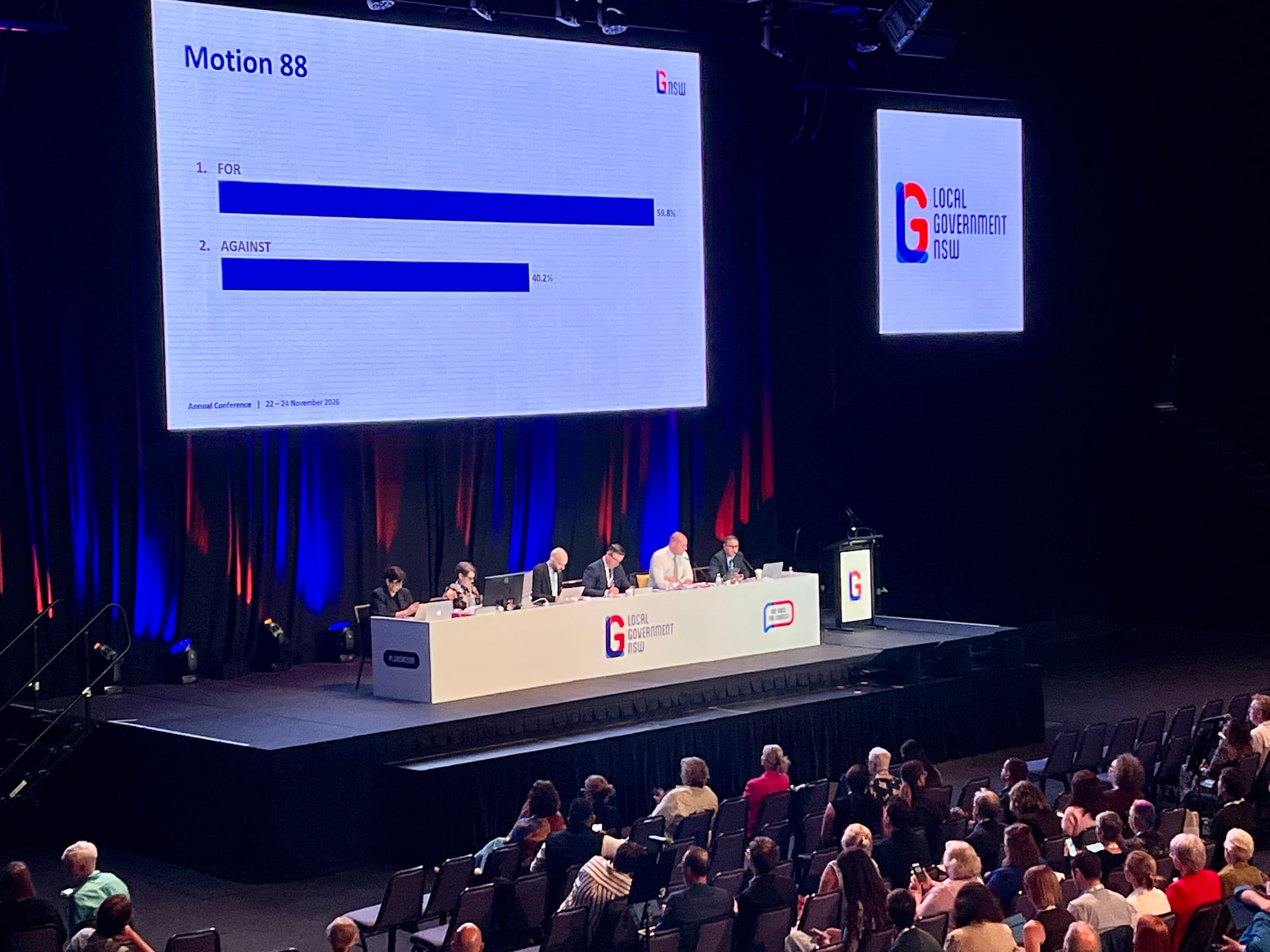
Bayside Council’s Motion 88 – highly anticipated by the Illawarra’s Knitting Nannas – had a win in its call for sustainable funding for climate resilience.
Bayside councillor Soraya Kassim said the motion drew on the "polluter pays" principle to help communities affected by erosion, inundation, drought and bushfires. “We would like to have a fund which is sustainable and equitable by having it funded by fossil fuel industries, which are contributing towards the cost which we are currently bearing,” she said.
A speaker from Dubbo Regional Council dissented, saying he couldn’t “see the point” of penalising coal and gas companies.
A show of hands didn't reveal a clear winner, so delegates voted via electronic devices while the digital clock counted down. The motion was carried, with 59.8% of the vote.
The Upper Hunter Shire Council put forward one of the more controversial proposals, calling on “the NSW Minns Labor Government to ditch the gun buy-back scheme and re-allocate this funding to rural healthcare and roads”.
Mayor of Yass Valley Council, Jasmin Jones, told how she had a baby beside the road and has spent the past 15 years fighting for a maternity unit. She said the motion sends “the strongest possible message to those people in the city making the decisions for our communities” that taxpayer money is being wasted on gun buybacks when it is needed in the bush. However, other speakers objected to linking guns and healthcare, with Shoalhaven Greens councillor Debbie Killian describing it as “an absurd connection” and “a completely different issue”.
“Cancelling the gun buyback – that one was quite a good debate and was defeated,” Cr Brown said. “I think: how many guns does one need? Yes, if you're a farmer, a different equation. If you're living in Wollongong – do you even need four?”
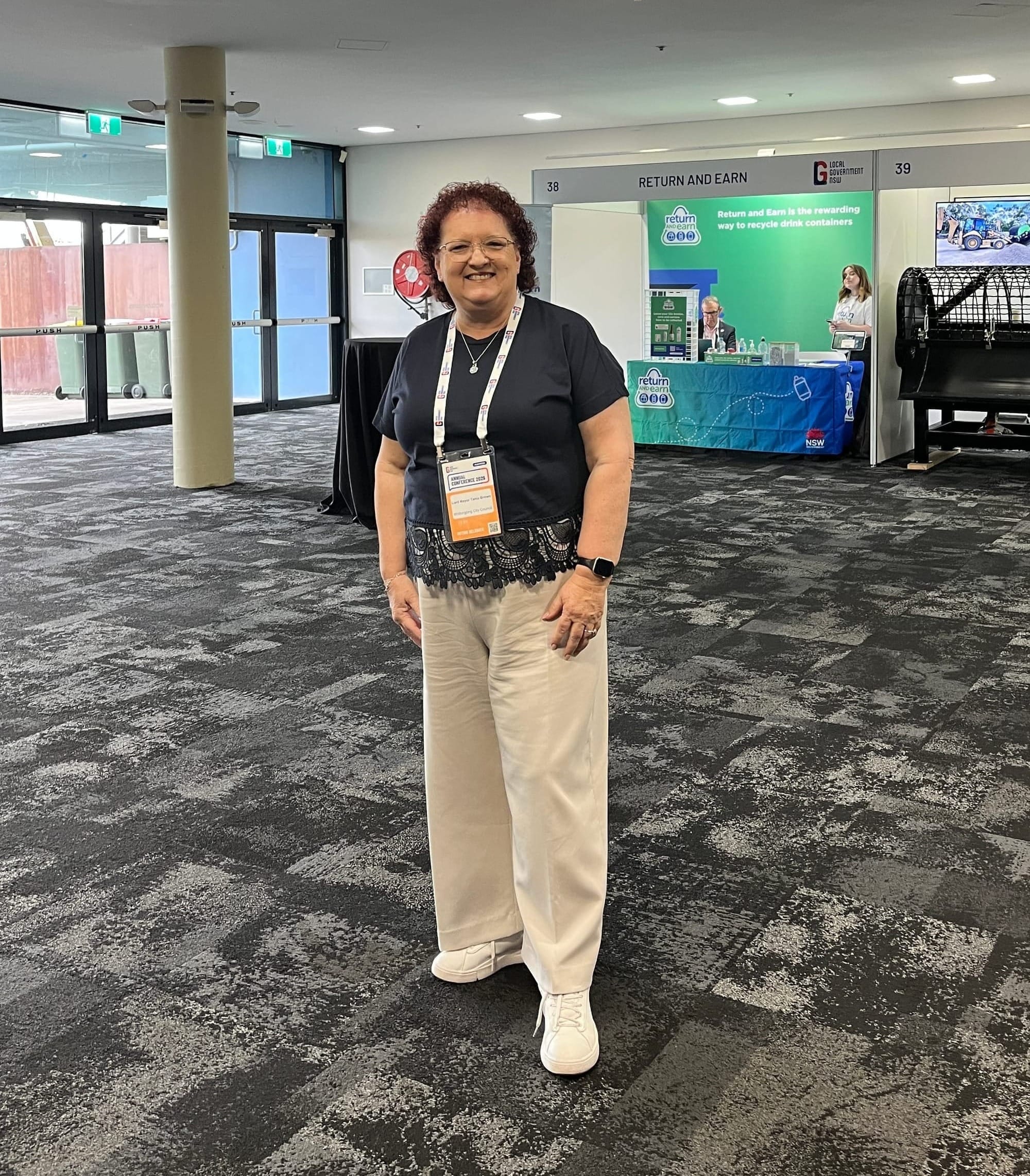
The Lord Mayor said the breadth of discussion was typical of LGNSW conferences.
“You always see that regional divide between the real country in the far west. Things like the gun scheme and water buybacks, which are not things that we tend to discuss here on the coast.
"So it's always a good reminder of the different challenges that councils face.
“But then you also have so much in common: pushing back on planning, trying to make sure that we're getting our fair share from from state government, particularly in the lead-up to a state election. It’s important that we've got our advocacy ready, to lobby all candidates and all parties to make sure that councils are not forgotten.”
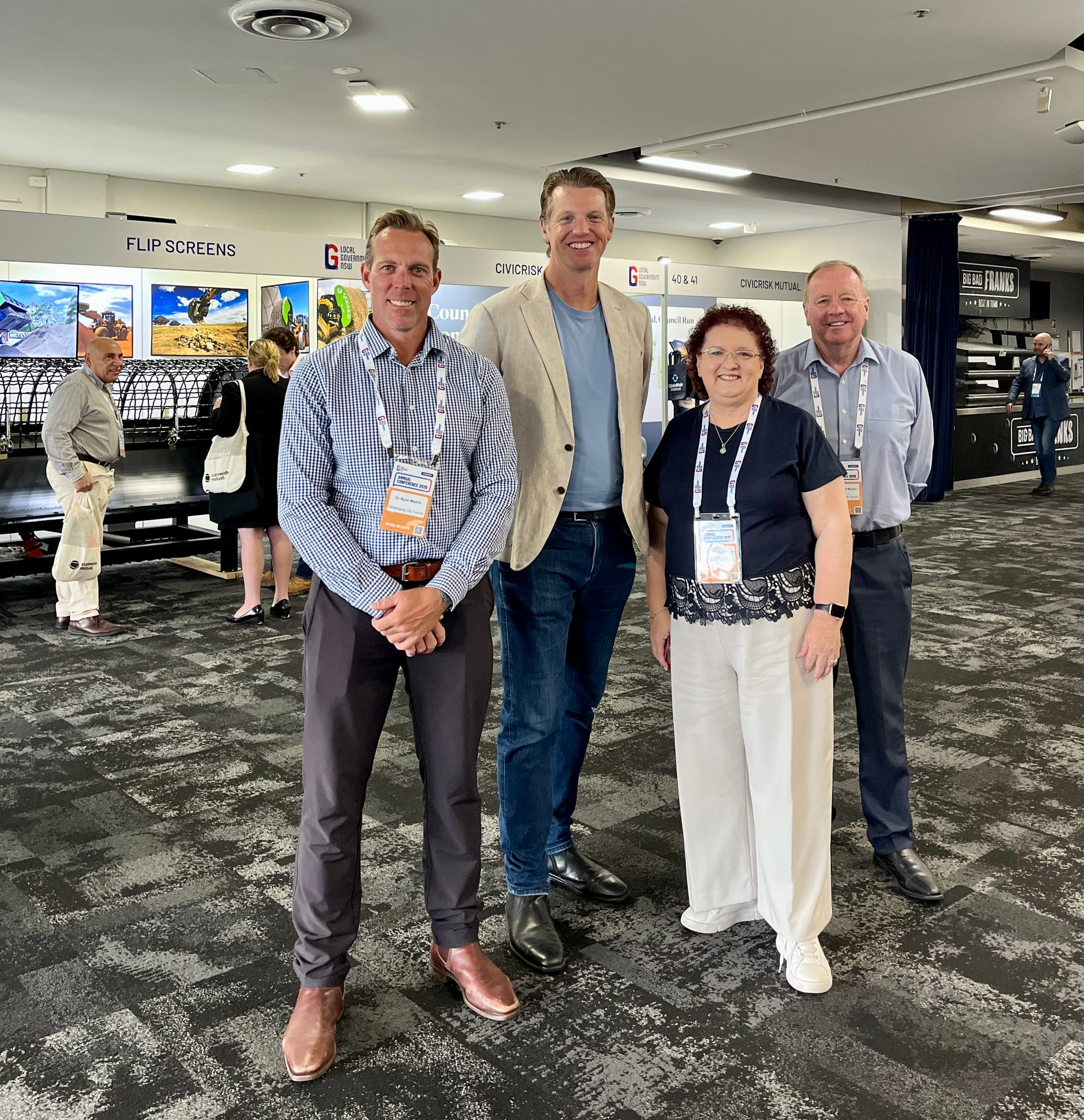
Councillors Ryan Morris, Dan Hayes, Tania Brown and Richard Martin on Monday's motions day.
What Wollongong wants
Wollongong City Council's two key asks were so unobjectionable they were passed “in globo” (Latin for ‘in bulk’, or what WCC meetings call “en bloc”).
Its first motion was to ask CSIRO to help find solutions for feral deer.
“When you hit rutting season, there's always the story about the deer going for a swim at North Beach,” Cr Brown said. “But you see the deer along the expressway on the M1; it is a dangerous thing. So if we can facilitate a bit more research into reducing the number of deer, we want to support that.”
Bordered by bushland, Wollongong has the region’s highest abundance of rusa deer and, when annual shooting operations in the Royal National Park wrapped up in August, NPWS had removed a total of just 88 animals.
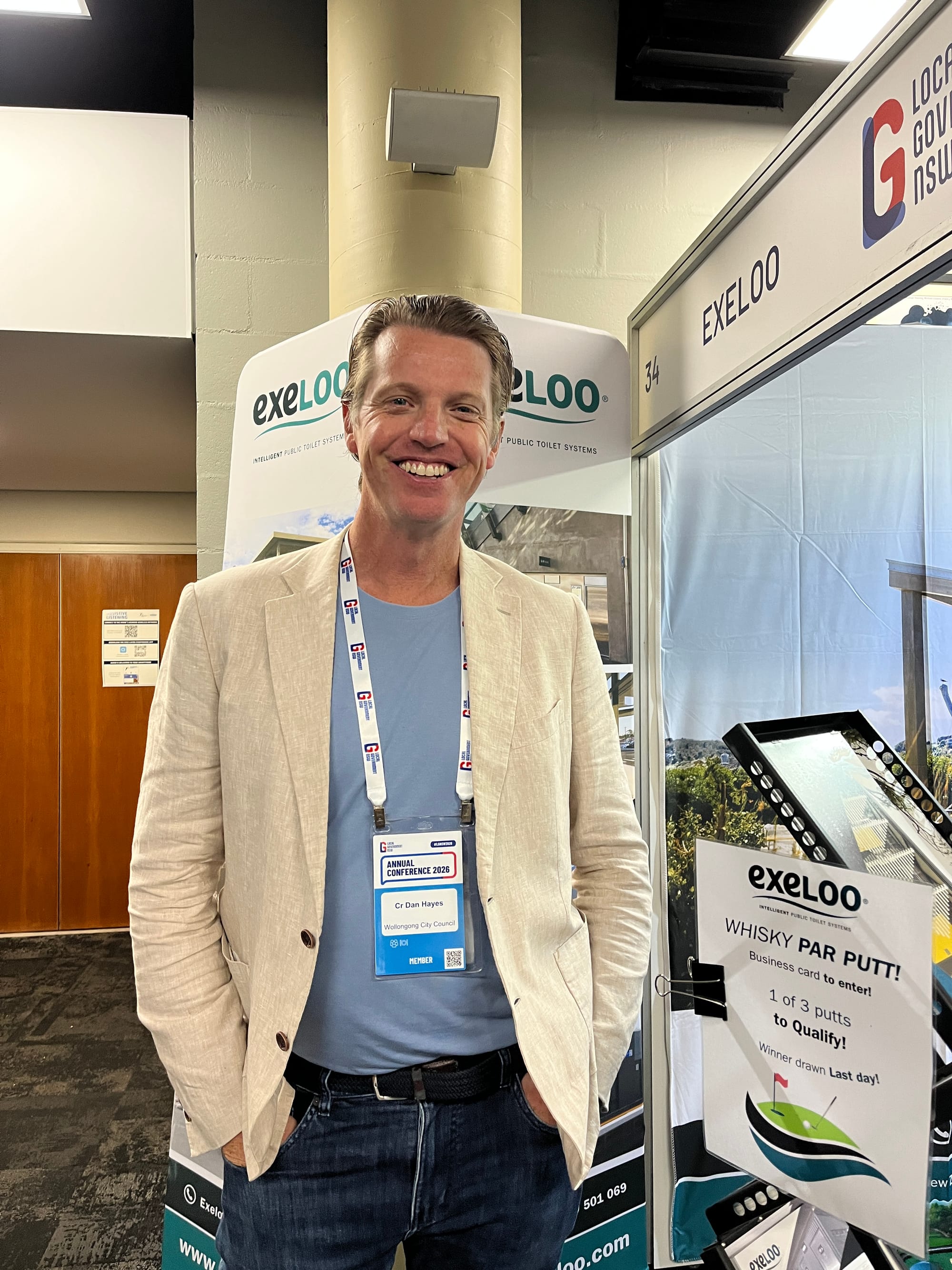
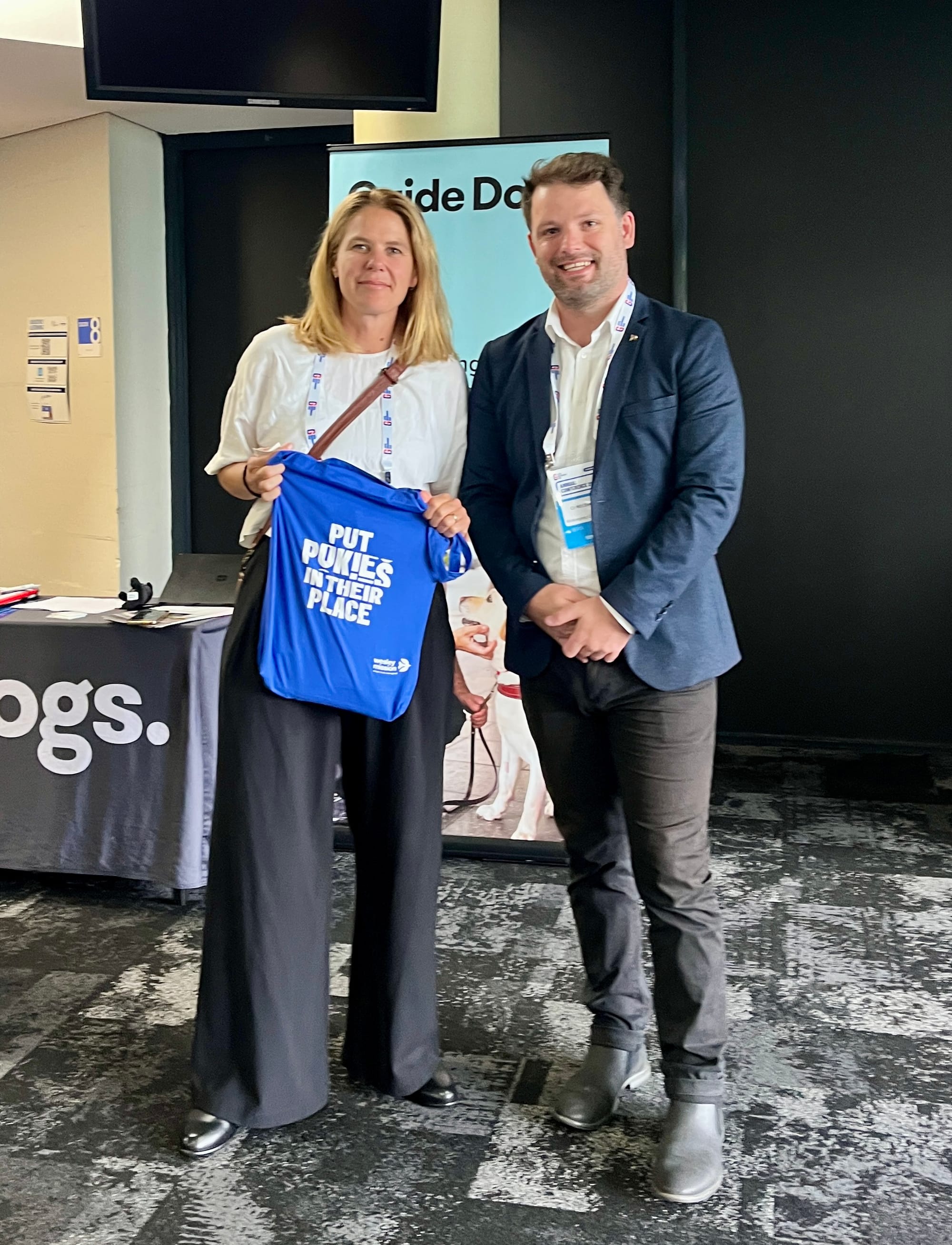
Exploring the exhibition area: councillors Dan Hayes, Jess Whittaker and Kit Docker.
Council’s other key motion concerned who foots the bill for whale carcasses.
Last year, WCC paid about $44,000 for the disposal of a juvenile humpback, which died wrapped in state government shark nets. That whale ended in the tip, as did a calf that washed up in Shell Cove Marina earlier this month.
“I'm really interested in the whale carcass removal,” Cr Brown said, “because that's one that has hit us a few times, hit Shellharbour recently, and depending on where a whale washes up, who gets the bill.
“We need a bit better coordination between state and council – all councils – to say, what's the consistent policy?
“Also, when National Parks was removing a whale at Bellambi, how they removed it was particularly confronting. So, if we can investigate more about offshore removal and towing out to sea – we had a lot of people telling us that that's something we should do.
“In fact, Shellharbour tried the other day, and because of tidal issues, it didn't work.”
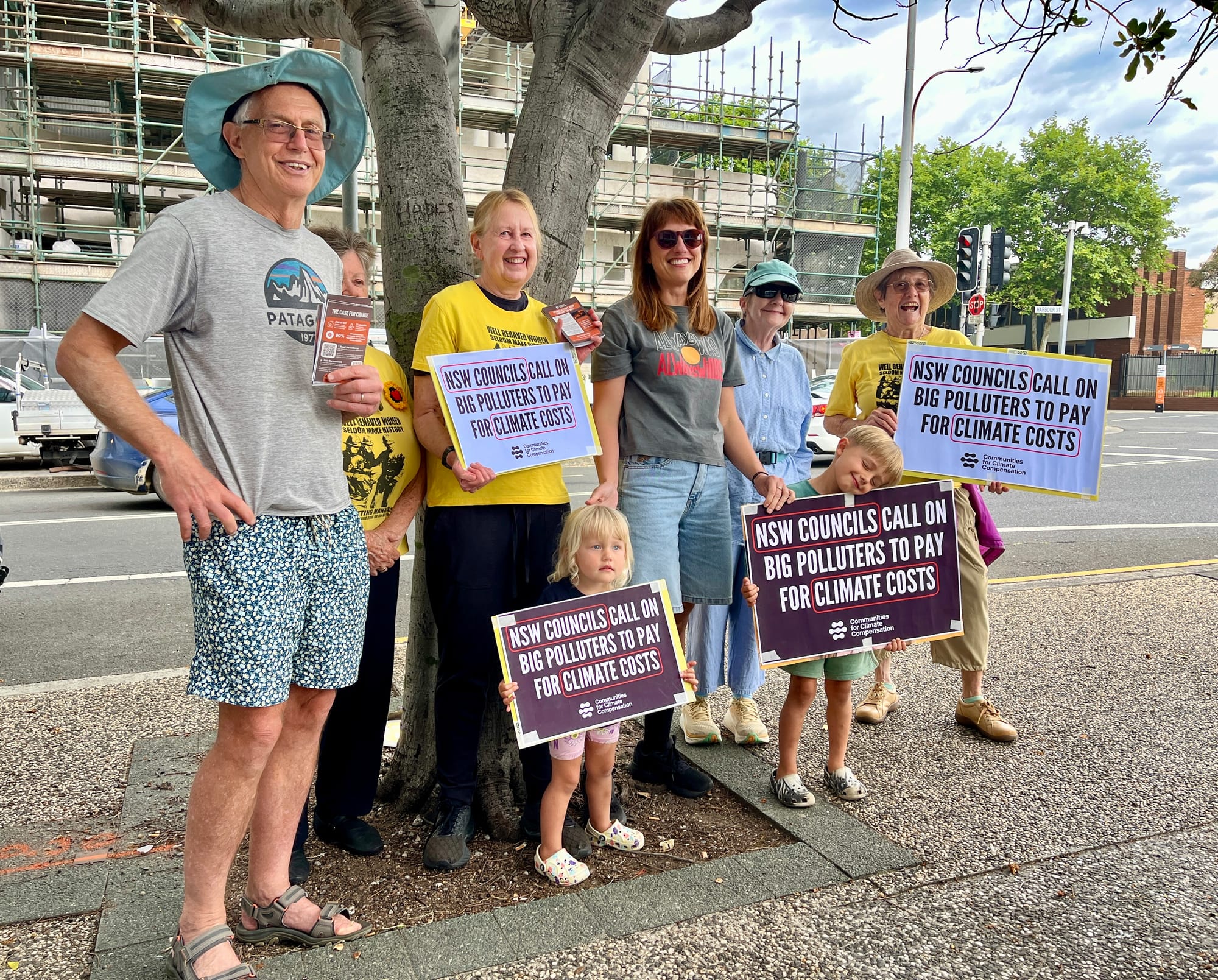
Climate activists are calling on polluters to pay for climate costs.
Activists rally round
Community activists also recognised the power of the LGNSW conference to shape policy, with two groups running rallies around it.
On Monday morning, the Illawarra Knitting Nannas Against Greed (IKNAG) joined the Wollongong Climate Compensation Fund team in a demonstration outside WIN Entertainment Centre. They held signs reading “NSW Councils call on Big Polluters to Pay for Climate Costs”.
And on Sunday in Lang Park, Wrong for the Gong protested against super-high-rise towers, an event attended by two Wollongong councillors currently running for state roles: the Greens Kit Docker and Independent Andrew Anthony.
Signs there included: “Mountains to the sea, once a vision, now a memory”.
Asked if the rally might influence policymakers at the LGNSW conference, Cr Brown said: “I don't think so, because we're already pushing back.
“Council's policies are in line with pushing back on overly high-rise development … So we’re kind of in agreement, but I was busy opening the conference at the same time.
“It was very targeted at the state, not really at local government.”
While the state Department of Planning, Housing and Infrastructure is the decision maker on state significant developments (SSDs), Cr Brown’s own view on the number of storeys suitable for Wollongong is: “20 is plenty”.
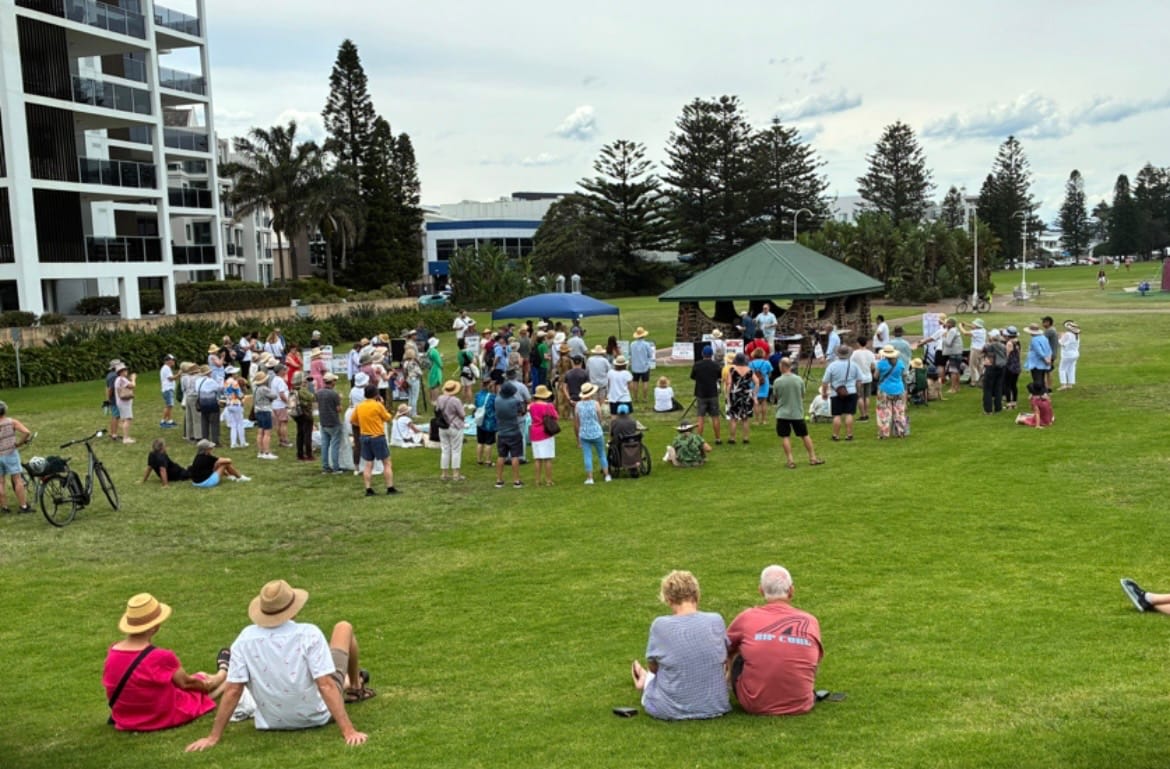
Sunday's rally against super-high-rises.
Good publicity for the Gong
Ultimately, the conference wasn’t just a boost for collective bargaining power.
It was good publicity for the city, too.
“It's been very worthwhile from a Wollongong perspective,” Cr Brown said, “because a lot of people are telling me it's their first visit here, and how surprised they are at what a beautiful city it is.
“They just think ‘Steel Town’, and that shows we've still got a lot of work to do in that. But they've been very impressed with the restaurants, and a few people got the e-scooters up to the breakfast function at the Novotel; they are certainly enjoying our city.
"And with 900 delegates, that's good for our visitor economy.”


