

Sculpture again the focus of remembering resistance to war
Triumph, the monument installed in 2018 in Port Kembla Heritage Park, oversaw an event which reflected on a proud Illawarra moment
On the headland near Port Kembla’s eastern breakwater, a rusty steel monument makes a dramatic figure against the skyline.
It sits in the Port Kembla Heritage Park precinct amid the remains of fortifications constructed to protect the harbour from Japanese attack during World War II – gun emplacements, the breakwater battery military museum (now closed), underground tunnels, and the grassy hills where the soldiers’ barracks once stood.
The mass of white concrete pyramids that spreads across the grassy headland like an alien landing pad are another artefact of Australia’s war with Japan – once part of a tank trap connecting Bronwsville in Dapto to Hooka Island in Lake Illawarra and intended to prevent Japanese troops moving north towards the industrial heartland of Port Kembla should they land on the South Coast.
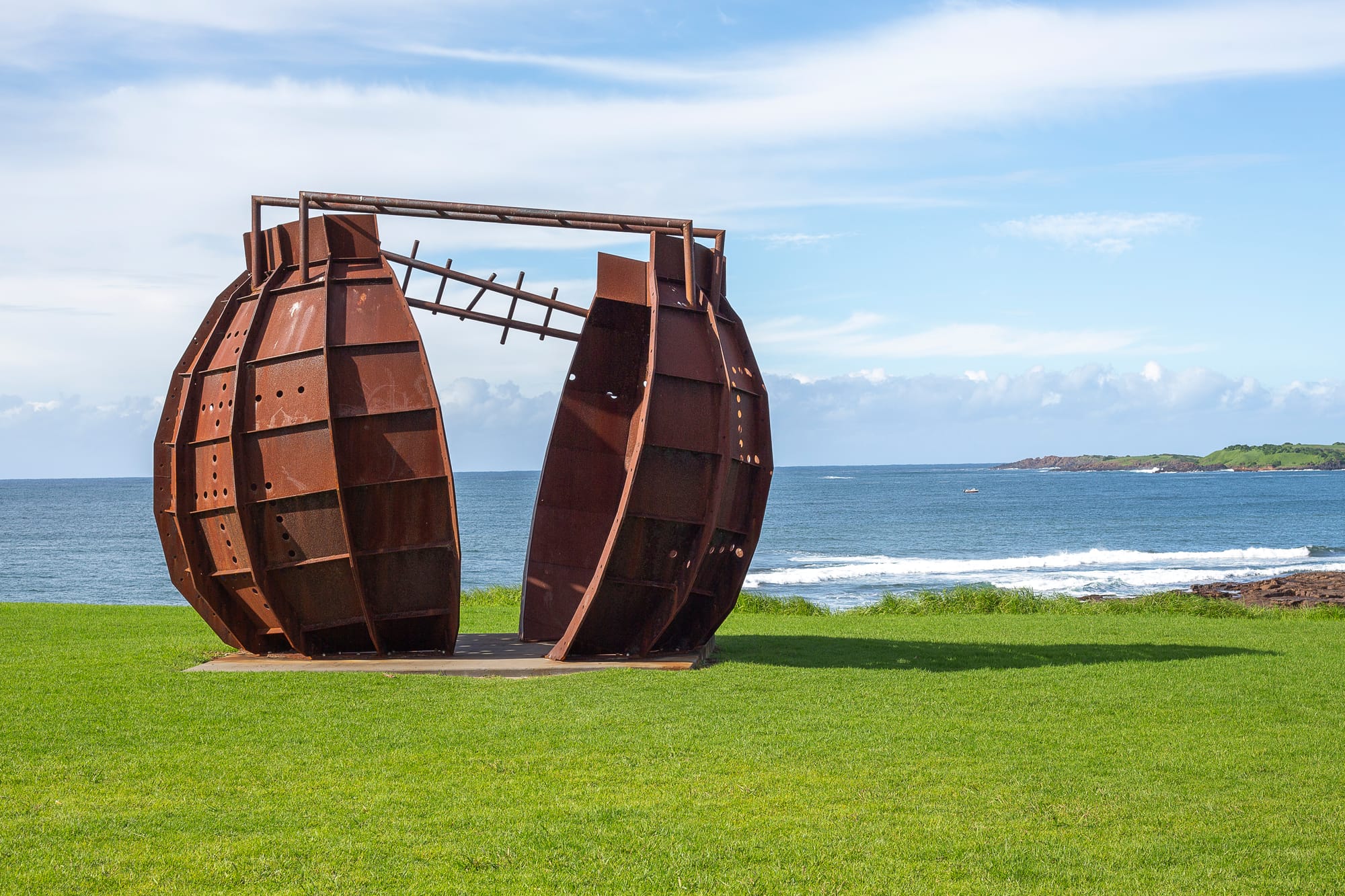
Commissioned by the Maritime Union of Australia in 2018, the Triumph monument is the work of Chinese-Australian artist Tianli Zu.
It is unique among the wartime memorabilia preserved in the park in that it commemorates not the military defence of Australia but the attempt by local waterside workers in 1938 to contain Japanese aggression by refusing to load pig iron on the tramp steamer Dalfram bound for Kobe.
The workers were well aware of Japan’s invasion and occupation of China and of the massacre that had taken place in December 1937 known as the Rape of Nanking, when Japanese troops slaughtered an estimated 300,000. Their refusal to load the pig iron – which they feared would be turned into bombs and bullets – was an act of solidarity with the Chinese people and an attempt to protect Australia from future Japanese attack.
The strike was not in defence of the wharfies’ own wages and conditions but of a principle and emerged from the spirit of solidarity between workers in distant lands. It pitted them against not only the might of industrial congolomerate BHP – who were profiting from the sale of war material to a belligerent foreign power – but also the government of Prime Minister Lyons.
Lyons and his Attorney-General Robert (Bob) Menzies were determined to continue Australian trade with Japan despite its aggression against its Asian neighbours. Menzies earned the moniker Pig Iron Bob during the dispute, a nickname that was to follow him for the rest of his life.
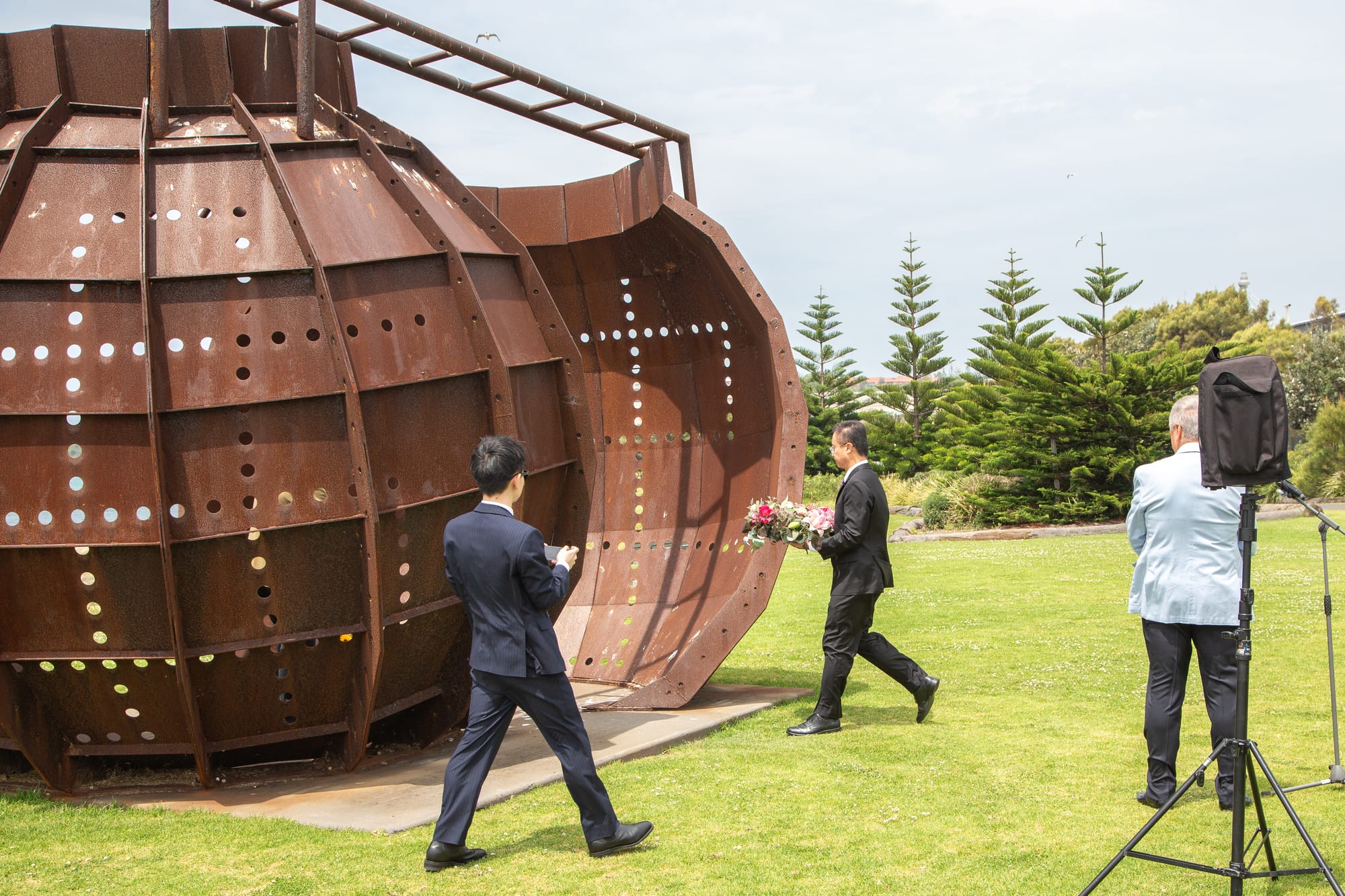
Chinese-Australians supported the strikers by bringing truckloads of vegetables from their shops and market gardens to feed the hungry workers. Zu’s design for the memorial is centred on two steel spheres set at an angle to create a V-for-victory shape between them.
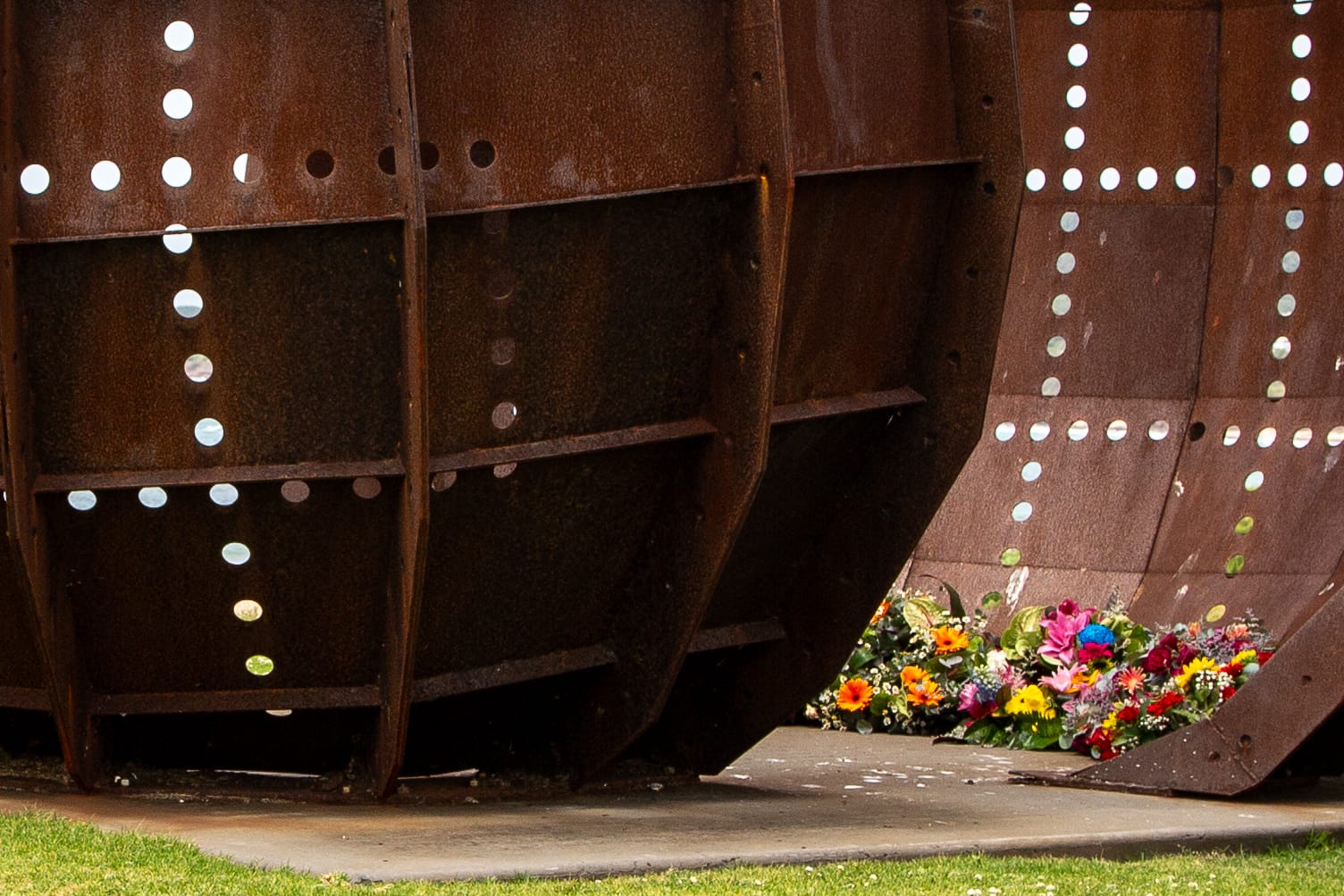
The spheres are connected by ladders representing the development of Chinese-Australian relations and perforated by holes in the pattern of Chinese "friendship knots" in recognition of the spirit of solidarity that the dispute created between Australian and Chinese workers. Another element incorporated in the design are the Chinese symbols for female and water contained in the base of the monument – a tribute to the role of women in the dispute.
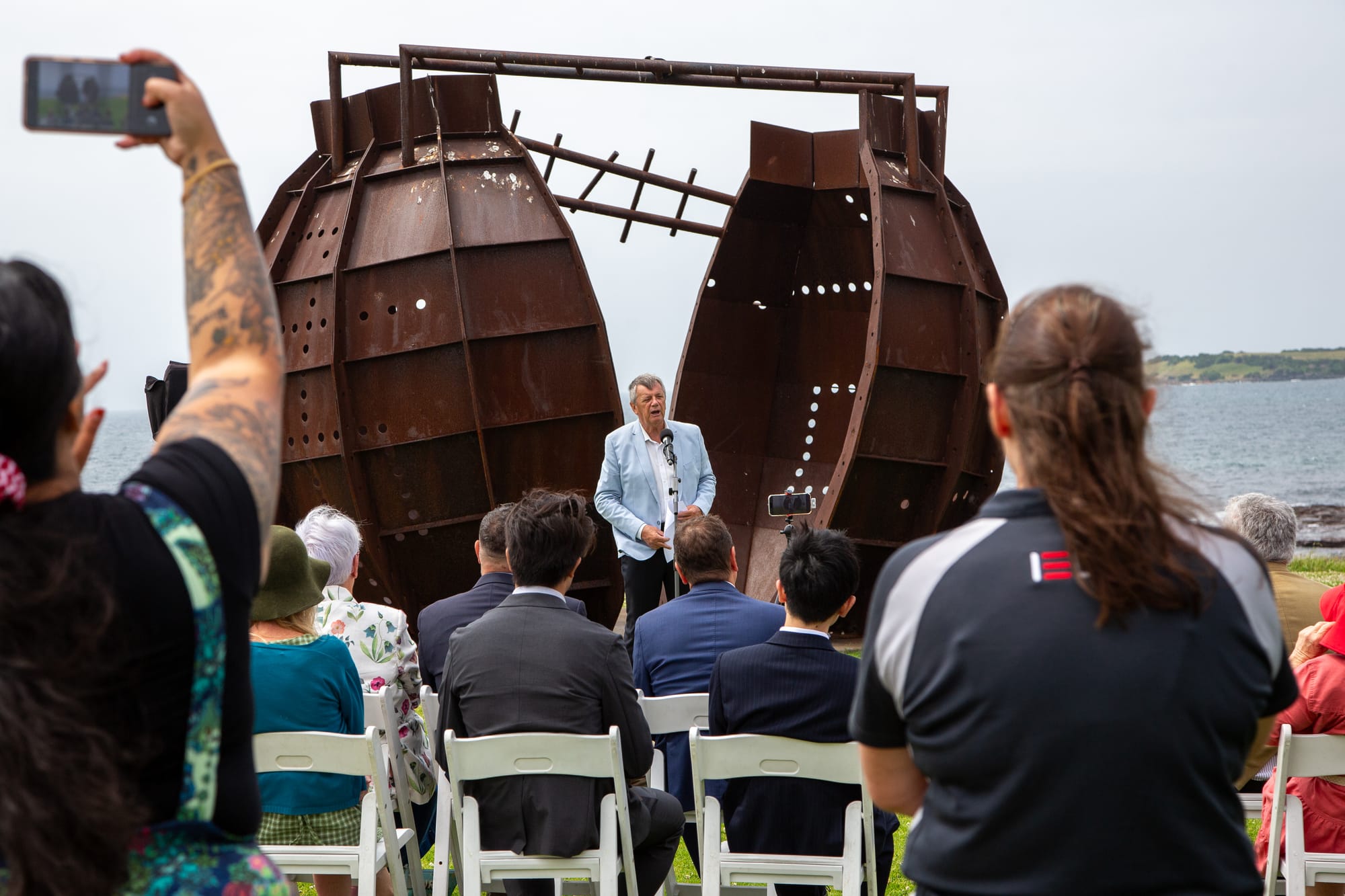
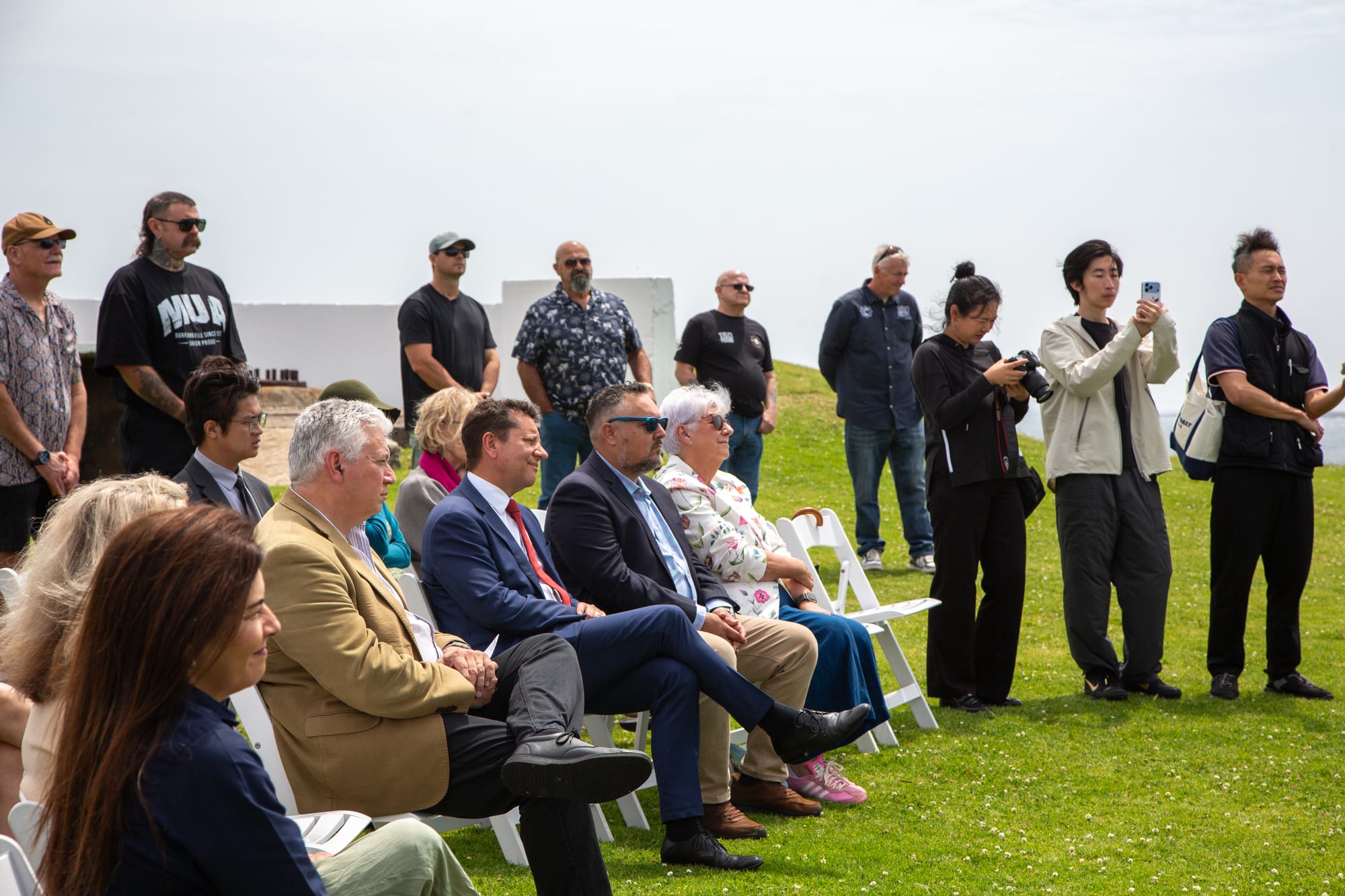
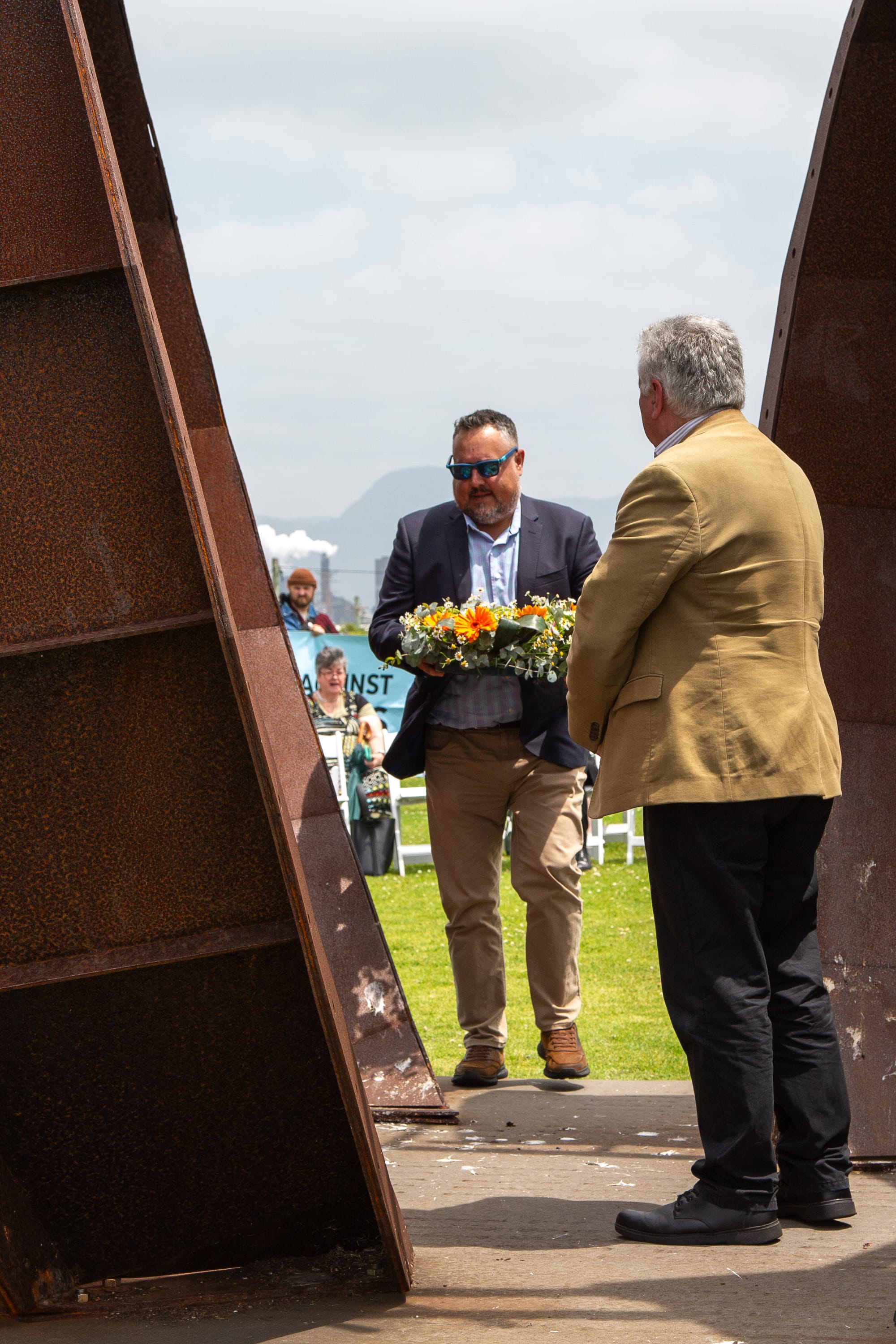
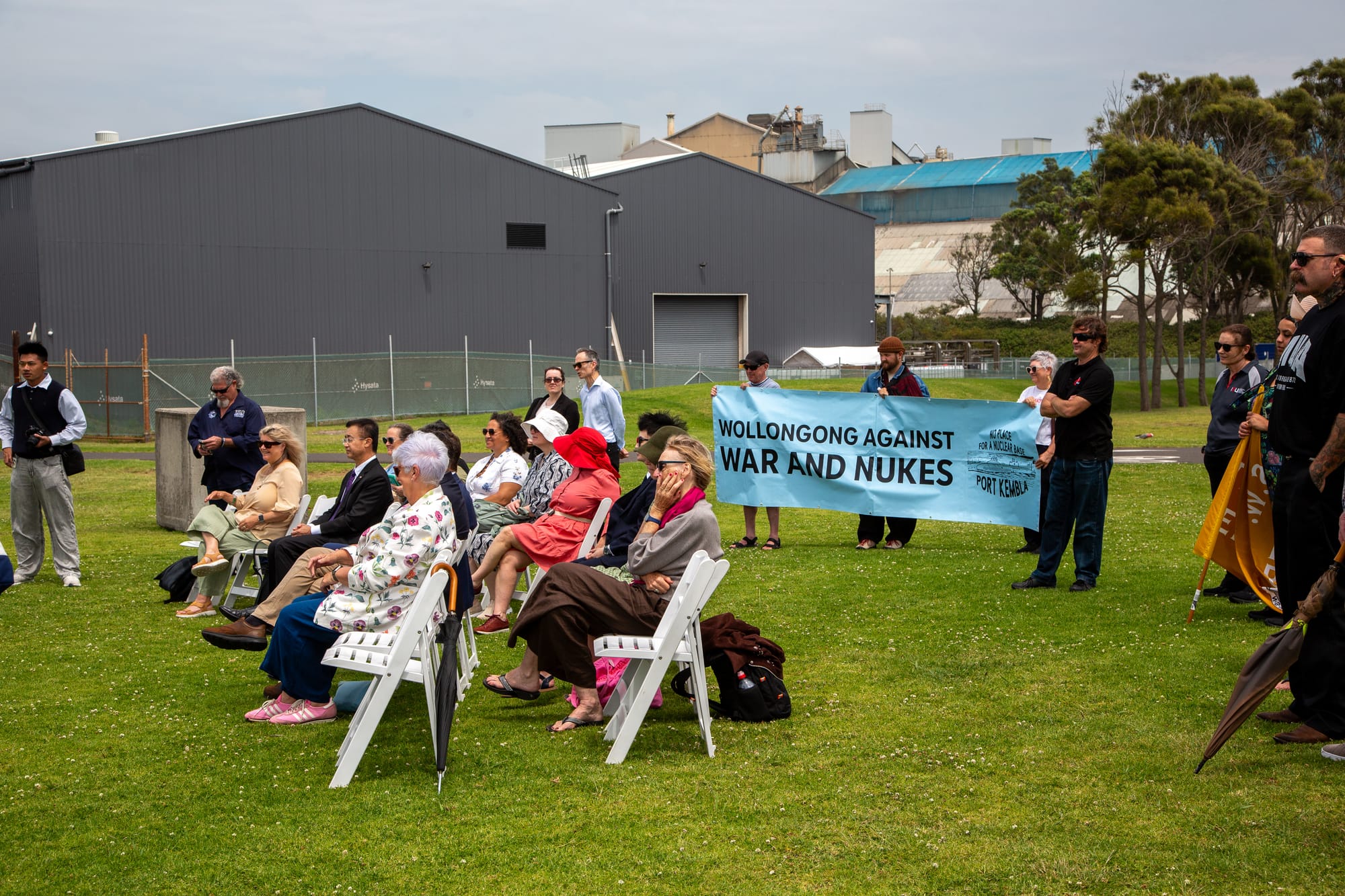
The Dalfram dispute is etched into the folk history of the Illawarra. Following Triumph’s installation on the headland, it has become a focal point for annual commemorations organised by the Maritime Union and the South Coast Labour Council and attended by unionists, local dignitaries, Chinese consular officials, Chinese-Australians and peace activists.
Photos: Melanie Barnes
On November 13 this year, MUA Veterans Association President Garry Keane led the commemoration of the dispute's 88th anniversary, with Acting Consul General of the Chinese Consulate General in Sydney Wang Chunsheng, Member for Wollongong Paul Scully and Deputy Lord Mayor Linda Campbell among those who laid wreaths.
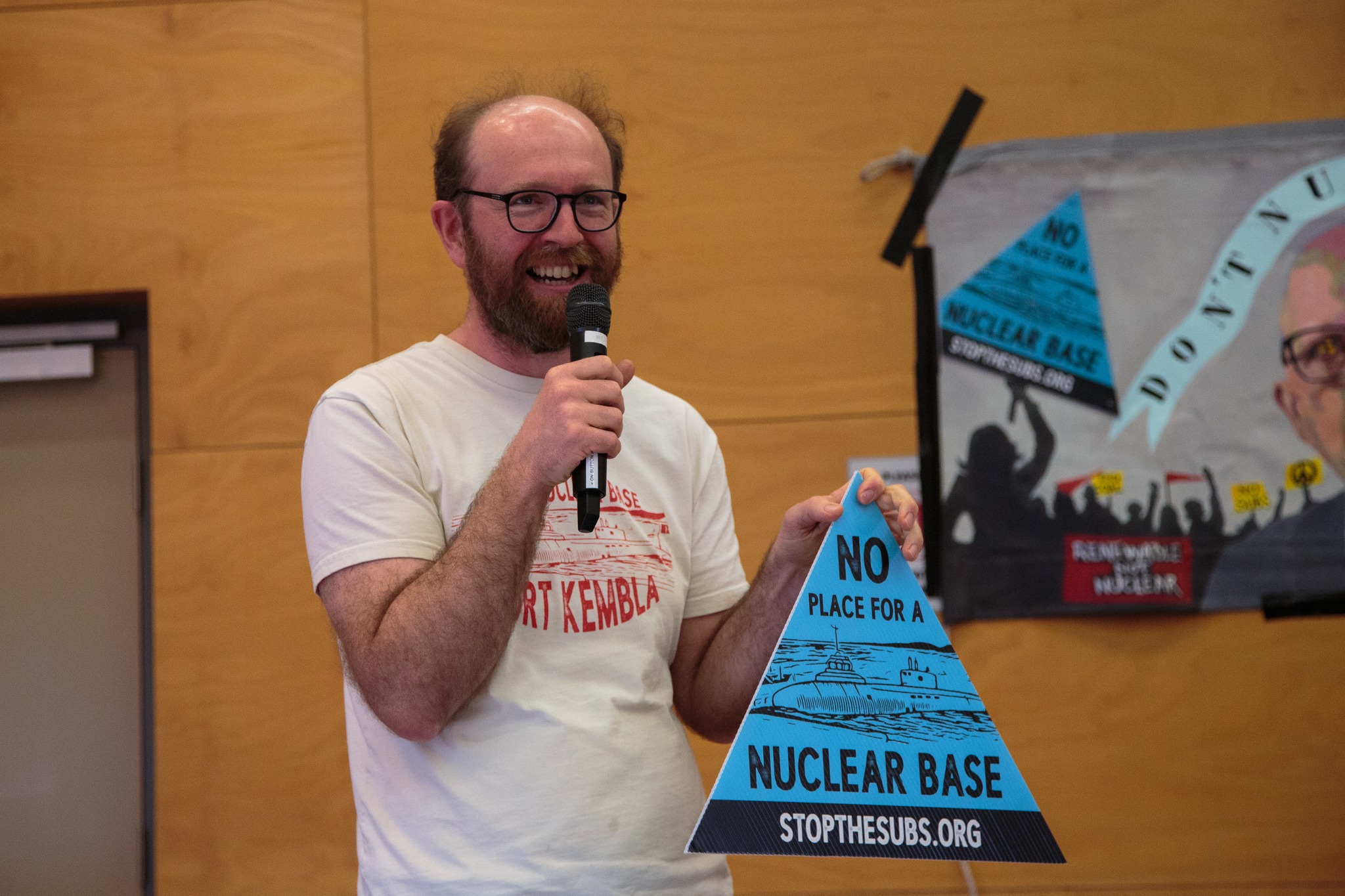
Today, all eyes are once more turned to Port Kembla as a potential site for an east coast nuclear submarine base under the AUKUS pact. But while AUKUS seeks to harness Australia to America planning for a war with China, the Triumph monument reminds us of the Illawarra’s longstanding commitment to peace and international solidarity.
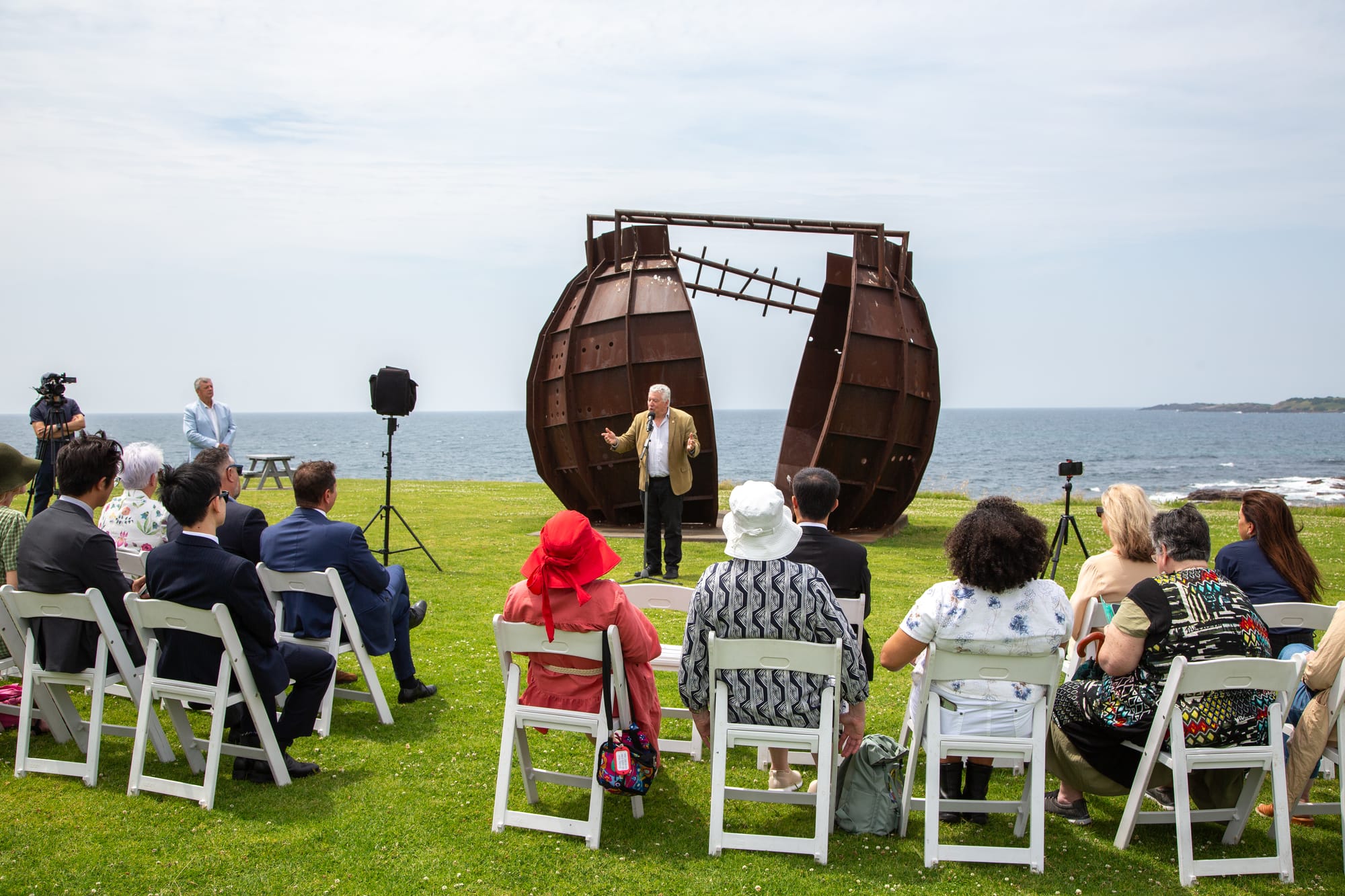
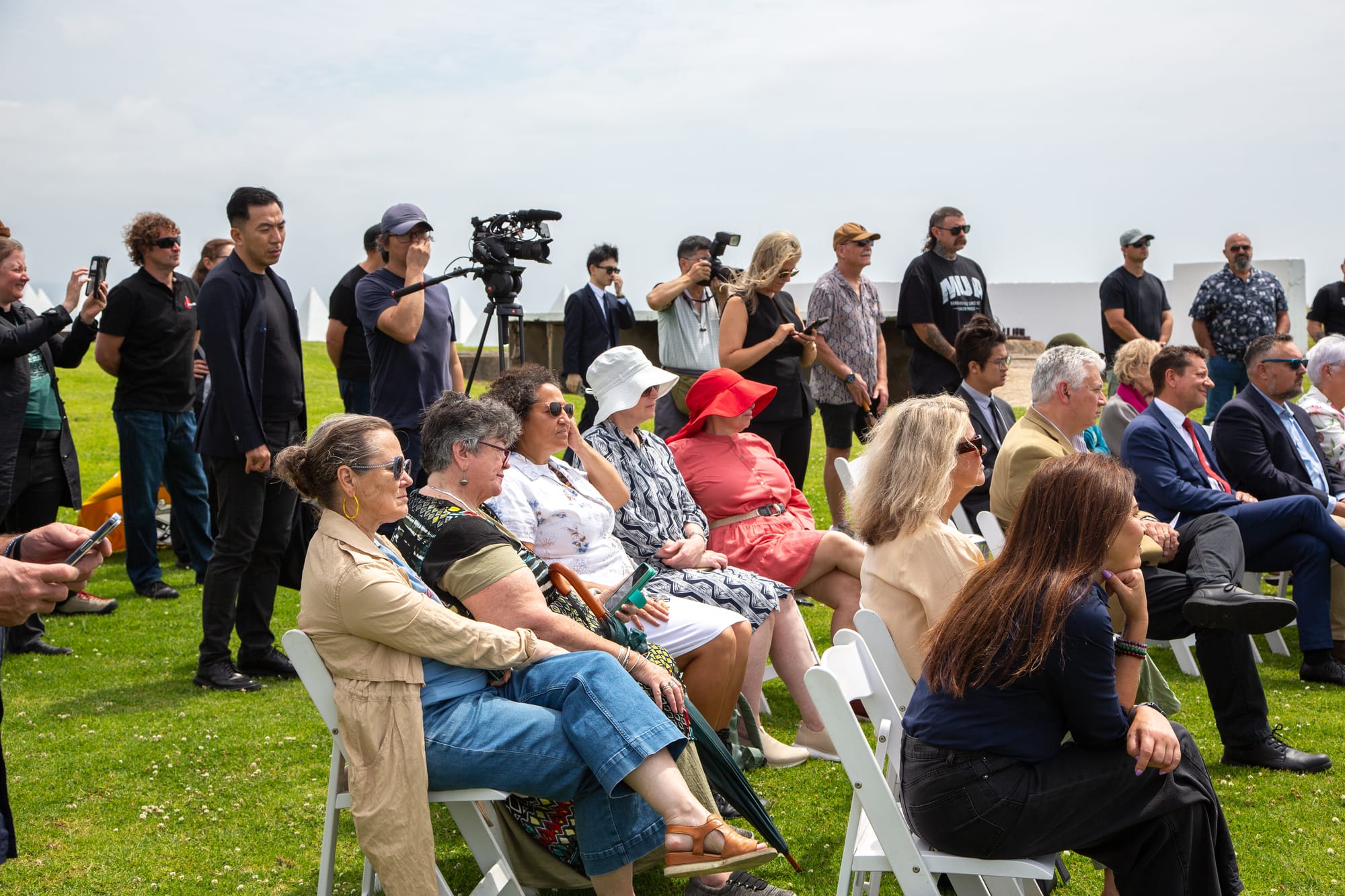
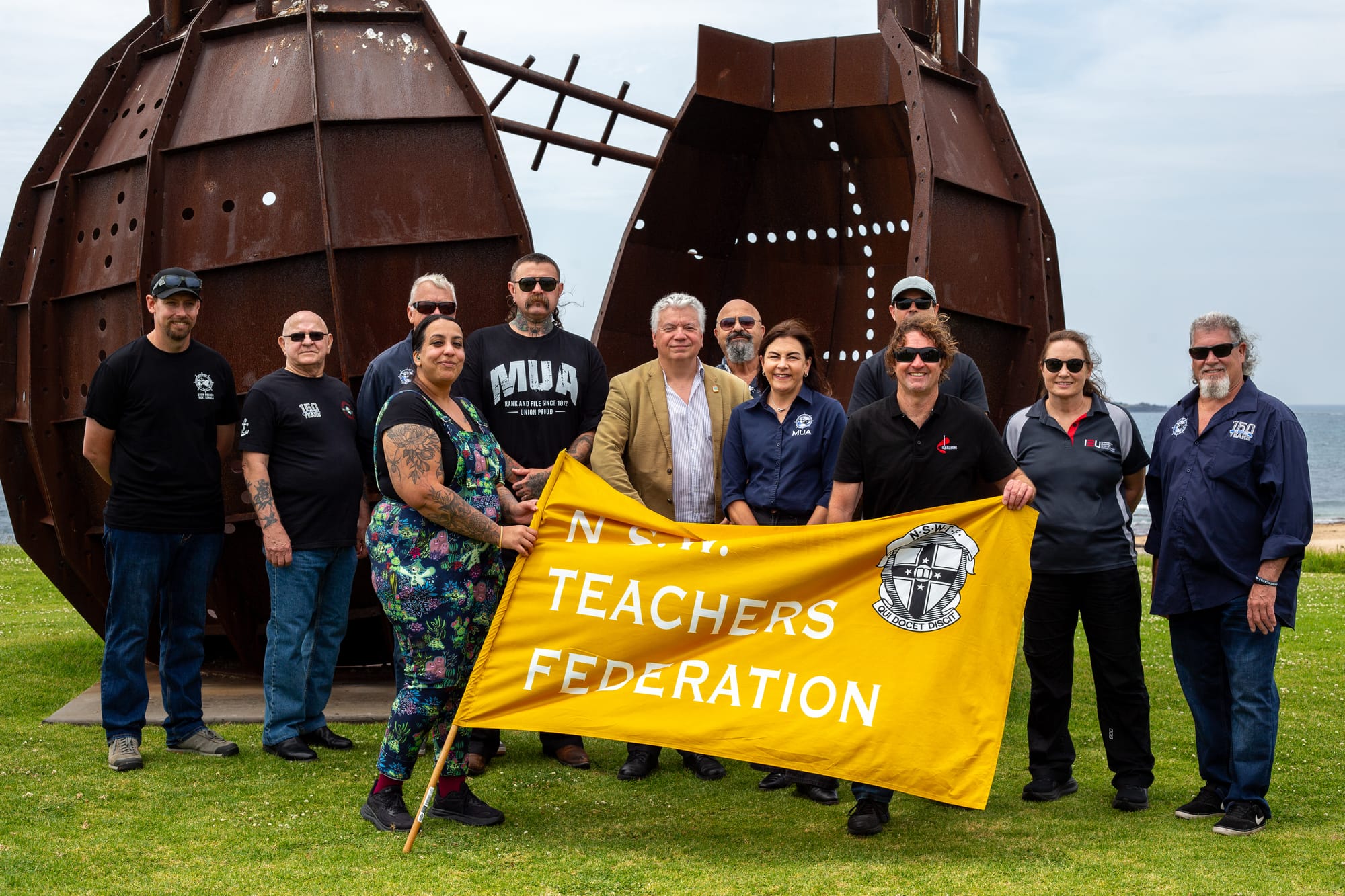
Photos: Melanie Barnes
A few days after this year’s official commemoration of the Dalfram dispute, hundreds of workers picketed Unanderra steelmaker Bisalloy Steels, shutting down production at the factory for 48 hours to hinder the supply of armour-plated Illawarra steel to Israeli weapons company Elbit Systems. At the same time, the names of 18,457 children killed with those same weapons were remembered at the Port Kembla showing of American artist Phil Buehler’s ‘Wall of Tears’.
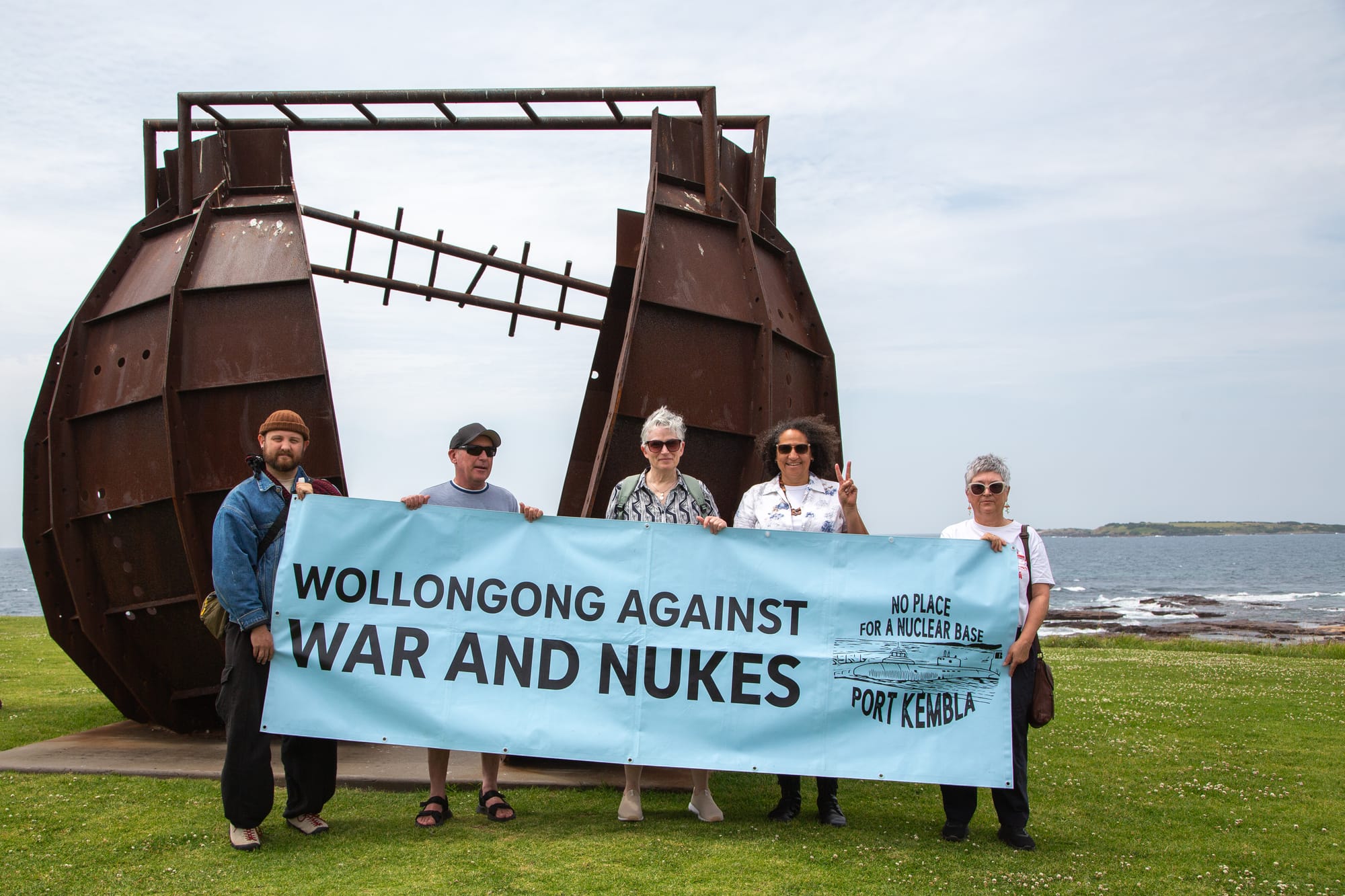
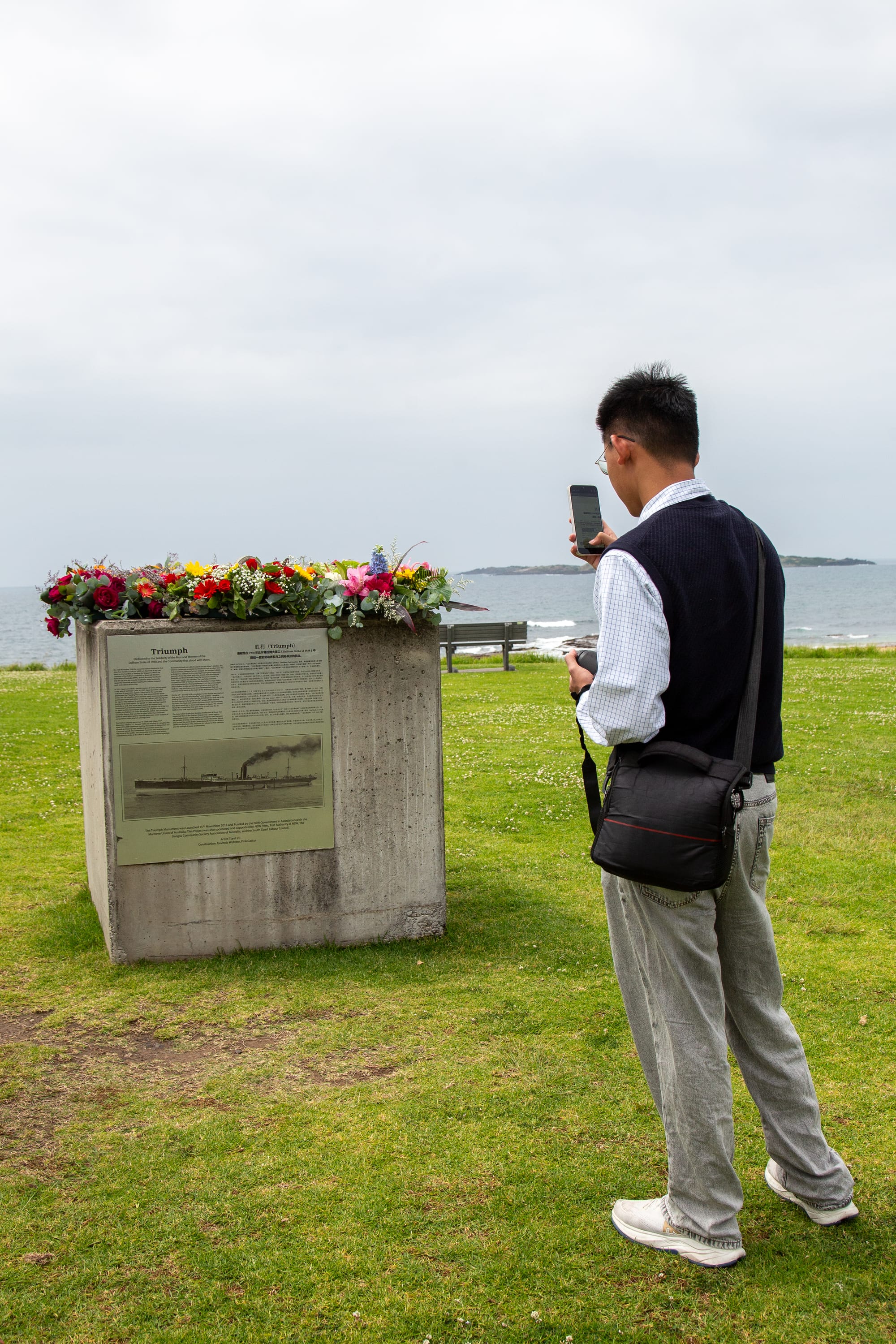
Photos: Melanie Barnes
Triumph asks us to reflect on the nature of war and what victory really means in the struggle against war and fascism. To quote from the artist’s own words:
‘At its core, Triumph is about ordinary men, women and children. The spirit of peace it embodies is not about any individual victory – it is about the strength of community and our collective humanity. And that’s the real meaning of Triumph.
Further reading
- Donaldson, Mike; Southall, Nick (2013). Against Fascism and War: Pig Iron Bob and the Dalfram Dispute - Port Kembla 1938, University of Wollongong
- Zu, Tianli, ‘Triumph’ [Artists Statement]


