
Notes on the Slate Pencil Sea Urchin
I love the rock ledges around Sandon Point, both near the surf club and also just south of the boat sheds. The diversity there is incredible.


It feels like forever since I’ve had a good old-fashioned rock wander. As summer didn’t seem to really exist and the rest of the year has just been rainy day after rainy day, it hasn’t been on my ‘must do’ list for a while. And then the other day, something just clicked, maybe the chance of spotting a whale or two, or the possibility of grabbing any sun at all, so I did a quick tide search here and headed out with only my phone in hand.
And wow, was it worth it. The tide was super low, which is always fun because you can roll up your jeans and get your hairy, white legs out on display (and to those of you who witnessed that sight, you’re welcome) and wade out to spots that you generally can’t see, even when the tide is low. I love the rock ledges around Sandon Point, both near the surf club and also just south of the boat sheds. The diversity there is incredible.
It felt so good to just have that salty water lapping over my skin, even though the ocean is still murkier than usual on account of all the rain. It took me a little while to get back into the swing of things and into peak ‘finding mode’. When I talk to people about just how much there is to spot in the area, I often hear back that the only things that they find are sea snails. Firstly, in their defence, sea snails are awesome and I could watch them forever, especially in time lapse, but there is so much more to find. You just need to slow down and peer under ledges, watch for bubbles or slight movement and scan the same area a few times.
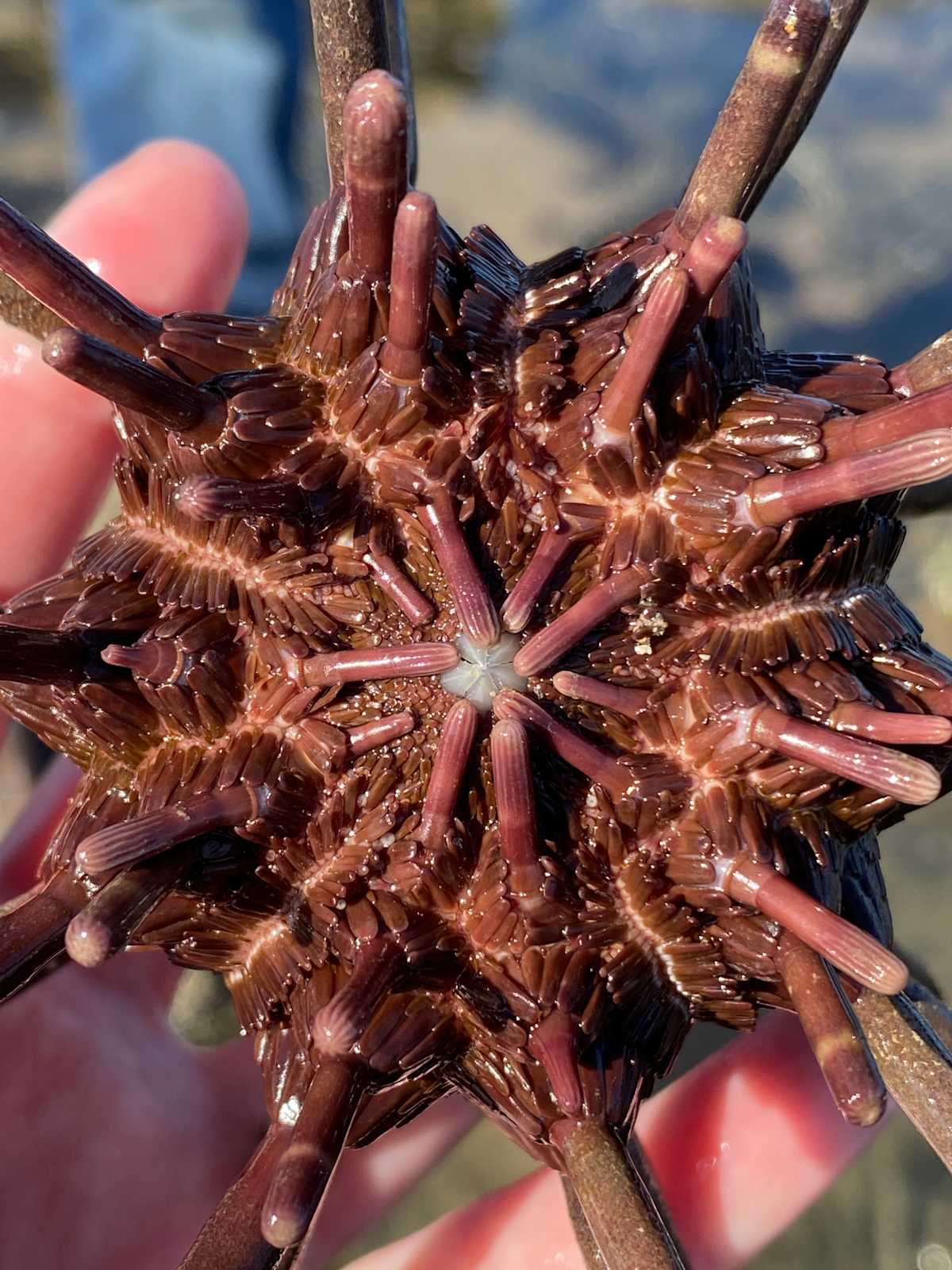
And even then, a big pretty creature like this Slate Pencil Sea Urchin can be missed if your eyes aren’t focused in the right area. Named because its thick, blunt spines look kind of like an old-style pencil, these urchins look heaps different to the Spiny Sea Urchins I often see around, with their armour of hundreds or thousands of sharp, purple spines. The slate urchins are found along the east coast of Australia in the intertidal zone, which is the area that’s above water during low tide and underwater during high. They use their teeth to scrape away at algae on rocks and shells at night and usually wedge themselves into crevices or under ledges during the day, so it was a nice find to see this healthy specimen with the sun on my back.
Between finding a couple of these urchins and a couple of octopus and countless sea stars of various species and hermit crabs and nudibranchs and one lone umbrella snail, I suddenly remembered why I love spending so much time peering into rock pools. I suggest you give it a go too. There’s a whole world to discover.


