

Whale of a Tale resurfaces in Senate report
Nearly three years after the Illawarra Flame exposed a fake study about wind turbines harming whales, the story has popped up again

In October 2023, the Illawarra Flame exposed on a lie so large it made a splash in the media and became the iconic example of misinformation about offshore wind.
The Whale of a Tale story sparked numerous follow-ups in national media and The Illawarra Flame even featured on the ABC's Media Watch (in a good way, as the little local paper that scooped the rest). Our industry body, The Local and Independent News Association, which represents 173 newsrooms across Australia, held the story up as an example of what small independent organisations can achieve.
In March 2026 – not long after BlueFloat's exit officially mothballed the chances of a wind farm off the Illawarra coast – the Whale of a Tale resurfaced when the Select Committee on Information Integrity on Climate Change and Energy published its final report.
The federal Senate inquiry spent seven months examining the prevalence and impacts of misinformation and disinformation, including how it is spread – sometimes intentionally, other times by well-meaning concerned citizens – via AI, astroturfing campaigns and social media.
The inquiry’s final report records the Illawarra Flame’s role in providing accurate information, which we did by publishing a piece in which a respected University of Wollongong scientist set the record straight about a ‘study’ on wind turbines harming whales.
“Concerned about the divisive impact of the story, the Illawarra Flame investigated the claims,” states a case study within the report.
“It discovered the entire report was fabricated, with no scientific evidence supporting the notion that wind farms harm whales.
“The Illawarra Flame successfully combatted the misinformation being distributed through the community and was featured on Media Watch for its role in uncovering the truth.”
In its report, the Senate's committee has published a list of 21 recommendations, including that the Australian Government provide more funding for regional and independent media outlets.
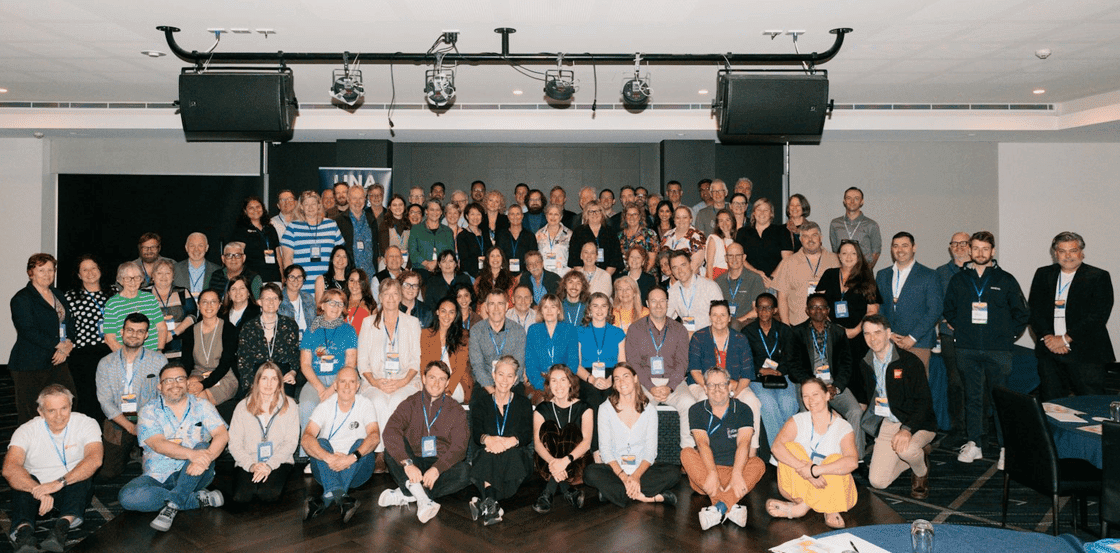
Claire Stuchbery, Executive Director of the Local & Independent News Association (LINA), praised the Flame's achievement at LINA’s annual conference, held in the South Australian town of Murray Bridge last week.
“Mis and disinformation is not merely confusing, but is actually detrimental to our decision-making processes in communities,” Claire said. “Journalism that questions information is essential to forming our own views on a topic armed with facts rather than fiction.
"The myth busting reporting produced by The Illawarra Flame on deliberately misleading information is an important re-set on a heated debate and just one example of why public interest journalism, enhanced by local knowledge, is so important.
“This work has been highlighted in the Senate enquiry because the government knows how important it is to counter the impact of mis and disinformation circulating in our communities.
"We see this playing out in communities across Australia and not all of them are lucky enough to have a newsroom like The Illawarra Flame to investigate emerging issues. LINA is proud to amplify their work to the Parliament and the broader community.”
How the tale began
When consultation began for an Illawarra Offshore Wind Zone in August 2023, angry debate took off on social media, and the Illawarra Flame immediately saw the need for a trusted source. We chose University of Wollongong experts at the Blue Energy Futures Lab, an informal collaboration that represents more than 30 academics and has Energy Futures Network Director Ty Christopher and Associate Professor Michelle Voyer as its spokespeople. That fact-checking relationship with local scientists continues to this day.
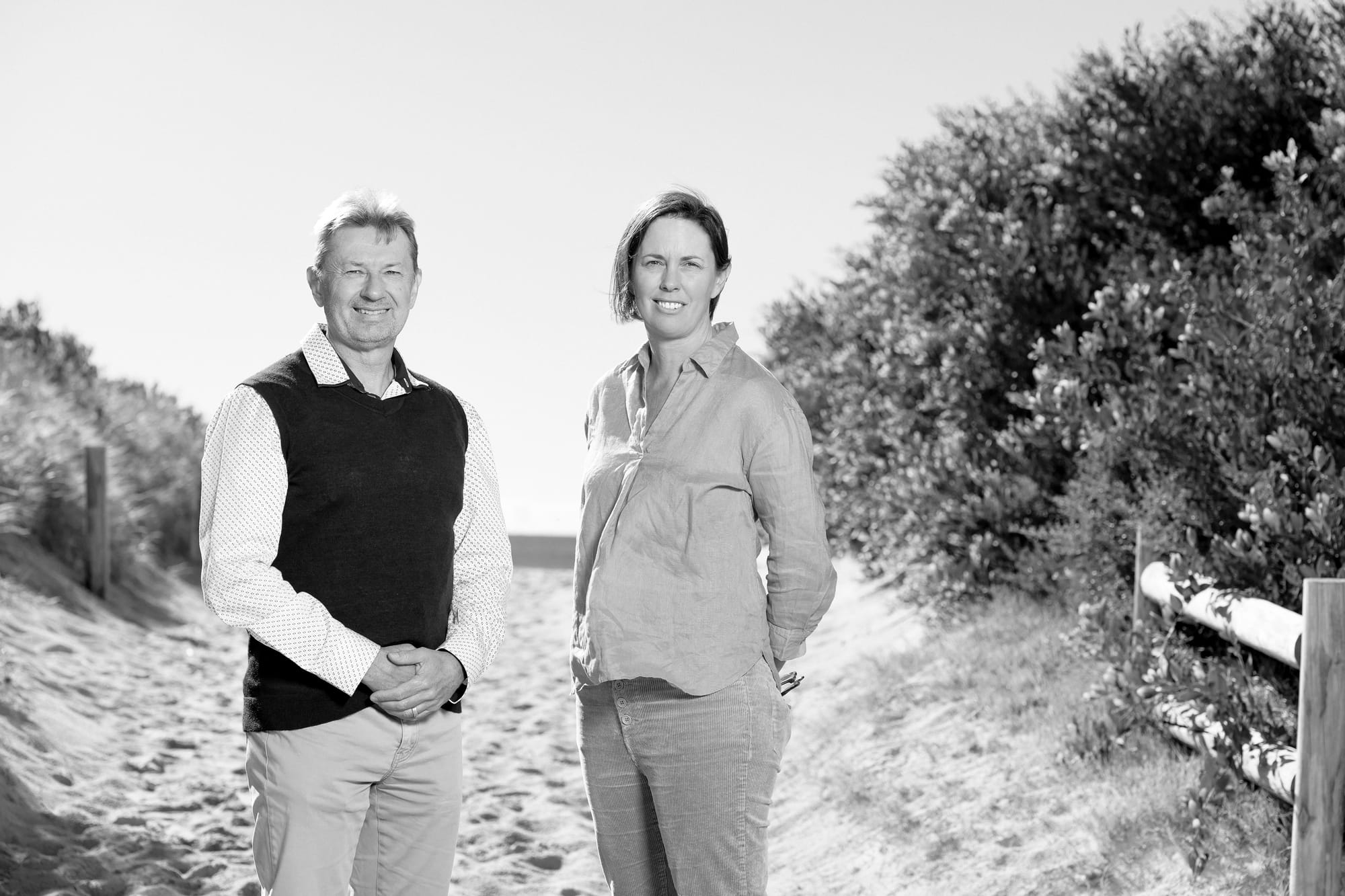
Credit for the original exposé goes to Michelle Voyer, principal research fellow at the Australian National Centre for Ocean Resources and Security (ANCORS). Not only did Michelle see the AI-generated study was a fake, but she was instrumental in setting up an evidence-based offshore wind FAQ web page, then working with local media to share it.
“What we saw in the Illawarra shows how hard it can be to tell fact from fiction once a story takes off,” Michelle said this week after the report’s release.
“The ‘whale tale’ caught fire because it was so obviously wrong – so it was relatively easy to identify it as misinformation. But most misinformation isn’t that simple.
"More often, it’s a bit like looking at one frame of a whole movie and thinking you know the entire plot.
“Some of the claims circulating had elements of truth, but when they’re stripped of context they don’t tell the full story of how an impact might be managed, or how it fits within a much bigger picture. In many cases, people are trying to guess how the movie ends before the science has had a chance to run its course and show us what’s really going on."
The first recommendation of the Senate committee was that the Australian Government support and adopt the United Nations Global Principles on Information Integrity. The report also said the government should explore ways to ensure greater transparency of campaign activities, such as the creation of third parties, that are resourced by commercial/corporate interests in the lead-up to a federal election, and recommends more funding support for social sciences research.
Michelle said: “The Select Committee on Information Integrity has made some really sensible recommendations, especially around supporting local media and using social science to work directly with communities and build trust. That kind of engagement really matters when people are trying to make sense of complex issues like offshore wind.
“I’m proud that UOW stepped up early with clear FAQs to explain what the science says, and to be upfront about what we don’t yet fully understand.
"Making this kind of work more coordinated and better supported will be crucial in an increasingly complex information landscape, where it’s becoming harder for people to tell what’s real and what isn’t.
3 years and an AI lifetime ago
In our newsroom, the great whale debate of 2023 already seems like ancient history. Since then, thanks to investigative journalism by the ABC, the Conversation and others, the public has become wiser to the fossil fuel funding behind renewables scare campaigns. We’re all alive to the risks of ‘astroturfing’ – when vested interests set up grassroots campaigns – and the fact that disinformation polarises public discourse and erodes trust in democratic institutions.
Today, AI fakes have become the norm and everyone’s in on the joke. No one batted an eyelid, for example, when Facebook posters shared a tongue-in-cheek meme of PM Anthony Albanese holding a sign reading ‘No Offshore Wind Farm for the Illawarra’ against a background of dead and bloody whales.
We all know seeing is not believing now.
And that includes the disinformation disseminators – so expect more interesting times ahead.


