
Welcome to 'What on Earth?!' Wednesday
You won’t see me smile but I have many teeth, And two little eyes that are hidden underneath, What on earth am I?


I have my own shell but I don’t call it home
I have just one foot but it’s still good to roam
You won’t see me smile but I have many teeth
And two little eyes that are hidden underneath
I’m good in all weather, especially the rain
Don’t overthink it, it’s all in the name
What on earth am I?
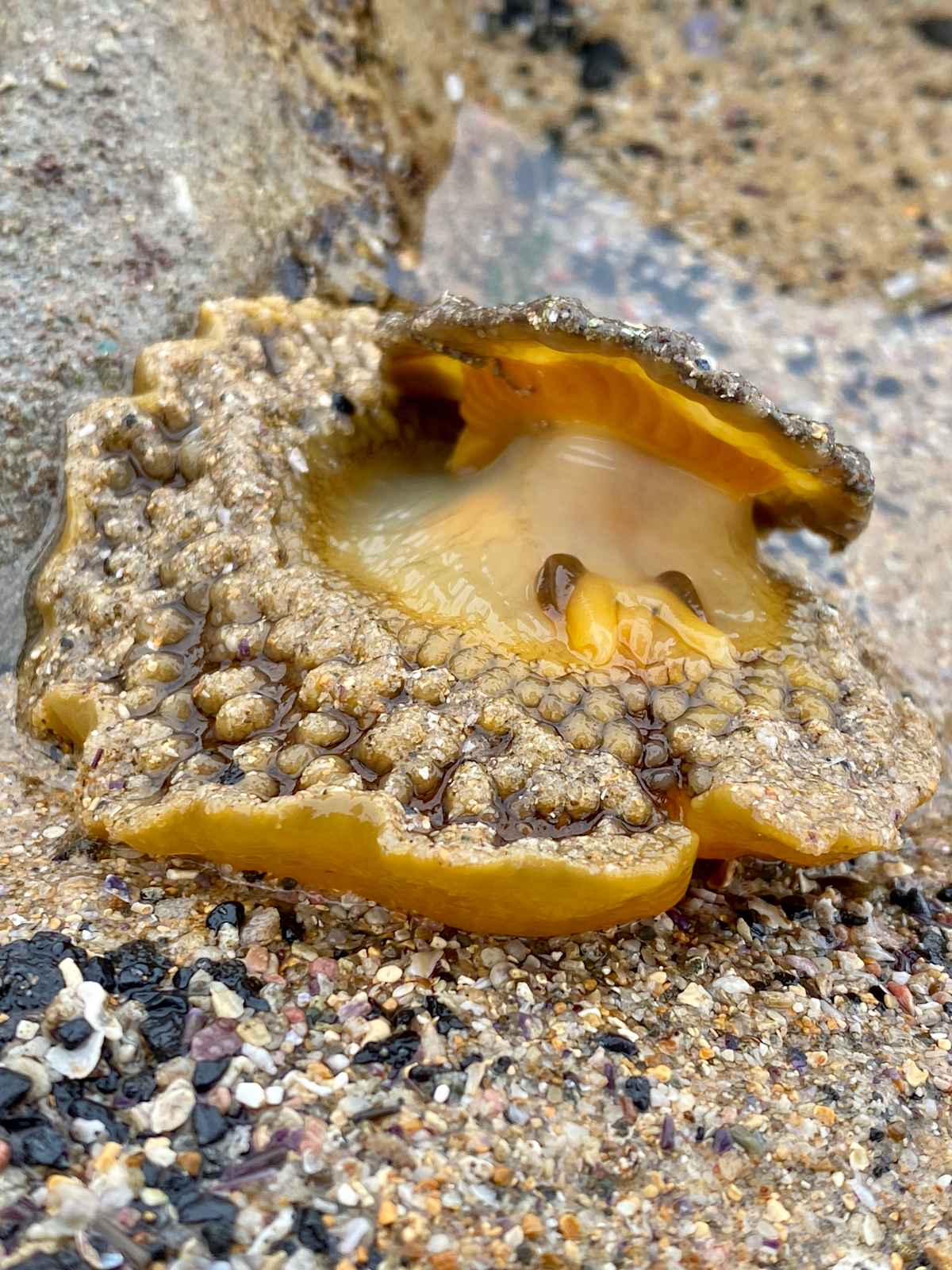
I’m an Umbrella Slug.
These animals are fairly new to me. I think the first one I ever found was found for me and, let’s be honest, that’s the case with a lot of the animals I find. It’s always good to associate yourself with a group of like-minded people, especially those with awesome eye sight and who don’t mind getting their feet wet or sludging their way through the mud. Those are the best types of people.
But this meaty fellow was found during a rock wander along the intertidal zone around Sandon Point. A good way to think about the intertidal zone is that it’s the area that is above water during low tide and under water during high tide. There’s lots of life there and this creature lives in this zone and up to a depth of around 100 metres. As long as there are sponges available to eat, it’s happy.
Most molluscs, including your common garden snail, have a radula. It’s a tongue-like organ covered in teeny, tiny teeth and the umbrella slug uses this to scrape along sponges. But even more strange is the way the little shell pops up and the long rhinophore reaches out, ‘tasting’ the chemicals in the water. Behind the rhinophore are the little eyes, also hidden away until the shell ‘lid’ is lifted. We all had a good old scream when this first happened because it was really unexpected. I mean, who knew that the shell even moved, let alone that it could pop its lid and have a peek outside?
They vary quite a bit in colour, depending on the species of sponge they’ve been dining on. And their shell is often loaded with various algae and organisms who have made themselves at home. So they can be quite well camouflaged, especially when their top is down and they’re not moving. But if you spend some time peering under rock ledges on a very low tide, you might get lucky and find an umbrella snail, tipping its hat and looking right back at you.


